
Chief Rabbi Leads Calls to Block Church of England Discussion of Palestinian Christian Genocide Report
The Motion Before the General Synod The Church of England's General Synod is scheduled to consider a motion at its gathering in York that would encourage engagement with the document A Moment of Truth: Faith in a Time of Genocide, also known as Kairos II. The motion, tabled by the Venerable Stewart Fyfe, Archdeacon of West Cumberland, does not seek formal endorsement of the tex
The Motion Before the General Synod
The Church of England's General Synod is scheduled to consider a motion at its gathering in York that would encourage engagement with the document A Moment of Truth: Faith in a Time of Genocide, also known as Kairos II. The motion, tabled by the Venerable Stewart Fyfe, Archdeacon of West Cumberland, does not seek formal endorsement of the text but proposes that the Church receive and reflect on it as part of its understanding of Palestinian Christian experience. The proposal originated through the Church's standard democratic process from a local diocese. This measured approach reflects the synod's tradition of deliberative engagement rather than immediate policy shifts, allowing members to examine the document's theological and experiential claims without committing the institution to specific positions on contested political terms.
Archdeacon Fyfe has emphasized that the motion deliberately steers clear of inflammatory language, focusing instead on pastoral listening. Such restraint highlights the Church of England's ongoing efforts to balance its historic ties with Jewish communities against its growing awareness of Palestinian Christian perspectives shaped by decades of occupation. The upcoming debate in York therefore represents not merely a procedural vote but a moment when Anglican leaders must weigh the moral weight of Palestinian testimonies against established interfaith protocols developed over many years. Suppressing this discussion would echo patterns seen in other denominations where external pressures have limited space for honest reckoning with occupation realities.
Contents of Kairos II and Its Palestinian Origins
Kairos II was issued on 14 November 2025 by Kairos Palestine, the Palestinian Christian Initiative. The document states that Palestinian Christians gathered after prayer and reflection on the suffering of their people under occupation. It declares that they live in a time of genocide, ethnic cleansing and forced displacement unfolding before the eyes of the world. The text describes Israel as a colonial, settler and exclusionary entity and identifies Palestinians as the indigenous people of the land. It calls on churches to distinguish between dialogue with Jews and dialogue with Zionism, framing the war on Gaza as the continuation of a project to seize all of Palestine emptied of its Palestinian people. These assertions draw directly from the lived experience of communities whose presence in the region predates modern state formations and whose daily realities include checkpoints, land expropriations and restricted access to agricultural fields.
The document addresses the attacks of 7 October 2023 by noting that mentioning context does not justify the killing or capture of civilians, violations of international law or war crimes. It adds that the events were born out of decades of injustice, oppression and displacement since the Nakba of 1948 and more than sixteen years of an immoral, suffocating blockade on Gaza. It rejects Israel's claim of self-defence, asking how a colonizer can defend itself against those it has colonized and expelled from their land. By situating recent violence within this longer historical arc, Kairos II invites readers to consider how successive waves of displacement have fractured family networks and eroded communal resilience across generations of Palestinian Christians. The Nakba of 1948 marked the beginning of systematic expulsion that affected Christian villages alongside Muslim ones, scattering families from places like Lydda and Ramle and establishing patterns of dispossession that continue to define life under occupation.
Kairos Palestine itself builds upon the legacy of Kairos South Africa, the 1985 document issued by South African Christians during apartheid that called the church to resist racial oppression through prophetic witness. That earlier text provided theological grounding for international solidarity against systemic injustice, and Kairos II adapts similar methods to the Palestinian context where occupation functions as a contemporary form of exclusion. Palestinian Christian communities trace their roots to the earliest followers of Jesus in the Holy Land, maintaining continuous presence in Bethlehem, Jerusalem, Nazareth and surrounding villages despite centuries of shifting empires. Their numbers have dwindled dramatically under modern occupation policies that restrict building permits, limit access to holy sites and encourage emigration through economic strangulation.
Opposition Led by Chief Rabbi Sir Ephraim Mirvis
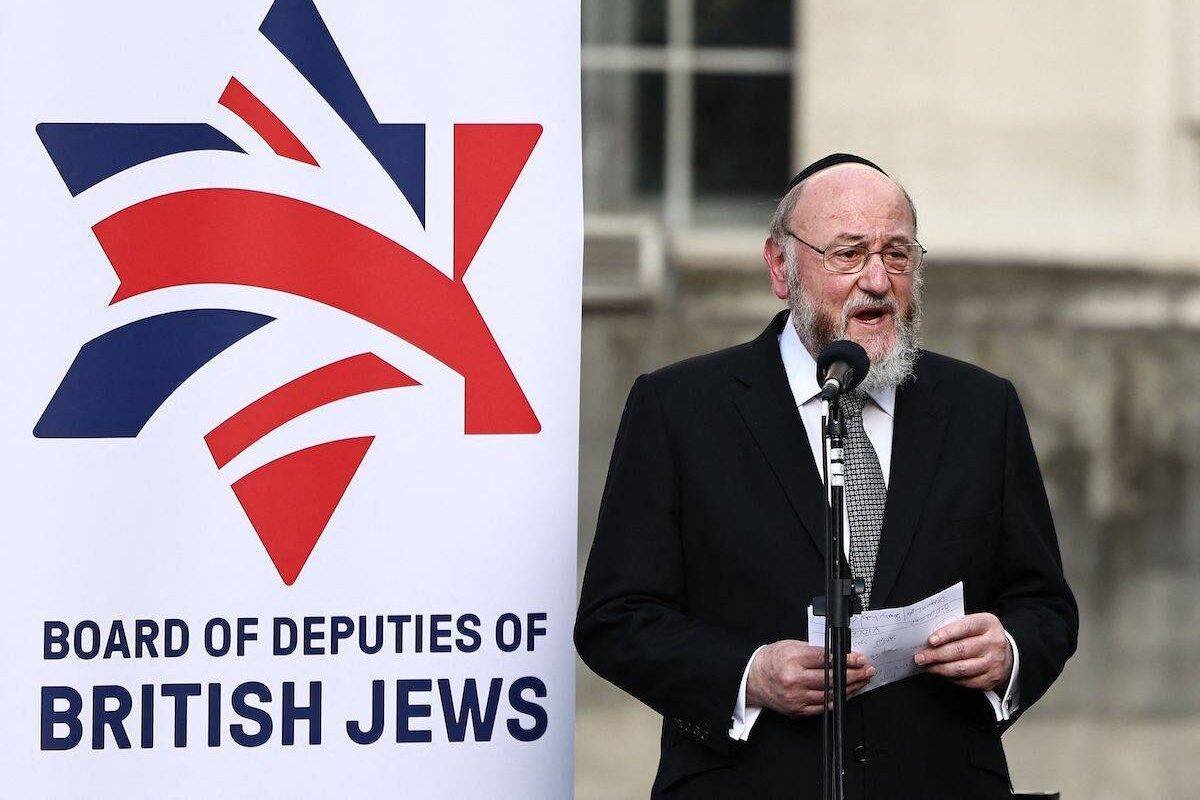
Chief Rabbi Sir Ephraim Mirvis has led a campaign urging the Church of England to block discussion of the document. He described Kairos II as deeply concerning and expressed hope that the synod would see it for what it is. Mirvis suggested the text reduced a complex political and historical reality to a one-sided account, downplayed Jewish historical experience and presented political activism dressed up as theology. His intervention carries particular weight given his position as a leading voice in British Jewish life and his public statements linking synagogue security concerns to broader geopolitical tensions. The Chief Rabbi's call for the synod to reject engagement underscores the delicate equilibrium that has characterized Christian-Jewish relations in Britain since the establishment of formal dialogue structures in the late twentieth century.
Efforts to suppress Palestinian Christian testimony carry profound implications for those whose voices emerge from the very land where Christianity was born. When genocide documentation is sidelined, it not only silences immediate suffering but also erases the theological continuity that Palestinian believers claim with the early church. Mirvis's son serving in the Israeli army adds a personal dimension to these exchanges, yet the core issue remains whether external religious leaders can dictate the boundaries of Anglican discernment on matters of justice and occupation.
Voices from Other Jewish Leaders and Organizations
Rabbi Dr Jonathan Romain, convenor of the Rabbinic Court of Great Britain, urged withdrawal of the document, stating that its descriptions such as Israel being colonial invalidated its authenticity when Jewish sovereignty dates back to biblical times. Rabbi Charley Baginsky, co-leader of the Movement for Progressive Judaism, said the Church has the prerogative to discuss the suffering of Palestinian Christians but questioned whether Kairos II provided the right tools for that discussion. The Campaign Against Antisemitism called the document appalling and shocking that the synod would entertain it. The Board of Deputies of British Jews described it as replete with historical distortions and false allegations that implicate Jews everywhere. Mirvis has a son serving in the Israeli army, a detail reported in coverage of his statements. These collective responses illustrate the breadth of concern within British Jewish institutions about how theological documents might influence public discourse on Israel and Palestine.
The Methodist Church's Formal Acceptance
The Methodist Church has already formally accepted the Kairos II text and stated that study materials based on its contents should be prepared for the community. This decision stands in contrast to the current debate within the Church of England. The motion before the General Synod carefully avoids the words genocide or apartheid, as noted by the Venerable Stewart Fyfe. Methodist acceptance signals a willingness among some Protestant bodies to integrate Palestinian Christian narratives into educational resources, potentially shaping how congregations across Britain understand the intersection of faith and contemporary conflict. The divergence between the two denominations highlights differing approaches to balancing historical interfaith commitments with emerging calls for justice-oriented solidarity.
Human Impact on Palestinian Christians Under Occupation
Palestinian Christians have long documented the effects of occupation, displacement and restrictions on movement that shape daily life in the West Bank, Gaza and East Jerusalem. The Kairos II document emerges from this lived reality, where families face barriers to worship, access to holy sites and economic survival. Engagement with the text would allow the Church of England to hear directly from Palestinian voices that connect policy decisions in Israel to the erosion of community life, including the blockade that has limited supplies and movement in Gaza for more than sixteen years. Stories of elderly parishioners unable to reach Bethlehem for Christmas services or young families separated by permit systems reveal the human texture behind abstract geopolitical debates.
These restrictions extend beyond physical movement to affect educational opportunities, healthcare access and the preservation of cultural heritage sites central to Christian identity. Palestinian Christian leaders have repeatedly described how prolonged separation from ancestral lands contributes to a gradual diminishment of their communities, prompting many younger members to emigrate in search of stability. By foregrounding such testimonies, Kairos II positions the Church of England to consider how its pastoral responsibilities might extend to supporting beleaguered congregations whose presence in the Holy Land represents a living link to early Christian history. Suppressing these accounts risks further isolating communities already facing demographic collapse, where the very continuity of witness in places like Bethlehem hangs in the balance.
Broader Questions of Dialogue and Historical Context
The debate raises questions about how churches distinguish between interfaith relations with Jewish communities and engagement with political positions associated with Zionism. Palestinian Christian initiatives have consistently framed their appeals within the framework of justice and international law rather than abstract theology. Historical patterns of displacement since 1948 continue to influence family structures, land ownership and access to resources across Palestinian territories. The Nakba remains a foundational reference point for understanding how land confiscations and village depopulations established enduring patterns of dispossession that subsequent generations have inherited. Theologically, separating dialogue with Jews from dialogue with Zionism matters because it preserves the possibility of mutual respect among Abrahamic faiths while rejecting an ideology that sacralizes territorial expansion at the expense of indigenous populations. This distinction draws from biblical calls for justice that transcend ethnic or national claims, allowing churches to affirm Jewish dignity without endorsing policies of exclusion.
Analysts note that the distinction between dialogue with Jews and dialogue with Zionism proposed in Kairos II seeks to preserve space for theological exchange while challenging political frameworks that equate criticism of state policies with hostility toward Jewish people. This framing echoes earlier Palestinian Christian statements that have sought to navigate interfaith sensitivities without silencing calls for accountability. As the General Synod prepares for its deliberations, the outcome may influence how other Anglican provinces worldwide approach similar documents emerging from conflict zones. Within the global Anglican communion, decisions in York could either reinforce solidarity with oppressed Christian minorities or signal that external lobbying can override local prophetic voices, affecting provinces from Africa to Asia where similar justice questions arise. By Fatima Al-Rashid, Staff Writer
This article was produced with AI-assisted research and editorial support. Reporting is based on sources cited in the article.
What's Your Reaction?
 Like
0
Like
0
 Dislike
0
Dislike
0
 Love
0
Love
0
 Funny
0
Funny
0
 Wow
0
Wow
0
 Sad
0
Sad
0
 Angry
0
Angry
0
Gulf/MENA Correspondent at Global1.News. Based in Doha, covering Gulf politics, energy markets, diplomacy, and development across the Middle East and North Africa. Tracks the economic transformation of the Gulf states.












Comments (0)