
Brazil's Amazon Paradox: Record-Low Deforestation Masks Tipping Point Crisis
Deep in Brazil's Legal Amazon, the rainforest is telling two stories at once. Satellite data shows clearing has plummeted to its lowest level in eleven years under President Luiz Inácio Lula da Silva's renewed enforcement push — a rare environmental victory on a continent battling deforestation across the Andes and the Pantanal. Yet beneath that headline success, the jungle is
Deep in Brazil's Legal Amazon, the rainforest is telling two stories at once. Satellite data shows clearing has plummeted to its lowest level in eleven years under President Luiz Inácio Lula da Silva's renewed enforcement push — a rare environmental victory on a continent battling deforestation across the Andes and the Pantanal. Yet beneath that headline success, the jungle is losing its ability to remain a rainforest at all.
Brazil's Amazon Paradox: Record-Low Deforestation Masks a Tipping Point Crisis
Belém, Brazil — June 2026 —
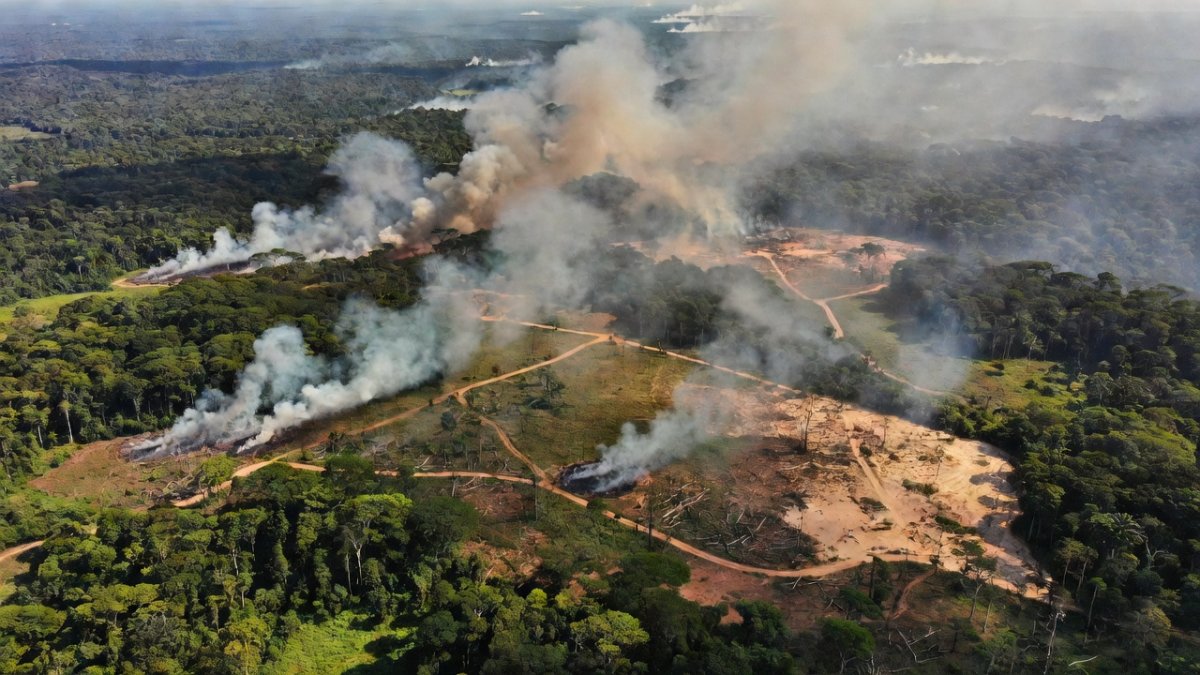
The Paradox: Record Low Deforestation
The Legal Amazon recorded just 5,796 km² of deforestation between August 2024 and July 2025 according to INPE PRODES data, marking the lowest figure in eleven years. This achievement reflects a roughly 70 percent cumulative reduction from 2022 peaks under the Lula administration. May 2026 DETER alerts showed a 61.4 percent year-over-year plunge from 960 km² to 370 km², the largest monthly drop ever recorded, while the accumulated ten-month decline reached 37.5 percent, the lowest value in the historical series. July 2026 brought a further 35.4 percent record drop for the first half of the year. Indigenous territories posted their lowest forest loss since 2016. These gains stem directly from intensified IBAMA enforcement, ICMBio operations, INPE satellite monitoring, embargoes, and command-and-control policies coordinated by MMA Minister Marina Silva. The administration’s explicit goal remains zero illegal deforestation by 2030. Across the vast basin spanning nine South American nations, these numbers represent a rare policy success amid broader regional pressures from expanding cattle frontiers and mining corridors. Local activists in Pará and Amazonas credit rapid-response teams for halting illegal clearings before they expand, yet they warn that enforcement alone cannot address underlying economic drivers. The paradox is clear: headline deforestation metrics improved dramatically while degradation processes accelerated elsewhere, threatening long-term forest integrity in ways satellite clearing statistics cannot fully capture.
The 'Worrying New Record': Degradation and the Tipping Point
Cumulative forest loss since pre-1970 now stands at approximately 851,000 km², or 21 percent of original cover—an area the size of India. Scientists have long warned that crossing the 20–25 percent threshold risks irreversible savannization across large portions of the basin. Forest degradation from fires, selective logging, and fragmentation frequently exceeds deforestation in total carbon impact, yet receives far less policy attention. Cattle ranching continues to drive 70–80 percent of remaining clearing, with soy expansion, illegal logging, and mining accounting for the balance; 95 percent of all clearing ties directly to agriculture. IMPAZON monitoring shows degradation patches spreading rapidly along roads and river corridors even as outright clearing slows. The tipping-point risk is no longer theoretical: models indicate that once savannization begins in the southern and eastern Amazon, it could propagate northward through altered rainfall patterns affecting the entire South American continent. Indigenous communities and smallholder farmers in the arc of deforestation already report shifting species composition and declining agricultural yields. While Lula’s enforcement has curbed large-scale illegal operations, the cumulative footprint of decades of incremental damage now places the biome perilously close to the critical threshold. Regional governments in Brazil, Peru, and Bolivia must therefore expand monitoring beyond simple deforestation metrics to track degradation if they hope to avoid crossing the point of no return.
Amazon Carbon Balance: From Sink to Source
The Amazon rainforest has ceased functioning as a net carbon sink and has become a net emitter, releasing 370 million tons of carbon over the last decade. This reversal stems primarily from widespread degradation rather than deforestation alone. Fires and fragmentation release stored carbon while simultaneously reducing the forest’s capacity to absorb new emissions. INPE and IMPAZON data confirm that degraded areas now outweigh intact forest in several states, flipping the regional carbon ledger. The shift carries profound implications for Latin America’s climate commitments and global mitigation targets. Marina Silva’s ministry has highlighted that protecting remaining intact blocks in Indigenous territories offers the fastest route to restoring sink capacity, yet funding for such protection remains insufficient. Meanwhile, the Cerrado and Pantanal biomes face parallel pressures, creating a continental-scale carbon feedback loop. Local activists in Acre and Rondônia document dying canopy trees and increased understory flammability, signs that the forest is drying from within. Without immediate scaling of restoration and enforcement, the Amazon’s transformation from sink to source will accelerate warming across the Southern Hemisphere. The Lula administration’s 2030 zero-illegal-deforestation target must therefore be paired with equally ambitious degradation-reduction measures if Brazil is to meet its Nationally Determined Contribution under the Paris Agreement.
Fires and the Super El Niño Threat
The 2024 fire season burned 44.2 million acres in the Amazon, a 66 percent increase from 2023, setting the stage for even greater risk in 2026. Forecasters warn of a Super El Niño event that will bring severe drought, critically low river levels on the Solimões River, and dense smoke over Manaus. Belém authorities have activated a multi-agency plan for extreme heat and fire response involving IBAMA, ICMBio, state civil defense, and municipal firefighters. Historical precedents from the 2015–2016 and 2023–2024 El Niño events show that drought-stressed forests become far more flammable, turning selective logging scars into ignition points. Indigenous territories have suffered repeated incursions by fire during these periods, destroying medicinal plants and game populations essential to traditional livelihoods. Amazonas Atual reports that riverine communities already face navigation hazards and fish-stock collapses linked to low water. The combination of record degradation and forecasted climate extremes creates a dangerous synergy: even reduced deforestation rates cannot prevent massive carbon releases if fires escape control. Coordinated aerial and satellite surveillance by INPE and IBAMA will be essential, yet budget constraints and political resistance threaten operational capacity. Without rapid international support for fire-fighting infrastructure and community-based early-warning systems, the 2026 dry season could erase years of deforestation gains in a single season of uncontrolled burning.
Political Headwinds: Agribusiness Pushback
Agribusiness interests are advancing legislative proposals to limit environmental monitoring and sanctions, described by Jacobin Brasil as a “shock-and-awe” campaign. These bills target IBAMA’s fining authority and seek to weaken embargoes on illegally cleared land. Although Lula’s government restored enforcement capacity after the Bolsonaro years, congressional majorities tied to soy and cattle sectors continue to erode legal protections. The controversy surrounding IBAMA operations—particularly heavy fines and demolitions affecting small farmers—has been exploited to portray enforcement as anti-development. Yet 95 percent of clearing remains linked to large-scale agriculture, not subsistence plots. Indigenous leaders and Amazonian civil-society networks argue that relaxing sanctions would reverse the 37.5 percent accumulated decline achieved through DETER and PRODES monitoring. Marina Silva has publicly defended command-and-control measures while calling for economic alternatives such as sustainable forest products and payment-for-ecosystem-services programs. The tension between short-term commodity profits and long-term biome stability defines contemporary Latin American environmental politics. Failure to counter the agribusiness lobby risks locking the region into a high-emission pathway incompatible with both national climate pledges and global temperature goals. Sustained pressure from Indigenous movements and international partners remains the primary counterweight to these legislative threats.
Voices from Indigenous Territories
Indigenous lands recorded their lowest deforestation since 2016, yet communities report intensifying degradation from fires and illegal mining on their borders. Leaders in the Xingu and Javari territories describe how smoke from surrounding cattle ranches drifts across protected forests, harming respiratory health and traditional livelihoods. They credit INPE satellite alerts and IBAMA rapid-response teams for preventing larger invasions, but emphasize that enforcement must be paired with territorial recognition and funding for community monitoring. The 2026 Super El Niño forecast raises particular alarm: low river levels on the Solimões will isolate villages and complicate evacuation during fire events. Local activists have formed alliances with researchers from IMPAZON to document degradation inside Indigenous territories, generating data that strengthens legal cases against encroaching ranchers. These voices underscore that the Amazon’s future cannot be decided solely in Brasília; Indigenous governance systems have proven effective at maintaining forest cover when supported rather than undermined by federal policy. Their territorial stewardship offers a proven model for keeping the biome below the 20–25 percent tipping-point threshold while advancing social justice across the basin.
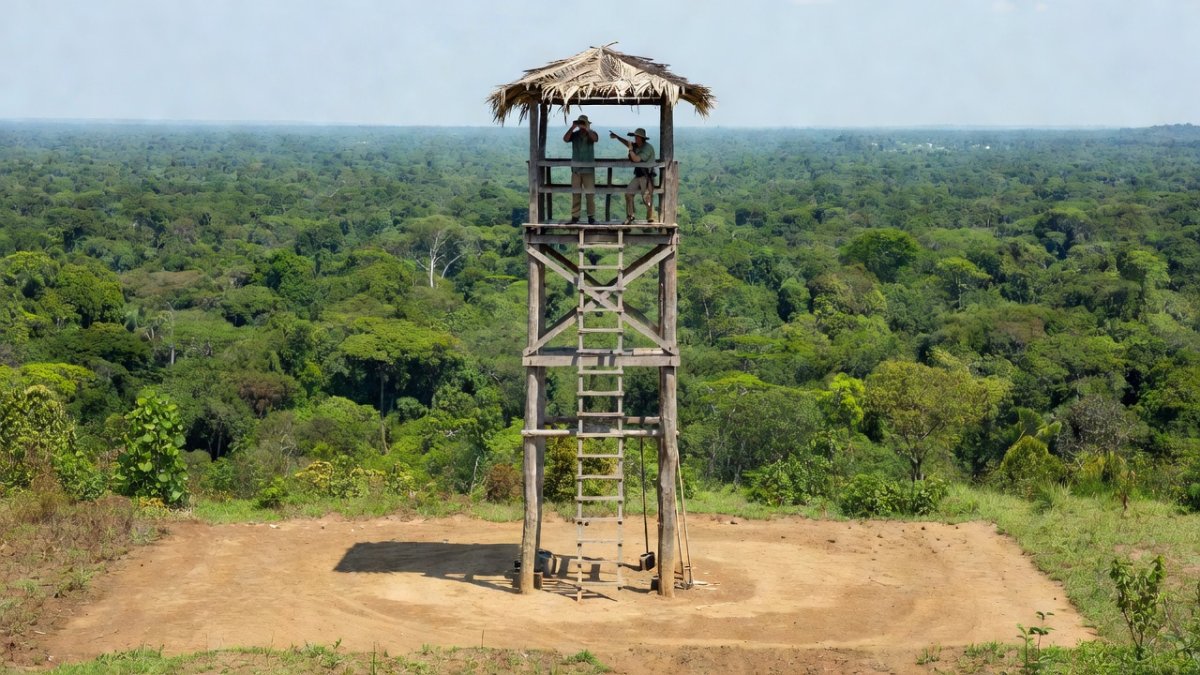
The Bottom Line — What Comes Next
The 2026 outlook presents a narrow window. Record-low deforestation achieved through IBAMA, ICMBio, and INPE efforts demonstrates that political will can bend the deforestation curve. Yet the Amazon’s shift to net carbon emitter status, combined with degradation exceeding clearing and the approaching Super El Niño, threatens to erase those gains. The 20–25 percent savannization threshold looms as cumulative loss sits at 21 percent. Agribusiness legislative campaigns and enforcement controversies add political volatility. Indigenous territories remain the most effective barrier against further loss, but require sustained resources. The Lula administration’s 2030 zero-illegal-deforestation target is still achievable if degradation receives equal priority and international climate finance supports fire response and restoration. Latin America’s largest rainforest now stands at a crossroads where policy success on one metric collides with systemic risk on others. Without immediate expansion of monitoring, enforcement, and Indigenous-led protection, the basin could cross irreversible thresholds within the coming decade, reshaping rainfall patterns, carbon cycles, and livelihoods across the continent. The data are unambiguous; the political choices that follow will determine whether the Amazon remains a living forest or becomes a net source of planetary instability.
By Elena Vasquez, Staff WriterThis article was produced with AI-assisted research and editorial support. Reporting is based on sources cited in the article.
What's Your Reaction?
 Like
0
Like
0
 Dislike
0
Dislike
0
 Love
0
Love
0
 Funny
0
Funny
0
 Wow
0
Wow
0
 Sad
0
Sad
0
 Angry
0
Angry
0

Latin America Correspondent at Global1.News. Based in Mexico City, covering politics, economics, energy, and culture across the region. Brings an on-the-ground perspective to stories spanning from the Rio Grande to Patagonia.














Comments (0)