
Japan Earthquake: 7.1 Magnitude Strikes Kumamoto, Killing Five
A powerful 7.1-magnitude earthquake has struck Kumamoto Prefecture in southern Japan, claiming five lives and injuring dozens more in a sudden and devastating display of nature’s force that has once again tested the resilience of communities across K.
A powerful 7.1-magnitude earthquake has struck Kumamoto Prefecture in southern Japan, claiming five lives and injuring dozens more in a sudden and devastating display of nature’s force that has once again tested the resilience of communities across Kyushu. The tremor, which struck late on a Tuesday afternoon, sent immediate ripples of concern through families preparing evening meals and has drawn quiet empathy from Thai readers who share deep cultural and economic ties with the region. This breaking event underscores both the fragility of life in earthquake-prone zones and the enduring spirit of mutual support that binds Japan and ASEAN nations together.
Japan Earthquake: 7.1 Magnitude Strikes Kumamoto, Killing Five
Bangkok, Thailand — Article continues...
The Earthquake Strikes Southern Japan
On Tuesday July 28 2026 at 4:27 p.m. local time a 7.1-magnitude earthquake struck Kumamoto Prefecture in southern Japan according to the Japan Meteorological Agency with the United States Geological Survey recording the event as 6.8 Mww at a depth of 10 kilometers.
The tremor occurred along the Ring of Fire where Japan experiences between 18 and 20 percent of the world's earthquakes each year and immediately triggered JMA warnings for residents in Kumamoto Nagasaki Kagoshima Fukuoka Saga Oita and Miyazaki prefectures.
The epicenter lay approximately 20 kilometers south of Kumamoto city at a shallow depth of 10 kilometers, allowing the intense shaking to radiate widely across the island of Kyushu. Seismologists noted that this event shared similarities with the devastating 2016 Kumamoto earthquake, which also struck along the same fault system, though the current quake’s magnitude and timing caught many residents during the late afternoon when families were preparing evening meals. The Japan Meteorological Agency quickly issued alerts emphasizing the risk of strong aftershocks in the coming days.
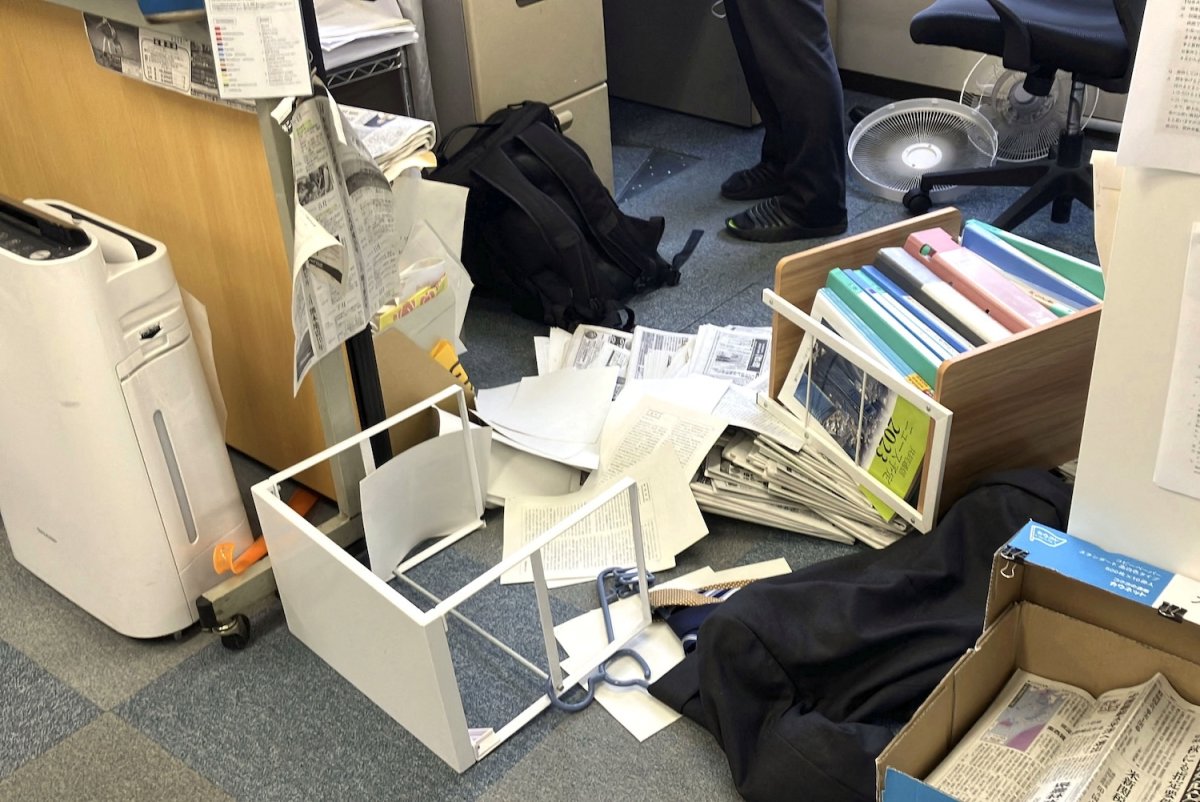
Across Kyushu, the tremor was felt as a violent rolling motion that lasted nearly a minute in some areas. In Fukuoka, office workers described desks sliding across floors while in Kagoshima, residents reported dishes crashing from shelves and car alarms blaring in unison. The shallow depth amplified the surface intensity, turning ordinary moments into scenes of sudden chaos as people instinctively sought doorways or open spaces.
Local cultural traditions of community vigilance played a quiet role in the immediate response, with neighbors checking on elderly residents in rural villages much like Thai villagers might during monsoon tremors. This shared sense of mutual care helped ease the initial panic even as the ground continued to sway.
Casualties and Immediate Human Impact
At least five people died and seven others suffered severe injuries while hospitals across Kumamoto Prefecture reported more than 50 total injuries from the shaking and related incidents.
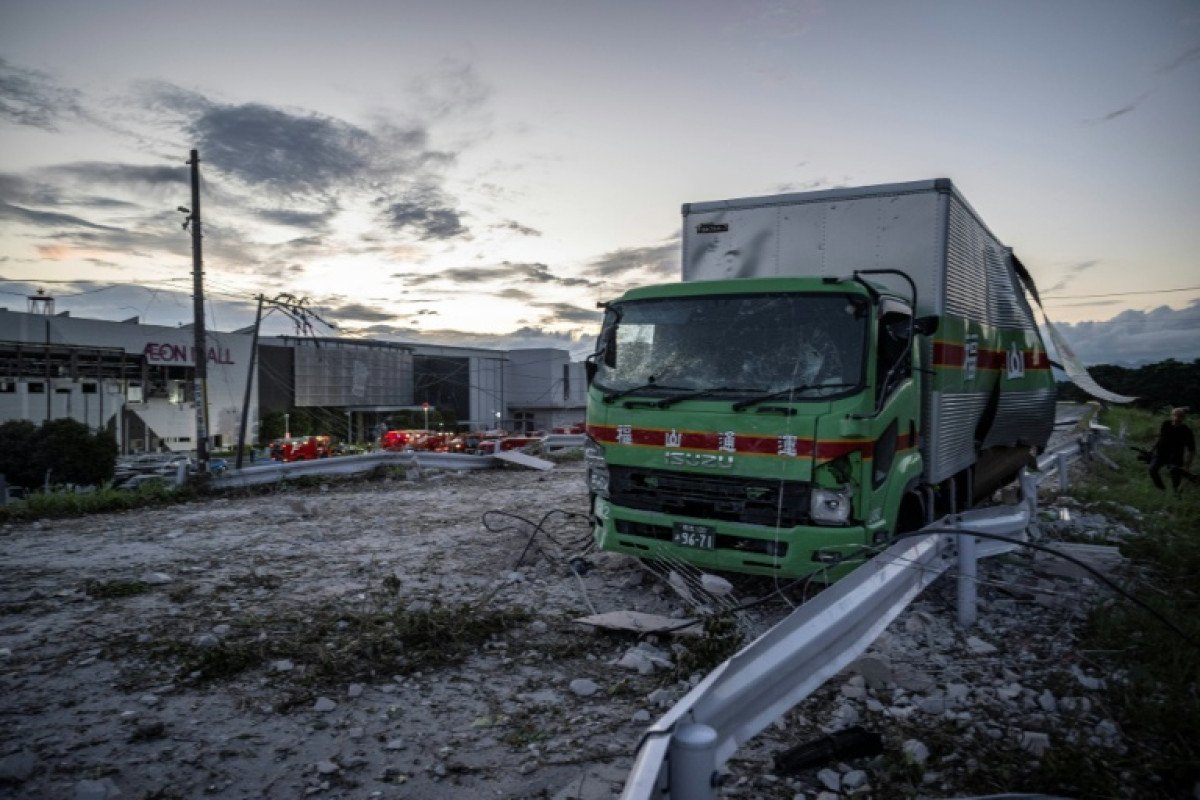
An Aeon Mall in Kashima saw its ceilings and walls collapse after a gas explosion forcing the evacuation of customers with eight people rescued and five injured in the process.
At the Nippon Paper factory in Yatsushiro a chimney collapsed leaving nine workers unaccounted for as rescue teams began operations amid the debris.
Chiharu Hara, a 42-year-old teacher in central Kumamoto, was grading papers when the floor heaved beneath her classroom. “The desks began to dance and the windows rattled like wind chimes in a storm,” she recalled gently, helping students crawl beneath their desks before guiding them outside. Nearby, factory worker Kazuya Tsurunaga described the Aeon Mall explosion as “a sudden roar followed by clouds of dust,” noting how shoppers helped one another reach safety amid falling ceiling panels.
Hospitals in the prefecture treated over 50 injuries by evening, with many cases involving cuts from shattered glass and bruises from falling objects. Medical staff worked calmly, drawing on protocols refined after the 2016 disaster, while volunteers distributed blankets and warm tea to those waiting for treatment. The human stories emerging from these centers highlight quiet resilience rather than panic.
At the Aeon Mall in Kashima, rescue teams used ladders and flashlights to free eight people trapped near the collapsed ceiling, five of whom sustained minor injuries. The gas explosion that triggered the structural failure was contained quickly, preventing further harm and allowing families to reunite safely outside.
Damage to Infrastructure and Transport
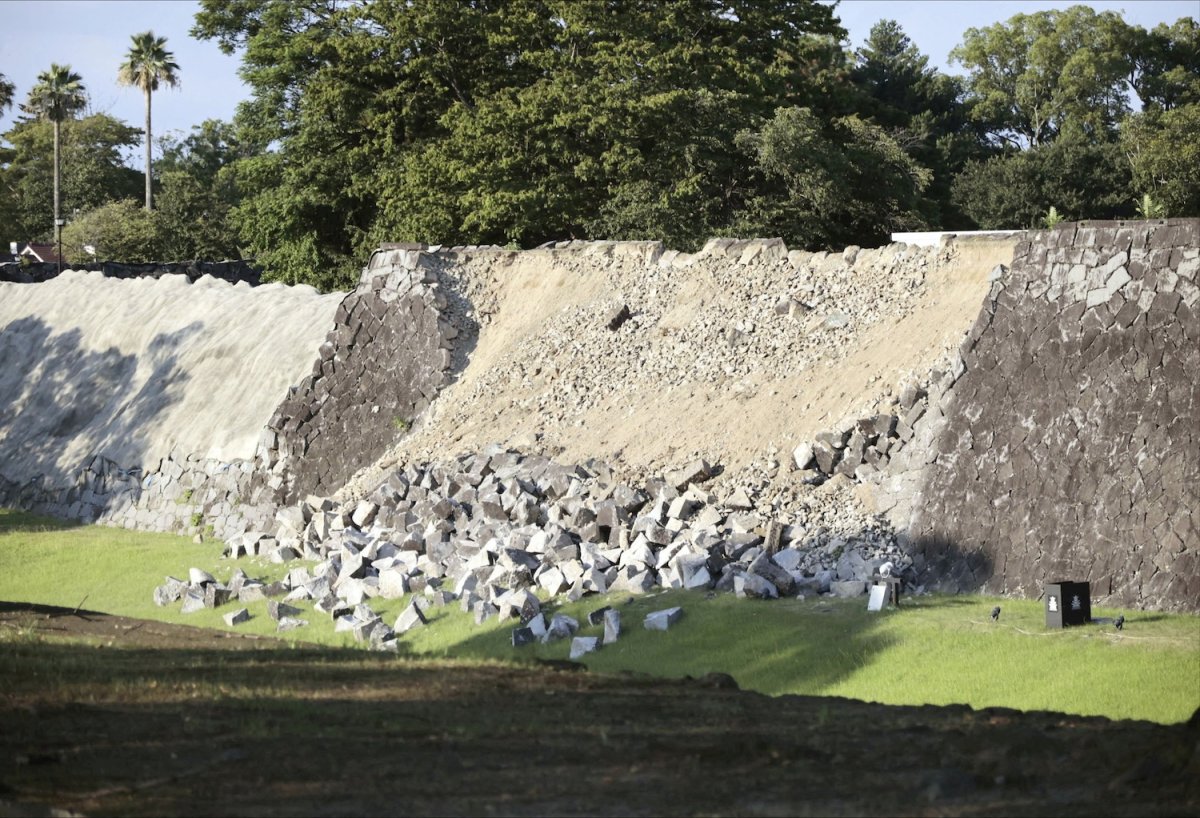
Kumamoto Castle experienced partial collapse of its historic walls while sections of the Kyushu Expressway broke in multiple places and a freight train capsized on its tracks.
The Shinkansen bullet train service across Kyushu halted immediately and remained suspended into Wednesday morning while Kumamoto Airport closed for several hours before reopening Tuesday evening.
Kyushu Electric Power reported that 36,880 households lost electricity and mobile services from KDDI and Docomo faced widespread disruptions in the affected areas.
Aerial footage revealed the Kyushu Expressway fractured in two places, with large cracks splitting the asphalt like seams in aged fabric. Engineers noted that while the damage appeared dramatic, the highway’s design had prevented total collapse, a testament to lessons learned from previous quakes. Kumamoto Castle, a centuries-old symbol of regional heritage whose stone walls have withstood centuries of natural trials, suffered partial collapses that saddened locals who view the landmark as a living connection to their ancestors.
A freight train carrying industrial goods capsized on its tracks near Yatsushiro, scattering containers but causing no injuries to crew members who had already evacuated. Power restoration efforts began immediately, with Kyushu Electric Power crews working through the night to reconnect the 36,880 affected households, many of whom regained electricity within hours thanks to redundant grid systems.
The Shinkansen suspension, though inconvenient, allowed time for thorough safety inspections that reassured passengers. Mobile network disruptions from KDDI and Docomo were addressed with temporary base stations, reflecting Japan’s emphasis on rapid communication recovery during emergencies.
Government and Military Response
Prime Minister Sanae Takaichi ordered the deployment of 3,600 military personnel supported by 20 aircraft to assist with search rescue and relief operations across the prefecture.
Authorities instructed 300,000 people to evacuate due to risks from multiple fires damaged roads and bridges while a one-meter tsunami warning was issued and later lifted without incident.
No irregularities were reported at any nuclear facilities in the region allowing focus to remain on civilian safety and infrastructure repair.
Prime Minister Sanae Takaichi addressed the nation with measured compassion, stating, “We stand together as one people, drawing strength from our shared history of overcoming nature’s challenges. Every life matters, and we will spare no effort in rescue and recovery.” Her words echoed the gentle solidarity often seen in Thai communities during floods, fostering a sense of collective calm.
The deployment of 3,600 Self-Defense Forces personnel, supported by 20 aircraft, enabled swift search-and-rescue operations across remote mountain villages. Evacuation centers provided clean water, simple meals, and quiet spaces for families, with volunteers organizing children’s activities to ease the tension of displacement for the 300,000 people affected.
The one-meter tsunami warning was lifted within hours after ocean sensors confirmed no significant wave activity, allowing coastal residents to return home safely. This efficient coordination underscored Japan’s layered approach to disaster management, blending technology with community trust.
Business Disruptions and Technology Sector Effects
TSMC evacuated workers from its Kumamoto plant while Sony and Fujifilm also ordered staff to leave facilities as a precaution amid ongoing aftershocks and structural assessments.
These evacuations highlight the interconnected nature of global supply chains that link Japanese manufacturing directly to electronics production in Thailand Malaysia and other ASEAN nations.
TSMC’s Kumamoto plant, a vital node in the global semiconductor supply chain, saw workers evacuated as a precaution, highlighting how a single regional event can ripple through electronics production worldwide. The facility’s role in advanced chip manufacturing means even brief pauses affect assembly lines in Thailand, Malaysia, and beyond, where Thai factories integrate these components into finished devices.
Sony and Fujifilm similarly paused operations for structural checks, with production concerns centered on cleanroom integrity rather than immediate damage. Industry analysts noted that such interruptions, while temporary, remind manufacturers of the need for diversified sourcing to maintain steady output for international markets.
Thai electronics manufacturers, many of whom rely on Japanese components, monitored the situation closely through established ASEAN supply-chain networks. This interconnectedness encourages ongoing dialogue on resilience, ensuring that cultural and economic ties between Thailand and Japan continue to support mutual stability.
Relevance for Thai and ASEAN Communities
Thai readers will recall the 2016 Kumamoto earthquake that claimed 273 lives and the 2011 Tohoku disaster that resulted in 18,500 deaths and the Fukushima nuclear crisis both of which disrupted Thai tourism and industrial exports.
Thailand's Department of Disaster Prevention and Mitigation maintains close coordination with Japanese counterparts through ASEAN frameworks to share lessons on rapid evacuation and power restoration that directly benefit communities in Bangkok Chiang Mai and southern provinces prone to tremors.
Thai nationals working in Kyushu factories and the many Thai tourists who visit Kumamoto Castle each year now face uncertainty as families in Thailand monitor updates through the Thai Embassy in Tokyo and the Ministry of Foreign Affairs hotline.
Through mechanisms like the ASEAN Agreement on Disaster Management and Emergency Response (AADMER) and the ASEAN-Emergency Response and Coordination Centre, member nations share real-time seismic data and best practices. Thailand’s Department of Disaster Prevention and Mitigation has long studied Japanese evacuation drills, adapting elements that suit local flood-prone areas in Bangkok and Chiang Mai.
The Thai Embassy in Tokyo maintained an open hotline for nationals in Kyushu, offering consular assistance and emotional support to families worried about loved ones working in affected factories. Tourism operators noted that while Kyushu visits may see short-term dips, the spirit of recovery often draws visitors back, much like Thai destinations rebound after seasonal storms.
These connections foster a gentle cross-border empathy, where Thai communities send quiet wishes for swift rebuilding, strengthening ASEAN’s collective preparedness for future natural events.
Looking Ahead and Regional Preparedness
The current response by Japanese authorities builds on experience from past events yet the scale of evacuations and infrastructure damage underscores the need for continued ASEAN-wide cooperation on seismic monitoring and supply chain resilience.
Thai communities can draw cultural parallels to the spirit of mutual aid seen in local temples and village networks during Thailand's own flood seasons fostering empathy across borders in these difficult hours.
The Japan Meteorological Agency warned of possible strong aftershocks over the next week, urging residents to secure furniture and prepare emergency kits. Landslide risks in hilly areas prompted additional monitoring, drawing on experience from the 2016 Kumamoto recovery that took several years to fully restore infrastructure and community confidence.
ASEAN nations can learn from Japan’s blend of advanced early-warning systems and community-level mutual aid, practices that parallel Thailand’s village networks during monsoon seasons. Continued cooperation through joint exercises will help build shared resilience across the region.
In these hours of uncertainty, the quiet determination seen in Kumamoto mirrors the cultural values of patience and togetherness cherished in both Japanese and Thai societies, offering hope for steady recovery ahead.
As the sun rises over Kyushu in the days following the quake, families in affected villages gather to share simple meals of rice and miso soup, their gentle conversations echoing the same warmth found in Thai homes after monsoon rains. Community leaders in Kumamoto have begun organizing small neighborhood meetings where elders recount stories of past recoveries, instilling a quiet confidence in younger generations much like village elders do during Thailand’s annual flood preparations. These moments of shared storytelling strengthen bonds that transcend borders, reminding us that resilience is woven from patience, kindness, and the collective will to rebuild together.
Thai students studying in Fukuoka have reached out to their families back home through video calls, describing how local volunteers delivered warm blankets and encouraging words, a gesture that mirrors the spirit of Thai temple communities offering shelter during crises. Such cross-cultural exchanges highlight how natural disasters, while tragic, can deepen understanding and cooperation between nations that value harmony with nature and one another. In the spirit of gentle solidarity, many in Thailand light incense and offer quiet prayers for swift healing in Kumamoto, knowing that the same sun that warms Bangkok also shines on the resilient people of Kyushu.
By Ann Srisawat, Staff WriterThis article was produced with AI-assisted research and editorial support. Reporting is based on sources cited in the article.
What's Your Reaction?
 Like
0
Like
0
 Dislike
0
Dislike
0
 Love
0
Love
0
 Funny
0
Funny
0
 Wow
0
Wow
0
 Sad
0
Sad
0
 Angry
0
Angry
0

Southeast Asia Correspondent at Global1.News. Based in Bangkok, covering Thai and Southeast Asian politics, economy, technology, and culture. Deep regional perspective on one of the world's most dynamic regions.















Comments (0)