
Amazon Fires 2025: Burned Area Drops 80% to Record Low
In the vast expanse of South America's Amazon, a dramatic shift unfolded last year as flames consumed far less of the world's largest rainforest than in the devastating 2024 season.
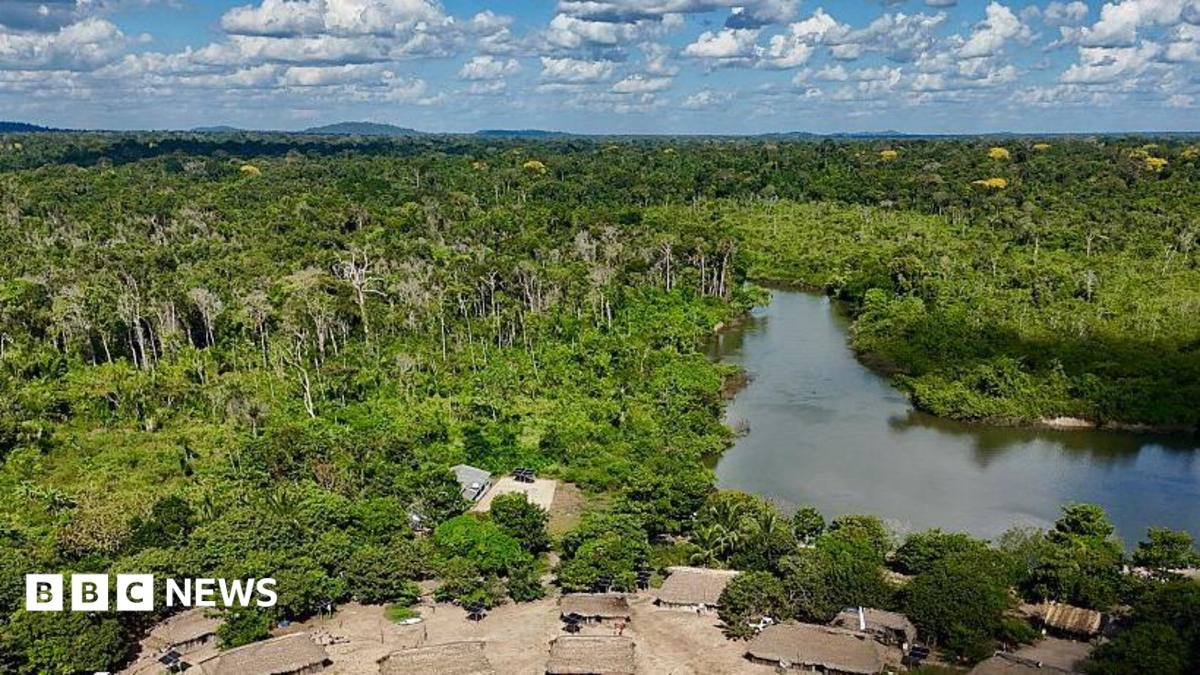
In the vast expanse of South America's Amazon, a dramatic shift unfolded last year as flames consumed far less of the world's largest rainforest than in the devastating 2024 season. MapBiomas data reveals just 3.1 million hectares burned across Brazil's Amazon in 2025, a sharp contrast to the record 15.8 million hectares scorched the prior year. This figure represents the smallest burned area since the monitoring group began tracking in 1985. The development arrives as President Luiz Inacio Lula da Silva campaigns for re-election this October, building on his long-standing pledge to safeguard the region. The 2024 fires, driven by a severe drought intensified by El Niño and widespread illegal clearing, caused widespread destruction across the region.
Amazon Burned Area Plummets 80% in 2025
Brasilia, Brazil - The latest MapBiomas report delivers concrete evidence of progress in protecting Brazil's Amazon, with burned land dropping from 15.8 million hectares in 2024 to 3.1 million hectares in 2025. This reduction marks the lowest level recorded since monitoring started in 1985 and signals that coordinated efforts can curb destruction in the rainforest that spans multiple states including Para, Amazonas, and Mato Grosso. The figures arrive amid President Luiz Inacio Lula da Silva's push for re-election this October, where environmental protection formed a core promise during his earlier campaign four years ago.
Record Low Fires Signal Possible Turnaround
The MapBiomas tracking that began in 1985 provides essential historical context for understanding the 2025 burned area of just 3.1 million hectares in Brazil's Amazon. This represents the smallest total since systematic records started, underscoring how far the region has moved from the record 15.8 million hectares scorched in 2024. The 31 percent drop below the historical average translates into fewer fires than seen in four decades, easing immediate pressures on states such as Para, Amazonas, and Mato Grosso where agricultural cycles and traditional livelihoods have long been vulnerable to uncontrolled burning.
Vera Arruda, researcher at the Amazon Environmental Research Institute and MapBiomas coordinator, described the 2025 numbers as significant proof that burned areas can be reduced across the country. Her assessment highlights both the achievement and the limits of this progress. While the lowest fire count in 41 years offers clear evidence that coordinated action can reduce destruction, she stresses that one year's data does not establish a lasting trend and urges continued prevention efforts to avoid complacency. These observations tie directly to daily realities in Amazonian communities, where the intense 2024 fires severely disrupted health, farming, and forest-based economies, whereas 2025 brought measurable relief that must not be taken for granted.
These community-level shifts illustrate why scaling back vigilance would be premature. In 2024, widespread blazes compounded daily hardships across rural settlements; the sharp decline in 2025 has already begun to stabilize local conditions, yet Arruda's caution reminds observers that sustained investment in monitoring and enforcement remains essential to protect these gains.
Broader National Decline Across Brazil
The MapBiomas findings extend beyond the Amazon to show a nationwide reduction, with approximately 12.7 million hectares burned across Brazil in 2025 versus 30 million hectares in 2024. This pattern reflects easing conditions after the unprecedented fires of 2024, which the Copernicus Climate Change Service attributed to climate extremes combined with human activity. The drop offers relief to regions from the Cerrado savanna to the Pantanal wetlands, where similar pressures from land clearance affect local economies and biodiversity hotspots across Latin America. Such trends highlight how Brazil's environmental policies influence neighboring countries facing parallel challenges in balancing development and conservation.
Weather Patterns Shape Fire Risks
Part of the 2025 improvement stems from cooler La Niña conditions that replaced the warmer El Niño phase responsible for fueling the unprecedented 2024 blazes, which Copernicus Climate Change Service linked to climate extremes interacting with human activity. MapBiomas has cautioned that any return of El Niño could extend dry seasons and heighten forest-fire risks in coming periods, underscoring the interplay between natural climate cycles and ongoing pressures from agriculture and logging that have intensified over decades. These dynamics mean that even with the sharp national reduction from 30 million to 12.7 million hectares burned, future seasons remain vulnerable to shifts in ocean temperatures. The 2025 figures demonstrate that favorable weather can amplify policy gains, yet the report emphasizes the need for adaptive strategies that account for both climatic variability and human drivers across the Amazon and neighboring Latin American ecosystems.
Lula's Pledges Face Scrutiny Amid Gains
President Lula promised on his first day in office in January 2023 to achieve zero deforestation in the Amazon, reversing increases seen under predecessor Jair Bolsonaro. During Bolsonaro's term, tree cutting rose 75 percent in three years as policies favored expanded farming and mining to address regional poverty. Bolsonaro’s administration opened vast tracts to agribusiness interests that accelerated both deforestation and associated fires. The 2025 burned area decline provides a boost to Lula's re-election bid this October by demonstrating measurable results from his environmental commitments. Yet activists criticize his approval of oil exploration at the Amazon river mouth as inconsistent with protection goals, reflecting tensions between economic needs and conservation in Brazilian politics. This tension carries direct implications for environmental voters whose support proved decisive in Lula's earlier victory four years ago. While the nationwide drop from 30 million to 12.7 million hectares burned offers a political boost, persistent criticism over the oil project risks dampening turnout among those who expect consistent protection of the rainforest spanning Para, Amazonas, and Mato Grosso. The outcome this October will test whether measurable fire reductions can outweigh perceptions of policy contradictions in Latin America's largest democracy.
Global Stakes for Rainforest Health
Tropical rainforests such as the Amazon play a central role in absorbing vast quantities of carbon dioxide and supporting millions of species, functions that have come under increasing strain from decades of deliberate land clearance for agriculture and logging combined with climate-change effects. The 2025 decline to 3.1 million hectares burned therefore carries weight for international climate goals that depend on preserving these carbon sinks and biodiversity reservoirs across Latin America. Neighboring countries from Bolivia to Peru watch Brazil's policies closely, knowing that reduced burning in the Amazon influences regional water cycles and ecological stability. Communities in states such as Acre and Rondonia, whose livelihoods remain tied to intact forest cover, stand to benefit most from sustained reductions. The MapBiomas data shows how lower burned areas can support broader efforts to maintain the rainforest's capacity to regulate climate and sustain biodiversity, offering a potential model for balancing development and conservation throughout the region.
By Elena Vasquez, Staff WriterThis article was produced with AI-assisted research and editorial support. Reporting is based on sources cited in the article.
What's Your Reaction?
 Like
0
Like
0
 Dislike
0
Dislike
0
 Love
0
Love
0
 Funny
0
Funny
0
 Wow
0
Wow
0
 Sad
0
Sad
0
 Angry
0
Angry
0

Latin America Correspondent at Global1.News. Based in Mexico City, covering politics, economics, energy, and culture across the region. Brings an on-the-ground perspective to stories spanning from the Rio Grande to Patagonia.















Comments (0)