
The Yazidi Women Who Survived: One Doctor's Fight for Justice and Recovery
The Abduction That Shattered a Life in Sinjar On 3 August 2014, Shireen was preparing for a high school examination in her family home in Sinjar when Islamic State militants stormed the house and seized her. At nineteen years old she was taken to Tal Afar and sold as a sex slave to an IS fighter. Three months later she was resold in Mosul to a man named Abu Omar, who already ma
The Abduction That Shattered a Life in Sinjar
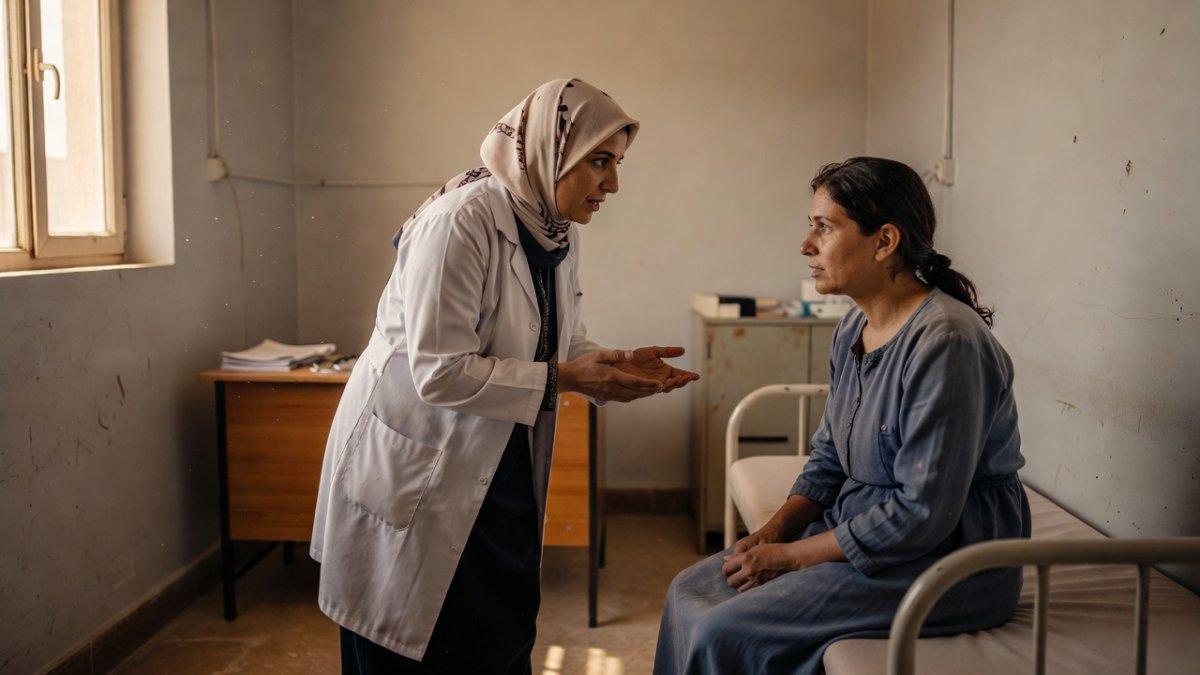
On 3 August 2014, Shireen was preparing for a high school examination in her family home in Sinjar when Islamic State militants stormed the house and seized her. At nineteen years old she was taken to Tal Afar and sold as a sex slave to an IS fighter. Three months later she was resold in Mosul to a man named Abu Omar, who already maintained two Iraqi wives. Shireen later recounted that Abu Omar told her he loved her, yet subjected her to repeated rape. The other wives beat her during their visits. Forced to convert to Islam and told that her Yazidi faith in Melek Tawwus was devil worship, she endured months of captivity before neighbours helped her escape and return to her family. She eventually reached a displacement camp near Duhok, carrying the physical and psychological wounds of her ordeal.
Dr Nagham Nawzat Responds to the Crisis
When Islamic State attacked Sinjar, Dr Nagham Nawzat, a Yazidi gynaecologist then working in the town, fled with her children first to Mount Sinjar and later to Duhok. Women began arriving at her clinic injured, traumatised and frequently pregnant as a result of rape. Recognising that existing services could not meet the scale of need, she founded the organisation Bahr al-Ulum to deliver coordinated medical care, psychological support and practical training. More than one thousand women have received assistance through the initiative since its establishment. Dr Nawzat has stated that while the harm inflicted cannot be undone, survivors can be supported to rebuild their lives with dignity and independence.
Medical Care, Skills and Economic Independence
Bahr al-Ulum arranges treatment for injuries sustained during captivity and offers counselling to address trauma. The organisation also provides training in sewing, hairdressing and other trades, followed by small loans that enable women to launch their own businesses. These measures aim to restore financial autonomy and reduce dependence on aid. Dr Nawzat works with local authorities and international organisations to ensure survivors receive comprehensive services rather than fragmented assistance. She has emphasised that the women are survivors, not merely victims, and that their testimonies must be preserved for any future legal proceedings against Islamic State members.
Death Threats and Continued Commitment
Dr Nawzat has received repeated death threats from Islamic State sympathisers angered by her efforts to help women escape and recover. Despite the personal risk, she has refused to halt her work, asking who else would assist the survivors if she stopped. Her persistence reflects the broader pattern of targeted violence against those who document or mitigate the consequences of the 2014 attacks. The United Nations Commission of Inquiry determined in 2016 that Islamic State committed genocide, crimes against humanity and war crimes against the Yazidi people. An estimated five thousand Yazidi men were killed and seven thousand women and girls were taken captive that year, with many still missing.
Connecting Displacement and the Search for Justice
The experiences of Yazidi survivors illustrate how targeted sexual violence and forced displacement function as instruments of group destruction. Similar patterns of occupation, forced movement and denial of basic rights have marked other conflicts across the Middle East. Dr Nawzat's approach, combining immediate medical response with longer-term skills development, offers a model for addressing both the bodily and social consequences of such violence. Her documentation work supports accountability efforts that extend beyond immediate humanitarian relief. International recognition of the genocide has not yet translated into full restitution or the return of all missing persons, leaving survivors to navigate daily life in camps while awaiting concrete justice measures.
The Human Cost and the Imperative of Sustained Support
Thousands of Yazidi families remain displaced years after the 2014 offensive. Women who escaped captivity continue to require specialised gynaecological care, mental health services and opportunities for economic participation. Bahr al-Ulum's emphasis on financial independence through vocational training addresses one dimension of recovery, yet the organisation operates amid limited resources and ongoing security concerns. Dr Nawzat has noted that the women deserve both healing and justice. Without sustained international engagement, the risk remains that the genocide's long-term effects will continue to shape the lives of an entire community. The work of medical professionals like Dr Nawzat demonstrates that recovery is possible when survivors receive consistent, rights-based support rather than temporary aid alone.
By Fatima Al-Rashid, Staff WriterThis article was produced with AI-assisted research and editorial support. Reporting is based on sources cited in the article.
What's Your Reaction?
 Like
0
Like
0
 Dislike
0
Dislike
0
 Love
0
Love
0
 Funny
0
Funny
0
 Wow
0
Wow
0
 Sad
0
Sad
0
 Angry
0
Angry
0
Gulf/MENA Correspondent at Global1.News. Based in Doha, covering Gulf politics, energy markets, diplomacy, and development across the Middle East and North Africa. Tracks the economic transformation of the Gulf states.












Comments (0)