
Indigenous Leaders Blast Ford Wildfire Response Failures in Thunder Bay
Indigenous leaders from multiple First Nations have united in Thunder Bay to denounce Premier Doug Ford’s handling of the wildfire emergency, exposing critical failures in communication, evacuation planning and resource allocation that left remote communities to fend for themselves.
Indigenous Leaders Blast Ford Wildfire Response Failures
Thunder Bay, Ontario — Article continues...
Indigenous Leaders Condemn Ford's Wildfire Response in Thunder Bay
Leaders from Gull Bay First Nation, Whitewater Lake First Nation, Fort William First Nation, Anishinabek Nation, Nokiiwin Tribal Council and Nishnawbe Aski Nation gathered in Thunder Bay this week to address Premier Doug Ford's handling of the wildfire crisis.
The CBC News video captures direct statements from these representatives, who criticised the provincial government's lack of clarity and organisation during the ongoing emergency.
Community members described repeated instances where provincial alerts arrived too late or not at all, forcing spontaneous decisions that placed elders and children at immediate risk. The absence of coordinated briefings left local leadership operating without reliable information on fire progression or available support.
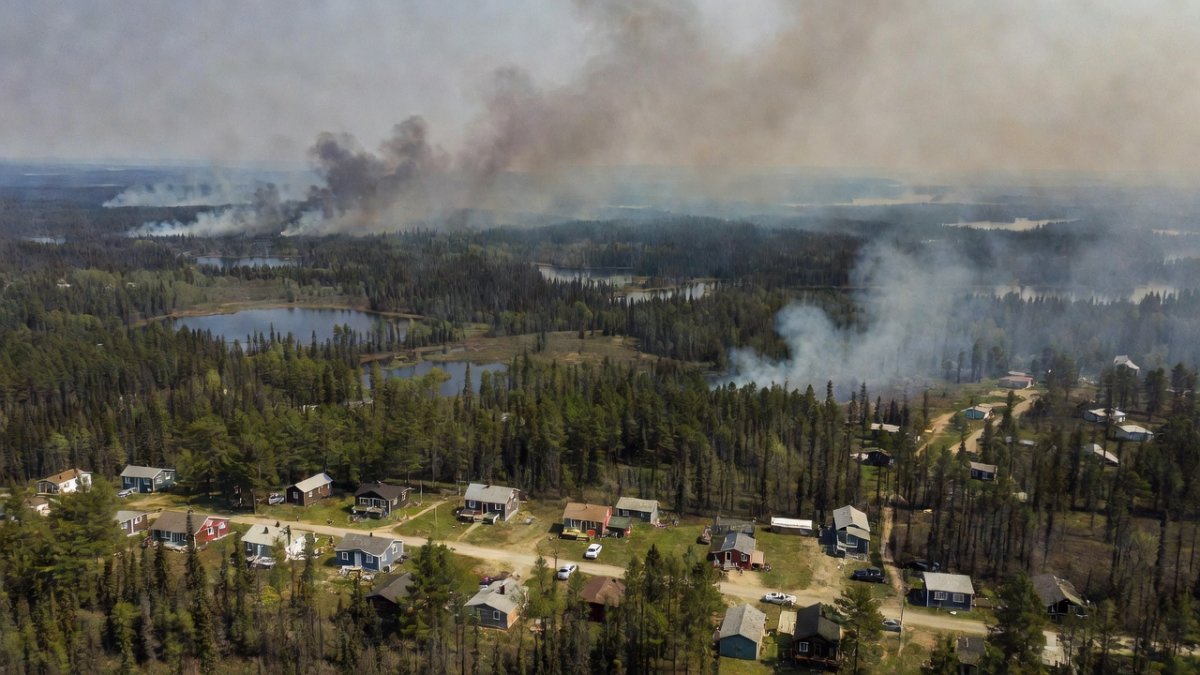
Namaygoosisagagun First Nation Destroyed Last Month
Namaygoosisagagun First Nation, located north of Thunder Bay, was destroyed by wildfire on June 15, with members forced to self-evacuate by boat after Chief Helen Paavola requested federal assistance and received confirmation of no imminent threat.
Whitewater Lake First Nation, situated 250 kilometres north of Thunder Bay, also suffered complete destruction of its infrastructure in the same period, leaving residents without homes or services.
The self-evacuation of Namaygoosisagagun by boat underscores the profound isolation faced by remote northwestern Ontario First Nations when provincial alerts fail to materialise. Chief Paavola’s experience of being assured there was no imminent threat left residents with mere hours to gather belongings and flee across open water, exposing gaps in real-time communication between Ontario’s emergency systems and Indigenous leadership. This breakdown not only risked lives but also severed immediate access to cultural sites and traditional territories that sustain community identity.
Compounding these failures, the Anishinabek Nation stepped in with emergency funding after federal delays left evacuees without timely support, highlighting how incomplete federal recognition for communities like Namaygoosisagagun restricts access to core disaster assistance programs. Without full status, these nations must navigate bureaucratic hurdles that delay critical resources such as temporary housing and health services. The total destruction of Whitewater Lake First Nation further illustrates the pattern, where entire settlements have been reduced to ash, forcing long-term displacement and raising urgent questions about rebuilding sovereignty over land that holds irreplaceable historical significance.
Grand Council Chief Highlights Evacuation Failures
Linda Debassige, Grand Council Chief of the Anishinabek Nation representing 39 member First Nations, stated that waiting for mandatory evacuation processes would have resulted in recovery missions for the bodies of children, elders, men and women.
Her comments underscore the disconnect between provincial protocols and the immediate realities faced by remote northwestern Ontario communities.
Ontario Budget Cuts Contradict Ford's Thunder Bay Pledge
Premier Doug Ford visited Thunder Bay and pledged the province would spend whatever necessary on the response, yet First Nations leaders described his approach as unclear and disorganised.
Ontario allocated $271 million for firefighting in 2025-26 but plans only $150 million for 2026-27, representing a 45 per cent reduction despite nearly 200 wildfires currently burning in the province.
Ontario’s reduction of the firefighting budget from $271 million to $150 million has directly constrained aerial response capacity and ground crew availability during peak fire seasons. Analysts note that this cut represents roughly a 45 percent decrease, leaving the province ill-equipped to manage simultaneous outbreaks across vast boreal regions where Indigenous communities reside. The shortfall becomes especially stark when compared against the scale of resources required for sustained suppression, mapping, and community protection in an era of lengthening fire seasons.
Federal-Provincial Tensions Surface Amid National Crisis
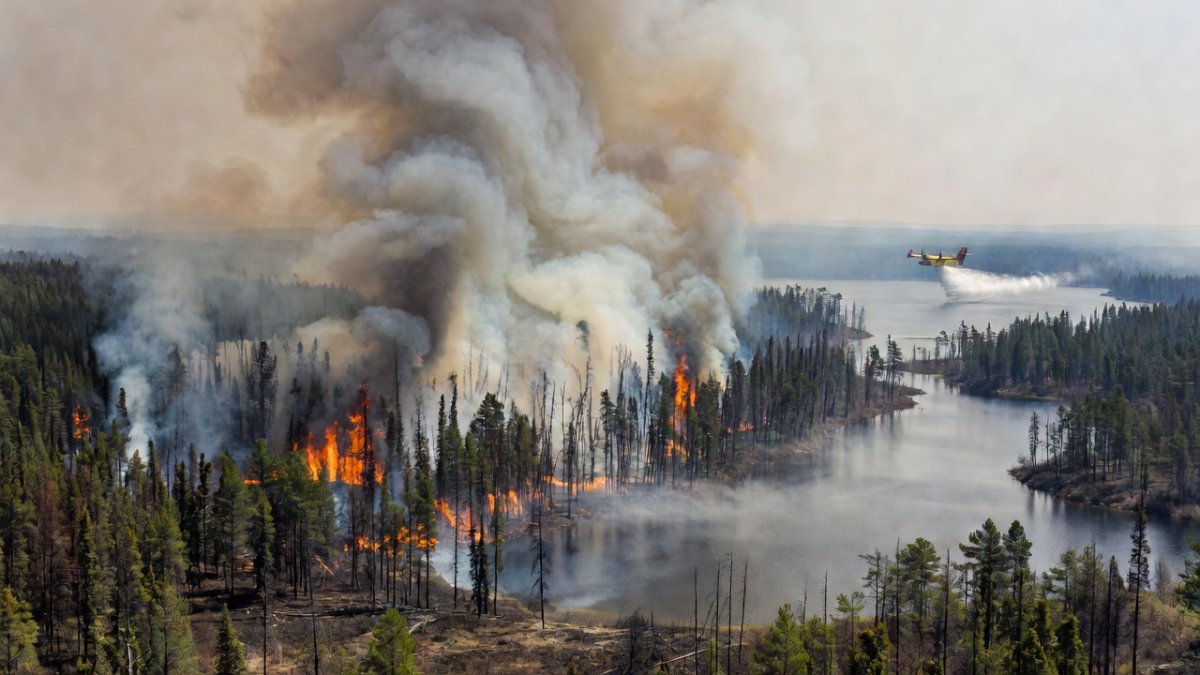
Nearly 1,000 wildfires burn across Canada, with Prime Minister Mark Carney describing the season as one of the most intense in Canadian history, while roughly 2,000 people have been evacuated from 13 communities, predominantly First Nations.
The federal government has allocated $316 million over five years for national aerial firefighting surge capacity, highlighting ongoing federal-provincial coordination challenges in public safety and emergency response.
The federal government’s $316 million five-year aerial firefighting fund offers some relief through shared aircraft and training, yet questions persist about whether the annual allocation of roughly $63 million suffices for nationwide demands. Experts argue the amount falls short of covering expanded fleet maintenance, rapid deployment logistics, and integration with provincial operations, particularly when Indigenous nations must often supplement gaps with their own limited revenues. Without increased baseline funding, these shortfalls risk recurring delays that disproportionately affect remote First Nations lacking independent firefighting infrastructure.
Disproportionate Impact on Indigenous Communities Examined
Professor Nicole Redvers of Western University noted that 80 per cent of Indigenous communities are located in fire-susceptible areas, linking the disproportionate impact to proximity to traditional territories and the need for renewed focus on Truth and Reconciliation commitments.
These realities connect directly to Canadian values of honouring Indigenous relationships with the land. Approximately 80 percent of Indigenous communities sit within fire-susceptible boreal zones, placing them at the forefront of Canada’s escalating wildfire crisis. Nicole Redvers’ research on climate adaptation planning emphasises that many of these nations lack dedicated resources for proactive measures such as fuel management and early-warning systems, leaving them reliant on reactive evacuations that disrupt education, health care, and cultural continuity. The statistic of more than 1,000 wildfires burning across Canada this season reflects a sharp rise tied directly to warming temperatures and prolonged drought conditions.
Prime Minister Carney has publicly linked these trends to the accelerating effects of climate change, calling for coordinated national strategies that prioritise Indigenous-led planning. Such approaches could integrate traditional ecological knowledge with modern forecasting to reduce future losses, yet implementation remains uneven. Without accelerated investment in adaptation and emissions reduction, the intersection of climate-driven fires and underfunded Indigenous communities threatens to deepen existing disparities in safety and recovery across the country.
By Alex Thompson, Staff WriterThis article was produced with AI-assisted research and editorial support. Reporting is based on sources cited in the article.
What's Your Reaction?
 Like
0
Like
0
 Dislike
0
Dislike
0
 Love
0
Love
0
 Funny
0
Funny
0
 Wow
0
Wow
0
 Sad
0
Sad
0
 Angry
0
Angry
0

Canada Correspondent at Global1.News. Based in Toronto, covering Canadian politics, energy, trade, and US-Canada relations. Provides the Canadian perspective on North American and global affairs.












Comments (0)