
Israel Dairy Crisis: Cottage Shortage Now Hits White Cheese
Shoppers walking into supermarkets across Israel this week have been met with an unfamiliar and increasingly frustrating sight. The refrigerated shelves that once held neat rows of cottage cheese and white cheese tubs now sit half-empty or filled with stopgap alternatives like labneh and sour cream. What began as a nagging shortage of one staple dairy product has spilled over into another, leaving families from Tel Aviv to the periphery scrambling to complete basic grocery lists.
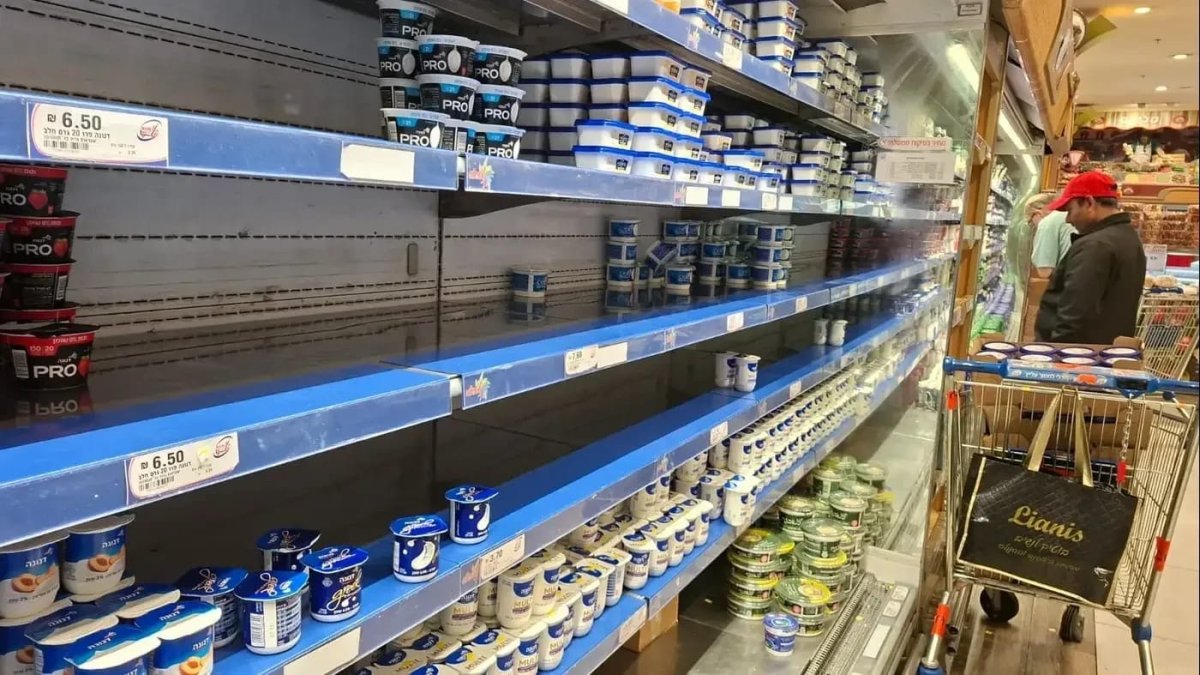
Shoppers walking into supermarkets across Israel this week have been met with an unfamiliar and increasingly frustrating sight. The refrigerated shelves that once held neat rows of cottage cheese and white cheese tubs now sit half-empty or filled with stopgap alternatives like labneh and sour cream. What began as a nagging shortage of one staple dairy product has spilled over into another, leaving families from Tel Aviv to the periphery scrambling to complete basic grocery lists. In a country where white cheese is a daily fixture on breakfast tables and in school lunches, the empty shelves are more than an inconvenience. They are a visible reminder of how fragile even the most established supply chains can become when technology falters and external pressures mount.
Empty Shelves and Frustrated Shoppers
In recent days the shortage has become impossible to ignore. Customers entering major retail chains discovered that the familiar plastic tubs of cottage cheese and white cheese had largely vanished. In their place sat packages of labneh, sour cream, and other dairy items pressed into service to fill the void. One frustrated consumer described visiting branches of three different chains in a single neighborhood and finding not a single tub of white cheese. “I was at branches of three different chains we have in the neighborhood,” the shopper told local media, “and not a single one of them had even one tub of white cheese.” The complaint echoes across social media and neighborhood WhatsApp groups, where parents trade tips on which Shufersal or other supermarket still has stock and which has already sold out by mid-morning.
The shortage is particularly acute in peripheral areas, where deliveries have always been thinner. Retailers report ordering ten crates and receiving barely half a crate; in some outlying towns a single tub is all that arrives. For households that rely on these affordable, protein-rich staples, the disruption forces last-minute menu changes and higher spending on substitutes. Cottage cheese has been scarce for weeks, but the sudden expansion into white cheese has turned a simmering annoyance into a full-blown consumer headache that touches daily life from kibbutz dining halls to urban apartment kitchens.
The Alon Tavor Warehouse Breakdown
At the heart of the crisis sits Tnuva’s cottage cheese production plant in Alon Tavor. The dairy itself continues to produce and package product without major interruption. The bottleneck is downstream, inside the automated warehouse that is supposed to move finished pallets onto distribution trucks. A computer malfunction in the warehouse management system has left large volumes of ready-to-ship cottage cheese stranded. The cheese is made, sealed, and sitting in the facility, yet a significant portion never reaches the loading docks.
Disruptions in the automated system have now stretched for more than two months. The software and robotics that orchestrate pallet movement and truck loading are operating far below capacity. Tnuva staff have resorted to manual workarounds, physically directing some flows by hand. Those stopgaps keep a trickle of product moving but cannot restore normal throughput. As a result, retailers across the country receive only a fraction of their ordered volumes, and the shortfall compounds week after week.
Dematic Technicians and the Limits of Remote Support
The warehouse automation was supplied by the German company Dematic, a global specialist in such systems. Technicians from Dematic did travel to Israel recently, but their scheduled visit was for maintenance at an Osem plant, not Tnuva. The two sites require different skill sets and different teams. A planned Dematic visit to the Alon Tavor facility during Operation Lion’s Roar was canceled because of the security situation. The next on-site window is now months away.
In the meantime Dematic personnel are attempting to guide Tnuva’s local teams through phone calls and Zoom sessions. Remote diagnostics can identify certain software glitches, yet they cannot replace hands-on calibration of sensors, conveyors, and robotic arms. The hybrid approach has produced only partial improvements. Israeli engineers on the ground are doing their best with limited tools, but the complexity of a fully automated high-bay warehouse means that many faults simply cannot be resolved from abroad. The episode underscores how dependent modern Israeli food logistics have become on specialized foreign expertise that cannot always be summoned at short notice.
How One Shortage Feeds Another
Food market sources explain that the white cheese shortage is a direct consequence of the cottage cheese bottleneck. When cottage cheese volumes collapse, production and packaging lines are sometimes redirected, and retail allocations are reshuffled. One product begins to cannibalize the other. Retailers who once received steady mixed pallets now face unpredictable deliveries of both items. The result is a cascading shortage that spreads across the dairy case.
Because Tnuva is the dominant player in white cheese, any disruption at Alon Tavor immediately ripples through the national supply. Strauss, which holds roughly 30 percent of the white cheese market, has increased its own output, yet the combined volumes still fall short of current demand. Smaller dairies lack the scale to close the gap quickly. The domino effect is visible in real time: empty cottage cheese shelves one week, empty white cheese shelves the next, and growing pressure on every alternative product that can be substituted.
Demand That Will Not Wait
Compounding the production snag is a noticeable rise in consumption. Since the beginning of the year, demand for dairy products has climbed by about 4 percent. One contributing factor is the sharp drop in overseas travel; fewer Israelis vacationing abroad means more breakfasts and snacks eaten at home. The security situation has kept families closer to their kitchens, and dairy staples have absorbed much of that extra appetite.
High demand collided with already thin inventories after the Shavuot holiday, a traditional peak period for cheese consumption. Dairies say the combination of elevated baseline demand and the post-holiday stock drawdown has made it nearly impossible to rebuild buffers. Every crate that fails to leave Alon Tavor is a crate that cannot replenish supermarket back rooms already running on fumes. The market is chasing a moving target, and the automated warehouse failure has removed the very flexibility needed to catch up.
Tnuva, Strauss, and the Shape of the Market
Israel’s white cheese market is highly concentrated. Tnuva remains the largest producer, while Strauss accounts for approximately 30 percent of sales. Together the two companies supply the overwhelming majority of the white cheese found in Shufersal, other supermarket chains, and smaller groceries. Both firms state that white cheese production and supply lines are operating normally and have even been boosted to meet the surge in orders. Yet the consumer experience on the ground tells a different story: shelves remain bare in many locations.
The discrepancy highlights the difference between factory-gate output and last-mile availability. Even if Strauss has ramped up, its additional volume cannot fully offset Tnuva’s dispatch problems. Retail buyers report that allocations continue to fall short of orders, particularly outside the main metropolitan centers. The market structure that once delivered reliable abundance has become a single point of failure. When the largest player’s warehouse stumbles, the entire category feels the shock.
Questions Over Official Response
So far there has been little public sign of coordinated government intervention. The Ministry of Economy and the Israel Innovation Authority have long promoted the modernization of food logistics, including automated warehouses, yet the current episode has not produced visible emergency measures. No temporary import relaxations or special distribution task forces have been announced in recent days. Regulators appear to be treating the matter as a private commercial glitch rather than a systemic food-supply issue.
That hands-off stance is drawing quiet criticism from retail executives and consumer advocates. In a small country where a handful of plants serve the entire population, a two-month disruption at a single automated facility quickly becomes a national concern. The absence of rapid technical assistance or contingency planning leaves citizens to absorb the shortage through empty shelves and higher prices for substitutes. For an economy that prides itself on technological resilience, the slow response raises uncomfortable questions about preparedness.
Food Security in a High-Tech Nation
The dairy crisis arrives at a moment when Israelis are already attuned to supply-chain vulnerabilities. Wartime disruptions, port congestion, and labor shortages have tested the food system repeatedly. An automated warehouse that cannot dispatch pallets adds a new and distinctly modern risk: over-reliance on complex systems whose maintenance depends on foreign specialists who may be unable to enter the country during security emergencies.
Alon Tavor is not an isolated case. Across the Israeli food sector, companies have invested heavily in robotics and warehouse software to cut costs and improve traceability. Those investments deliver efficiency in normal times. When they fail, the same concentration of technology becomes a chokepoint. The cottage cheese and white cheese shortages demonstrate that food security today is as much about software patches and technician visas as it is about milk quotas and pastureland. Daily life—school sandwiches, Friday breakfasts, hospital trays—depends on systems that few consumers ever see until they stop working.
Economically, the episode carries broader implications. Persistent shortages erode consumer confidence and push shoppers toward more expensive imported alternatives when they can be found. Smaller retailers in the periphery lose sales and goodwill. The dairy farmers who supply Tnuva and Strauss face uncertain offtake even as their cows continue to produce. In an inflation-sensitive environment, any upward pressure on staple food prices quickly becomes a household budget issue and a political talking point.
What Happens Next
Resolution hinges on two tracks. In the short term, Tnuva must continue manual workarounds and remote troubleshooting with Dematic while maximizing every available dispatch window. Strauss and smaller dairies will keep elevating output, yet their capacity has limits. Retail chains such as Shufersal are already adjusting planograms, giving more shelf space to labneh, yogurt cheeses, and other substitutes in an effort to keep the dairy aisle from looking barren.
Looking further ahead, the next scheduled Dematic visit remains months away. Until specialized technicians can work on-site at Alon Tavor, full restoration of automated throughput is unlikely. Industry observers expect the cottage cheese and white cheese shortages to ease only gradually, with intermittent restocking rather than a sudden return to normal. Consumers should brace for several more weeks of hunting across multiple stores or settling for alternatives.
The deeper lesson is already clear. Israel’s food system has become tightly coupled to advanced automation and global service networks. When those networks are interrupted by security constraints or simple scheduling conflicts, everyday staples disappear from neighborhood shelves. Strengthening domestic technical capacity, building redundant dispatch methods, and creating faster emergency protocols for foreign experts will determine whether the next warehouse glitch remains a local headache or again becomes a national dairy crisis. For now, Israeli families continue to open refrigerator doors and find that the familiar tubs of white cheese are still missing.
By Hannah Berg, Staff WriterThis article was produced with AI-assisted research and editorial support. Reporting is based on sources cited in the article.
What's Your Reaction?
 Like
0
Like
0
 Dislike
0
Dislike
0
 Love
0
Love
0
 Funny
0
Funny
0
 Wow
0
Wow
0
 Sad
0
Sad
0
 Angry
0
Angry
0

Israel Correspondent at Global1.News. Based in Tel Aviv, covering Israeli politics, security, technology, and society. Provides balanced, deeply-sourced reporting on one of the most closely-watched regions in the world.















Comments (0)