
IAI Names Former IDF Brig.-Gen. Guy Barlev as New CEO, Pending Government Approval
IAI names Brig.-Gen. (Ret.) Guy Barlev as CEO to succeed Boaz Levy. The nomination requires government approval for the state-owned defense manufacturer.
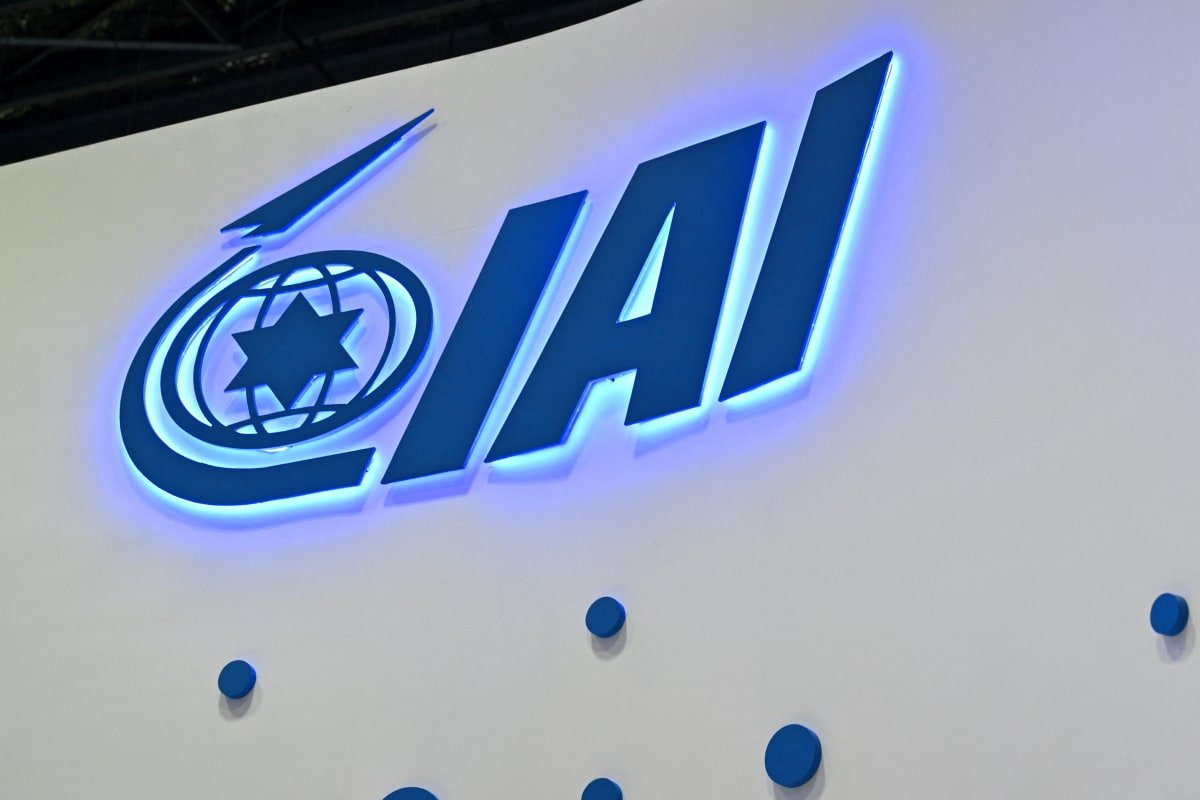
IAI Nominates Guy Barlev as Next Chief Executive
Israel Aerospace Industries has named Brig.-Gen. (Ret.) Guy Barlev as its next chief executive officer, a move that underscores continuity at the country's largest aerospace and defense manufacturer while signaling a carefully managed leadership handoff. The nomination, reported this week, remains subject to formal government approval, a standard requirement for senior appointments at the state-owned enterprise. Barlev, who has served as executive vice president since 2020 and heads the Systems, Missiles and Space Group, is positioned to succeed Boaz Levy, who is transitioning to chairman of the board after roughly five and a half years as president and CEO.
The announcement lands at a moment when Israel's defense-industrial base continues to balance domestic security demands with export-driven growth. From production floors in Lod and engineering centers around the center of the country to integration work tied to national missile-defense architecture, IAI's trajectory remains tightly linked to the broader Israeli defense ecosystem, supply-chain resilience, and the daily operational needs of the Israel Defense Forces.
Leadership Transition from Boaz Levy to the Board
Boaz Levy has led Israel Aerospace Industries as president and CEO since 2020–2021, a tenure spanning approximately five and a half years. Under the planned transition, Levy will move into the role of chairman of the board of directors. The shift is designed to preserve institutional knowledge at the top of an organization that sits at the intersection of advanced aerospace programs, missile defense, and space systems.
For a company of IAI's scale and strategic weight, orderly succession matters. Levy's move to the chairmanship keeps an experienced hand involved in oversight while opening the chief executive role to an internal candidate already steeped in the firm's most technologically intensive divisions. In the Israeli context, where defense manufacturers operate under constant scrutiny from security establishments, government ministries, and international partners, continuity of leadership is often as important as fresh operational focus.
Barlev's Path from IDF Service to IAI Executive Ranks
Guy Barlev brings a dual profile that is familiar in Israel's defense industry: senior military command experience followed by deep immersion in industrial program leadership. A retired Israel Defense Forces brigadier general, Barlev joined the executive ranks at IAI and has served as executive vice president since 2020. In that capacity he has led the Systems, Missiles and Space Group, one of the company's core divisions responsible for complex weapons systems, missile programs, and space-related activity.
That portfolio places him at the center of IAI's work on layered air and missile defense, advanced sensors, and multi-domain systems that feed both IDF requirements and export customers. His recent public association with announcements around the HYPNOSIS counter-UAS effort and related GPS anti-jamming and disruption technologies has kept him visible in discussions about emerging aerial threats—an issue that has only grown more acute across the Middle East and in global conflict zones.
The combination of IDF senior rank and multi-year responsibility for missiles and space systems is precisely the resumé Israeli defense boards and government overseers tend to favor when selecting leaders for flagship state-owned manufacturers.
Israel Aerospace Industries at a Glance
IAI is Israel's largest aerospace and defense manufacturer and remains a state-owned enterprise. It employs approximately 14,000 people, making it one of the most significant industrial employers in the country. Its activities span military aircraft modernization, unmanned systems, missiles, space platforms, radar and electronic systems, and a range of naval and land solutions.
Headquartered and heavily rooted in the center of the country, with major facilities historically associated with the Lod area and operations touching Haifa, Yehud, and the broader Tel Aviv metropolitan industrial belt, IAI forms a backbone of Israel's high-tech defense manufacturing base. Its workforce includes engineers, technicians, program managers, and production specialists whose skills are continually tested by rapid operational feedback from the IDF and by the exacting standards of foreign militaries.
Because it is state-owned, strategic decisions at IAI—including the appointment of a new CEO—carry implications that extend beyond ordinary corporate governance into national industrial policy, export controls, and long-term force design.
Recent Innovations: ELLYON, HYPNOSIS, DIAMOND, and Arrow 4
In recent periods IAI has highlighted several systems that illustrate the breadth of its current portfolio. ELLYON is presented as a multi-mission aircraft concept combining electronic attack capabilities with intelligence, surveillance, target acquisition, and reconnaissance functions. The platform reflects the growing demand for aircraft that can both collect information and actively shape the electromagnetic environment—an operational need sharpened by regional conflicts and by the proliferation of advanced air defenses.
HYPNOSIS addresses the counter-unmanned aerial systems challenge through GPS disruption and related techniques. As low-cost drones and loitering munitions have become fixtures of modern battlefields, including along Israel's borders and in neighboring theaters, the ability to deny or degrade satellite navigation for hostile platforms has moved from niche capability to core defensive requirement. Barlev has been associated with recent IAI communications on HYPNOSIS and GPS anti-jamming technology, underscoring the priority the Systems, Missiles and Space Group places on this mission set.
DIAMOND is described as a hybrid modular naval warfare solution, pointing to IAI's continued investment in maritime systems at a time when Israel's naval forces and coastal defense architecture face multi-axis threats. Modular, hybrid approaches allow faster adaptation to different vessel classes and mission profiles—an attractive feature for both domestic use and export customers operating mixed fleets.
Arrow 4 represents the next evolution in the Arrow family of missile-defense interceptors, a cornerstone of Israel's multi-layer air and missile defense array developed in close cooperation with Israeli and international partners. Progress on Arrow 4 keeps IAI at the center of strategic defense programs that protect population centers from Jerusalem to Tel Aviv and Haifa and that form part of the wider architecture watched closely by allies.
Government Approval and the State-Owned Enterprise Framework
Because Israel Aerospace Industries is a state-owned company, the nomination of a new chief executive requires formal approval from the Israeli government. This process typically involves relevant ministries, including those overseeing defense, economy, and state holdings, and is intended to ensure that leadership of critical national industries aligns with security, industrial, and fiscal policy.
The approval step is not a mere formality. It reflects the reality that IAI's order book, technology roadmap, and international partnerships intersect with classified programs, export licensing, and long-term force modernization plans. Officials in Jerusalem and at the Ministry of Defense maintain a direct interest in who steers the company. Until approval is secured, Barlev's appointment remains a nomination rather than a completed transition.
Similar governance mechanisms apply across other major state-linked defense and infrastructure entities, reinforcing a culture of dual accountability—to commercial performance on one hand and to national security priorities on the other.
IAI's Place in Israel's Defense Ecosystem and Economy
IAI does not operate in isolation. It sits alongside Rafael Advanced Defense Systems, Elbit Systems, and specialized players such as Israel Shipyards within a dense defense-industrial network that supplies the IDF while generating substantial export revenue. That network supports high-skill employment, sustains supplier chains of small and medium enterprises across the country, and feeds dual-use technologies into Israel's broader innovation economy.
Daily life in Israel is shaped in part by the reliability of the systems these companies produce—from rocket and missile defenses that have become familiar to residents of the south and center, to intelligence and surveillance tools that inform operational decisions. IAI's approximately 14,000 employees, together with the wider contractor base, represent a strategic human-capital asset. Disruptions to production or leadership uncertainty can ripple into delivery schedules for critical capabilities.
Economically, aerospace and defense manufacturing remains one of the sectors in which Israel maintains clear comparative advantage. The industry's performance influences foreign-currency earnings, technology spin-offs, and the attractiveness of Israel as a partner for international co-development programs.
Competition Among Israeli Defense Firms
Within Israel, IAI competes and collaborates with Rafael, Elbit Systems, and Israel Shipyards across overlapping domains. Rafael is closely identified with air-defense interceptors, precision munitions, and advanced electro-optics. Elbit Systems has built a broad portfolio spanning airborne systems, land vehicles, soldier systems, and electronic warfare. Israel Shipyards focuses on naval platforms and related maritime solutions. IAI's own strengths in large aircraft programs, space, heavy missiles, and integrated systems mean the firms often meet as both rivals for contracts and teammates on national programs.
This competitive dynamic is generally viewed inside Israel as healthy: it drives innovation, gives the Ministry of Defense multiple sourcing options, and sharpens the offerings each company takes to export markets. At the same time, the state retains tools—through ownership stakes, regulation, and procurement policy—to encourage cooperation when programs are too large or sensitive for pure market competition.
Barlev's elevation keeps leadership of the largest player in the hands of an executive already fluent in the technical and programmatic language shared across this ecosystem.
Export Markets and International Partnerships
Export performance has long been essential to the business models of Israeli defense manufacturers, including IAI. Foreign sales help amortize research and development costs, maintain production lines between domestic orders, and deepen strategic relationships with partner nations. IAI's portfolio—ranging from missile defense and intelligence aircraft to naval and counter-UAS systems—maps onto requirements voiced by countries facing aerial, maritime, and border threats.
International partnerships also shape technology roadmaps. Cooperative programs, particularly in missile defense, have historically linked Israeli industry with major allies and have subjected systems to rigorous joint testing regimes. Maintaining credibility with those partners requires stable leadership, predictable program execution, and clear lines of authority inside the company—factors that make the CEO transition more than an internal personnel matter.
As global demand for counter-drone systems, electronic attack platforms, and layered air defense continues to rise, IAI's ability to field solutions such as HYPNOSIS, ELLYON-related capabilities, DIAMOND naval modules, and Arrow-family interceptors will influence its standing in competitive international tenders.
Significance for Israel's Aerospace and Defense Sector
The nomination of an internal candidate who already runs the Systems, Missiles and Space Group suggests the board and government stakeholders prefer evolution over abrupt change. For the wider sector, the signal is one of stability at a pivotal industrial node. Suppliers, IDF project offices, and foreign customers all watch leadership moves at IAI for clues about program priorities and investment direction.
Barlev's background aligns with the domains—missiles, space, complex systems integration—that are likely to remain central to Israeli force design in the coming years. Continuity in those areas can reduce friction during the handoff and help protect delivery timelines on programs that have little margin for delay.
At the same time, a new CEO will eventually put his own stamp on organizational structure, business development emphasis, and the balance between domestic and export focus. How that balance is struck will matter for employment across IAI sites and for the health of the surrounding industrial base.
Israel's Defense Technology Landscape in 2026
By 2026, Israel's defense technology sector continues to operate under the twin pressures of sustained operational demand and intensifying global competition. Lessons from recent multi-front confrontations have accelerated interest in counter-UAS, resilient navigation and timing, multi-mission airborne platforms, and next-generation interceptors. Companies that can move quickly from prototype to fielded capability retain an edge.
State-owned and privately held firms alike are investing in modular architectures, software-defined systems, and tighter integration between sensors and effectors. The workforce challenge—recruiting and retaining engineers who might otherwise join civilian tech firms in Tel Aviv or Herzliya—remains a constant theme. IAI's size and mission diversity give it certain advantages in offering long-horizon projects, yet it must still compete for talent with both startups and larger commercial technology employers.
Government policy, channeled through the Ministry of Defense, the Ministry of Economy, and bodies such as the Israel Innovation Authority, continues to shape incentives for dual-use research and for maintaining production surge capacity. Leadership choices at IAI feed into that larger policy conversation because the company's decisions affect national readiness and industrial depth.
What Comes Next
The immediate next step is the government approval process. Until that concludes, Boaz Levy remains the sitting president and CEO while preparing for the chairmanship, and Guy Barlev continues in his executive vice president role heading the Systems, Missiles and Space Group. Stakeholders across the defense establishment, the workforce of roughly 14,000, and international partners will watch for formal confirmation and for early indications of Barlev's priorities once he assumes the chief executive position.
For Israel's aerospace and defense community, the episode is a reminder that even at the largest manufacturers, leadership transitions are deliberate, regulated, and closely tied to national strategy. The systems now associated with IAI's recent push—ELLYON, HYPNOSIS, DIAMOND, and Arrow 4—will form part of the operational and commercial backdrop against which the new CEO's tenure will be judged.
In Lod, Jerusalem, Tel Aviv, and the industrial zones that support them, the practical test will be whether the handoff preserves momentum on programs that Israeli security planners and export customers both regard as essential.
By Hannah Berg, Staff Writer
This article was produced with AI-assisted research and editorial support. Reporting is based on sources cited in the article.
What's Your Reaction?
 Like
0
Like
0
 Dislike
0
Dislike
0
 Love
0
Love
0
 Funny
0
Funny
0
 Wow
0
Wow
0
 Sad
0
Sad
0
 Angry
0
Angry
0

Israel Correspondent at Global1.News. Based in Tel Aviv, covering Israeli politics, security, technology, and society. Provides balanced, deeply-sourced reporting on one of the most closely-watched regions in the world.













Comments (0)