
Venezuela Demands Compensation from Trinidad and Tobago Over May Oil Spill Dispute
A fresh diplomatic row has erupted between Trinidad and Tobago and Venezuela after Caracas formally demanded compensation for what it claims is a major oil spill from our waters into the Gulf of Paria. While local officials insist the May incident was minor and contained, Venezuelan authorities point to widespread damage affecting thousands of livelihoods on both sides of the border. Neighbours who share these waters are now watching closely as the dispute threatens to strain already delicate...
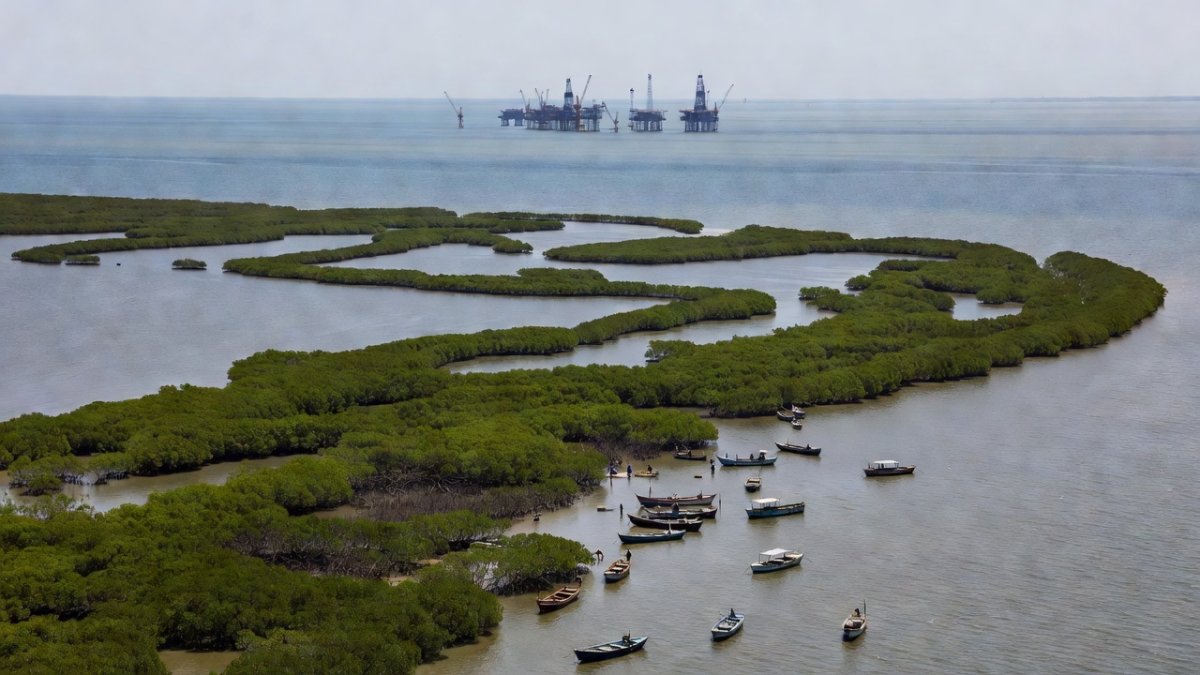
A fresh diplomatic row has erupted between Trinidad and Tobago and Venezuela after Caracas formally demanded compensation for what it claims is a major oil spill from our waters into the Gulf of Paria. While local officials insist the May incident was minor and contained, Venezuelan authorities point to widespread damage affecting thousands of livelihoods on both sides of the border. Neighbours who share these waters are now watching closely as the dispute threatens to strain already delicate relations.
Gulf of Paria Oil Spill: Venezuela Demands Compensation as Trinidad Defends 10-Barrel Response
Port of Spain, Trinidad and Tobago — Article continues with details of the dispute over the May oil spill and its cross-border impact on communities, fisheries and shared energy resources in the Gulf of Paria.
The Spill Detected in the Gulf of Paria
On the morning of May 1 2026 at 7:25 am workers at Heritage Petroleum’s main offshore field noticed oil in the water. Trinidad and Tobago’s Ministry of Energy later described the incident as a minor spill of about ten barrels that was quickly contained. Daily inspections since that day have shown no recurrence according to official statements from the ministry. Neighbouring communities in south Trinidad have been watching the situation closely because the Gulf of Paria is part of our shared waters with Venezuela and many families on both sides depend on fishing and small-scale trade.
Heritage Petroleum stands at the heart of Trinidad and Tobago’s energy story, taking over the assets once managed by Petrotrin and keeping the lights on for thousands of families across the south. The company’s offshore platforms in the Gulf of Paria represent not just barrels of oil but steady jobs for welders, boat captains and engineers who send money home to Point Fortin and La Brea every payday. When workers spotted the sheen that May morning, it was their own waters they were protecting, the same waters that have fed generations of fishermen long before any rig was ever built.
The Gulf itself is a living classroom of mangroves and mudflats where scarlet ibis still nest and crabs scuttle at low tide. These wetlands act as natural nurseries for the fish that end up on dinner tables from Icacos to Cedros, while also shielding coastal villages from storm surges. Local folks in south Trinidad often say the Gulf feels like one big backyard shared with Venezuelan neighbours; when something goes wrong out there, everybody feels the pinch in their pocket and on their plate.
Yet many residents worry that oversight has grown too thin. After years of watching production numbers slide and hearing promises of stricter checks, people in the fishing communities now question whether daily inspections are enough when the next spill could be bigger and faster than the last. They remember how quickly small leaks can turn into long-term damage to the very mangroves that keep their homes safe during the rainy season.
Venezuela’s Formal Demand for Compensation
Venezuela’s Foreign Minister Yván Gil has now written formally to Trinidad and Tobago asking for compensation. He stated that communications from Caracas have gone unanswered and that the spill caused widespread environmental damage across 1 625 square kilometres affecting twelve strategic wetland systems. More than 140 species of fish are said to have been impacted and over 500 fishermen have seen their livelihoods disrupted. In a region where the cost of living keeps rising and many households already struggle with high food prices these losses hit especially hard. Venezuelan officials are insisting that Trinidad and Tobago must take responsibility for the clean-up and restoration work.
Venezuelan Foreign Minister Yván Gil has positioned himself as a firm defender of his country’s coastal communities, using this demand to remind Caracas that environmental protection still matters even amid economic hardship. His letter taps into a longer pattern: at least three documented spills from Trinidadian waters reached Venezuelan shores between 2017 and 2023, each time leaving fishermen with fewer catches and officials scrambling for answers. Under the United Nations Convention on the Law of the Sea and existing bilateral maritime agreements, both nations are expected to cooperate on pollution response, yet clear compensation pathways remain murky and rarely tested.
The ripple effects reach beyond the two countries. CARICOM’s quiet diplomacy now faces fresh strain as member states weigh solidarity with Trinidad against the need to keep lines open with Venezuela for food and fuel. Venezuelan officials have hinted they may seek support through regional forums, turning what began as a technical dispute into a test of how small neighbours manage shared resources when trust is already low.
Trinidad and Tobago’s Position and Containment Efforts
Energy Minister Dr Roodal Moonilal has maintained that the spill was small and that containment measures worked effectively. The ministry points to the daily checks that have found no further leakage. For many people in Trinidad this quick containment is welcome news because any larger incident could have affected tourism recovery along the south-west coast and raised fears about long-term damage to mangroves that protect against flooding during the rainy season. Still the disagreement over the true size of the spill has left some residents uneasy about how future incidents might be handled.
Expert Dispute Over the Reported Volume
Venezuelan energy consultant Dr Einstein Millán Arcia a former PDVSA advisor with a PhD from Oklahoma University has challenged the ten-barrel figure. He argues that the affected area of 1 625 square kilometres would be mathematically impossible if only ten barrels had been released. Dr Millán Arcia has called on Trinidad and Tobago to pay every cent needed for environmental damage repairs including full clean-up and restoring the ecosystem’s balance. His comments have circulated widely in both countries and have prompted renewed discussion about how oil spills are measured and reported in shared waters.
Shared Resources and the Loran-Manatee Field
The Gulf of Paria is home to the Loran-Manatee field where gas reserves straddle the maritime border. Venezuela holds 73.75 percent of the field while Trinidad and Tobago owns 26.25 percent. This shared resource has long been seen as a potential area for cooperation yet the Dragon gas project remains stalled amid political tensions between the Kamla Persad-Bissessar administration and Venezuela. With Trinidad’s crude production averaging 52 000 barrels per day and natural gas output around 2.59 billion cubic feet per day in the first quarter of 2026 any disruption to joint projects adds pressure to an energy sector already facing annual declines of roughly 3.2 percent in oil and 2 percent in gas since the peaks of 2005 and 2009. The energy services sector reported a 56 percent drop in business volume during the same quarter highlighting how disputes like this one ripple through local jobs and family incomes.
The Loran-Manatee field holds enough gas to ease Trinidad’s tightening energy squeeze, yet the Dragon project stays frozen because political temperatures between the Persad-Bissessar government and Caracas remain cool. Trinidad’s crude output has slipped to around 52 000 barrels a day while gas production hovers near 2.59 billion cubic feet, numbers that translate into higher electricity bills and dearer transport for ordinary households already stretched by rising food prices. Reopening the Petrotrin refinery, long discussed as a way to create local jobs and cut import costs, now looks even more complicated if cross-border tensions keep investors away.
Every delay in these joint projects adds pressure on the energy services sector, where business volumes have already dropped sharply. Families in Point Fortin who once relied on steady rig work now watch contract after contract shrink, while industrial users pay more for fuel that used to come cheaper from shared fields. The stalled Dragon initiative therefore sits at the centre of both economic worry and diplomatic caution, reminding everyone how tightly energy, politics and daily life are woven together in these waters.
Regional Implications and the Need for Dialogue
This is not the first time an oil spill from Trinidad and Tobago has reached Venezuelan waters and the latest demand for compensation has revived calls for stronger regional cooperation through CARICOM mechanisms. Fishermen in both countries share the same waters and the same worries about declining catches and rising fuel costs. Environmental damage in the wetlands also threatens the broader Caribbean tourism recovery that many islands are still working to strengthen after the pandemic. As hurricane season approaches communities on both sides of the Gulf are reminded how fragile small-island ecosystems remain in the face of climate change and industrial activity. Neighbours in Trinidad and Venezuela alike are hoping that open talks can lead to practical steps for protecting the Gulf and supporting the livelihoods that depend on it.
CARICOM has mediated fisheries and trade spats before, but an environmental claim of this scale would push the organisation to develop clearer rules for joint monitoring and rapid response across member waters. For the average Trinidadian the stakes show up at the pump and in the grocery aisle, where any prolonged dispute risks nudging fuel and food prices higher at a time when household budgets are already thin. Across the wider Caribbean, small-island nations are watching to see whether practical cooperation can replace finger-pointing when mangroves and livelihoods cross invisible borders.
As the 2026 hurricane season gathers strength, the same wetlands now under discussion become even more vital for buffering storm surges that could reach communities on both sides of the Gulf. Fishermen and families alike are calling for steady dialogue that puts protection of the shared sea above short-term blame, because in the end the Gulf of Paria belongs to all who depend on it for their next meal and their children’s future.
By Sharon Sahatoo, Staff WriterThis article was produced with AI-assisted research and editorial support. Reporting is based on sources cited in the article.
What's Your Reaction?
 Like
0
Like
0
 Dislike
0
Dislike
0
 Love
0
Love
0
 Funny
0
Funny
0
 Wow
0
Wow
0
 Sad
0
Sad
0
 Angry
0
Angry
0

Caribbean Correspondent at Global1.News. Based in Port of Spain, Trinidad, covering Caribbean politics, economy, energy, climate, and culture. Amplifying the voices and stories of the Caribbean region.











Comments (0)