
Lebanon Deploys Military in Southern Pilot Zone After Israel Deal
The Lebanese army began moving units into the southern village of Zawtar al-Garhbiya on Tuesday, marking the start of operations in one of three designated pilot zones under a U.S.-backed framework agreement with Israel. This step occurs while President Joseph Aoun conducts meetings in Washington, reflecting efforts to shift security responsibilities in areas long influenced by Hezbollah.
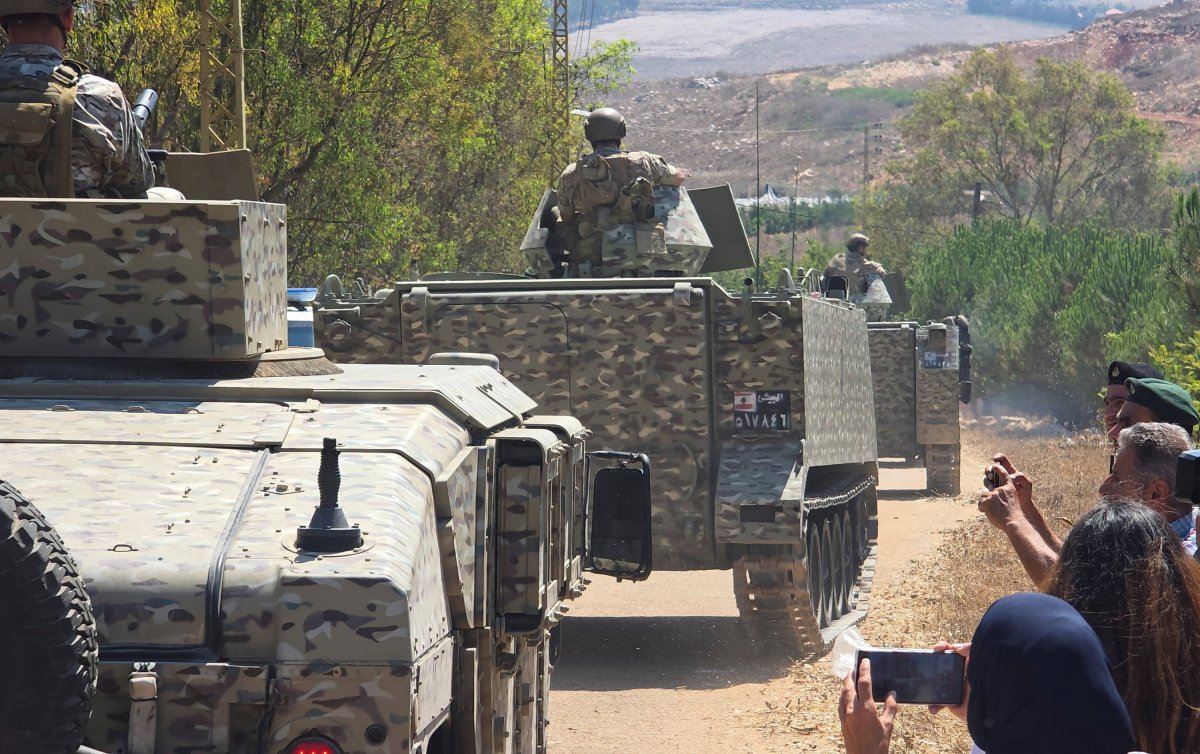
The Deployment to Zawtar al-Garhbiya
Military vehicles entered Zawtar al-Garhbiya in the Nabatieh region on Tuesday morning, according to an army statement. The village lies on the edge of territory Israel has referred to as a security zone. Lebanese forces already maintain positions in the other two pilot zones of Froun and Srifa. Israeli troops had reached the outskirts of Zawtar al-Garhbiya but maintain no presence in the remaining villages. The U.S. State Department confirmed on Monday that the Lebanese army had begun ensuring security across these locations.
The deployment echoes earlier efforts by UNIFIL, established in 1978 following Israel's initial incursion into southern Lebanon, to create buffers between conflicting parties. Yet the current pilot zones operate outside that multilateral framework, relying instead on bilateral U.S. guarantees that sidestep the veto power of permanent Security Council members sympathetic to Hezbollah.
Lebanon's sectarian power-sharing system complicates army cohesion in these areas, as Maronite Christian President Joseph Aoun must balance Druze, Shia, and Sunni sensitivities while the force attempts to project unified authority. Economic collapse since 2019 has left the military chronically underfunded, raising questions about its ability to sustain prolonged deployments without external subsidies.
Details of the U.S.-Backed Framework Agreement
The framework signed last month outlines Israel's gradual withdrawal from Lebanese territory and the transfer of security duties in the south to the Lebanese army. The agreement seeks Hezbollah disarmament in the designated zones. No timetable exists for full Israeli withdrawal. The Lebanese military statement and U.S. announcement emphasize incremental steps rather than immediate comprehensive enforcement. This cautious approach aligns with the absence of fixed deadlines in the text of the framework.
UN Security Council Resolution 1701, which ended the 2006 Lebanon War, envisioned a similar handover but was never fully implemented because Hezbollah retained its arsenal south of the Litani River. Today's framework revives that language while deliberately avoiding any enforcement mechanism that could trigger renewed parliamentary deadlock in Beirut.
Israeli doctrine still treats the northern border as a core strategic priority, recalling the 1982-2000 occupation when a self-declared security zone failed to prevent cross-border attacks. The shift toward precision-strike deterrence now allows Israel to withdraw from ground positions without ceding the ability to respond rapidly if the Lebanese army falters.
President Aoun's Diplomatic Engagements in Washington
President Joseph Aoun's presence in Washington coincides with the deployment announcement. U.S. officials described the pilot-zone initiative as an opportunity for the Lebanese state to reassert control in areas historically dominated by Hezbollah. The timing underscores American diplomatic engagement aimed at supporting Lebanese institutions along the border with Israel. Such visits typically focus on security assistance and coordination rather than rapid operational changes.
Aoun's Maronite Christian role within the sectarian system gives him nominal command authority, yet real power remains fragmented among militia-linked factions that have blocked army expansion for years. Washington views his visit as a chance to bypass this paralysis through targeted aid rather than broad institutional reform.
The 2020 Beirut port explosion exposed the Lebanese state's diminished capacity, destroying critical infrastructure and accelerating economic freefall. U.S. planners now see southern deployments as a low-risk test of whether limited external support can restore minimal state functions before broader reconstruction becomes feasible.
Hezbollah's Rejection and Its Implications
Hezbollah has repeatedly rejected the framework and stated it will not disarm. The group maintains both political and military structures within Lebanon. Its refusal creates friction with the Lebanese army's expanded role in the pilot zones. Hezbollah originally launched rocket attacks on Israel in March in support of Iran, contributing to the subsequent Israeli invasion and continued occupation of select areas. This stance reflects the organization's prioritization of its military capabilities over integration into state-controlled security arrangements.
The group's stance is rooted in the 2023-2026 Iran-Israel shadow war, during which Hezbollah served as Tehran's forward deterrent. Any perceived disarmament in the south would weaken Iran's ability to threaten Israel's northern communities without direct Iranian involvement.
Lebanese political dynamics further constrain Hezbollah: parliamentary deadlock has prevented formation of governments capable of enforcing army primacy, leaving the group free to operate parallel command structures that the pilot zones only marginally challenge.
International Reactions and Diplomatic Implications
European capitals have welcomed the pilot zones as a pragmatic alternative to the stalled implementation of Resolution 1701, though they remain wary of repeating the 2006 experience when cease-fire monitoring collapsed within months. France, the traditional lead on Lebanon policy, has signaled willingness to increase UNIFIL funding if the zones expand.
Regional actors view the U.S. framework as an attempt to isolate Iranian influence without triggering another full-scale war. Gulf states have quietly offered financial incentives for Lebanese army success, linking any future reconstruction aid to measurable reductions in Hezbollah's southern footprint.
Diplomatic fallout centers on whether the precedent of pilot zones can be replicated along the Syrian border, where similar proxy dynamics persist. Success here could reshape deterrence calculations across the Levant.
Israeli Military Adjustments and Border Security
The Israeli military announced it would adjust its force posture in one of the pilot areas. Israeli forces invaded Lebanon during the recent conflict with Hezbollah and have retained control over parts of the country despite the cease-fire. The pilot-zone process addresses only limited segments of the border region at this stage. Israeli calculations center on maintaining defensive positions while monitoring Lebanese army implementation in the designated villages.
Israel's northern border doctrine has evolved from static occupation to calibrated withdrawals backed by overwhelming air and artillery superiority. The 1982-2000 security zone taught planners that ground presence alone cannot neutralize threats without local partner forces willing to confront non-state actors.
Precision-strike capabilities now allow Israel to accept limited Lebanese army deployments while retaining the option of rapid re-intervention should Hezbollah re-infiltrate the zones, a flexibility absent during earlier occupations.
Regional Dynamics Involving Iran and Its Proxies
The developments connect directly to Iran's network of allied groups operating across Lebanon, Syria, and other theaters. Hezbollah functions as a key element within this structure, linking local border issues to wider Iran-Israel confrontations. The U.S.-backed framework attempts to limit Hezbollah's operational freedom near the Israeli-Lebanese frontier. Iranian strategic interests favor preserving proxy influence to deter Israeli actions and shape outcomes in southern Lebanon without direct confrontation.
The 2023-2026 shadow war demonstrated Iran's preference for calibrated escalation through proxies rather than direct conflict. Any erosion of Hezbollah's southern positions would force Tehran to recalibrate its entire forward-defense architecture stretching from Iraq to the Mediterranean.
Lebanon's economic collapse since 2019 has made Iranian financial support for Hezbollah even more critical, turning the pilot zones into a test of whether state institutions can compete with non-state patronage networks amid fiscal ruin.
Strategic Calculus for All Parties Involved
Lebanese authorities seek to strengthen state sovereignty and reduce parallel armed structures in the south. Israel prioritizes security buffers and gradual risk reduction along its northern border. The United States pursues diplomatic tools to weaken Iranian proxy reach while encouraging Lebanese institutional capacity. Hezbollah weighs retention of its military assets against potential political costs within Lebanon. These calculations intersect with broader great-power competition in the Middle East, where U.S. engagement competes with Iranian efforts to sustain influence through non-state actors.
The Maronite presidency's traditional role as arbiter of Lebanese sovereignty gives Aoun symbolic leverage, yet sectarian vetoes continue to limit his freedom to confront Hezbollah directly. U.S. assistance is therefore calibrated to avoid provoking parliamentary paralysis that could halt even modest progress.
Israeli planners balance the desire for a stable northern border against the risk that premature withdrawal revives the security dilemmas of the 1982-2000 period, when rapid exits invited renewed attacks.
Prospects for Long-Term Stability in Southern Lebanon
Implementation remains limited to the three pilot zones, with no indication of accelerated expansion. The Lebanese army's presence in Froun and Srifa predates the latest deployment, suggesting phased rather than simultaneous progress. Sustained stability depends on continued coordination among Lebanese institutions, Israeli security requirements, and U.S. diplomatic support. Hezbollah's ongoing rejection introduces persistent uncertainty into the border dynamics. Regional actors will continue to assess how developments in these zones affect the larger Iran-Israel confrontation and Lebanese internal balance.
Historical precedent from UNIFIL's nearly five-decade presence suggests that external monitoring alone cannot substitute for genuine Lebanese state capacity weakened by the 2020 port explosion and subsequent economic meltdown.
Long-term success hinges on whether the pilot zones can gradually expand without reigniting the cycle of occupation and resistance that has defined the border since 1978, a prospect that remains distant given Hezbollah's entrenched position and Iran's regional priorities.
By Malik Hassan, Staff Writer.This article was produced with AI-assisted research and editorial support. Reporting is based on sources cited in the article.
What's Your Reaction?
 Like
0
Like
0
 Dislike
0
Dislike
0
 Love
0
Love
0
 Funny
0
Funny
0
 Wow
0
Wow
0
 Sad
0
Sad
0
 Angry
0
Angry
0

Middle East Correspondent at Global1.News. Based in Beirut, covering politics, conflict, energy, and society across the Middle East. Brings context and depth to a region often reduced to headlines.













Comments (0)