
Trump: Netanyahu Won't Be Arrested in US Despite NYC Mayor's ICC Threat
In a dramatic escalation of international tensions, President Donald Trump has vowed to shield Israeli Prime Minister Benjamin Netanyahu from any arrest attempt during his upcoming visit to New York, directly countering threats from the city’s mayor to enforce an ICC warrant.
In a dramatic escalation of international tensions, President Donald Trump has vowed to shield Israeli Prime Minister Benjamin Netanyahu from any arrest attempt during his upcoming visit to New York, directly countering threats from the city’s mayor to enforce an ICC warrant. This assurance, highlighted in a recent i24NEWS video report on The Rundown with Benita Levin featuring Ambassador Danny Danon, underscores the robust U.S.-Israel alliance amid ongoing regional conflicts. The development sets the stage for a high-stakes UN General Assembly session in 2026 where federal authority will clash with local political posturing.
Trump: Netanyahu Won't Be Arrested in US Despite NYC Mayor's ICC Threat
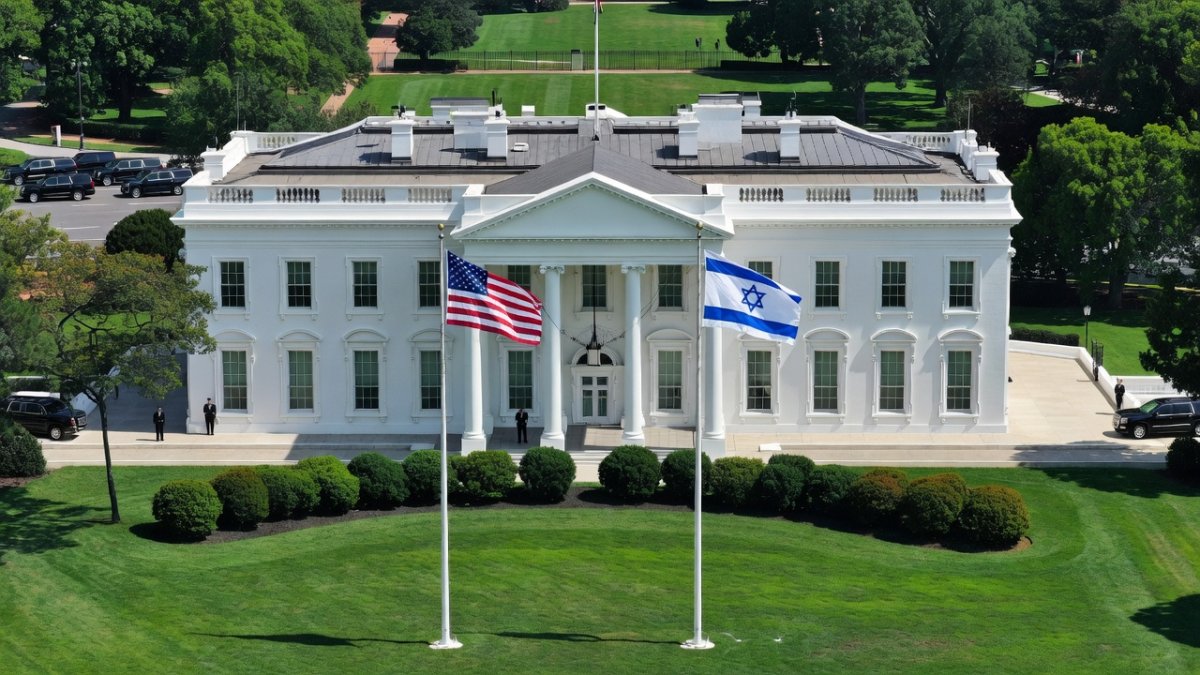
Trump’s Direct Response to the Threat
President Trump’s Truth Social post on the matter stated explicitly that “Netanyahu will not be arrested, in any way, shape, or form, while in the United States of America,” underscoring that the protection stems directly from Netanyahu’s leadership in confronting the Islamic Republic of Iran. This declaration followed Mayor Zohran Mamdani’s comments to The New York Times that his administration would review whether New York City police could act on the ICC warrant during the September 2026 UN General Assembly. The post came amid heightened coordination between Washington and Jerusalem on countering Iranian proxies, with Trump highlighting Netanyahu’s role in operations that have degraded Hezbollah and Hamas capabilities since October 2023. Analysts in Jerusalem noted that the statement reinforces the personal rapport between the two leaders, built during Trump’s first term when he moved the U.S. Embassy to Jerusalem and recognized Israeli sovereignty over the Golan Heights.
The February 2025 executive order signed by Trump imposed targeted sanctions on ICC personnel involved in the Netanyahu and Gallant warrants, freezing assets and barring entry to the United States for court officials. Secretary of State Marco Rubio reinforced this stance by pledging to “systematically disable” the court’s overreach, citing its repeated targeting of democratic allies while ignoring atrocities in China, Russia, and Syria. The legal rationale rests on the United States never having ratified the Rome Statute, meaning the ICC lacks jurisdiction over non-member states such as Israel and America; this principle was affirmed in prior U.S. legislation like the American Service-Members’ Protection Act. Israeli diplomats in Washington viewed the combined measures as a clear deterrent against any municipal interference during the 2026 visit.
Forward-looking implications include strengthened bilateral intelligence sharing between the CIA, Mossad, and Shin Bet ahead of potential Iranian escalations, with the executive order serving as a template for future protections. The episode also signals to other progressive U.S. mayors that federal authority will preempt local attempts to insert themselves into foreign policy, preserving the UN General Assembly as a secure venue for Israeli leaders. Jerusalem officials expect this framework to extend through 2028, allowing uninterrupted strategic planning against regional threats without distraction from ICC-related theater.
ICC Warrant Details and Israeli Rejection
The ICC warrant targets Netanyahu and former Defense Minister Yoav Gallant for alleged war crimes and crimes against humanity tied to operations in Gaza. Israel’s Prime Minister’s Office immediately labeled the warrant “bogus” and described the ICC as a “kangaroo court” lacking any authority over Israel or the United States.
The ICC warrants issued in November 2024 accused Prime Minister Benjamin Netanyahu and former Defense Minister Yoav Gallant of starvation as a method of warfare, murder, and persecution in connection with Gaza operations following the October 7, 2023 Hamas attacks. The court simultaneously sought Mohammed Deif, Hamas’s military commander, though that warrant was withdrawn in February 2025 after his reported death in an Israeli strike. Israel’s Prime Minister’s Office immediately rejected the documents as “bogus,” labeling the ICC a “kangaroo court” with no authority over a non-signatory state. The full PMO statement emphasized that Israel, unlike ICC members, maintains its own robust judicial system capable of investigating alleged incidents, rendering external intervention both illegitimate and unnecessary.
Under the Rome Statute, the ICC can only exercise jurisdiction over nationals of states parties or crimes committed on their territory, a limitation Israel has consistently invoked since the court’s founding. Jerusalem has filed formal challenges arguing that the warrants violate complementarity principles and reflect political bias, evidenced by the court’s failure to issue equivalent measures against Hamas leaders for the massacre of 1,200 Israelis. Israeli legal teams in The Hague continue to submit evidence of Hamas embedding military infrastructure within civilian areas, data that the ICC has largely sidelined according to officials in the Foreign Ministry. This rejection aligns with positions held by the United States and several other non-member nations that view the court as selectively enforcing international law against Western-aligned democracies.
The warrants have had minimal impact on Israeli military decision-making, with the IDF continuing targeted operations against Hamas tunnel networks in Gaza under the current ceasefire framework. Officials in Tel Aviv argue that the episode instead bolsters domestic support for maintaining independent defense capabilities, including advanced missile defense systems and intelligence operations. Looking ahead, the government anticipates further ICC attempts to influence battlefield conduct but remains confident that U.S. sanctions and bilateral alliances will neutralize any practical consequences during the 2026 UN General Assembly period.
The PMO statement accused Mamdani of raising the issue to divert attention from failures in New York City governance. Israeli officials in Jerusalem and Tel Aviv have consistently rejected the court’s legitimacy since the warrants were issued. This unified stance reinforces Israel’s commitment to self-reliance in legal and security matters.
Mamdani’s Position and Legal Limits
Mamdani, a democratic socialist and longtime supporter of the BDS movement, has been among the most vocal critics of Israel in American politics. Legal experts note that New York City holds no independent foreign-policy authority and cannot enforce ICC warrants against visiting heads of state.
Mayor Zohran Mamdani, elected in January 2026 as a democratic socialist and longtime BDS supporter, told The New York Times that Netanyahu “belongs in The Hague,” prompting his administration to explore whether city police could enforce the ICC warrant. Mamdani’s background includes vocal advocacy for Palestinian causes during his time in the New York State Assembly, where he consistently opposed U.S. military aid to Israel. Despite these statements, the New York City Law Department initiated a review that quickly concluded municipal authorities lack any mechanism to detain visiting heads of state under international warrants. Legal experts across multiple universities have affirmed that federal preemption under the Supremacy Clause prevents cities from overriding State Department protocols governing diplomatic immunity during UN events.
Security arrangements for the UN General Assembly fall exclusively under federal jurisdiction, with the U.S. Secret Service and State Department coordinating directly with Israel’s Shin Bet on perimeter protection and movement logistics in Manhattan. Ambassador Danny Danon highlighted on i24NEWS that any city-level action would immediately collide with these established federal safeguards, a point reinforced by precedents from previous Netanyahu visits where local protests were managed without interfering with official duties. The consensus among constitutional scholars is that ICC warrants carry no domestic enforceability in the United States, particularly against officials from non-party states, rendering Mamdani’s comments largely symbolic gestures aimed at his progressive base.
Implications for the September 2026 session include heightened coordination between Jerusalem and Washington to ensure seamless access to UN headquarters, insulating the visit from local political theater. Israeli diplomats anticipate that Mamdani’s stance will instead highlight divisions between municipal progressives and the federal government’s foreign-policy primacy, potentially affecting New York’s long-term role as UN host if such challenges persist. The episode has already prompted quiet reassurances from the State Department that all necessary protections remain in place regardless of city hall rhetoric.
Implications for US-Israel Relations
Trump’s swift public guarantee reinforces the security partnership between Washington and Jerusalem at a time when both countries coordinate closely against Iranian threats. The February 2025 executive order on ICC sanctions already signaled the administration’s willingness to shield Israeli officials from international legal actions viewed as politically motivated.
Israeli diplomats in New York and Washington see the episode as further evidence that the current US administration will prioritize bilateral defense ties over local political gestures. Daily security cooperation between the IDF, Shin Bet, and US agencies continues uninterrupted by the New York City mayor’s comments. Such continuity bolsters strategic planning for shared challenges in the Middle East.
Diplomatic Stakes at the 2026 UN General Assembly
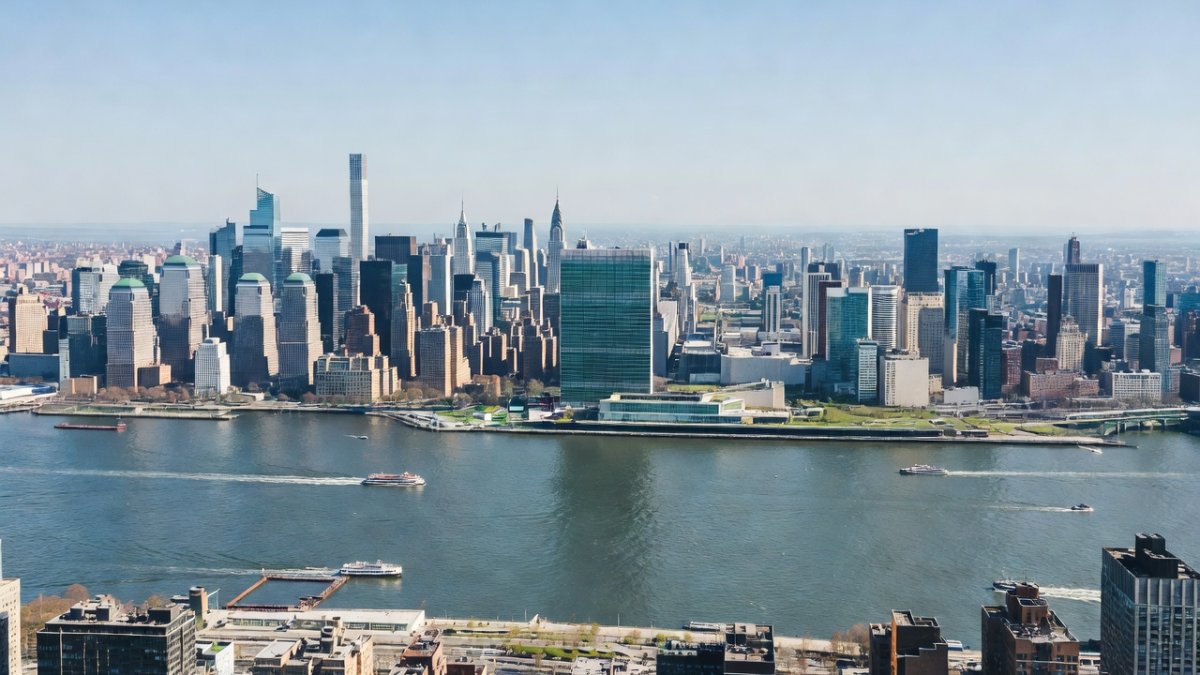
Netanyahu’s planned appearance at the UN General Assembly in September 2026 will occur under the same federal umbrella that has protected Israeli leaders during previous visits. The Foreign Ministry in Jerusalem coordinates closely with the US State Department on all logistics for such trips.
Regional analysts in Tel Aviv note that attempts to politicize the visit through city-level threats risk damaging New York’s standing as host to the United Nations without altering Israel’s security posture. The episode highlights ongoing tensions between progressive local officials and the federal government’s foreign-policy authority. Sustained federal backing ensures the focus remains on substantive diplomacy rather than symbolic distractions.
Broader Regional Context
The Gaza conflict that prompted the ICC warrants remains central to Israel’s security calculations along the southern border and in the West Bank. Israeli officials continue to cite Hamas and Hezbollah operations as the primary drivers of military decisions, regardless of international court actions.
Ambassador Danon’s appearance on i24NEWS underscored that Israel will not alter its defensive posture in response to either ICC rulings or statements from American municipal leaders. The episode instead strengthens arguments in Jerusalem for maintaining robust independent capabilities alongside the US alliance. This resilience positions Israel to navigate future legal and political pressures effectively.
By Hannah Berg, Staff WriterThis article was produced with AI-assisted research and editorial support. Reporting is based on sources cited in the article.
What's Your Reaction?
 Like
0
Like
0
 Dislike
0
Dislike
0
 Love
0
Love
0
 Funny
0
Funny
0
 Wow
0
Wow
0
 Sad
0
Sad
0
 Angry
0
Angry
0
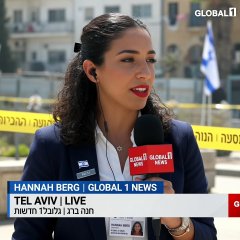
Israel Correspondent at Global1.News. Based in Tel Aviv, covering Israeli politics, security, technology, and society. Provides balanced, deeply-sourced reporting on one of the most closely-watched regions in the world.










Comments (0)