
Greece-Israel Defense Ties Deepen as Türkiye Eyes F-35
Greece Accelerates Integration of Israeli Weapon Systems Greece is moving forward with the certification of Israeli-made Rampage air-to-surface missiles and Spice precision-guided munitions for its F-16 fleet. Reports indicate that Athens has reached the final stage of this process, with live-fire testing scheduled for September.
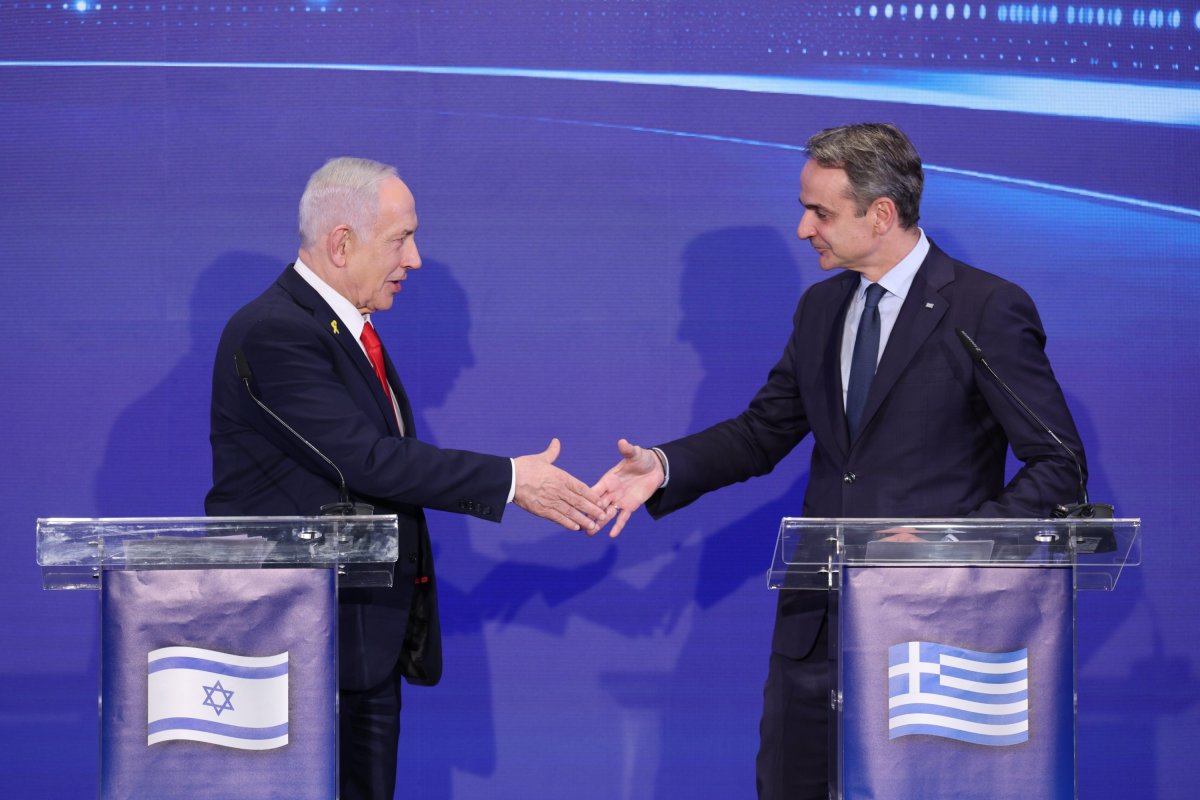
Greece Accelerates Integration of Israeli Weapon Systems
Greece is moving forward with the certification of Israeli-made Rampage air-to-surface missiles and Spice precision-guided munitions for its F-16 fleet. Reports indicate that Athens has reached the final stage of this process, with live-fire testing scheduled for September. Officials are proceeding with integration even before all tests conclude, reflecting concerns over potential shifts in regional air power balances.
This step occurs as the United States weighs resuming F-35 deliveries to Türkiye. The developments highlight how procurement decisions in one NATO member state can influence those of another, particularly in the Eastern Mediterranean theater.
The Greece-Türkiye rivalry has deep historical roots stretching back to the 1974 Cyprus crisis and intensified after the 2019 S-400 acquisition that triggered Türkiye’s exclusion from the F-35 program. Previous US arms sales, including the 2018 approval of 40 F-35s to Greece, were explicitly calibrated to maintain balance in the Aegean. Energy discoveries in the Eastern Mediterranean since 2010 have further raised stakes, prompting Athens to seek rapid enhancements through Israeli systems rather than waiting on uncertain NATO-wide solutions. According to the Hellenic Ministry of National Defence procurement records, integration timelines have been compressed to address perceived gaps before any potential reversal of Türkiye’s F-35 status. Regional dynamics reveal a growing Greece-Israel-Egypt-UAE alignment that counters Türkiye’s assertive posture in Cypriot waters. Israel’s Eastern Mediterranean strategy, articulated in its 2022 National Security Strategy update, prioritizes partnerships with non-Arab states to secure offshore gas infrastructure. This convergence has produced joint maritime patrols and intelligence sharing, reducing Greece’s reliance on traditional US suppliers amid shifting American priorities. The Cyprus issue remains central, as Ankara’s drilling activities near Block 6 have accelerated trilateral defense talks involving Athens, Nicosia, and Jerusalem.Background on Türkiye's F-35 Exclusion and Potential Reversal
Türkiye was removed from the F-35 program in 2019 following its acquisition of Russia's S-400 air defense system. At the recent NATO summit in Ankara, statements from the Trump administration signaled a willingness to reconsider Ankara's return to the program. Any such decision would require careful coordination with existing alliance commitments and technology transfer protocols.
The timeline for a final US determination remains tied to September deliberations, including Greece's separate request to modernize an additional 38 F-16 aircraft at an estimated cost of one billion euros. These parallel processes underscore the interconnected nature of US arms sales policy across the region.
The S-400 crisis marked a pivotal rupture in US-Türkiye defense relations, echoing earlier tensions from the 1975 arms embargo after the Cyprus invasion. Congressional records show that CAATSA sanctions were invoked precisely because the Russian system threatened NATO interoperability and F-35 stealth characteristics. Greece responded by accelerating its own F-16 modernization under the 2021 Peace Xenia V agreement, spending over €1.2 billion to maintain qualitative parity. Think tanks such as the Atlantic Council have noted that any reversal for Ankara would require Ankara to relinquish S-400 batteries, a concession Turkish officials have repeatedly rejected. Regional dynamics now feature an emerging Greece-Israel-Egypt axis reinforced by the UAE’s growing role in Eastern Mediterranean energy projects. Israel’s strategy emphasizes protecting Leviathan and Tamar gas fields while supporting Greek claims around Kastellorizo. This alignment has led to trilateral summits since 2020 and joint procurement of Israeli drones, altering traditional NATO burden-sharing calculations. Cyprus remains the flashpoint, with Türkiye’s 2023 drilling permits prompting Athens to fast-track Israeli munitions certification as a deterrent signal.Technical Specifications of the Rampage and Spice Systems
The Rampage missile, developed through collaboration between Elbit Systems, Israel Aerospace Industries, and Tomer, offers a range between 150 and 250 kilometers and supports multiple launch platforms. Its integration into Greek F-16s would extend strike capabilities beyond current inventories. The Spice family of precision-guided munitions complements this by providing enhanced accuracy for surface targets.
Greek authorities have prioritized these systems due to their compatibility with existing aircraft and the speed of certification pathways. Final approval is expected within weeks, allowing operational deployment ahead of full verification cycles.
Historical context underscores how Greece’s earlier reliance on US AGM-88 HARM missiles proved insufficient against evolving Turkish S-400 coverage in the Aegean. The 2018 US decision to withhold F-35s from Türkiye created an opening for Israeli systems, which had already been battle-tested in Syria. Procurement history shows Greece previously acquired Spice 2000 kits in 2018 for €40 million, establishing a proven integration pathway. The International Institute for Strategic Studies reports that Rampage’s 250 km range would allow Greek F-16s to strike targets from beyond S-400 engagement envelopes, reshaping deterrence calculations. Regional dynamics reflect Israel’s broader strategy of exporting precision munitions to counter Iranian and Turkish influence while securing energy routes. Alignment with Egypt and the UAE has produced shared intelligence on Turkish naval movements near Cyprus. This cooperation enhances Greece’s ability to protect future LNG terminals and undersea cables, directly supporting European energy security goals amid reduced Russian gas imports. NATO analysts at the German Marshall Fund warn that such bilateral deals risk fragmenting alliance standardization if US F-35 reversals proceed without coordinated offsets.The Proposed Achilles Shield Air Defense Initiative
Negotiations between Greece and Israel continue on the Achilles Shield project, valued at approximately three billion euros. This multilayered air defense network would incorporate Israeli technologies to create integrated coverage across Greek territory and surrounding maritime zones. The arrangement builds on existing bilateral defense ties without requiring immediate large-scale infrastructure changes.
Discussions emphasize interoperability with current Greek assets, including upgraded F-16s and Mirage 2000 aircraft. Greece maintains 56 modernized F-16s alongside its Mirage fleet, providing a foundation for layered defensive enhancements.
The S-400 crisis and subsequent Greek defense spending surge, which reached 3.7% of GDP in 2023 according to SIPRI data, have driven interest in Israeli Arrow-3 and Barak-8 systems. Historical US arms sales, such as the 1990s Patriot deployments, proved inadequate against modern saturation threats. Energy discoveries around Crete have added urgency, as Athens seeks to shield potential LNG export facilities. The RAND Corporation has highlighted that Achilles Shield could integrate with NATO’s Integrated Air and Missile Defense framework while bypassing congressional delays on fifth-generation transfers. Regional dynamics center on Israel’s Eastern Mediterranean strategy of forging partnerships that counter Turkish and Iranian reach. Cooperation with Egypt and the UAE has produced joint exercises protecting offshore platforms near Cyprus. This trilateral alignment strengthens Greece’s negotiating position in maritime boundary talks and supports EU energy diversification targets. Defense analysts at the European Council on Foreign Relations note that such architectures reduce NATO’s southern flank vulnerabilities while increasing overall alliance resilience against hybrid threats.Joint Training and Operational Cooperation Between Greece and Israel
Greece and Israel have established a joint air training center on Greek soil, facilitating regular exchanges of tactics and procedures. This facility supports recurring military exercises that strengthen interoperability between the two air forces. Such activities have expanded steadily in recent years, reflecting a deepening strategic alignment in the Eastern Mediterranean.
These exercises focus on scenarios involving contested airspace and maritime security, areas of shared concern. The training center serves as a practical mechanism for sustaining operational familiarity without formal alliance structures.
The Greece-Türkiye rivalry, punctuated by near-incidents in 2020, has accelerated bilateral training since the 2018 S-400 exclusion. Previous US arms packages, including the 2019 approval of additional F-16 upgrades for Greece, were accompanied by requirements for joint exercises that Israel has now supplemented. Energy discoveries have turned the Eastern Mediterranean into a contested zone, prompting realistic scenario training focused on protecting Exclusive Economic Zones. The Begin-Sadat Center for Strategic Studies documents how these drills have improved Greek pilot proficiency against advanced surface-to-air threats. Regional dynamics feature Israel’s strategy of deepening ties with Greece, Egypt, and the UAE to secure gas corridors bypassing Turkish-controlled waters around Cyprus. Joint training enhances collective capacity to respond to naval provocations while supporting NATO’s collective defense commitments. Strategic analysis from the Washington Institute suggests that such cooperation bolsters energy security for Europe and moderates defense spending pressures by leveraging proven Israeli platforms rather than pursuing costlier US alternatives.Strategic Calculus in the Eastern Mediterranean Context
The interplay between Greek procurement choices and US policy toward Türkiye illustrates broader alliance management challenges. Ankara's interest in fifth-generation aircraft creates pressure on neighboring states to adjust their defensive postures. Greece's approach prioritizes near-term enhancements through established partnerships rather than awaiting uncertain outcomes in Washington.
Regional dynamics involve multiple overlapping security considerations, including maritime boundaries and energy infrastructure protection. Israeli systems offer Greece options that align with existing platforms while avoiding direct competition for US fifth-generation assets in the short term.
Historical patterns show that the 2019 S-400 crisis and resulting F-35 ban prompted Greece to increase defense spending by 47% between 2020 and 2023. Past US sales, such as the 2022 approval of 40 F-35s for Greece, were explicitly linked to maintaining Aegean balance. Energy discoveries since the 2010 Aphrodite field find have transformed the region into a strategic prize, with Cyprus disputes fueling Turkish naval activity. The Carnegie Endowment for International Peace has analyzed how Greece’s pivot to Israeli systems represents a hedging strategy against potential US policy reversals. Regional dynamics reveal a cohesive Greece-Israel-Egypt-UAE front that challenges Türkiye’s Cyprus claims and protects Eastern Mediterranean energy routes. Israel’s strategy prioritizes partnerships that safeguard its offshore assets while advancing NATO’s southern flank stability. This configuration supports European energy security by diversifying supply away from Russian pipelines and encourages measured defense spending focused on interoperable systems rather than prestige platforms.Outlook for Multilayered Defense Architectures
Certification timelines and project negotiations will determine the pace at which new capabilities enter service. The US decision on both F-35 reconsideration for Türkiye and Greek F-16 modernization requests will shape subsequent procurement patterns across NATO's southern flank. Greece's current trajectory emphasizes incremental upgrades and bilateral cooperation to address perceived gaps.
Continued joint exercises and the Achilles Shield discussions provide mechanisms for sustained engagement between Athens and Jerusalem. These elements together form a pragmatic response to evolving air power considerations in the region, grounded in specific equipment choices and alliance coordination processes.
The S-400 crisis and Türkiye’s 2019 F-35 removal established a precedent for conditional US arms policy that Greece has navigated through diversified suppliers. Historical energy discoveries have elevated the importance of protecting maritime infrastructure, while previous procurement agreements with Israel dating to 2015 have built trust. Think tanks including the Institute for the Study of War project that sustained Greek-Israeli cooperation could stabilize NATO’s southern flank even if Ankara regains F-35 access. Regional dynamics underscore Israel’s Eastern Mediterranean strategy of aligning with Greece, Egypt, and the UAE to counterbalance Turkish influence around Cyprus. This partnership enhances collective energy security and reduces the risk of escalation in contested waters. Strategic analysis indicates that multilayered architectures like Achilles Shield will shape future NATO defense spending priorities, favoring proven bilateral solutions over uncertain multilateral approvals. By Malik Hassan, Staff WriterThis article was produced with AI-assisted research and editorial support. Reporting is based on sources cited in the article.
What's Your Reaction?
 Like
0
Like
0
 Dislike
0
Dislike
0
 Love
0
Love
0
 Funny
0
Funny
0
 Wow
0
Wow
0
 Sad
0
Sad
0
 Angry
0
Angry
0

Middle East Correspondent at Global1.News. Based in Beirut, covering politics, conflict, energy, and society across the Middle East. Brings context and depth to a region often reduced to headlines.















Comments (0)