
West Africa's $25bn Gas Pipeline: A New Chapter for Regional Energy
In a landmark development with profound implications for the continent, fourteen West African nations have formally endorsed the $25 billion Nigeria-Morocco Atlantic Gas Pipeline, marking one of the largest cross-border energy initiatives in African history.
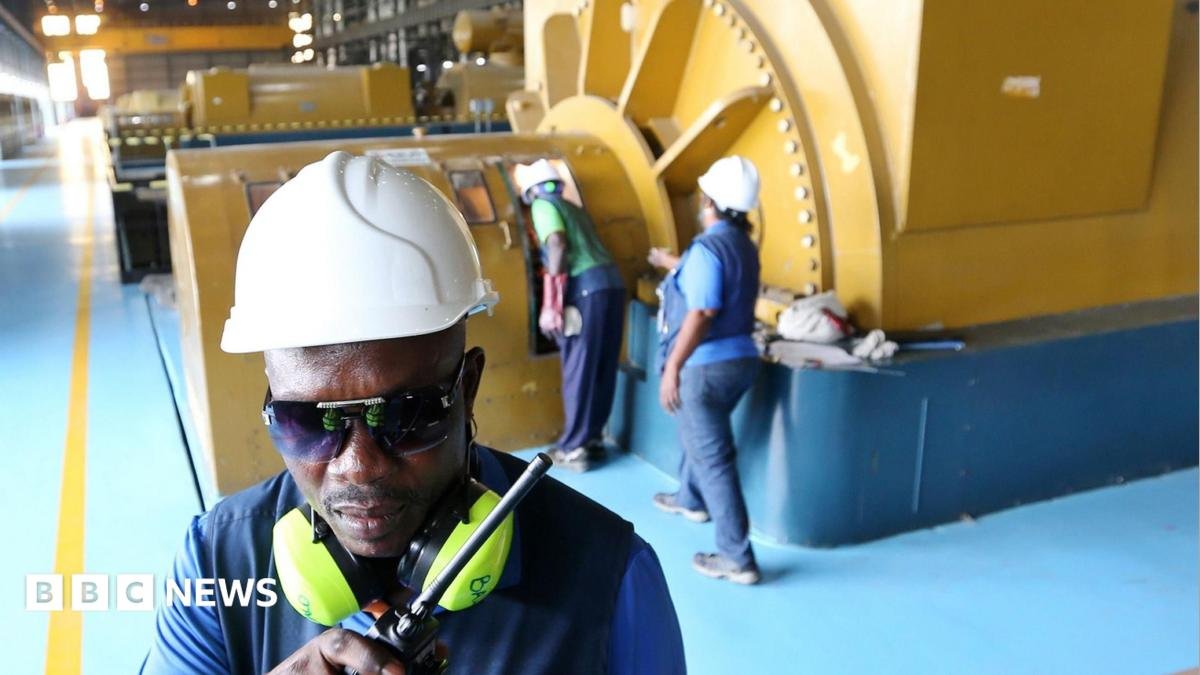
In a landmark development with profound implications for the continent, fourteen West African nations have formally endorsed the $25 billion Nigeria-Morocco Atlantic Gas Pipeline, marking one of the largest cross-border energy initiatives in African history. This agreement, reached under the Ecowas framework after nearly a decade of negotiations, signals a decisive shift from fragmented national planning toward coordinated regional infrastructure that could deliver reliable gas supplies to hundreds of millions. The project’s scale and ambition underscore both the historic opportunity and the formidable coordination challenges that lie ahead.
West Africa's $25bn Gas Pipeline: A New Chapter for Regional Energy
Dakar, Senegal — Article continues...
The signing of the Nigeria-Morocco Atlantic Gas Pipeline marks one of those rare moments when West African nations move from talk to action on a scale that could reshape daily life for millions. Leaders gathered in Freetown under the Ecowas banner, with Sierra Leone's President Julius Maada Bio announcing the formal endorsement of a project that has taken nearly a decade to reach this point. For communities along the Atlantic coast, the promise of steady energy supply feels both long overdue and cautiously welcome.
The Pipeline's First Steps Through Senegal
Senegal stands among the first countries where construction will begin once the phased rollout starts. The initial axis linking Morocco, Mauritania and Senegal means our coastal regions could see early infrastructure work, bringing jobs in laying and maintenance while connecting local industries to a steadier gas supply. In places like Dakar and Saint-Louis, households and small businesses still rely on costly imported fuels; this project offers a chance to ease that burden over time. Yet the benefits will depend on how fairly the gains are shared with ordinary Senegalese families who have waited through years of energy shortages.
Breaking the Pattern of Raw Exports
Energy expert Charles Majoni has described the current system as a complete devaluation of Africa's resources. Gas is pulled from the ground here, sent abroad for refining, then shipped back at three or four times the original price. This pipeline aims to change that equation by keeping more processing and value closer to home. For Senegal and its neighbours, ending this cycle could mean lower costs for cooking, transport and small manufacturing, rather than watching profits flow outward while local prices stay high.
Take Nigeria's crude oil. For decades it has left our shores unrefined, only to return as petrol and diesel at prices that strain every household budget from Lagos to Dakar. The same pattern repeats with Ghana's cocoa, shipped as beans and bought back as chocolate, and with Guinea's bauxite, exported raw while we import finished aluminium goods at four times the cost. These cycles drain foreign reserves and keep local industries small. The Atlantic pipeline seeks to interrupt that flow by processing gas closer to home, turning a resource that once left us poorer into one that powers our factories and kitchens first.
Economists have long called this the resource curse, where abundant minerals and energy fail to lift living standards because value is captured elsewhere. Recent estimates suggest African countries lose between $30 and $40 billion each year through such raw-export arrangements. For ordinary families the cost is felt daily when a cylinder of cooking gas costs more than a week's wages or when power cuts halt a tailor's sewing machine. By keeping processing and distribution inside the region, the project could begin to reverse that arithmetic, lowering the price of energy that reaches stoves and workshops.
Cooperation Across Fourteen Nations
Prof Ganiyat Adejoke Adesina-Uthman has called the project a symbol of what Africa can achieve when countries collaborate. The 6,000-kilometre route will run along the Atlantic coast through fourteen nations, deliberately avoiding the most insecure areas of the Sahel. Nigeria's state oil firm and Morocco's national mining body are leading the effort, backed by the Islamic Development Bank and the OPEC Fund. This kind of cross-border work echoes older traditions of trade and exchange along the same coastline, reminding us that shared infrastructure can strengthen ties that politics sometimes strains.
Ecowas has quietly driven the final push, turning years of bilateral talks into a single regional commitment signed in Freetown. The same organisation that once focused on peacekeeping now coordinates energy policy across capitals that once planned in isolation. This builds on earlier efforts such as the West African Power Pool, which linked electricity grids from Cote d'Ivoire to Nigeria and proved that shared infrastructure can survive political changes. The pipeline extends that logic along the coast, deliberately choosing a route that skirts the Sahel's instability.
In 2026 the project carries a distinctly pan-African tone. Leaders speak of reviving the spirit of trade caravans that once moved goods and ideas along these same shores. Neighbouring regions offer cautionary contrasts: several East African pipeline proposals have stalled over financing disputes, while Central African energy corridors remain fragmented by differing national priorities. West Africa's willingness to align fourteen regulatory frameworks therefore signals a maturing form of integration that places practical delivery above rhetoric.
Realistic Obstacles Ahead
Construction is not expected before 2028, and the $25 billion price tag could grow with inflation and delays. Protecting such a long pipeline across multiple borders will require sustained security cooperation. Political stability in all thirteen participating nations remains essential, as any disruption in one country could affect the entire chain. Financing will also test the commitment of governments already managing tight budgets and competing development needs.
Nigeria already exports liquefied natural gas to Europe and Asia from terminals in Bonny and Brass. Those facilities compete for the same gas the pipeline would carry, and operators may prefer the flexibility of shipping to global spot markets rather than locking volumes into a fixed route. Security adds another layer of complexity: protecting 6,000 kilometres across thirteen borders will require joint patrols, shared intelligence and rapid-response agreements that have rarely been sustained at this scale.
Europe's own energy transition raises further questions. As renewable capacity grows, long-term gas demand could fall by the time the pipeline reaches full capacity after 2030. Planners chose the Atlantic route over the older Trans-Saharan proposal precisely because offshore sections reduce exposure to Sahel insecurity, even though construction costs are higher. The decision reflects a calculation that political risk outweighs engineering expense, yet it leaves the project exposed to shifting European climate targets and financing conditions that could tighten if demand forecasts weaken.
A Seat at the Global Energy Table
By connecting Nigerian gas to Morocco and onward to Europe through Spain, the pipeline places West Africa in a stronger position within international energy markets. The planned capacity of 30 billion cubic metres per year could serve around 400 million consumers. This is not simply about exports; it is about negotiating from a position of greater control over our own resources and building direct links that bypass older middlemen. For African voices in global forums, such projects demonstrate that the continent can shape its energy future rather than merely supply raw materials.
By linking Nigerian reserves directly to Morocco and onward to Spain, the pipeline gives West Africa a new bargaining position with European buyers who turned to African gas after Russian supplies were curtailed. China and other Asian importers will also face a more coordinated regional supplier rather than separate national sellers. This changes the conversation from one-sided extraction to negotiated supply agreements that can include technology transfer and local content requirements.
The timing matters. Europe's search for reliable alternatives coincides with Africa's own push to industrialise. Instead of the familiar story of resources leaving the continent while value is added elsewhere, the project lets African states shape part of the global energy map. When ministers sit at future climate and trade tables, they will speak from a position of demonstrated delivery rather than promised potential, altering how partners calculate Africa's weight in energy decisions.
Grounded Hope for the Years Ahead
After ten years of negotiations, the formal endorsement in Freetown brings a measure of progress worth acknowledging. Senegal's early involvement in the first phase gives us a front-row view of both the opportunities and the hard work required. The challenges of funding, security and coordination are real, yet the alternative of continued dependence on expensive imported energy is no longer acceptable. If the pipeline delivers on its promise, it could quietly improve kitchens, workshops and clinics across the region while reminding the world that African nations can build together when they choose to.
By Amara Diop, Staff Writer
This article was produced with AI-assisted research and editorial support. Reporting is based on sources cited in the article.
What's Your Reaction?
 Like
0
Like
0
 Dislike
0
Dislike
0
 Love
0
Love
0
 Funny
0
Funny
0
 Wow
0
Wow
0
 Sad
0
Sad
0
 Angry
0
Angry
0

West Africa/Sahel Correspondent at Global1.News. Dakar-based journalist covering politics, security, climate, and development across Francophone and Anglophone West Africa. Tells the stories of a region undergoing profound transformation.











Comments (0)