
Cottage cheese crisis expands to white cheese — Israeli dairy shortage deepens
Israeli Shelves In recent days shoppers at major retail chains have noticed empty spaces where cottage cheese and white cheese once sat in abundance. Packages of labneh and sour cream now occupy those spots as retailers attempt to manage the growing gaps. What began as a cottage cheese issue has moved into white cheese categories, affecting both price-controlled items and higher-priced varieties that reach NIS 15 per unit. Consumer Frustrations in Neighborhood Chains Resident
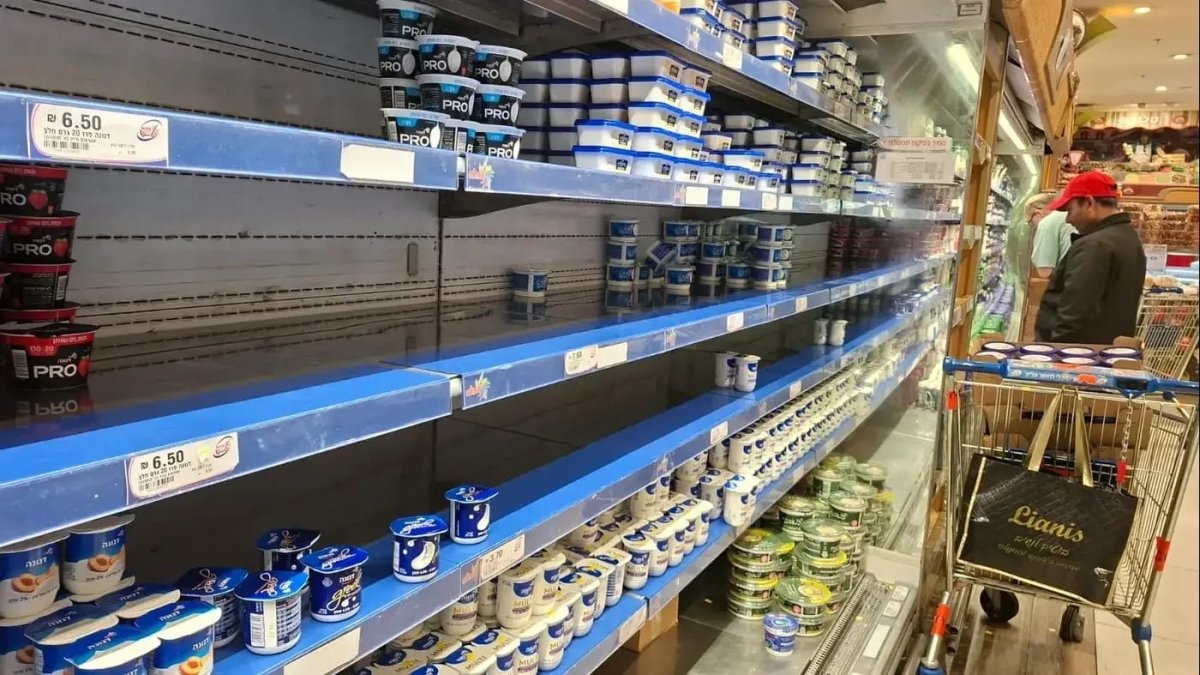
The Expanding Dairy Shortage Across Israeli Shelves
In recent days shoppers at major retail chains have noticed empty spaces where cottage cheese and white cheese once sat in abundance. Packages of labneh and sour cream now occupy those spots as retailers attempt to manage the growing gaps. What began as a cottage cheese issue has moved into white cheese categories, affecting both price-controlled items and higher-priced varieties that reach NIS 15 per unit.
Consumer Frustrations in Neighborhood Chains
Residents in cities such as Tel Aviv and Jerusalem report visiting multiple branches without success. One shopper described checking three local outlets and finding no white cheese tubs at all, including 9 percent fat, 3 percent fat, smooth, and low-fat options. These accounts highlight how the shortage has spread beyond the familiar cottage cheese shortage that Israelis had started to accept.
Shoppers in neighborhood supermarkets reported turning to labneh, sour cream, and flavored yogurts as substitutes for missing white cheese and cottage cheese. Many families paid NIS 15 or more for smaller packages of these alternatives, increasing weekly grocery bills at a time when inflation already pressures household budgets. The psychological effect of walking into stores with empty dairy shelves has been particularly acute in a country that views reliable food supply as a basic expectation.
Parents described rearranging meal plans and driving between branches in search of staples, while social media groups filled with photos of bare refrigerators in chain stores. This visible scarcity has reinforced a broader sense that Israel’s food security remains vulnerable despite advanced agricultural technology and strong local production capacity. The shortage has hit hardest in middle-income neighborhoods where residents rely on predictable pricing and availability.
Smaller independent grocers have also struggled to maintain stock, leading some customers to question whether the country’s concentrated dairy infrastructure can withstand even localized technical failures. The experience has left many Israelis wondering how quickly supply chains can recover when the dominant player encounters disruption.
Supply Shortfalls Reported by Retailers
Food market sources note that retailers ordering ten crates of cottage cheese now receive roughly half that amount. In peripheral areas the deliveries sometimes drop to a single tub. The white cheese shortage traces directly to the cottage cheese shortfall, as production capacity and distribution lines overlap at major dairies.
Tnuva Warehouse Malfunction at Alon Tavor
The core problem sits inside Tnuva's automated warehouse at the Alon Tavor facility. Cottage cheese is produced and packaged on schedule, yet pallets remain stuck and fail to reach distribution trucks. The malfunction affects the warehouse management system rather than the production line itself, and the disruptions have continued for more than two months.
The Dematic automated warehouse system at the Alon Tavor facility in the Lower Galilee relies on computer-controlled cranes and conveyors to move thousands of pallets daily through high-density racking. When the central software failed, operators could not simply switch to manual mode because safety protocols and mechanical interlocks prevent human access to active zones. This design, typical of large-scale Israeli food logistics centers, prioritizes speed and accuracy over flexibility during outages.
Technicians at the site faced limited options for bypassing the controls without risking damage to both equipment and product integrity. The Alon Tavor plant serves as a critical node in Tnuva’s nationwide network, handling a substantial share of the company’s chilled dairy output. A prolonged computer malfunction therefore cascaded quickly into distribution delays across central and northern Israel.
Because the facility was built around automation, even partial manual operation required specialized training and additional safety oversight that were not immediately available. The result was a near-total halt in pallet retrieval and loading for several days, exposing how dependent Israel’s largest dairy processor has become on single-point digital systems.
Dematic Remote Support Amid Security Constraints
Technicians from the German company Dematic had been scheduled for maintenance at the Tnuva site following an earlier visit to the Osem plant. That planned work was canceled during Operation Lion's Roar because of the security situation. Dematic staff now provide assistance through phone calls and video conferences while Tnuva employees handle portions of the system manually. This workaround remains limited and prevents a return to normal dispatch volumes.
Market Positions of Tnuva and Strauss
Tnuva serves as Israel's largest white cheese producer, while Strauss accounts for roughly 30 percent of the category. Together the two companies supply most of the white cheese available in retail outlets across the country. Any sustained interruption at Tnuva therefore creates visible effects on shelves nationwide.
Tnuva, founded in 1926 and now owned by the Central Bottling Company together with China’s Bright Food, controls the largest share of Israel’s dairy market. The company operates nine plants nationwide, giving it unmatched reach from the north to the south. Strauss Group holds a strong but secondary position, focusing on both dairy and non-dairy products, yet it lacks the scale to absorb sudden shortfalls from the market leader.
When Tnuva’s supply chain breaks, the imbalance becomes immediately visible on shelves because competitors cannot ramp up production fast enough to cover the gap. Industry observers note that this concentration, while efficient under normal conditions, creates systemic risk for consumers and retailers alike. Strauss has attempted to increase output at its own facilities, but capacity constraints and differing product lines limit its ability to substitute directly for Tnuva’s core items.
The episode highlights how decades of consolidation in Israeli dairy have produced a market where one company’s operational hiccup can affect millions of households. Policymakers and business leaders are now examining whether greater diversification or improved redundancy in automated systems could reduce such exposure in the future.
Rising Demand Linked to Domestic Travel Patterns
Since the beginning of the year demand for dairy products has increased by about 4 percent. Industry observers attribute part of this rise to fewer Israelis traveling abroad amid the security situation. The surge has compounded the difficulty of rebuilding stocks after the Shavuot holiday, leaving dairies with persistent shortfalls.
Israel’s security situation this year has kept more families inside the country rather than traveling abroad, contributing to a documented 4 percent rise in domestic dairy consumption. With fewer vacations, households have stocked larger quantities of milk, cheese, and yogurt for everyday use and for holiday preparations. This steady increase in demand has placed additional pressure on an already strained supply network.
The approach of Shavuot has further amplified the problem, as the holiday traditionally drives a sharp spike in cheesecake and other dairy-based foods. Compared with previous years, retailers report earlier sell-outs and higher advance orders from bakeries and home cooks. The combination of elevated baseline demand and seasonal peaks has left little margin for the technical setback at Alon Tavor.
Industry analysts point out that similar demand surges occurred in past years without causing widespread shortages, underscoring how the current malfunction has interacted with broader travel and consumption patterns. Families planning Shavuot meals now face both higher prices and limited choices, illustrating the tight coupling between national security conditions, holiday cycles, and food logistics in Israel.
Impact on Daily Life for Israeli Families
Families in places such as Petah Tikva and surrounding kibbutzim now adjust shopping routines and meal plans around missing staples. Households that once relied on affordable cottage cheese and white cheese for everyday consumption face higher costs when substituting other dairy items. The situation adds pressure to already strained household budgets in a period of elevated living expenses.
Allegations and Industry Rebuttals
Some voices have suggested Tnuva might benefit from an artificial shortage. Industry sources reject the claim outright, noting that unsold product represents lost revenue for the company. Tnuva operates nine plants nationwide, and officials emphasize that the current issue stems from a computer malfunction rather than any strategic decision.
Automation and Supply Chain Realities in Israeli Industry
The Alon Tavor warehouse relies on advanced automated systems typical of Israel's food production sector. When remote support replaces on-site technician visits, the limits of such technology become clear. The episode underscores how security conditions can affect even routine maintenance in critical supply chains that serve millions of consumers.
Economic Context for the Broader Dairy Sector
Israel's dairy market operates under a mix of regulated and free-price products. Shortages in one segment quickly influence neighboring categories because production lines and distribution networks are shared. The current episode illustrates the tight margins and high coordination required to keep shelves stocked in a small domestic market.
Looking Ahead for Retail and Production Adjustments
Retailers including Shufersal continue to rearrange displays and promote alternative items while awaiting restored deliveries. Tnuva teams maintain manual operations alongside remote guidance from Dematic. Observers note that full recovery will depend on resolving the warehouse software issues once on-site technical support becomes feasible again.
By Hannah Berg, Staff WriterThis article was produced with AI-assisted research and editorial support. Reporting is based on sources cited in the article.
What's Your Reaction?
 Like
0
Like
0
 Dislike
0
Dislike
0
 Love
0
Love
0
 Funny
0
Funny
0
 Wow
0
Wow
0
 Sad
0
Sad
0
 Angry
0
Angry
0

Israel Correspondent at Global1.News. Based in Tel Aviv, covering Israeli politics, security, technology, and society. Provides balanced, deeply-sourced reporting on one of the most closely-watched regions in the world.















Comments (0)