
NEET 2026 Paper Leak Ignites India Medical Education Crisis
The abrupt cancellation of NEET UG 2026 after a massive paper leak has plunged India into political turmoil, with opposition leaders detained during protests against the government on July 21, 2026. This scandal disrupts the futures of 26 lakh aspirants and exposes chronic weaknesses in the National Testing Agency’s oversight of medical admissions. The crisis now threatens both educational equity and India’s healthcare workforce pipeline. NEET 2026 Paper Leak Ignites India...
NEET 2026 Paper Leak Ignites India Political Crisis
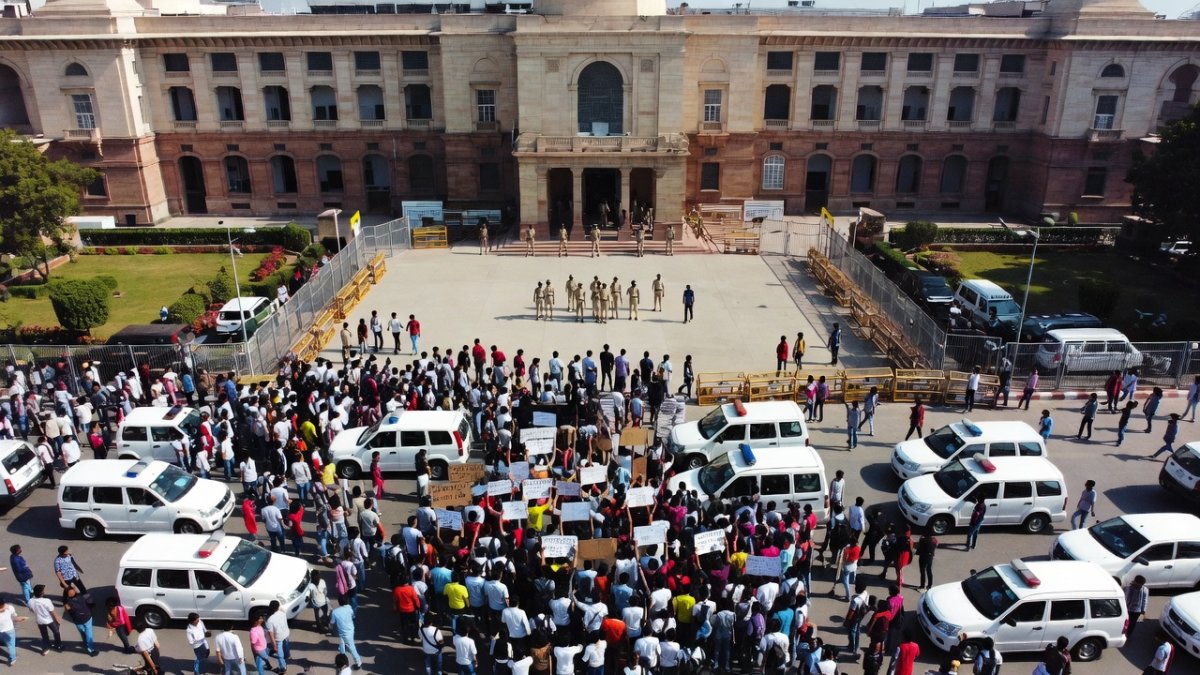
New Delhi, India – July 21, 2026 — The National Testing Agency’s abrupt cancellation of NEET UG 2026 after confirmation of a massive paper leak has escalated into a direct confrontation between the central government and opposition parties, reshaping the national conversation on education integrity and youth opportunity.
The NEET Paper Leak: What Happened
The NEET UG 2026 exam, India’s sole gateway for undergraduate medical admissions conducted annually by the National Testing Agency under the Ministry of Education, was cancelled after evidence emerged of question papers circulating among select candidates days before the scheduled date. The NTA, responsible for standardising admissions to over 100,000 MBBS seats across government and private medical colleges, detected the breach through discrepancies in candidate responses and subsequent investigations. This action directly affects the healthcare pipeline, as NEET scores determine entry into premier institutions including AIIMS New Delhi and postgraduate pathways that feed India’s doctor shortage.
Details released by the NTA indicate the leak involved organised networks that sold access to papers in multiple states, mirroring vulnerabilities in the exam’s offline and hybrid delivery model. The Ministry of Education has not yet announced a revised schedule, leaving the 2026 cycle in suspension. For Indian students preparing through years of coaching in hubs like Kota and Hyderabad, this represents a complete reset of merit-based selection that the NTA was established to protect.
A Pattern of Failure: India’s Recurring Exam Leaks
NEET UG 2026 joins a documented sequence of compromised national examinations, including the 2024 NEET-UG leak that affected over 24 lakh candidates and the June 2025 UGC-NET breach impacting 11 lakh aspirants. The NTA has overseen multiple breaches in recent years without implementing foolproof preventive measures. Paper-leak mafias have flourished, with estimates placing their annual turnover at ₹400–600 crore through weak printing-press security and transport vulnerabilities across more than 4,000 centres. Successive CBI probes have yielded arrests of middlemen and a few NTA staff but rarely reached enabling political or bureaucratic nodes.
These failures occur within India’s centralised education framework, where single-exam outcomes dictate access to limited seats in AIIMS, IITs, and state medical colleges. Successive governments have responded with inquiries rather than structural overhauls, allowing the cycle to continue. Indian taxpayers fund the NTA’s operations through the Ministry of Education, yet the recurring disruptions impose additional costs on families already bearing coaching expenses averaging several lakhs per student.
Political Fallout: Protests and Arrests
On July 21, 2026, Congress leaders Rahul Gandhi and Priyanka Gandhi joined Samajwadi Party chief Akhilesh Yadav in leading a protest march toward the Prime Minister’s residence, demanding the immediate removal of Education Minister Dharmendra Pradhan. Delhi Police detained the leaders and transported them away in a bus, preventing the demonstration from reaching its target. Rahul Gandhi publicly labelled Prime Minister Modi the most youth-hostile Prime Minister in India’s history, tying the NEET failure to broader governance shortcomings in education and employment.
The Crazy for Justice Party staged a parallel protest at Jantar Mantar, while environmental activist Sonam Wangchuk began a hunger strike highlighting interconnected issues of youth disillusionment. These actions reflect opposition strategy to frame exam integrity as a political accountability issue ahead of future electoral cycles. The Ministry of Education has defended the NTA’s handling, but the detentions have amplified calls for independent oversight of national testing bodies.
The Human Cost: Students Left in Limbo
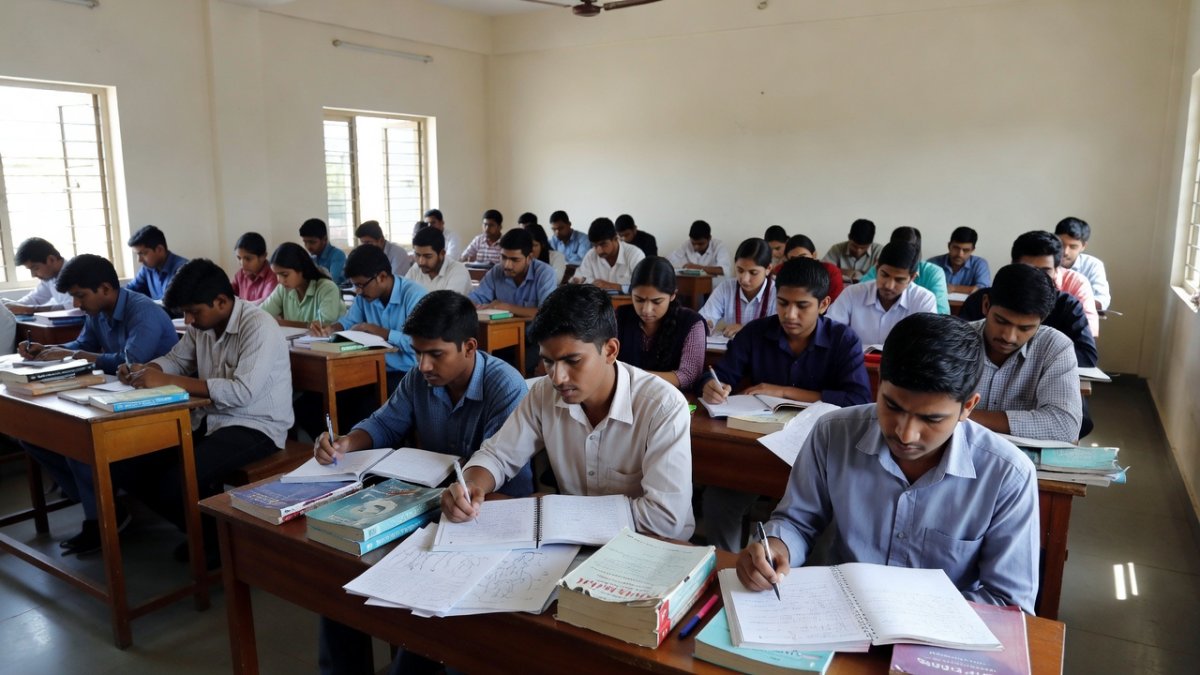
Lakhs of medical aspirants, many from middle-income families in states such as Bihar, Uttar Pradesh, and Rajasthan, now face prolonged uncertainty regarding their 2026 admission prospects and career timelines. NEET UG 2026 had registered approximately 26 lakh candidates, marking a 4% increase from the previous year. Coaching institutes in Kota charge annual fees ranging from ₹1.5 lakh to ₹3.5 lakh, with hostel and living expenses adding another ₹1–2 lakh per year. For families in Bihar and Uttar Pradesh, where per capita incomes average ₹1.2–1.5 lakh annually, this represents a multi-year investment that a single leak can render redundant.
The psychological toll includes heightened anxiety, financial strain from extended coaching, and disrupted preparation cycles that typically span two to three years. Kota alone has reported over 25 student suicides in the past two years, with exam pressure identified as a contributing factor in the majority of cases. Mental health professionals describe a pattern of acute anxiety, sleep disorders, and depression among aspirants, particularly those from rural backgrounds. India’s healthcare system depends on a steady influx of qualified doctors to address shortages in rural districts and urban hospitals. Delays in NEET cycles directly slow this pipeline, affecting patient care capacity in government facilities.
International Benchmarks for Exam Security
In contrast to India’s model, Singapore’s GCE A-Levels use tamper-evident digital question banks with zero paper transit. South Korea’s Suneung employs AI-powered CCTV monitoring across all test sites, while the United States Medical Licensing Examination delivers fully computer-adaptive tests at secure Prometric centres. India’s continued reliance on physical question paper transport represents a security model abandoned by nearly every comparable education system.
Structural Reform or Band-Aid Solutions?
Proposed fixes such as enhanced surveillance at centres and faster CBI inquiries address symptoms rather than the root causes embedded in the NTA’s operational model. Systemic reform would require shifting toward fully paperless, computer-adaptive testing with real-time encryption and decentralised question banks. An NTA governance restructuring that places independent domain experts on its board, separating policy oversight from day-to-day administration, could restore institutional accountability. A permanent Oversight Commission on National Examinations, chaired by a retired Supreme Court judge with representation from IITs, AIIMS, and state education boards, would provide continuous monitoring.
AI-based remote proctoring with real-time behavioural analytics, already deployed in the GATE online format, could be scaled nationally. Biometric verification at entry and randomised allotment of question paper variants across centres would eliminate advance targeting by leak syndicates. The cost of implementing these reforms — estimated at ₹200–350 crore — is negligible compared to the economic losses from recurring disruptions. Without such changes, paper leak mafias will continue to exploit the high-stakes, centralised format that funnels millions of students through a single annual window.
The Bottom Line
The NEET UG 2026 cancellation and subsequent political detentions crystallise the consequences of repeated institutional lapses in India’s education governance. With opposition pressure mounting for ministerial accountability and students bearing the direct costs, the episode demands decisive action from the Ministry of Education to safeguard the integrity of medical admissions. Failure to implement verifiable reforms will perpetuate cycles of disruption that undermine both educational equity and the nation’s healthcare workforce development. — By Dr. Raj Patel, Staff Writer
This article was produced with AI-assisted research and editorial support. Reporting is based on sources cited in the article.
What's Your Reaction?
 Like
0
Like
0
 Dislike
0
Dislike
0
 Love
0
Love
0
 Funny
0
Funny
0
 Wow
0
Wow
0
 Sad
0
Sad
0
 Angry
0
Angry
0

India/South Asia Correspondent at Global1.News. Analytical voice with a background in science and health journalism. Based in New Delhi, covering Indian politics, education, healthcare, technology, and policy. Breaks down complex data into clear, actionable reporting.














Comments (0)