
Andy Burnham Cabinet Signals Palestine Policy Shift
In a recent Middle East Eye report, editor-in-chief David Hearst examined the formation of Andy Burnham's cabinet following Keir Starmer's resignation and assessed its potential effects on British policy toward Palestine. The analysis highlights appointments that could signal a departure from previous approaches. Burnham has publicly acknowledged Labour's shortcomings on Gaza while outlining new commitments on sanctions.
In a recent Middle East Eye report, editor-in-chief David Hearst examined the formation of Andy Burnham's cabinet following Keir Starmer's resignation and assessed its potential effects on British policy toward Palestine. The analysis highlights appointments that could signal a departure from previous approaches. Burnham has publicly acknowledged Labour's shortcomings on Gaza while outlining new commitments on sanctions.
Andy Burnham Cabinet Signals Palestine Policy Shift
London, UK — Andy Burnham assumed the role of UK Prime Minister after Keir Starmer stepped down, prompting immediate attention to how the new government might address the ongoing crisis in Gaza. His early statements included an apology for Labour's record and pledges for firmer measures against Israel.

New Cabinet Appointments and Backgrounds
Andy Burnham selected Ed Miliband as Foreign Secretary. Miliband has previously backed recognition of a Palestinian state and voiced opposition to military action in Syria. John Healey was named Chancellor, bringing experience in defence matters. Louise Haigh took the position of First Secretary of State. These choices place officials with varied records on Middle East issues into key roles that influence foreign policy decisions.
Ed Miliband as Foreign Secretary
Ed Miliband's appointment draws notice because of his past positions on Palestinian statehood. As Foreign Secretary he will oversee diplomatic responses to developments in Gaza and the West Bank. Observers note that his earlier statements could shape how the UK engages with international calls for accountability regarding Israeli actions.
During his tenure as Labour leader from 2010 to 2015, Miliband explicitly stated that a future Labour government would recognise a Palestinian state, a position he reiterated in parliamentary debates and party conferences. This stance contrasted with the more cautious approach of predecessors and reflected growing pressure from Labour's grassroots and Palestinian solidarity groups across Britain.
Miliband's foreign policy record also includes criticism of Israel's 2014 military offensive in Gaza, where he called for an immediate ceasefire and highlighted the disproportionate impact on civilian populations. His appointment signals a potential recalibration in UK-Israel relations, moving away from the unconditional support seen under previous Conservative-led governments toward greater emphasis on international law and Palestinian rights.
Diplomats in Whitehall have noted that Miliband's history could influence Britain's voting patterns at the United Nations and its engagement with the International Criminal Court, particularly as Palestinian communities in the UK continue to demand concrete action beyond rhetoric.

Burnham's Apology and Policy Pledges
Andy Burnham stated that Labour had failed on Gaza and declared "we didn't get it right." He committed to stronger sanctions on Israel and increased diplomatic pressure. These remarks followed months of public campaigning by British groups urging a change in approach. The pledges remain subject to implementation details that have not yet been fully specified.
Burnham has proposed targeted sanctions against Israeli officials and entities involved in settlement expansion, including asset freezes and travel bans, alongside a review of all existing arms export licences. The UK's current policy permits arms sales to Israel provided they are not used in occupied territories, yet critics argue enforcement has been lax.
Between 2015 and 2023, the UK licensed over £500 million in arms exports to Israel, including components for F-35 fighter jets and drone technology, according to figures from the Department for International Trade. The Office for Product Safety and Standards has faced multiple legal challenges from human rights organisations over its failure to suspend licences amid documented civilian casualties in Gaza.
Campaigners have long demanded a full arms embargo, citing the UK's obligations under the Arms Trade Treaty. Burnham's pledges have raised hopes among Palestinian advocacy networks, though they stress that without immediate suspension of all licences, the measures risk remaining symbolic.
Campaigner Demands Beyond Apologies
Pro-Palestine campaigners welcomed the apology but described it as insufficient. They continue to call for a complete arms embargo on Israel. Groups across the UK, including those representing the country's large Muslim population, have maintained consistent pressure through protests and advocacy since October 2023. They argue that sanctions alone will not address the scale of destruction reported in Gaza.
Conditions in Gaza After Ceasefire
Figures from Gaza's Health Ministry indicate that more than 73,000 Palestinians have been killed since October 2023. Even after a ceasefire took effect, Israeli strikes have continued on a near-daily basis, resulting in at least 1,127 additional deaths. Reports from NPR state that Israel now controls nearly 70 percent of Gaza as of July 2026. These conditions affect daily life for remaining residents amid restricted access to aid and services.
According to Al Jazeera reporting on 2 July 2026, approximately 90 percent of Gaza's structures have been destroyed or severely damaged, leaving vast residential areas uninhabitable. The Gaza Health Ministry has documented widespread displacement, with over 1.9 million people forced from their homes, many now sheltering in overcrowded conditions without adequate sanitation.
Israeli authorities continue to block essential aid convoys at border crossings, exacerbating shortages of food, medicine and fuel. The healthcare system has collapsed, with only a handful of hospitals partially operational and medical staff reporting acute shortages of surgical supplies and antibiotics.
The International Court of Justice case alleging genocide against Israel remains ongoing, with Palestinian representatives presenting evidence of systematic destruction of civilian infrastructure. These realities underscore the urgent need for sustained international intervention to prevent further loss of life.
Potential Direction of UK Policy
The combination of Burnham's statements and Miliband's appointment raises questions about whether Britain will align more closely with calls for Palestinian state recognition. Historical UK positions on the Middle East have often balanced relations with Israel against domestic opinion. Any shift would depend on concrete actions such as arms export decisions and participation in international forums. Local Palestinian communities in Britain have expressed cautious interest in these developments.
Actual policy change could involve suspending bilateral military cooperation agreements with Israel and supporting UN resolutions calling for an end to the occupation. Britain might also increase cooperation with the International Criminal Court by sharing evidence related to alleged war crimes in Gaza.
While the European Union has maintained a more unified stance on humanitarian access, several member states have already restricted arms exports to Israel. The UK's historical role as a major arms supplier places it in a position to influence broader Western policy if it chooses to lead by example.
Palestinian voices in Britain continue to emphasise that meaningful change requires not only diplomatic statements but also tangible steps to end the blockade and support reconstruction efforts under Palestinian control.
By Fatima Al-Rashid, Staff Writer
This article was produced with AI-assisted research and editorial support. Reporting is based on sources cited in the article.
What's Your Reaction?
 Like
0
Like
0
 Dislike
0
Dislike
0
 Love
0
Love
0
 Funny
0
Funny
0
 Wow
0
Wow
0
 Sad
0
Sad
0
 Angry
0
Angry
0
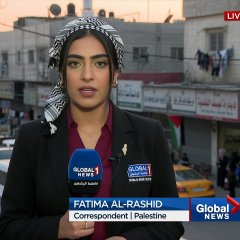
Gulf/MENA Correspondent at Global1.News. Based in Doha, covering Gulf politics, energy markets, diplomacy, and development across the Middle East and North Africa. Tracks the economic transformation of the Gulf states.











Comments (0)