
US-Iran War Enters New Phase as Energy Routes Shut
The United States has conducted ten consecutive nights of strikes against Iranian military infrastructure, prompting Iranian missile and drone attacks on US positions in Bahrain, Kuwait and Jordan while closing the Strait of Hormuz to tanker traffic. US-Iran War Enters New Phase as Energy Routes Shut Beirut, Lebanon – July 22, 2026 — President Donald Trump stated that the United States is “not finished at all” with Iran after Central Command targeted missile launch sites, .
The United States has conducted ten consecutive nights of strikes against Iranian military infrastructure, prompting Iranian missile and drone attacks on US positions in Bahrain, Kuwait and Jordan while closing the Strait of Hormuz to tanker traffic.
US-Iran War Enters New Phase as Energy Routes Shut
Beirut, Lebanon – July 22, 2026 — President Donald Trump stated that the United States is “not finished at all” with Iran after Central Command targeted missile launch sites, command centers and air-defense systems for the tenth straight night. Seventeen US service members have been killed since the campaign began, including one soldier who died in northern Iraq while clearing unexploded ordnance from a downed Iranian drone.
US Campaign Targets Core Iranian Capabilities
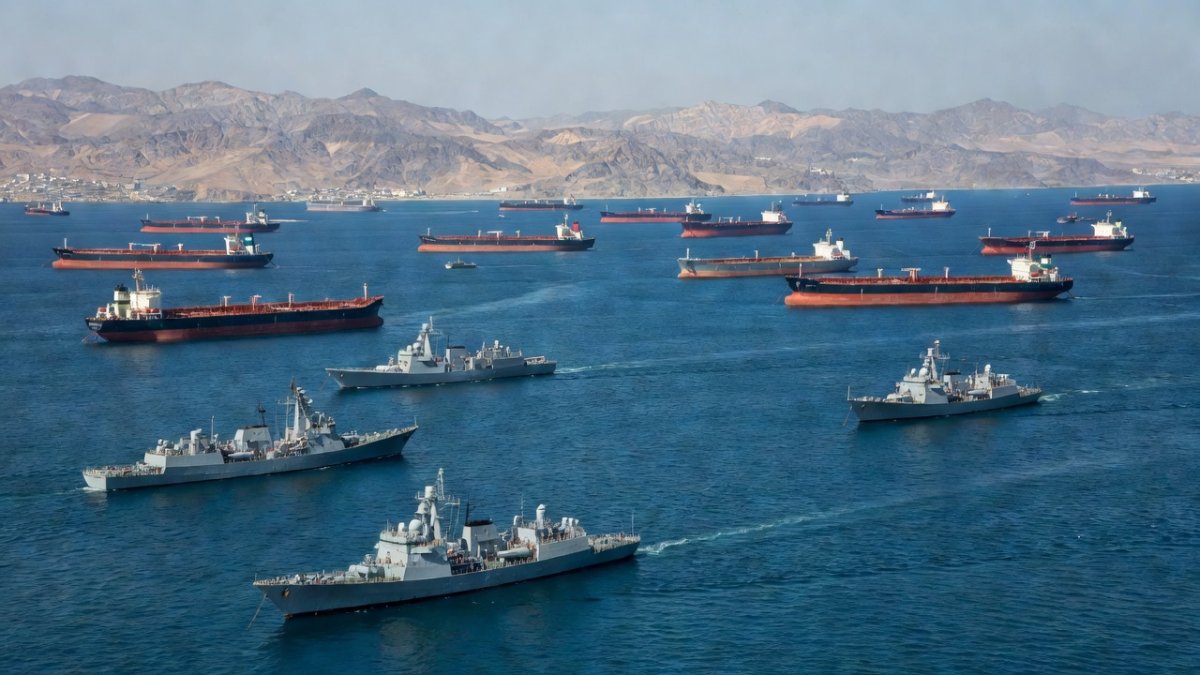
US Central Command has struck coastal surveillance sites and maritime facilities along Iran’s southern coast in addition to inland command nodes. These operations aim to degrade Iran’s ability to project force through the Strait of Hormuz. Former National Intelligence Manager for Iran Norman Roule noted that the targeting list reflects a deliberate effort to neutralize both offensive and defensive systems before any diplomatic opening.
Since the initial February 2026 exchanges following the collapse of indirect Vienna talks, US Central Command operations have shifted from limited retaliatory strikes on proxy facilities in Iraq and Syria to systematic degradation of Iran’s integrated air-defense network. Early raids focused on radar installations near Bandar Abbas and the 15th Khordad air-defense site. By night five, targeting expanded to include coastal surveillance radars at Jask and the missile storage depots at Khojasteh, reflecting a deliberate evolution toward suppressing Iran’s anti-access capabilities in the Persian Gulf.
Over the subsequent nights, the campaign incorporated precision strikes on command nodes at the Khatam al-Anbiya headquarters in Tehran and air-defense batteries protecting the Bushehr sector. This progression mirrors the 1999 NATO campaign against Yugoslav integrated air defenses, where initial suppression of enemy air defenses enabled deeper strikes. Iranian sources confirm losses at these locations, underscoring how the ten-night sequence has progressively eroded Tehran’s ability to contest maritime approaches.
Iranian Retaliation and Regional Reach
Iran’s Islamic Revolutionary Guard Corps has claimed strikes on US assets in Jordan while US embassies issued warnings to citizens in Bahrain. These actions demonstrate Tehran’s willingness to expand the battlefield beyond its own territory. Hani Sabra of Alef Advisory observed that Iran is calibrating responses to impose costs without triggering an all-out regional war that would further isolate it.
The IRGC’s asymmetric doctrine relies on layered proxy networks to multiply pressure points without committing conventional forces. Iraqi militias such as Kataib Hezbollah and Harakat al-Nujaba have conducted eight rocket and drone attacks on U.S. facilities in Erbil and Al-Asad since 15 July, according to the Institute for the Study of War. In Yemen, Houthi forces launched anti-ship missiles at two Greek-flagged tankers transiting the Bab el Mandeb on 19 July, forcing Maersk to suspend Red Sea sailings. Syrian-based groups have intermittently shelled U.S. positions near Al-Tanf. These calibrated strikes, as noted by Hani Sabra, aim to raise U.S. costs while preserving deniability and avoiding direct confrontation that could unify Gulf states against Tehran.
Nuclear Site Threat Raises Stakes
President Trump has singled out the “Pickaxe Mountain” area, a suspected nuclear-related facility, for potential heavy strikes. This threat directly links the current conventional campaign to Iran’s nuclear program. Regional capitals now weigh whether Washington will accept a limited ceasefire or press for deeper degradation of Iran’s nuclear infrastructure.
The “Pickaxe Mountain” facility corresponds to a hardened underground complex near the Zagros range identified in Israeli intelligence assessments. Post-JCPOA withdrawal, Iran has accumulated over 5,000 kilograms of 60-percent enriched uranium. This stockpile exceeds the breakout threshold outlined in previous red-line discussions surrounding Fordow and Natanz. Israeli officials assess that Pickaxe Mountain incorporates centrifuge halls designed to withstand bunker-buster munitions. The site’s development since 2021 reflects Tehran’s strategy of dispersing enrichment capacity beyond the three declared facilities, raising the operational threshold for any preventive action.
Energy Chokepoints and Price Shock
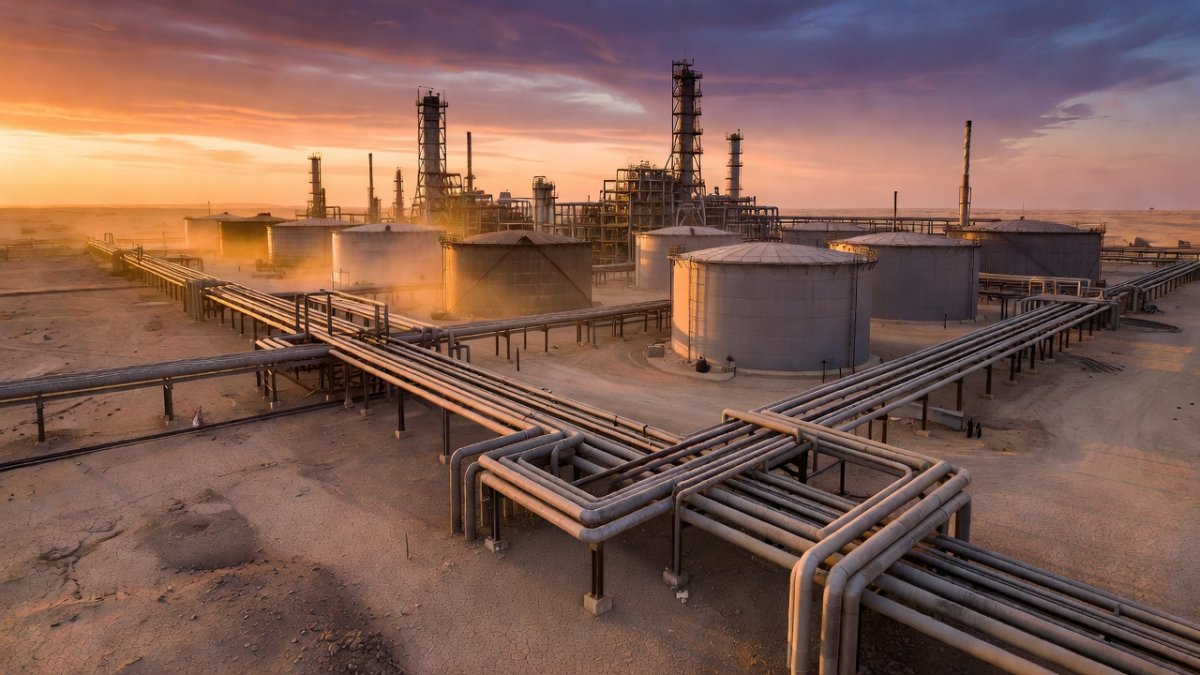
The effective closure of the Strait of Hormuz has halted tanker transit, while Houthi statements have banned shipping to Saudi ports via the Bab el Mandeb. Shipping executives describe the dual closure as unprecedented. Analysts project that sustained disruption could push Brent crude toward $150 per barrel, accelerating Gulf states’ diversification timelines and increasing pressure on OPEC+ cohesion.
Closure of the Strait of Hormuz alongside Houthi interdiction of the Bab el Mandeb has exposed Gulf economies to acute revenue shocks. Saudi Arabia’s Vision 2030 projects face immediate financing gaps. The UAE’s diversification into tourism and finance offers partial insulation, yet ADNOC’s export terminals remain vulnerable to secondary effects on insurance premiums. Qatar’s LNG cargoes, rerouted around the Cape, incur delays that threaten European winter contracts.
These disruptions invite comparison to the 1973 embargo and the 1990 Gulf War. The 2022 Ukraine crisis demonstrated how coordinated releases from strategic reserves can moderate spikes, yet current OPEC+ spare capacity stands at only 2.5 million barrels. Alternative routes such as the East-West pipeline to Yanbu and the UAE’s Fujairah terminal provide limited relief, handling at most 2 million barrels combined.
Lebanon and Israeli Withdrawal Dynamics
The Lebanese army has begun deploying in southern Lebanon following the Israeli withdrawal. President Trump’s July 21, 2026 meeting with Lebanese President Joseph Aoun at the White House signals renewed US engagement with Beirut. Lebanese officials seek to prevent Hezbollah from exploiting the US-Iran fighting to reassert influence along the border.
Hezbollah’s operational capacity has been significantly degraded by Israeli operations since late 2024, with senior commanders eliminated and rocket inventories reduced by an estimated 40 percent. The Lebanese Army’s deployment south of the Litani River under UNIFIL coordination represents an attempt to fill the resulting vacuum. President Joseph Aoun’s meeting with President Trump focused on securing reconstruction financing tied to verified Hezbollah disarmament milestones. Internal Lebanese politics reveal tensions between Aoun’s central-government consolidation and Amal-Hezbollah parliamentary blocs wary of ceding southern influence. The emerging ceasefire framework seeks Israeli withdrawal from border points in exchange for Lebanese state control.
ASEAN and Broader Great-Power Ripples
Foreign ministers meeting in Manila placed the US-Iran conflict at the center of energy-security discussions. Asian importers face immediate supply risks and are accelerating alternative sourcing arrangements. The episode underscores how Middle East kinetic escalation now directly shapes Indo-Pacific strategic calculations.
Japan and South Korea have activated emergency LNG procurement from U.S. Gulf Coast terminals and Australian fields, with Tokyo securing an additional 1.2 million tons through December, per IEA data. India has diverted cargoes from Russia’s Arctic LNG 2 project. Semiconductor supply chains face 15–20 percent cost increases if Brent remains above $120, warns CSIS. China has deployed three Type 052D destroyers to the Arabian Sea under the guise of anti-piracy patrols, signaling readiness to protect energy lanes. ASEAN members such as Malaysia and Indonesia, which imported 180,000 barrels per day from Iran in 2025, now navigate U.S. secondary sanctions while relying on American security guarantees in the South China Sea.
Humanitarian and Economic Toll
More than 120,000 civilians have fled Iranian border provinces into Iraqi Kurdistan since 10 July, according to UNHCR figures, overwhelming Erbil’s reception centers already hosting 650,000 Syrian refugees. Civilian casualties inside Iran exceed 240 from strikes near Bushehr and Bandar Abbas, per Iranian state media. Food-price inflation has reached 34 percent in Lebanon and 28 percent in Jordan since Hormuz closure, while Egypt’s wheat import bill is projected to rise $1.1 billion by year-end, according to the World Bank. These pressures compound existing debt crises and risk renewed protests across the Levant and North Africa.
Strategic Calculus and Second-Order Effects
Washington’s leverage rests on sustained air and naval superiority plus the threat of deeper nuclear-site strikes. Tehran’s leverage lies in its ability to keep the Strait closed and to activate proxies across Iraq, Syria and Yemen. Both sides recognize that a prolonged closure risks global recession and potential intervention by other powers. Sunni Gulf states, already diversifying their economies, now accelerate security partnerships outside traditional frameworks. The current phase of the conflict therefore tests not only US-Iran red lines but the resilience of the entire regional security architecture.
Russia and China have adopted cautious hedging postures, with Moscow offering rhetorical support through Foreign Minister Lavrov’s statements at the UN Security Council while avoiding direct material commitments. Beijing has urged restraint via its special envoy to the Middle East, mindful of energy import dependencies. Gulf states including Saudi Arabia and the UAE pursue parallel diplomatic tracks, engaging both Washington and Tehran to preserve hedging options amid recession risks projected by the IMF at 1.8 percent global GDP contraction. Turkey has positioned itself as a mediator, with Foreign Minister Hakan Fidan proposing Istanbul-hosted talks. The humanitarian dimension includes displacement of over 120,000 civilians along the Iran-Iraq border, compounding existing refugee pressures on Lebanon and Jordan.
By Malik Hassan, Staff WriterThis article was produced with AI-assisted research and editorial support. Reporting is based on sources cited in the article.
What's Your Reaction?
 Like
0
Like
0
 Dislike
0
Dislike
0
 Love
0
Love
0
 Funny
0
Funny
0
 Wow
0
Wow
0
 Sad
0
Sad
0
 Angry
0
Angry
0
Middle East Correspondent at Global1.News. Based in Beirut, covering politics, conflict, energy, and society across the Middle East. Brings context and depth to a region often reduced to headlines.













Comments (0)