
Israel's Military Order Seizes 5.2 Dunams of Palestinian Land in Occupied East Jerusalem
Israeli military order seizes 5.2 dunams in Jaba for settlement road until 2028, fragmenting Palestinian land, destroying livelihoods, and violating international law. Expansions detail resident hardships, historical confiscation patterns, legal breaches, and threats to a contiguous Palestinian state amid accelerating settlement growth.
Israel's Military Order Seizes 5.2 Dunams of Palestinian Land in Occupied East Jerusalem
Occupied East Jerusalem — Article continues...
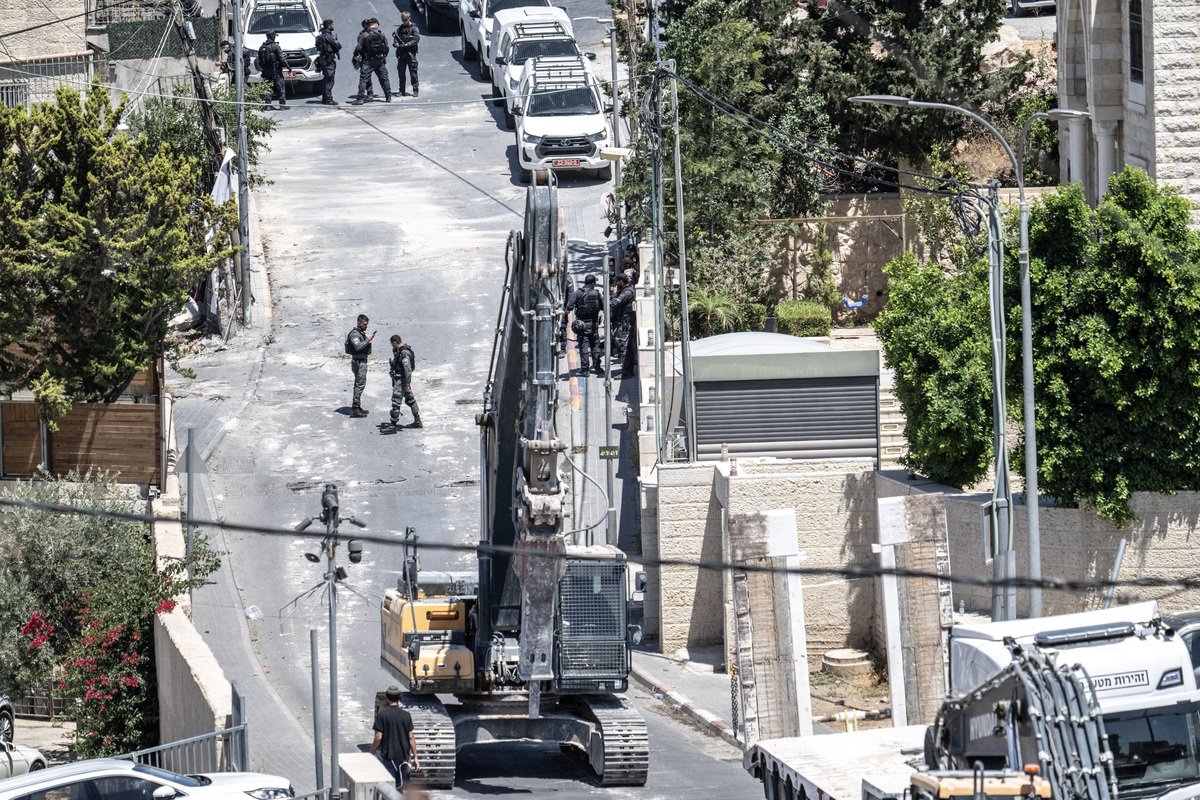
In a stark escalation of land control measures, Israeli authorities issued a military order on July 21, 2026, seizing 5,283 square meters in the Palestinian town of Jaba to build a settlement road linking illegal outposts to occupied East Jerusalem. This temporary appropriation, extending until December 2028, cuts through vital agricultural zones and accelerates the fragmentation of Palestinian territory under the guise of infrastructure. Human rights observers see it as part of a deliberate pattern that displaces communities, erodes livelihoods, and undermines any prospect for a viable Palestinian future.
The Details of the Land Seizure Order
Israeli authorities issued a military order on July 21, 2026, to temporarily seize 5,283 square meters of land in the town of Jaba, north of occupied East Jerusalem. The Jerusalem Governorate reported the order through Anadolu Agency, noting that it targets areas known as Al-Muntar, Ras al-Marj and Shaab al-Ghuzoul. The seizure covers a 725-meter-long plot and remains scheduled until December 31, 2028.
Palestinian officials described the order as part of ongoing efforts to control additional territory. The Jerusalem Governorate stated that such orders allow Israeli forces to take control of Palestinian land for infrastructure projects tied to settlements.
The Proposed Settlement Road and Its Route
The military order supports construction of a settlement road linking Route 60 near the Jaba checkpoint to the separation wall near the illegal Neve Yaakov settlement. This route would run through the seized land in Jaba. Palestinian authorities noted that the project aims to connect illegal settlements directly to occupied East Jerusalem.
The Jerusalem Governorate explained that settlement road projects serve to impose new facts on the ground. These roads expand networks that link settlements while restricting Palestinian movement in the surrounding areas.
Impact on Residents of Jaba
Residents of Jaba face direct consequences from the loss of agricultural and residential land. The seizure removes access to plots used for farming and daily activities in a town already affected by checkpoints and the separation wall. Families in the area report reduced space for future development and increased isolation from Jerusalem.
Local voices describe the order as another restriction on their ability to maintain normal life. The Jerusalem Governorate highlighted how these seizures disrupt community ties and limit economic opportunities tied to the land.
In Jaba, land seizures have directly curtailed agricultural livelihoods by removing access to olive groves and grazing areas that families have cultivated for generations. Farmers now navigate restricted zones where permits are required for entry, often granted only during narrow seasonal windows, resulting in unharvested crops and declining yields. Water access has similarly deteriorated, as pipelines serving Palestinian plots are rerouted or blocked to prioritize settlement infrastructure, forcing residents to rely on costly tanker deliveries that strain household budgets already pressured by movement restrictions.
The checkpoint regime compounds these hardships, with multiple military posts controlling entry and exit from the village and subjecting residents to prolonged searches that disrupt commutes to Jerusalem for work or medical care. The separation wall further fragments community ties, isolating extended families across its path and limiting social interactions that once sustained local networks. Local businesses, particularly those dependent on cross-village trade, report sharp revenue drops as customers face unpredictable delays, pushing some enterprises toward closure and accelerating economic dependence on external aid.
Patterns of Land Confiscation in East Jerusalem
Land confiscation in occupied East Jerusalem has followed a consistent approach over decades. Israeli authorities have used military orders to acquire territory for roads, walls and settlements, gradually altering the landscape around Palestinian towns like Jaba. This process connects individual seizures to larger infrastructure plans.
The Jerusalem Governorate noted that these actions form part of de facto annexation efforts. Historical records show repeated use of temporary seizure orders that extend control over Palestinian property without formal transfer of title.
Land confiscation patterns in East Jerusalem reveal a consistent trajectory, with prior seizure orders in Jaba and Sur Baher dating back to the early 2000s that transferred hundreds of dunams to state control under absentee property laws and military declarations. These actions have paved the way for settlement expansion while systematically denying Palestinian building permits through zoning plans that designate most village land as agricultural or green space. The July 8, 2026 demolition of a four-apartment building in Sur Baher owned by Fuad Awadallah exemplifies this approach, where structures erected on family land without permits — unobtainable under prevailing regulations — were razed, displacing multiple households and underscoring the legal barriers embedded in the planning system.
Discriminatory zoning and permit denial operate as interconnected mechanisms that limit Palestinian development to a fraction of available land, while adjacent settlement areas receive expedited approvals and infrastructure support. In Jaba and Sur Baher, this has produced a patchwork of isolated enclaves surrounded by confiscated territory, eroding the viability of sustained residency. Historical records show repeated cycles of seizure followed by settlement construction, reinforcing a framework where Palestinian land use is curtailed to accommodate demographic shifts favoring Israeli control.
Context Under International Law
Under international law, these seizures contravene UN Security Council Resolution 2334, which reaffirms that settlements in the occupied Palestinian territory lack legal validity and constitute a violation of international humanitarian law. The International Court of Justice's 2004 advisory opinion on the separation wall further established that such measures, including associated land appropriations, breach obligations under the Fourth Geneva Convention by altering the demographic composition of occupied territory. The International Criminal Court has maintained jurisdiction over settlement-related activities, viewing them as potential war crimes involving population transfer, with ongoing examinations documenting systematic displacement patterns tracked by UNOCHA reports.
UNOCHA documentation records thousands of Palestinians displaced annually due to settlement expansion and associated demolitions, highlighting how these practices undermine the right to self-determination. Resolutions and opinions collectively frame land seizures not as isolated administrative acts but as elements of a broader policy that contravenes prohibitions on acquiring territory by force. This legal architecture provides a basis for accountability mechanisms, though enforcement remains limited amid ongoing implementation of seizure orders.
Statistics on Settlement Expansion
Approximately 750,000 Israeli settlers currently live in 141 illegal settlements and 224 outposts across the occupied West Bank, including occupied East Jerusalem. Palestinian authorities report that settlement growth has accelerated alongside construction of bypass roads. Since October 2023, the West Bank has recorded 1,181 Palestinian deaths, around 13,000 injuries and nearly 24,000 arrests linked to army and settler actions.
These figures illustrate the scale of demographic change occurring in the territory. The Jerusalem Governorate connected the Jaba order to this wider expansion of settlement infrastructure.
Consequences for a Future Palestinian State
Settlement expansion and road networks in the West Bank and East Jerusalem reduce the possibility of a geographically contiguous Palestinian state. Palestinian authorities stated that these projects fragment territory and limit options for viable borders. The seizure in Jaba contributes to this fragmentation by linking settlements while cutting through Palestinian areas.
Officials warned that continued land control measures weaken prospects for negotiations. The governorate described the road plan as tied to annexation goals that prioritize settlement connectivity over Palestinian territorial integrity.
The road network under construction through Jaba integrates into a larger settlement bloc strategy that fragments the West Bank into disconnected segments, undermining prospects for a contiguous Palestinian state. By linking settlements east of the Green Line with Jerusalem, these routes prioritize Israeli connectivity while restricting Palestinian access to central areas, effectively carving out enclaves that preclude viable territorial integrity. This infrastructure development accelerates the isolation of villages like Jaba, reducing available land corridors essential for future state viability.
International responses have included EU statements condemning settlement expansion as an obstacle to a two-state solution, alongside Arab League resolutions urging coordinated diplomatic pressure to halt such projects. The United States has played a dual role, with periodic calls for restraint tempered by continued military aid and limited opposition to specific expansions, enabling incremental advances in settlement infrastructure. These dynamics collectively constrain negotiation space, as physical changes on the ground outpace diplomatic efforts to preserve contiguity.
By Fatima Al-Rashid, Staff Writer
This article was produced with AI-assisted research and editorial support. Reporting is based on sources cited in the article.
What's Your Reaction?
 Like
0
Like
0
 Dislike
0
Dislike
0
 Love
0
Love
0
 Funny
0
Funny
0
 Wow
0
Wow
0
 Sad
0
Sad
0
 Angry
0
Angry
0

Gulf/MENA Correspondent at Global1.News. Based in Doha, covering Gulf politics, energy markets, diplomacy, and development across the Middle East and North Africa. Tracks the economic transformation of the Gulf states.














Comments (0)