
Mamdani v. Netanyahu: NYC Mayor's ICC Gambit Shakes US-Israel Diplomatic Norms
The international legal status of Israeli Prime Minister Benjamin Netanyahu has become an unexpected flashpoint in New York City politics, as Mayor Zohran Mamdani explores whether municipal authorities can enforce an International Criminal Court a...
The international legal status of Israeli Prime Minister Benjamin Netanyahu has become an unexpected flashpoint in New York City politics, as Mayor Zohran Mamdani explores whether municipal authorities can enforce an International Criminal Court arrest warrant against the visiting head of state. The controversy, which erupted in early July 2026, has drawn swift rebukes from Israeli diplomats, a forceful intervention from President Donald Trump, and renewed scrutiny of the ICC's reach into American domestic jurisdictions ahead of the UN General Assembly in September.
Mamdani v. Netanyahu: NYC Mayor's ICC Gambit Shakes US-Israel Diplomatic Norms
New York, United States — July 21, 2026 —
Geopolitical Context — Framing
The July 2026 statement by New York City Mayor Zohran Mamdani placed the city at the center of a diplomatic standoff involving the International Criminal Court warrant issued against Israeli Prime Minister Benjamin Netanyahu in November 2024. The warrant cited starvation as a method of warfare and other inhumane acts in Gaza. With the UN General Assembly scheduled for September 2026 in Manhattan, the episode directly links local American politics to the broader Levant conflict involving Israel, Hamas, Hezbollah, and Iranian influence networks.
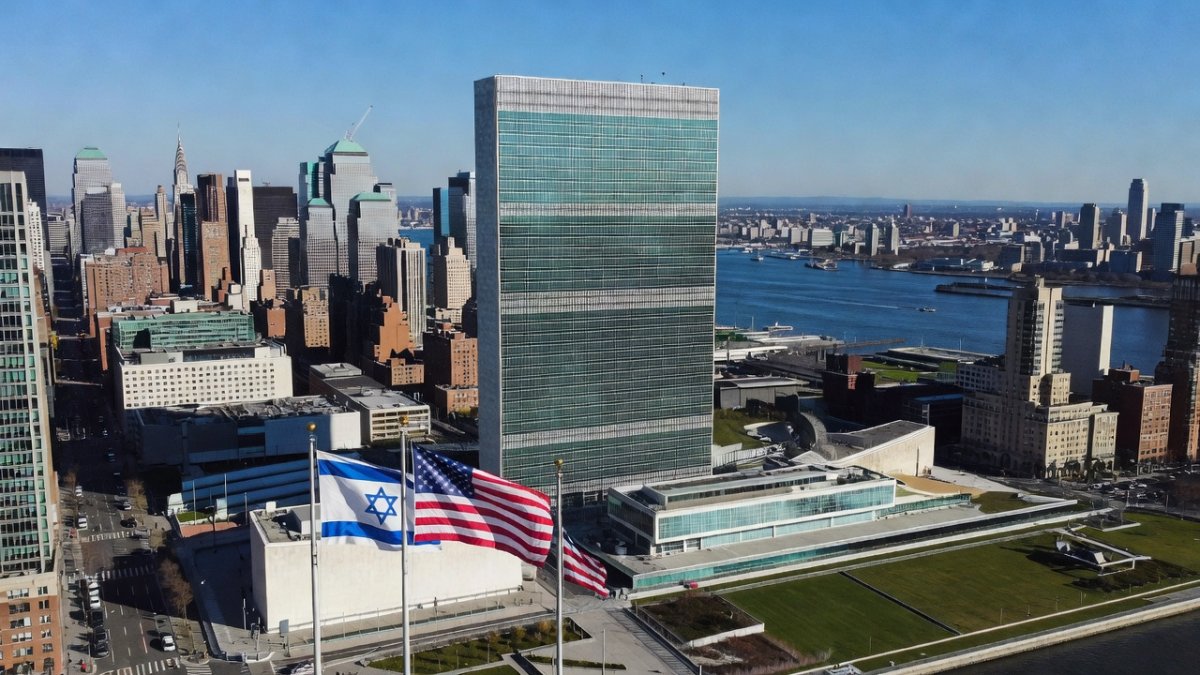
Regional powers have watched the development closely. Jordan and Egypt, both signatories to peace treaties with Israel, expressed concern that any enforcement attempt could destabilize already fragile border security arrangements. Meanwhile, Iranian state media framed the episode as evidence of eroding U.S. support for Israel, a narrative aimed at bolstering Shia militia recruitment in Iraq and Syria.
The Mamdani Doctrine — Who he is and legal maneuvering
Zohran Mamdani, 34, assumed office as New York City’s 112th mayor on January 1, 2026. A Democrat and Democratic Socialists of America member, he previously represented Astoria, Queens, in the New York State Assembly. On July 7, 2026, he told The New York Times that his office was “looking into” executing the ICC warrant against Netanyahu. Mamdani confirmed consultations with the NYC Law Department but acknowledged that no new local legislation would be required or possible.
Legal experts note that ICC warrants rely on national governments for enforcement. The United States is not a party to the Rome Statute, and New York City possesses no independent foreign policy authority. Mamdani’s approach therefore functions primarily as political signaling rather than operational policy, calibrated to appeal to progressive constituencies while testing the boundaries of municipal power in international affairs.
Zohran Mamdani, a Muslim-American assemblymember of Ugandan-Indian descent, rose through New York City’s progressive ranks via the Democratic Socialists of America. His platform fuses domestic equity concerns with vocal criticism of Israeli policy, reflecting a generational shift among younger Democratic voters. This background positions him to frame local policing decisions as extensions of global justice commitments rather than mere municipal administration.
The DSA’s national platform endorses the Boycott, Divestment and Sanctions movement and rejects the International Holocaust Remembrance Alliance definition of antisemitism that includes certain criticisms of Israel. In city councils from Chicago to San Francisco, similar resolutions have produced symbolic divestment measures and sister-city pairings with Palestinian municipalities. Mamdani’s threat to arrest Prime Minister Netanyahu extends this “municipal foreign policy” trend into criminal-justice territory, testing the boundary between expressive local governance and federal supremacy over diplomacy.
New York City Charter provisions and state law limit the NYPD’s authority to enforce foreign arrest warrants absent federal concurrence. Any attempt to detain a sitting head of state would likely trigger immediate federal preemption and lawsuits under the Supremacy Clause. Politically, Mamdani must weigh enthusiastic support from his DSA base against donor flight and moderate Democratic defections that could stall his first-year legislative agenda on housing and transit.
Israel's Diplomatic Counter-Offensive — Danon, Akunis response
Israeli UN Ambassador Danny Danon immediately rejected the proposal, stating that “if anyone should be arrested, it is Mamdani.” Danon accused the mayor of fueling antisemitism and neglecting core municipal responsibilities. Israel’s Consul-General in New York, Ofir Akunis, added that Mamdani possesses “no authority” to act on ICC matters. Both officials emphasized that the United States does not recognize ICC jurisdiction over its citizens or allies.
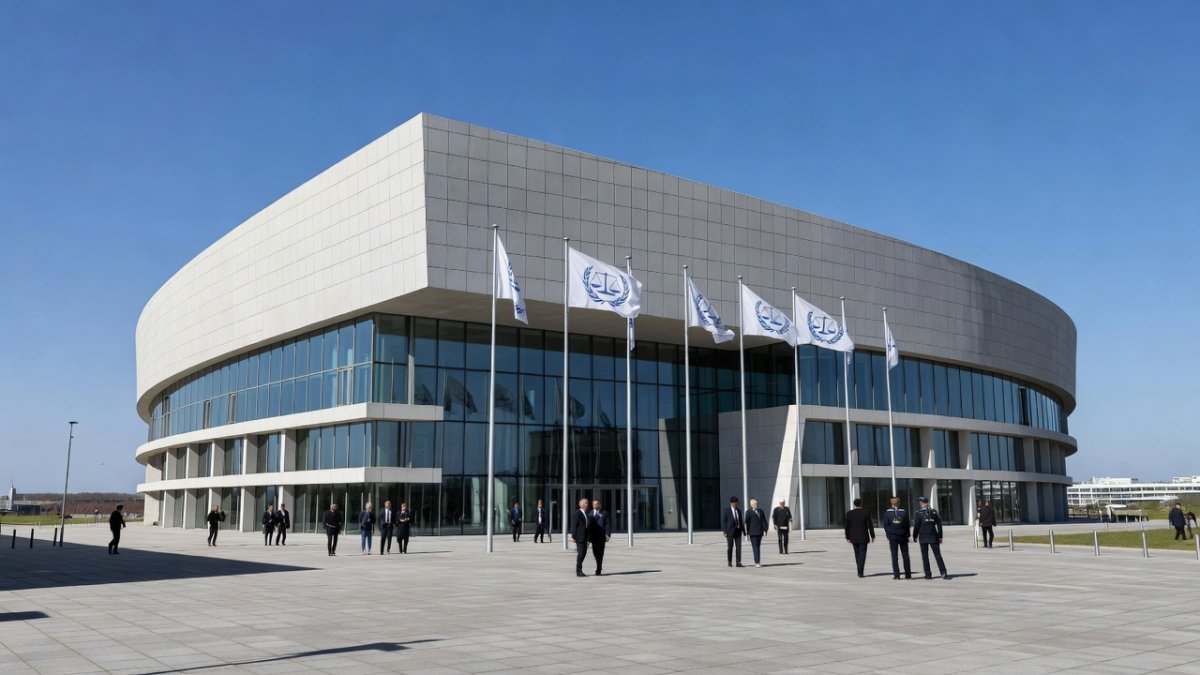
Israeli strategy focused on rapid public rebuttal and quiet coordination with federal authorities. Jerusalem calculated that swift condemnation would deter other U.S. cities from similar gestures and reinforce the message that bilateral security cooperation remains insulated from local political theater.
Danny Danon, Israel’s former UN ambassador and current Knesset member, built a reputation for confrontational interventions against Iranian and Palestinian representatives. His style favors direct accusations of institutional bias rather than quiet lobbying, a tactic now redirected toward New York City Hall. Coordination between the Israeli consulate in Manhattan and the UN mission has intensified, pooling legal memoranda and intelligence assessments on Mamdani’s statements.
Israeli public-diplomacy efforts have circulated talking points emphasizing the legal immunity of heads of government under customary international law. Parallel outreach in Washington seeks assurances that the State Department will classify any local arrest attempt as a violation of the Foreign Sovereign Immunities Act. These moves mirror earlier campaigns against city-council BDS resolutions in Los Angeles and Seattle, where federal letters and congressional hearings ultimately neutralized municipal measures.
Israeli strategists view the Mamdani episode as a test case for containing progressive municipal activism before it spreads to other sanctuary cities. Success would reinforce the message that foreign-policy enforcement remains a federal monopoly, while failure could embolden additional local challenges to bilateral agreements.
Washington Weighs In — Trump's intervention
On July 20, 2026, President Trump posted on Truth Social that “Benjamin Netanyahu will not be arrested, in any way, shape, or form, while in the United States of America.” The statement aligned with longstanding U.S. policy of non-cooperation with the ICC regarding Israeli officials. Federal agencies, including the State Department and Department of Justice, reiterated that ICC enforcement mechanisms do not extend to municipal governments.
Trump’s intervention served multiple audiences. Domestically, it reassured pro-Israel voters ahead of midterm cycles. Regionally, it signaled continuity in U.S. commitment to Israel despite domestic political turbulence, a message directed at Gulf capitals weighing normalization timelines with Riyadh and Abu Dhabi.
The ICC Question — International justice debate
The ICC warrant against Netanyahu remains contested. Issued in November 2024, it rests on allegations of starvation tactics and other acts during operations in Gaza. Critics argue the court applies selective standards, noting the absence of comparable warrants against leaders in Syria, Yemen, or Sudan. Supporters maintain that the Rome Statute framework provides the only existing mechanism for accountability in asymmetric conflicts.
Analysis of enforcement patterns shows that ICC warrants succeed primarily when backed by major powers or when targets travel to cooperating jurisdictions. In the U.S. context, the warrant carries symbolic weight but no practical legal force at the city level, limiting its impact to diplomatic friction rather than operational risk.
The ICC opened a preliminary examination into the Palestinian situation in 2015 and formally launched an investigation in 2021 under Prosecutor Fatou Bensouda. The 2024 arrest-warrant applications against Israeli and Hamas leaders mark the first time a sitting Israeli prime minister has faced such scrutiny. Precedents include the 2023 warrant for Vladimir Putin and earlier warrants for Sudanese and Libyan officials, illustrating the court’s willingness to target heads of state when jurisdiction is asserted.
The United States, a non-signatory, has alternated between sanctions and engagement. The Trump administration imposed sanctions on ICC personnel in 2020; the Biden administration revoked them before reimposition occurred. Because Israel is also a non-party, enforcement of any warrant inside U.S. territory would require either Israeli surrender or host-state cooperation that Washington has consistently withheld.
Critics argue the court applies disproportionate scrutiny to Israel relative to conflicts in Syria or Yemen, while supporters contend the court is finally extending accountability to democratic allies. The Mamdani threat injects this debate into domestic U.S. politics, forcing local officials to navigate the gap between symbolic solidarity and enforceable international law.
Regional Implications — For Israel, Palestinians, US-ME relations
The episode arrives at a sensitive moment for Israeli-Palestinian dynamics. Hamas and Palestinian Islamic Jihad have cited the warrant in propaganda, while the Palestinian Authority in Ramallah welcomed any additional pressure on Israeli leadership. At the same time, Israeli security assessments indicate heightened vigilance around Netanyahu’s travel, including expanded coordination with U.S. federal protective services.
For Washington’s regional posture, the Mamdani episode underscores the challenge of insulating bilateral alliances from subnational political actors. Gulf states monitoring the Abraham Accords trajectory received reassurance from the federal response, yet the incident highlighted how domestic U.S. polarization can generate secondary effects on Arab-Israeli normalization timelines. Iran, for its part, continues to portray the episode as evidence of shifting American priorities, seeking to leverage the narrative in talks with Russia and China over sanctions relief.
Ultimately, the episode illustrates the limits of municipal authority in foreign affairs while exposing the persistent gap between international legal aspirations and enforcement realities in the Middle East.
Gulf capitals have registered quiet concern that the episode could complicate normalization timetables under the Abraham Accords. Saudi and Emirati officials continue technical talks on investment and security cooperation, yet any perception that U.S. cities can unilaterally constrain Israeli leaders risks domestic political costs for Arab governments already facing Islamist opposition.
Iranian state media has amplified Mamdani’s remarks as evidence of eroding U.S. support for Israel, pairing the story with renewed calls for Palestinian unity. Hamas and Palestinian Islamic Jihad statements from Gaza have similarly welcomed the development, though their operational capacity remains constrained by ongoing conflict and reconstruction needs.
At the UN General Assembly, the controversy supplies additional ammunition for annual resolutions critical of Israel. While these texts rarely alter facts on the ground, they contribute to incremental diplomatic isolation that Israeli planners must weigh against deepening ties with Abraham Accords signatories and emerging Asian partners.
By Malik Hassan, Staff WriterThis article was produced with AI-assisted research and editorial support. Reporting is based on sources cited in the article.
What's Your Reaction?
 Like
0
Like
0
 Dislike
0
Dislike
0
 Love
0
Love
0
 Funny
0
Funny
0
 Wow
0
Wow
0
 Sad
0
Sad
0
 Angry
0
Angry
0
Middle East Correspondent at Global1.News. Based in Beirut, covering politics, conflict, energy, and society across the Middle East. Brings context and depth to a region often reduced to headlines.












Comments (0)