
Cottage Cheese Crisis Expands to White Cheese as Tnuva Supply Chain Disruption Deepens
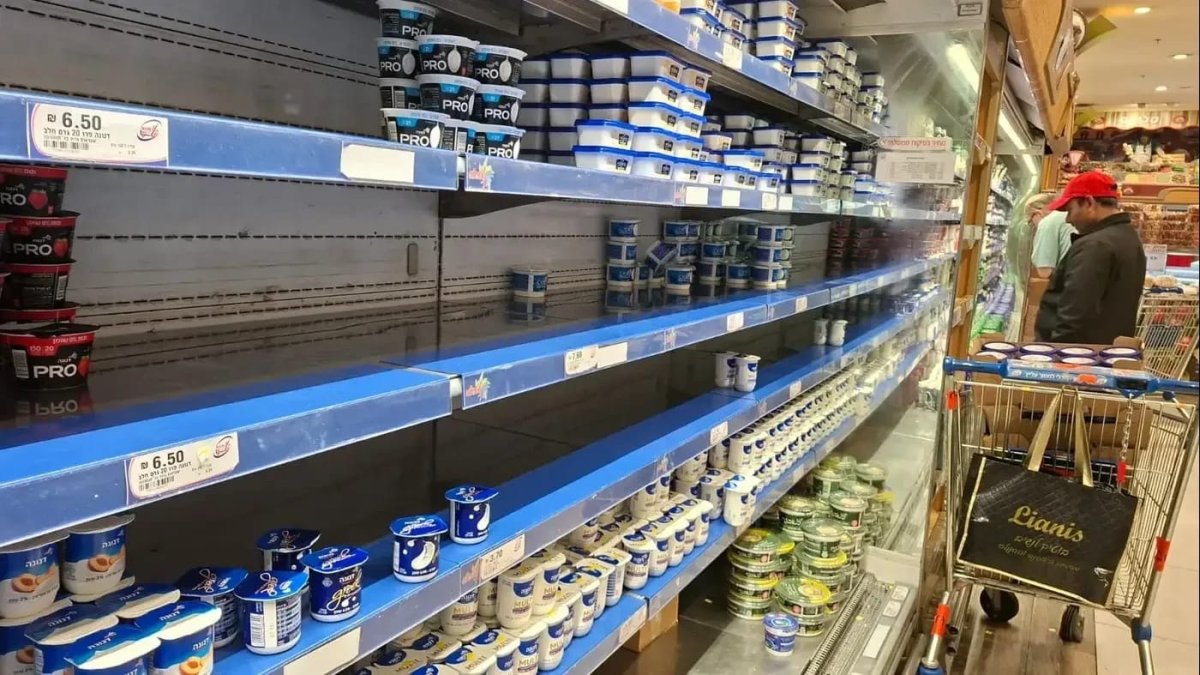
In recent days, the shortage of cottage cheese in Israel has escalated into a broader crisis affecting white cheese products, driven by a prolonged technical malfunction at Tnuva's Alon Tavor plant. This disruption, compounded by security-related travel restrictions on Dematic technicians from the KION Group, has left supermarket shelves empty at chains like Shufersal. Consumers across the country are feeling the pinch as supply chains strain under these pressures.
The Expanding Dairy Supply Crisis Unfolds
The shortage of cottage cheese in Israel has now spread to white cheese products across retail outlets. This development stems directly from ongoing disruptions at Tnuva's automated warehouse in Alon Tavor. Supply chains that normally deliver fresh dairy to households face mounting pressure in recent months.
Israeli consumers encounter empty shelves more frequently at major supermarket chains. The situation affects daily routines in cities and towns where families rely on consistent access to staple items. Economic realities tied to the security environment amplify these distribution challenges.
Industry observers note that the crisis highlights vulnerabilities in automated systems critical to Israel's food sector. Tnuva remains the dominant player in the dairy market, making its operational setbacks felt nationwide. Supply chain resilience becomes a pressing topic amid broader regional tensions.
Analysis of retail data from this week shows that major outlets have reported stockouts lasting several days in succession, forcing shoppers to travel farther or switch brands entirely. Historical patterns in Israel's dairy sector indicate that such concentrated disruptions rarely resolve quickly without external intervention, raising questions about long-term preparedness. The involvement of international partners like the KION Group adds layers of complexity when geopolitical factors intervene.
Broader market monitoring reveals that smaller regional dairies have attempted to fill gaps but lack the scale to match Tnuva's output volume. This imbalance underscores how automation at facilities like Alon Tavor has centralized production risks over the past decade. Families in peripheral areas face amplified difficulties compared to urban centers with more diverse retail options.
Historical Context
The current dairy shortages echo the 2011 cottage cheese protests, when consumers boycotted Tnuva products over sharp price hikes that reached 40 percent in some cases. Those demonstrations, sparked by social media campaigns, led to regulatory scrutiny and temporary price caps but did little to address underlying supply chain fragilities. Since then, Israel's dairy industry has shifted heavily toward automation, with Tnuva investing in facilities like the Alon Tavor plant to cut labor costs and boost efficiency amid rising global competition.
Key changes include greater dependence on foreign technology providers such as Dematic, a move that improved throughput during stable periods yet exposed new vulnerabilities during security events. Unlike 2011, when protests focused on pricing, today's issues center on physical distribution failures that no amount of consumer activism can immediately fix. Government data from the intervening years shows dairy consumption per capita has risen steadily, amplifying the impact of any single-point breakdown.
Technical Malfunction Disrupts Warehouse Operations
A computer malfunction at the Alon Tavor facility has paralyzed pallet movement and truck dispatches for over two months. Cottage cheese sits packaged and ready yet fails to reach distribution networks effectively. This technical failure originates in the system managing automated storage and retrieval processes.
Tnuva's teams have shifted to manual operations as a temporary measure to keep limited flows moving. Such workarounds prove insufficient for meeting full market demand. The automated warehouse represents a key investment in efficiency for Israel's largest dairy producer.
Connections between this tech infrastructure and national supply security grow clearer each week. Disruptions at Alon Tavor ripple through retail networks serving households from the north to central regions. Innovation in logistics faces real tests when core systems encounter prolonged issues.
Internal assessments at Tnuva indicate the malfunction traces back to software integration errors that emerged after routine updates, a common risk in highly automated environments. Manual handling has reduced daily output by roughly half, according to industry estimates, leaving thousands of units stranded. This situation highlights how even advanced systems require constant expert oversight that remote tools cannot fully replicate.
Dematic Support Faces Travel Restrictions
Technicians from Dematic, a subsidiary of Germany's KION Group, normally handle maintenance at the Alon Tavor site. Their scheduled visit during Operation Lion's Roar was canceled due to the prevailing security situation. Remote assistance via Zoom now forms the primary channel for troubleshooting.
Tnuva employees coordinate with these experts from afar while attempting manual interventions on site. The arrangement underscores how international partnerships in industrial automation intersect with Israel's security environment. Dematic's role in servicing advanced warehouse technology remains essential yet constrained.
Broader implications touch on Israel's reliance on specialized foreign expertise for high-tech supply chain components. Economic dynamics in the dairy sector depend on timely resolutions to such technical dependencies. Daily operations at facilities like Alon Tavor illustrate these interconnected challenges.
Similar dependencies have surfaced in other Israeli industries, where KION Group components power logistics for multiple sectors beyond dairy. The cancellation of on-site visits has delayed diagnostic work by weeks, forcing Tnuva to prioritize high-volume items while lower-priority stock accumulates. This pattern illustrates the trade-offs of globalized automation in a region prone to sudden travel disruptions.
Government Response
The Agriculture Ministry has issued statements acknowledging the supply disruptions but stopped short of announcing direct interventions, citing the technical nature of the issue at Tnuva's Alon Tavor plant. Officials from the Economy Ministry have met with retail representatives to discuss inventory monitoring, while the Finance Ministry has reviewed potential subsidies for alternative dairy imports if shortages persist into the coming months. No emergency price controls have been activated yet, though regulators are tracking compliance with existing dairy pricing agreements.
Parliamentary committees have scheduled hearings to examine supply chain resilience, drawing on input from both Tnuva executives and Dematic representatives. These steps reflect a cautious approach that prioritizes private-sector resolution over immediate state action, consistent with policies developed after earlier food sector incidents.
Consumer Reports Highlight Empty Shelves
Shoppers describe visiting multiple branches without locating basic white cheese products. One account shared with Walla noted three different chains in a single neighborhood yielding no results. These experiences reflect widespread frustration in routine grocery runs.
Retail environments in urban centers show consistent gaps in dairy sections. Families adjust meal planning around unavailable staples that once formed reliable options. The visibility of shortages in everyday settings connects directly to production bottlenecks upstream.
Public awareness of the issue spreads through personal encounters at stores like those operated by major chains. Such patterns affect consumer confidence in consistent product availability. Israel's food retail landscape absorbs these pressures amid ongoing external factors.
Shift from Cottage Cheese to White Cheese
With cottage cheese in short supply, demand has transferred to white cheese varieties. This substitution creates additional strain on remaining inventory. The transition occurs as households seek familiar dairy options for regular consumption.
Market sources describe the pattern as an escalating cycle driven by necessity. White cheese products now face the same distribution hurdles previously limited to cottage cheese. Tnuva's output remains ready at the dairy yet encounters barriers in reaching stores.
This demand pivot reveals how interconnected product categories operate within Israel's dairy ecosystem. Economic pressures encourage consumers to stock alternatives when primary choices disappear. Supply chain links between production and retail determine the speed of these shifts.
Demand Growth Tied to Security Conditions
Dairy product demand has increased by about 4 percent since the start of the year. Reduced travel abroad by Israelis contributes to higher domestic consumption. The security situation plays a direct role in altering purchasing patterns.
Households that might have vacationed overseas now direct spending toward local groceries. This change amplifies existing supply constraints at Tnuva's facilities. Broader economic dynamics in the innovation-driven economy intersect with these consumption trends.
Daily life adjustments in response to regional developments influence market fundamentals. Israel's tech and business sectors operate alongside these consumer behavior changes. The dairy sector experiences the effects through sustained elevated demand levels.
Hoarding Behavior Intensifies Shortages
A food market source explains that absence of cottage cheese prompts stockpiling of white cheese. Heavy demand from this behavior accelerates depletion of available stock. The resulting tailspin requires intervention to stabilize flows.
Retail observations confirm accelerated purchasing when shelves begin to thin. Such patterns compound the effects of the warehouse malfunction at Alon Tavor. Consumer responses reflect practical adaptations to perceived scarcity.
These dynamics connect to wider supply chain concerns in Israel's food industry. Tnuva's position as the primary supplier places its operational recovery at the center of resolution efforts. Market stability depends on addressing both technical and behavioral factors.
Effects Reach Price-Controlled and Premium Lines
The shortage extends across 9 percent and 3 percent white cheese options as well as smooth and low-fat varieties. Cream products priced up to NIS 15 also appear affected. Both regulated staples and higher-end items experience distribution shortfalls.
Tnuva's automated systems normally handle this full range of products efficiently. Current limitations expose how a single point of failure impacts diverse segments. Israeli households encounter reduced choices regardless of price point preferences.
Analysis of the dairy market shows these uniform effects stem from the shared warehouse infrastructure. Economic considerations for producers and retailers alike grow more complex under prolonged constraints. Supply reliability remains a shared priority across product tiers.
Tnuva's Role in National Dairy Supply
As Israel's largest dairy company, Tnuva operates critical facilities including the Alon Tavor warehouse. Its output supports a significant portion of domestic consumption needs. Disruptions here carry national implications for food availability.
The company's integration of advanced automation reflects investments in sector modernization. Partnerships with firms like Dematic highlight the global dimension of these technological upgrades. Operational continuity at such sites underpins broader economic stability.
Perspectives from the industry emphasize Tnuva's central position in maintaining supply chains. Challenges at Alon Tavor test the limits of current systems during periods of heightened demand. Israel's dairy economy depends on swift adaptations to these realities.
Supply Chain Vulnerabilities in Focus
The crisis brings attention to automated logistics as a cornerstone of efficient dairy distribution. Reliance on specialized international support introduces additional variables tied to security conditions. Israel's innovation economy benefits from such technologies yet navigates associated risks.
Connections between warehouse performance and retail outcomes appear direct in this instance. Broader lessons emerge for other sectors dependent on similar automated infrastructure. Economic analysis points to the need for robust contingency measures.
Daily operations in facilities like Alon Tavor demonstrate how technical issues translate into consumer-level impacts. Supply chain resilience forms part of ongoing discussions in business and policy circles. Regional context shapes the feasibility of standard maintenance protocols.
Economic Impact
Consumers face added costs from extra travel to stocked stores and occasional premium pricing on substitute imports, with household dairy budgets rising an estimated 8-12 percent in affected regions this month. Inflation metrics already show upward pressure in the food category, as repeated stockouts contribute to broader price volatility tracked by the Central Bureau of Statistics. Families on fixed incomes report reallocating spending away from other essentials to secure basic dairy items.
Retailers such as Shufersal have absorbed some losses through discounted promotions on available stock, yet prolonged shortfalls threaten profit margins across the sector. These localized effects compound national economic challenges tied to security conditions, illustrating how a single automated facility can influence macroeconomic indicators.
International Comparisons
Countries like the Netherlands and Singapore, which also rely heavily on automated food warehouses, maintain redundant manual backup systems and diversified supplier networks to mitigate similar risks. In Germany, KION Group clients often contract local service teams to avoid travel disruptions, a model Israel has not fully adopted. Australia has invested in domestic training programs for automation maintenance, reducing dependence on overseas experts during crises.
These approaches demonstrate that while automation boosts efficiency, successful implementations pair it with contingency planning tailored to local conditions. Israel's unique security environment amplifies the need for such adaptations compared to more stable regions.
Economic Pressures on Households and Markets
Families navigate higher search costs and potential substitutions when staples remain unavailable. These adjustments occur against a backdrop of steady demand growth linked to domestic consumption patterns. Israel's economic landscape absorbs these localized strains.
Retail chains experience uneven inventory levels that affect sales planning. The situation underscores ties between security developments and routine economic activity. Market participants monitor developments at Tnuva for signs of stabilization.
Broader implications touch on inflation dynamics within the dairy category. Consumer behavior shifts influence pricing and availability across related products. Balanced coverage of these trends reveals the interplay of technology, security, and daily needs.
Outlook for Resolution and Recovery
Efforts continue through remote collaboration between Tnuva staff and Dematic experts. Manual processes provide partial relief while full system restoration remains pending. The timeline for complete recovery depends on resolving both technical and access-related barriers.
Stakeholders across the supply chain watch for improvements that could ease pressure on shelves. Israel's dairy sector has navigated prior challenges, offering context for current responses. Sustained attention to automated infrastructure will shape future preparedness.
Connections to the wider economy highlight the importance of reliable food distribution networks. Ongoing developments at Alon Tavor will determine how quickly normal patterns return. This episode illustrates the layered factors influencing Israel's innovation-driven industries amid regional conditions.
By Hannah Berg, Staff WriterThis article was produced with AI-assisted research and editorial support. Reporting is based on sources cited in the article.
What's Your Reaction?
 Like
0
Like
0
 Dislike
0
Dislike
0
 Love
0
Love
0
 Funny
0
Funny
0
 Wow
0
Wow
0
 Sad
0
Sad
0
 Angry
0
Angry
0

Israel Correspondent at Global1.News. Based in Tel Aviv, covering Israeli politics, security, technology, and society. Provides balanced, deeply-sourced reporting on one of the most closely-watched regions in the world.













Comments (0)