
Marcos Condemns China Coast Guard Attack on Filipino Sailor at Ayungin Shoal
President Marcos Jr. condemned the China Coast Guard's baton assault on a Filipino sailor at Ayungin Shoal on July 20, with Malacañang affirming Philippine personnel acted within their rights. The incident, occurring as ASEAN ministers met in Manila, draws on the 2016 arbitration ruling as Manila's legal foundation against Beijing's claims. China disputes the account. The US, Australia, and Japan have voiced support for the Philippines.
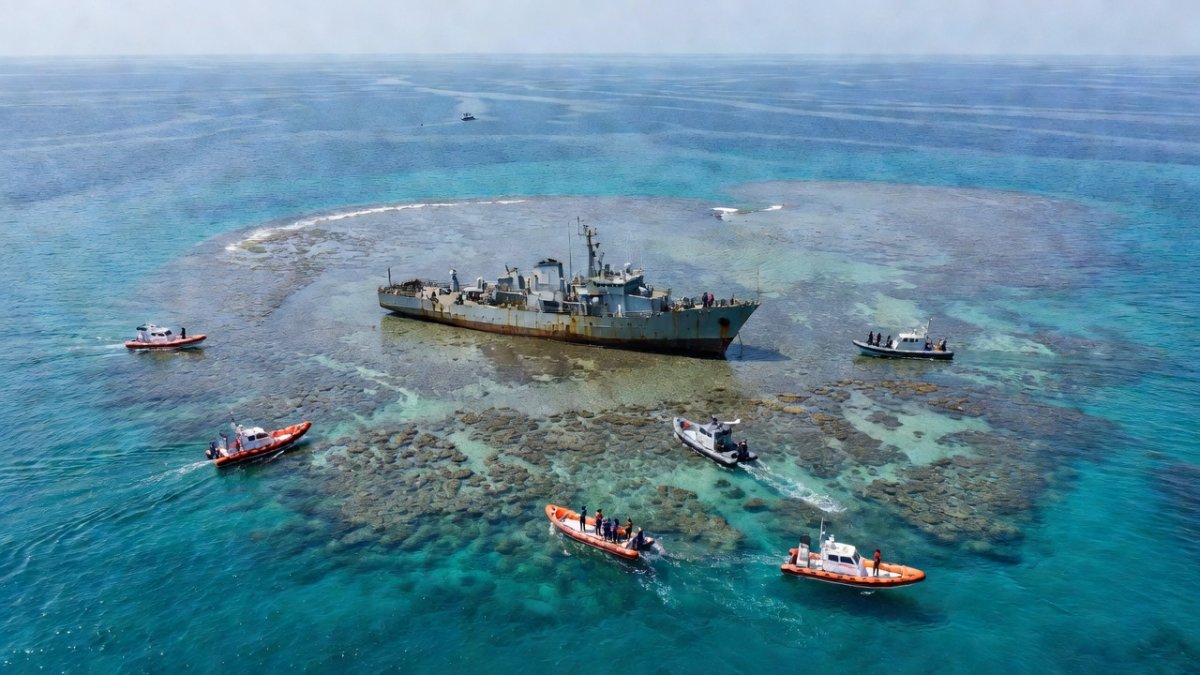
President Condemns Attack
Tensions rose in the West Philippine Sea when Chinese Coast Guard personnel struck a Filipino sailor during a resupply mission on July 20. President Ferdinand Marcos Jr. condemned the incident through Press Secretary Claire Castro on July 21. She stated, "The president condemns incidents like these. This is not about the size of your territory... but the fight for the truth and for what is your right." Castro added that Filipino personnel acted within their mandate and rights while carrying out a lawful mission.
The Department of National Defense described the episode as part of a continuing pattern of provocative behavior by China. The Department of Foreign Affairs is coordinating with the Armed Forces of the Philippines and said any form of violence against Filipino personnel is unacceptable.
What Happened at Ayungin Shoal
At 9:15 a.m. on July 20, a Chinese Coast Guard rigid-hull inflatable boat approached the BRP Sierra Madre at Ayungin Shoal. Two Philippine rubber boats moved to intervene and protect the resupply operation. During the confrontation, a Chinese officer struck a Filipino sailor on the head with a wooden baton. The National Task Force for the West Philippine Sea coordinates these missions to ensure troops receive food, water, and medical supplies.
The BRP Sierra Madre is a World War II-era landing ship tank that the Philippines deliberately grounded at Ayungin Shoal in 1999. It now serves as a permanent outpost manned by a rotating crew of marines. Regular resupply runs keep the crew sustained through difficult conditions.
Chinese Coast Guard tactics often involve rapid approaches with small boats to disrupt Philippine operations. The July 20 incident followed the same pattern as earlier encounters, highlighting the ongoing risks in the area.
China's Account and Manila's Position
Beijing claimed that Philippine personnel harassed its boat during the encounter. Manila rejected the accusation and pointed to the 2016 Permanent Court of Arbitration ruling. That decision invalidated China's nine-dash line claim and affirmed the Philippines' exclusive economic zone rights in the area. The ruling is the legal foundation for resupply missions and patrols in the region.
Philippine officials emphasize that the 2016 award is final and binding under international law. They state that the presence of the BRP Sierra Madre and the delivery of supplies are lawful activities conducted under Philippine sovereignty.
Pattern of Provocations
The July 20 baton strike fits into a longer series of incidents. In June 2024, Chinese personnel armed with knives, sticks, and an axe attacked Filipino troops during another resupply mission. One sailor lost a finger in that clash. Similar incidents have drawn responses from multiple countries.
Days before the latest confrontation, the Department of Foreign Affairs protested an AI-generated video released by China Daily that portrayed Filipinos as monkeys. The DFA said the video was offensive and called it an attempt to divert attention from the maritime disputes.
Chinese Coast Guard vessels have used water cannons, blocking tactics, and close-quarters maneuvers against Philippine boats in prior encounters.
International Response
The incident occurred while ASEAN foreign ministers were meeting in Manila. The United States, Australia, and Japan issued statements supporting the Philippines and calling for restraint. The allies reaffirmed their commitment to freedom of navigation and peaceful resolution of disputes under international law.
U.S. Senator Marco Rubio visited Manila for security talks after the clash. Discussions focused on maritime domain awareness and joint training. The statements from allied nations signal growing international concern over these incidents.
Impact on Filipino Communities
Fishermen from Zambales, Palawan, and Batanes report being shadowed, water-cannoned, or forced to abandon traditional fishing grounds by Chinese vessels operating in the area.
The crew aboard the BRP Sierra Madre lives in cramped quarters with limited fresh water and maintains constant vigilance. The vessel, grounded at Ayungin Shoal since 1999, is staffed by a rotating detachment of Philippine marines who sustain the country's physical presence in the disputed waters.
By Bella Reyes, Staff Writer
This article was produced with AI-assisted research and editorial support. Reporting is based on sources cited in the article.
What's Your Reaction?
 Like
0
Like
0
 Dislike
0
Dislike
0
 Love
0
Love
0
 Funny
0
Funny
0
 Wow
0
Wow
0
 Sad
0
Sad
0
 Angry
0
Angry
0

Philippines/Southeast Asia Correspondent at Global1.News. Manila-based journalist covering Philippine politics, environment, maritime security, and social issues. Passionate about marine conservation and the communities protecting the Philippines' natural heritage.














Comments (0)