
Rubio Distances US from Netanyahu's 70% Gaza Seizure Order
In a recent Middle East Eye report titled "Rubio fails to comment on IDF's seizing 70% of Gaza," the focus turns to US Secretary of State Marco Rubio's appearance before House Democrats during a congressional hearing on June 2-3, 2026. The segment highlights Rubio's reluctance to address Israeli Prime Minister Benjamin Netanyahu's directive for expanded military control over Ga
In a recent Middle East Eye report titled "Rubio fails to comment on IDF's seizing 70% of Gaza," the focus turns to US Secretary of State Marco Rubio's appearance before House Democrats during a congressional hearing on June 2-3, 2026. The segment highlights Rubio's reluctance to address Israeli Prime Minister Benjamin Netanyahu's directive for expanded military control over Gaza, drawing attention to the widening gap between stated US policy and actions on the ground that affect millions of Palestinian lives.
Rubio Distances US from Netanyahu's 70% Gaza Seizure Order as Humanitarian Crisis Deepens
Washington, DC – June 8, 2026 — US Secretary of State Marco Rubio faced sharp questioning from House Democrats this week over the Trump administration's failure to address Israeli Prime Minister Benjamin Netanyahu's order for the military to seize control of 70 percent of Gaza, a directive that contradicts Washington's stated 20-point plan for the besieged enclave.
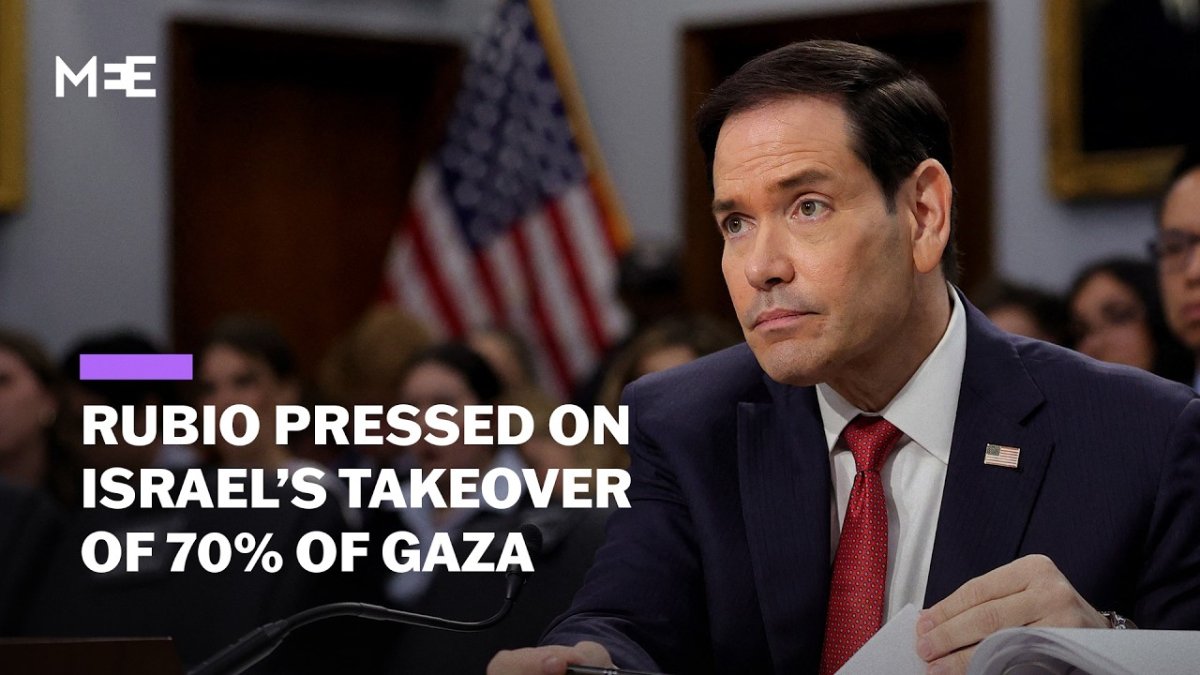
Rubio's Congressional Hearing Testimony
During the hearing held on June 2-3, House Democrats led by Rep. Joaquin Castro of Texas pressed Rubio on the humanitarian consequences of Israeli military expansion in Gaza. Rubio distanced the United States from Netanyahu's order, stating that Washington maintains its own plan that does not include such large-scale territorial seizure. "We have a plan — it doesn't call for that," Rubio told lawmakers, explicitly noting that the directive fell outside the framework of the Trump administration's 20-point vision for post-war Gaza, which envisions governance by a non-Hamas entity.
Rubio's responses avoided direct endorsement or condemnation of the 70 percent control target. Instead, he reiterated that US policy centers on a structured post-conflict arrangement rather than indefinite territorial seizures. Democrats on the committee raised concerns about documented patterns of buffer zone expansion and their alignment with broader displacement strategies discussed by Israeli officials in recent months.
Netanyahu's Order to Seize 70 Percent of Gaza
Netanyahu's directive instructs the Israeli military to expand its zone of control from approximately 53-60 percent of the territory to 70 percent — an escalation that would confine Gaza's 2.2 million Palestinian residents to a narrow strip of roughly 109 square kilometers. Israeli defense officials, including Defense Minister Israel Katz, have previously referenced measures designed to encourage what they term "voluntary migration" from Gaza, language that Palestinian leaders and human rights organizations view as a cover for forced displacement.
The order builds on months of incremental territorial restriction, including the establishment of a "Yellow Line" buffer zone that has steadily eaten into residential and agricultural areas. According to monitoring groups, more than 3,000 documented ceasefire violations have been recorded since the latest truce was agreed, with Israeli military incursions and construction of new outposts continuing across the Strip.
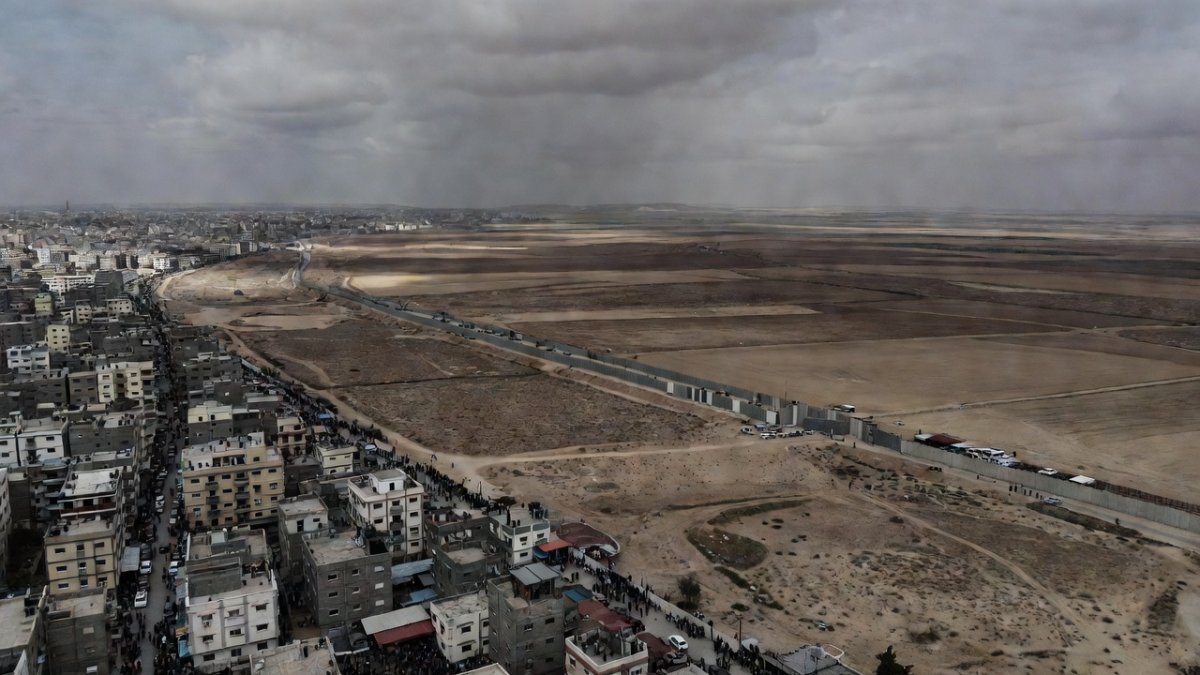
The Humanitarian Toll on Gaza's Population
Confining 2.2 million people to 109 square kilometers would produce one of the highest population densities in the world, intensifying overcrowding in remaining residential areas and further straining access to water, electricity, and medical services that have already been degraded by months of blockade and bombardment. Families in northern Gaza and Khan Younis have described repeated displacement orders that leave them with shrinking options for shelter, food, andlivelihood.
Local accounts from Gaza City and Khan Younis highlight how expanded control zones disrupt agricultural land and fishing access along the coast. With no safe corridor for movement between the isolated pockets, residents report ongoing uncertainty that prevents any return to stable daily routines or meaningful reconstruction efforts. Medical workers in remaining clinics describe treating patients who have been displaced four, five, or six times since the conflict began.
Community leaders in Gaza emphasize that these territorial changes compound the effects of prior displacement waves, separating extended families and limiting movement between what remains of urban centers. Children, the elderly, and those requiring consistent medical care are disproportionately affected, deepening the isolation of an already enclosed population that has endured more than 15 years of blockade and repeated military offensives.
The Widening Rift Between Washington and Tel Aviv
Rubio's testimony revealed a clear divergence from Netanyahu's stated objectives. While the Trump plan focuses on establishing alternative governance structures in Gaza after Hamas, the Israeli order prioritizes immediate territorial expansion that clearly exceeds those parameters. This gap suggests that US diplomatic messaging may not fully constrain Israeli military planning on the ground, raising questions about the enforceability of American policy red lines.
Israeli officials have framed the expansion as a necessary security measure to prevent Hamas from regrouping, yet Palestinian perspectives and international legal analysis view it as consistent with historical patterns of land appropriation that predate the current conflict. The US emphasis on a non-Hamas governing entity does not address the immediate spatial confinement now underway, leaving open questions about how or whether stated American policy limits will be enforced.
Regional observers note that similar gaps between Washington and Tel Aviv have appeared in earlier rounds of negotiations, often allowing incremental changes on the ground to outpace diplomatic frameworks. For Palestinians, the consequence remains the same: diplomatic statements and military directives intersect to reshape their daily realities, with civilians bearing the heaviest cost of unresolved differences between allies.
Ceasefire in Name Only
With more than 3,000 documented ceasefire violations already recorded, any existing agreements remain fragile before the latest territorial directive. Netanyahu's order risks further undermining trust in negotiated pauses, as Palestinian communities experience the expansion as an active continuation of hostilities rather than as a step toward de-escalation. Relief organizations report that humanitarian access has continued to deteriorate, with aid convoys frequently delayed or denied entry to affected areas.
For Gaza's residents, the distinction between a ceasefire and active conflict has blurred to the point of meaninglessness. The 70 percent seizure order, if implemented, would formalize a reality in which the majority of the Strip remains under direct Israeli military control, with Palestinians confined to shrinking enclaves with no guaranteed access to basic necessities or freedom of movement.
Analysis and Implications
The Rubio hearing and Netanyahu's order together illustrate a fundamental disconnect between diplomatic rhetoric and on-the-ground action. Whether US leverage can realign Israeli actions with the 20-point plan's governance vision remains uncertain. What is clear is that for the 2.2 million Palestinians of Gaza, the outcome of this policy gap will determine whether the remaining space can support basic living conditions or whether further confinement becomes a permanent feature of life under occupation.
Palestinian civil society groups continue to document these developments as part of broader efforts to record the human cost of policy decisions made far from the affected areas. As the international community weighs its response, the voices of those living under the resulting restrictions — families in Gaza City, farmers in Khan Younis, medical workers in overstretched clinics — remain the most essential measure of what these policies truly mean.
By Fatima Al-Rashid, Staff Writer
This article was produced with AI-assisted research and editorial support. Reporting is based on sources cited in the article.
What's Your Reaction?
 Like
0
Like
0
 Dislike
0
Dislike
0
 Love
0
Love
0
 Funny
0
Funny
0
 Wow
0
Wow
0
 Sad
0
Sad
0
 Angry
0
Angry
0

Gulf/MENA Correspondent at Global1.News. Based in Doha, covering Gulf politics, energy markets, diplomacy, and development across the Middle East and North Africa. Tracks the economic transformation of the Gulf states.














Comments (0)