
Global Warning: Greenland Ice Melt Threatens Latin America's Coasts
The Al Jazeera English documentary "Global Warning: Our Future in a Warmer World" opens with a stark examination of Greenland's accelerating ice loss, narrated by Philip Boucher-Hayes. Episode 1 reveals how the island's vast ice sheet functions as Earth's early-warning system, with melt rates now directly threatening coastal cities across Latin America through rising seas, disrupted ocean currents, and cascading ecosystem failures.
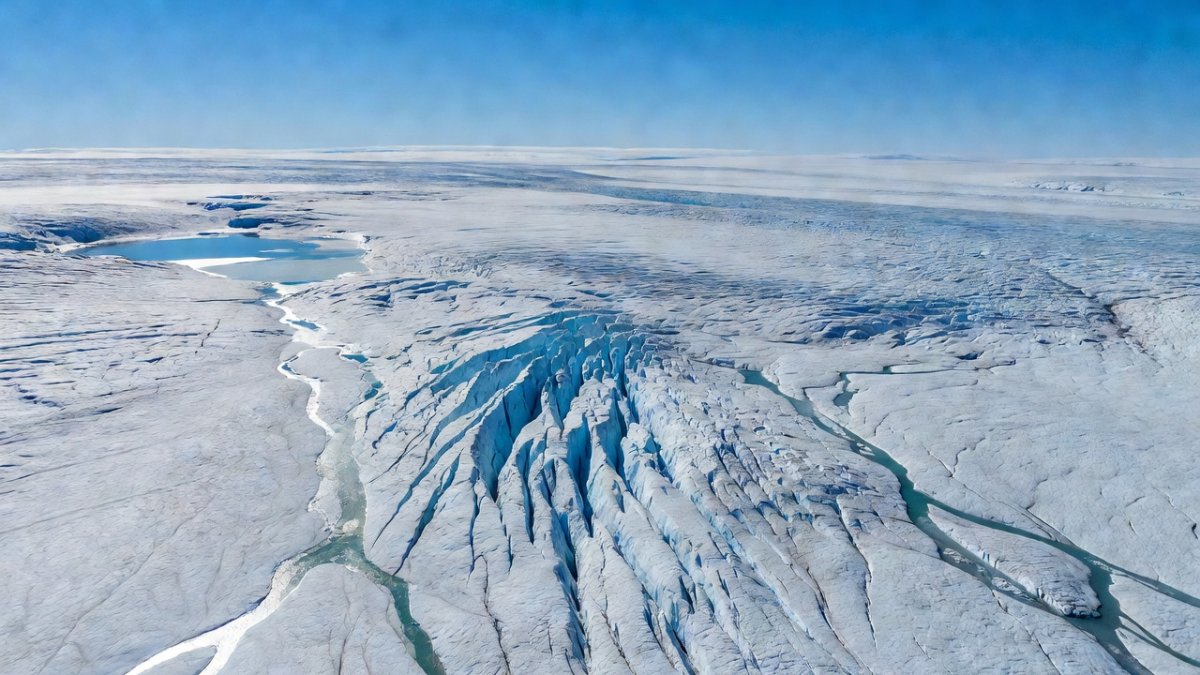
Greenland's Melting Ice Sheet — A Planet's Thermometer
The Greenland Ice Sheet stores enough ice to raise global sea levels by 7 meters. Since 1972, it has lost over 5,000 gigatons — now losing 250-280 Gt per year, equivalent to 0.7-0.8 mm of annual sea level rise. Philip Boucher-Hayes visits Greenland's mega-crevasses and accelerating melt zones. NSIDC data shows the 2025 melt season was "moderately intense" with nearly half the ice sheet melting. The darkening ice surface (albedo feedback) accelerates the process. Scientific voyages continue to assess the damage to what was once considered permanent ice. In the documentary, researchers from GEUS and NSIDC deploy sensors across the ice sheet to measure surface lowering rates exceeding 1 meter annually in key basins. These measurements confirm that surface melt now exceeds snowfall accumulation across 60 percent of the ice sheet during summer months. The film highlights how this northern melt directly feeds into equatorial sea-level budgets, with satellite altimetry showing that 40 percent of recent global rise traces back to Greenland contributions. For Latin America, this thermometer reading signals urgent preparation needs along Brazil's 7,000-kilometer coastline and the low-lying pampas of Argentina. The documentary stresses that every additional gigaton lost translates into millimeters of inundation threatening ports from Santos to Buenos Aires within decades.
Freshwater Flooding the North Atlantic — The AMOC Connection
Greenland's meltwater — 30 million tonnes per hour — is flooding the North Atlantic with freshwater, weakening the Atlantic Meridional Overturning Circulation (AMOC). The current has slowed 20% since 2004 (from 20 Sv to 15 Sv), now at its weakest in 1,600 years. Scientists like Stefan Rahmstorf warn the risk has shifted from "low probability" to a serious threat. Some studies estimate a 59% chance of collapse before 2050. The AMOC drives the Gulf Stream — its weakening means a colder Europe but devastating knock-on effects across the global climate system. Boucher-Hayes interviews oceanographers who document freshwater lenses extending hundreds of kilometers from Greenland's fjords, diluting surface salinity and halting deep-water formation. This slowdown already alters heat transport, with models projecting 10-15 percent further weakening by 2040 under current emissions. Latin American climate scientists note that AMOC disruption would shift rainfall patterns southward, intensifying droughts in northeast Brazil while increasing flood risks along the Pacific coast of Colombia and Ecuador. The documentary connects these Atlantic changes to observed coral bleaching events in the Caribbean and altered hurricane tracks that now strike Central America with greater frequency and intensity, underscoring how Greenland's freshwater pulse reverberates through every latitude.
What AMOC Collapse Means for the Amazon Rainforest
An AMOC shutdown would shift the Intertropical Convergence Zone southward, potentially reducing Amazon rainfall by 20-40%. This compounds existing deforestation pressure — 75% of dry-season rainfall decline is already linked to forest loss. Past AMOC weakenings in paleoclimate records transformed northern Amazon areas toward drier savanna, and scientists warn a modern collapse could accelerate large-scale Amazon dieback. The Amazon already emits more carbon than it absorbs in parts. An AMOC tipping point could push the biome past an irreversible threshold. The documentary features interviews with Brazilian climatologists who model how reduced moisture transport from the Atlantic would dry out the basin's southern and eastern flanks first. These regions, already fragmented by soy expansion and cattle ranching, would see fire seasons extend by weeks, releasing billions of tons of stored carbon. Indigenous leaders from the Xingu and Tapajós basins describe changing rainfall that now arrives weeks late, stressing crops and fisheries. The film emphasizes that an AMOC collapse would not only desiccate the rainforest but also weaken its role as a global carbon sink, creating feedback loops that accelerate warming worldwide and further destabilize Andean glaciers feeding the Amazon's headwaters.
Sea Level Rise — Latin America's Coastal Crisis
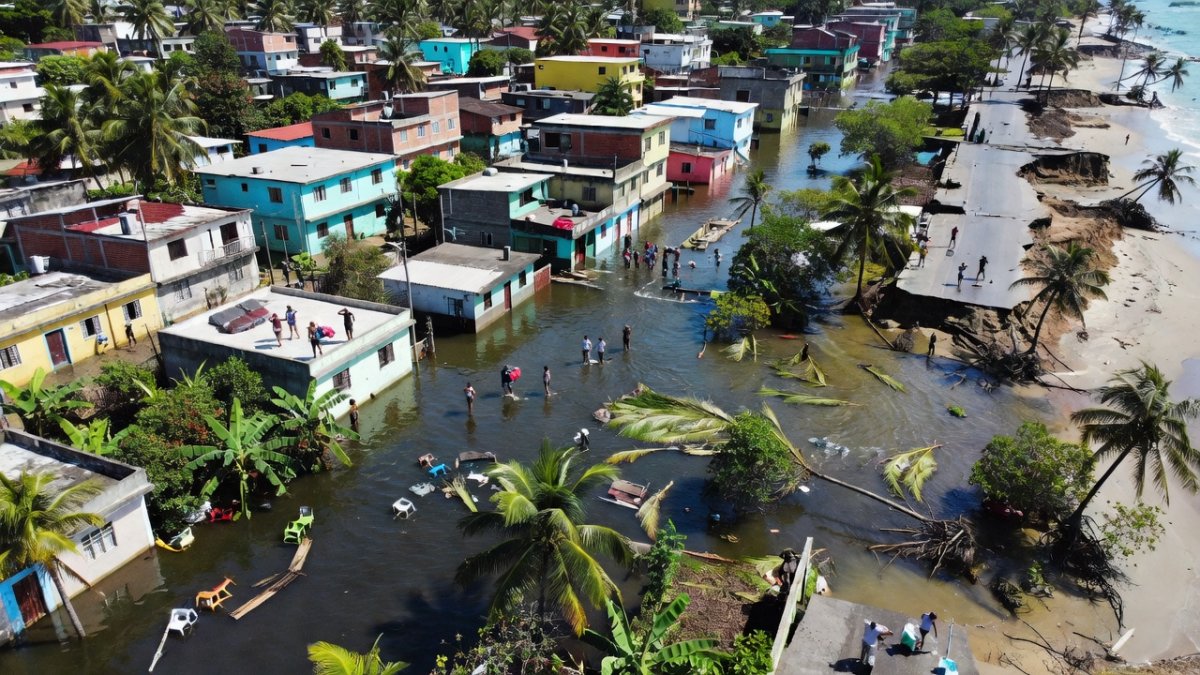
Greenland's melt is already reaching Latin American shores. NASA data cited by the UN projects 21 cm of sea level rise by 2050 in Rio de Janeiro and Atafona. Brazil's former Environment Minister Carlos Minc warned the rise could impact 2 million people in Rio, Recife, Salvador, Porto Alegre, and Santos — calling it an "announced tragedy." Recife, with average elevation of just 4 meters, faces frequent tidal flooding. In Argentina, the Rio de la Plata estuary and Buenos Aires low-lying districts grow more vulnerable. Across the Caribbean, small island states face 15-30 cm by 2050 under intermediate scenarios. The documentary shows Boucher-Hayes meeting coastal engineers in Recife who document 2 meters of annual shoreline retreat, swallowing homes and infrastructure. Satellite imagery reveals similar erosion along Venezuela's Orinoco delta and Mexico's Yucatán peninsula. Rising waters also salinize aquifers, threatening drinking supplies for millions in Lima and Guayaquil. The film stresses that without rapid global emissions cuts, these 21 centimeters will arrive alongside stronger storm surges, displacing entire fishing communities and overwhelming urban drainage systems already strained by tropical downpours intensified by warmer Atlantic waters.
Andean Glaciers — The Tropical Mirror of Greenland
While Greenland's ice vanishes in the north, tropical Andean glaciers tell the same story for Latin America. Peru has lost 47.7% of its glacier area in 37 years — some peaks like Nevados El Barroso have completely lost their ice cover. Ecuador reports 62% glacial surface loss over 60 years. Bolivia has lost over 50%. Andean glaciers are thinning 35% faster than the global average, at 0.7 meters per year. Cities like Huaraz (91% glacial water dependence) and La Paz (61-85%) face water security crises as these "water towers of the Andes" disappear. The documentary parallels Greenland fieldwork with expeditions to Peru's Cordillera Blanca, where retreating ice exposes unstable slopes prone to landslides. Local farmers report shrinking irrigation flows during dry seasons, forcing migration to coastal cities. In Bolivia's Tuni glacier, once supplying La Paz, volume loss now exceeds 70 percent since 2000. The film shows how these tropical losses mirror Greenland's albedo feedback, with exposed rock absorbing more heat and accelerating melt. For Latin America, the vanishing glaciers threaten hydropower generation that supplies 60 percent of regional electricity, creating energy and food security risks tied directly to the same warming driving polar ice loss.
Voices from the Ground — Scientists and Communities on the Frontline
The documentary features scientists from NSIDC, GEUS, and polar research institutes tracking Greenland's decline in real time. For Latin America, the message is clear: what happens in Greenland does not stay in Greenland. Indigenous communities in the Amazon, fishermen on Brazil's eroding coast, and Quechua farmers in the Peruvian Andes are all connected to the same climate system. The documentary shows that climate change is "no longer a distant fear" — it is "a clear and current threat." The series emphasizes innovative solutions alongside the stark warnings. Boucher-Hayes speaks with Peruvian glaciologists installing early-warning systems for glacial lake outburst floods and Brazilian oceanographers monitoring AMOC-linked rainfall shifts. Amazonian communities share traditional knowledge of changing seasons now validated by satellite data. Caribbean islanders describe relocating entire villages as shorelines retreat. The film balances these frontline accounts with emerging adaptation projects, including mangrove restoration in Ecuador and solar-powered desalination in Chile's Atacama, demonstrating that while Greenland's melt sets global boundaries, Latin American responses can still shape local resilience.
The Bottom Line — What Comes Next for Latin America
Al Jazeera's "Global Warning" series arrives as Latin America faces multiple climate fronts: rising seas on both coasts, disappearing glaciers in the Andes, Amazon tipping points, and intensifying extreme weather. The documentary's three-episode arc — from Greenland's ice to global decarbonization — presents both the scale of the crisis and pathways forward. For Latin American readers, the message is that the region's fate is tied to global emissions. With up to 95% of Andean glacier volume projected to disappear under 1.5°C+ warming, every fraction of a degree matters. The film concludes that rapid fossil-fuel phaseouts could still limit Greenland contributions to sea-level rise below 1 meter by 2100, preserving critical time for coastal defenses and Amazon protection. Latin American nations must accelerate renewable transitions already underway in Chile and Uruguay while demanding deeper cuts from major emitters. The documentary leaves viewers with the understanding that Greenland's thermometer reading demands immediate hemispheric action to safeguard the Amazon, the Andes, and the continent's vulnerable coasts from irreversible thresholds.
By Elena Vasquez, Staff WriterThis article was produced with AI-assisted research and editorial support. Reporting is based on sources cited in the article.
What's Your Reaction?
 Like
0
Like
0
 Dislike
0
Dislike
0
 Love
0
Love
0
 Funny
0
Funny
0
 Wow
0
Wow
0
 Sad
0
Sad
0
 Angry
0
Angry
0
Latin America Correspondent at Global1.News. Based in Mexico City, covering politics, economics, energy, and culture across the region. Brings an on-the-ground perspective to stories spanning from the Rio Grande to Patagonia.











Comments (0)