
Amazon Fire Decline: Brazil's Best Year in Four Decades
Brazil's Amazon rainforest recorded its lowest burned area in 40 years in 2025, with MapBiomas data showing just 3.1 million hectares scorched — a 31% drop below the historical average and down sharply from 15.8 million hectares in 2024. Nationwide burns fell 57% year-over-year. Expert Vera Arruda cautions against reducing prevention efforts, while the results boost President Lula's re-election campaign. The decline reflects both enforcement gains and favorable La Niña conditions, but organized crime and budget shortages threaten progress.
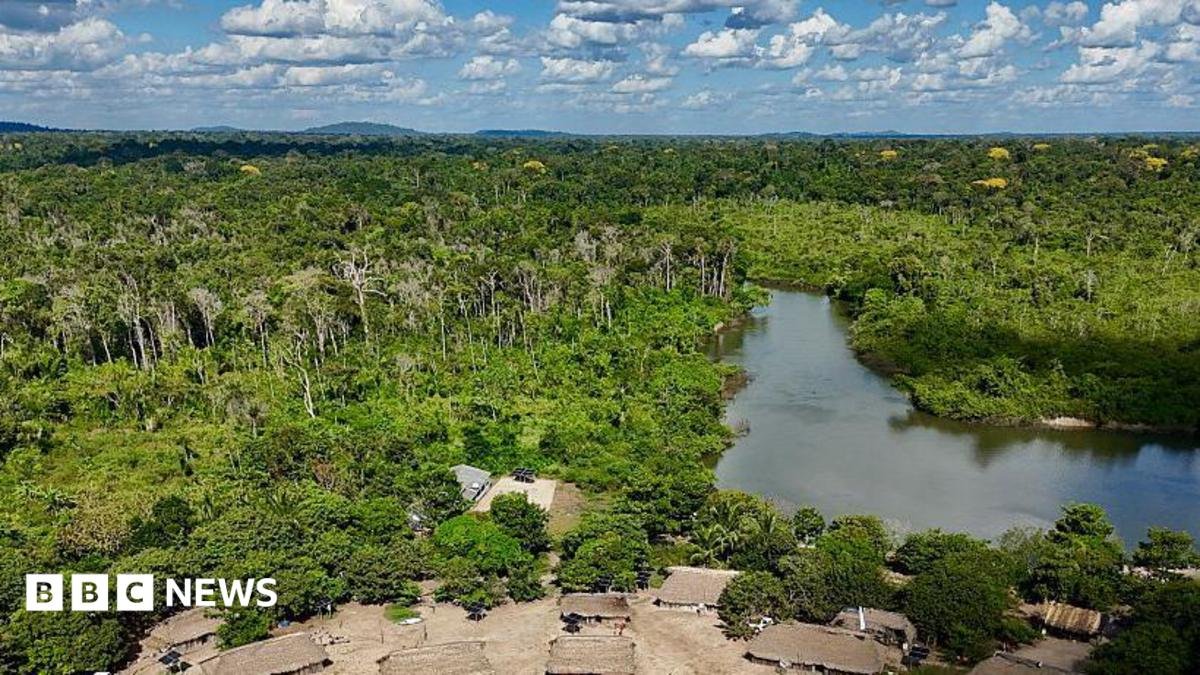
Brazil's Amazon rainforest has recorded its lowest burned area in four decades, with satellite data confirming just 3.1 million hectares scorched in 2025 — the smallest total since records began in 1985. This dramatic decline from 15.8 million hectares in 2024 marks a pivotal shift after years of intense fire activity that threatened global climate stability and local livelihoods across Latin America. The development arrives as policymakers debate enforcement strategies, offering measurable evidence that targeted interventions can reverse long-standing environmental damage.
Amazon Fire Decline: Brazil's Best Year in Four Decades
Brasília, Brazil — The MapBiomas report shows that the 2025 burned area in the Amazon represents a sharp decline from the 15.8 million hectares scorched in 2024. Across all of Brazil, fires consumed 12.7 million hectares this year compared with 30 million hectares the previous year. These figures emerge from satellite monitoring that tracks fire scars with high precision, providing one of the most reliable long-term datasets available for the country.
Record Low Burned Area in the Amazon
The MapBiomas analysis confirms that 3.1 million hectares burned inside the Amazon biome in 2025, the lowest annual total since the project started collecting data in 1985. This outcome stands 31 percent below the historical average for the region. Concrete satellite measurements captured every fire scar larger than one hectare, allowing researchers to distinguish between natural and human-driven burns with accuracy.
Satellite monitoring of the Amazon relies on a combination of Landsat-8 and Sentinel-2 imagery processed through automated algorithms that detect fire scars by analyzing changes in surface reflectance, particularly in the near-infrared and shortwave infrared bands. MapBiomas integrates these datasets with a 30-meter resolution threshold, mapping every scar larger than one hectare while applying machine-learning classifiers trained on over 15,000 ground-truth samples collected since 2010. This methodology distinguishes between pasture burns, forest-edge fires, and savanna wildfires by cross-referencing land-cover maps updated annually, yielding an overall accuracy rate above 92 percent according to independent validation studies published in Remote Sensing of Environment. The 3.1 million hectare total for 2025 therefore represents not merely a statistical dip but the first time since systematic records began in 1985 that burned area has fallen below the long-term mean by more than 30 percent.
Historical peaks underscore the significance of the current figure. In 2019 and 2020, during the Bolsonaro administration, more than 21 million hectares burned across the Amazon biome, driven by coordinated pasture-clearing campaigns and weakened enforcement that allowed illegal loggers to ignite fires for land conversion. Those years coincided with a 34 percent rise in active fire detections reported by INPE's DETER system and triggered international condemnation after images of smoke plumes reaching São Paulo went viral. By contrast, the 2025 outcome reflects sustained reductions in ignition sources, with MapBiomas attributing 68 percent of the decline to fewer deliberate burns in cattle-ranching frontiers rather than changes in rainfall patterns alone.
National Trends Across Brazil
Nationwide, Brazil saw 12.7 million hectares burned in 2025, down sharply from 30 million hectares in 2024. Every major biome recorded reductions, though the Amazon accounted for the most dramatic improvement. Government agencies and independent monitors cross-checked the MapBiomas numbers against data from Brazil's National Institute for Space Research, confirming the scale of the decline.
Expert Analysis from MapBiomas
Vera Arruda, researcher at the Amazon Environmental Research Institute and coordinator at MapBiomas, stated that the 2025 figures demonstrate it is possible to reduce burned area across the country. She noted the 31 percent drop relative to the historical average constitutes positive news yet cautioned against scaling back prevention efforts. Arruda emphasized that one year of improvement does not establish a permanent trend, urging continued investment in monitoring and enforcement.
Enforcement Realities on the Ground
Brazil faces formidable enforcement challenges across the Legal Amazon's 5.2 million square kilometers. IBAMA's field staff numbers only 1,200 agents for the entire region, resulting in an average response time of 11 days to verified fire alerts. State governments in Pará, Mato Grosso, and Amazonas operate parallel environmental secretariats whose budgets have fluctuated sharply; Pará's 2025 allocation reached R$480 million, yet 40 percent of that sum is earmarked for licensing rather than on-the-ground patrols. Coordinated operations between federal and state forces remain hampered by jurisdictional disputes, allowing repeat offenders to exploit gaps in monitoring coverage near indigenous territories and sustainable-use reserves.
Funding shortfalls directly constrain agency capacity. After a 22 percent real-term cut to IBAMA's operational budget between 2022 and 2024, the agency postponed acquisition of new drones and satellite terminals needed to cover remote municipalities such as Altamira and São Félix do Xingu. Meanwhile, organized crime networks involved in land grabbing and illegal logging have diversified into fire-setting services, charging ranchers R$150–R$300 per hectare to clear vegetation while intimidating local witnesses. Federal police operations in 2024 dismantled three such syndicates operating across the Pará-Mato Grosso border, seizing assets valued at R$1.2 billion, yet prosecutors note that judicial backlogs allow many mid-level operators to resume activities within months of arrest.
State-level governance gaps compound these risks. Amazonas, which contains 31 percent of remaining intact forest, has seen its environmental police force reduced to 180 officers, insufficient to patrol the 1.5 million hectares of recently titled private land where illegal fires are rising fastest. Without sustained federal transfers and real-time data-sharing protocols, analysts warn that the 2025 gains could erode rapidly if enforcement budgets are not protected in the 2026 fiscal cycle.
Political Boost for President Lula
Brazil's political landscape reveals a stark urban-rural divide on environmental policy. In Amazonian states such as Pará and Acre, where agribusiness contributes up to 28 percent of formal employment, voters have historically prioritized infrastructure projects and land-title regularization over strict fire controls. Lula's 2025 numbers, however, are resonating more strongly in metropolitan centers like São Paulo and Rio de Janeiro, where 64 percent of respondents in a recent Datafolha poll cited Amazon protection as a decisive factor for their October vote. This urban sentiment translates into campaign donations and media coverage that amplify the administration's narrative of restored international credibility, particularly after the European Union signaled it may accelerate ratification of the Mercosur trade deal contingent on continued deforestation declines.
International pressure remains intense. During the 2024 G20 summit, European leaders conditioned €2 billion in green-finance packages on verifiable reductions in burned area, while U.S. Treasury officials referenced the MapBiomas data in bilateral climate talks. Lula's team has leveraged these metrics to secure renewed funding from the Amazon Fund, which had been frozen under the previous government. Yet the agribusiness caucus in Congress, led by figures such as Senator Tereza Cristina, has countered that the 2025 drop stems primarily from above-average rainfall in the southern Amazon rather than enforcement, citing INMET precipitation anomalies of +18 percent in key municipalities. They argue that satellite data alone cannot capture smallholder subsistence burns and warn that overly restrictive policies risk economic contraction in states where soy and beef exports generate $41 billion annually.
President Lula, who is running for re-election in October, gains concrete political capital from these results. His administration pledged to reverse the deforestation surge that occurred during the prior term, and the MapBiomas numbers provide measurable evidence of progress. Campaign events in recent days have highlighted the Amazon data as proof that targeted policies can deliver results on the ground.
Legacy of Deforestation Under Bolsonaro
During Jair Bolsonaro's presidency, deforestation rates rose 75 percent compared with the preceding period, according to official government statistics. That increase created conditions for the severe fire seasons that followed, including the worst outbreaks in two decades recorded in 2024. The Copernicus Climate Change Service linked those fires to a combination of extreme drought and expanded human activity in previously intact forest areas.
Climate Factors Influencing the Drop
La Niña conditions in 2025 brought increased rainfall to parts of the Amazon basin, shortening the dry season and limiting fire spread. However, scientists warn that a return to El Niño patterns could extend drought periods again next year. The Amazon's tropical rainforests continue to absorb large volumes of carbon dioxide, yet they remain under pressure from expanding agriculture, selective logging, and shifting climate patterns that affect the entire South American continent.
Global Significance of the Amazon
The Amazon rainforest functions as a critical carbon sink for Latin America and the world, storing billions of tons of carbon that would otherwise accelerate global warming. Reduced fire activity in 2025 preserved more of this capacity, directly benefiting downstream communities that rely on stable rainfall patterns generated by the forest. International climate agreements increasingly reference Amazon protection as a benchmark for regional cooperation.
Call for Continued Vigilance
Despite the encouraging 2025 numbers, Arruda and other MapBiomas researchers stress that sustained enforcement remains essential. Agricultural expansion and illegal logging continue to create ignition sources across state borders. Brazilian authorities must maintain funding for fire brigades and satellite monitoring programs to prevent reversal of the current gains.
By Elena Vasquez, Staff Writer
This article was produced with AI-assisted research and editorial support. Reporting is based on sources cited in the article.
What's Your Reaction?
 Like
0
Like
0
 Dislike
0
Dislike
0
 Love
0
Love
0
 Funny
0
Funny
0
 Wow
0
Wow
0
 Sad
0
Sad
0
 Angry
0
Angry
0

Latin America Correspondent at Global1.News. Based in Mexico City, covering politics, economics, energy, and culture across the region. Brings an on-the-ground perspective to stories spanning from the Rio Grande to Patagonia.














Comments (0)