
Trump Imposes 50% Tariffs on Canada — Trade War Escalates
In a recent BBC News report, the channel covered the dramatic escalation in trade hostilities between the United States and Canada, as President Donald Trump signed executive orders imposing 50 percent tariffs on a wide range of Canadian goods. The move, announced on Monday July 20, represents one of the most aggressive trade actions taken by Washington against a close ally in modern history, with Prime Minister Mark Carney vowing that Canada stands ready to "intensify" trade
In a recent BBC News report, the channel covered the dramatic escalation in trade hostilities between the United States and Canada, as President Donald Trump signed executive orders imposing 50 percent tariffs on a wide range of Canadian goods. The move, announced on Monday July 20, represents one of the most aggressive trade actions taken by Washington against a close ally in modern history, with Prime Minister Mark Carney vowing that Canada stands ready to "intensify" trade talks in response.
Trump's 50 Percent Tariffs on Canada — A Trade War With the Closest Ally
Washington, DC – 21 July 2026 — US President Donald Trump has signed executive orders imposing 50 percent tariffs on a wide range of Canadian goods, invoking a rarely-used 1930s trade law to punish America's northern neighbor for what the White House calls discriminatory treatment of American automobiles, alcoholic beverages, and dairy products. Prime Minister Mark Carney, who received no advance warning during a World Cup final meeting with Trump the previous day, has vowed to intensify trade talks while Canadian officials across party lines call for a united response.
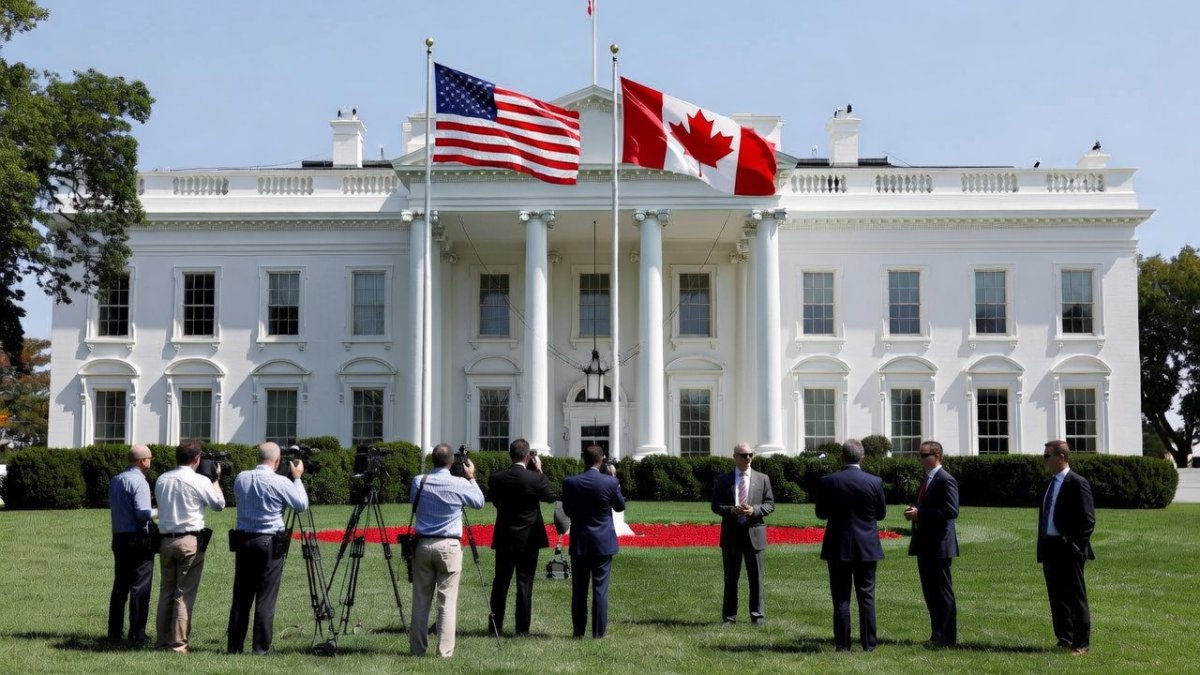
Trump's Tariff Action — Three Proclamations Under Section 338
President Donald Trump signed three proclamations under Section 338 of the Tariff Act of 1930 on July 20. This statute permits the president to impose tariffs when a foreign country is found to disadvantage United States commerce. The proclamations target specific Canadian exports including wine, hockey sticks, cement, autos, alcohol, and dairy products such as cheese. These measures apply across multiple sectors that have long formed part of the integrated North American supply chain.
The White House fact sheet framed the action as holding Canada accountable for its continued discrimination against American products. Officials emphasized that the tariffs address long-standing imbalances rather than serving as a broad punitive step. The proclamations deliberately exclude energy products, potash, fish, and critical minerals. Steel and aluminum remain covered under separate Section 232 tariffs already in place.
A 30-day window precedes the tariffs taking effect. This period allows time for possible negotiations between the two governments. Administration sources indicated that the delay provides an opportunity for Ottawa to address the cited concerns before duties are collected at the border.
Section 338 has rarely been applied in recent decades. Its use here marks a shift toward older statutory authorities following the Supreme Court ruling earlier this year that limited emergency powers. The three proclamations together create a targeted but substantial barrier on the listed Canadian goods entering the United States market.
The Trigger — Canada's Alleged Discrimination on Autos, Alcohol, and Dairy
The White House justification rests on three main pillars of Canadian discrimination. First, on automobiles: Canada imposes a 25 percent tariff on imported US motor vehicles that do not qualify for preferential treatment under the USMCA, while not applying the same rate to vehicles from other countries. Second, on alcohol: all but two Canadian provinces — British Columbia and Quebec — halted the purchase, distribution, or retailing of US alcoholic beverages, while imposing no similar restrictions on other nations. Third, on dairy: Canada's supply management system establishes tariff-rate quotas on US cheese that are far more restrictive than those imposed on European Union cheese imports, despite Canada having trade agreements with both. The Trump administration views these asymmetries as a direct violation of trade norms.
Canadian officials counter that these measures are legitimate policy tools within the framework of its trade agreements, and that Washington's accusations ignore Canada's own grievances over US tariff policy during the past eighteen months. Ottawa maintains that provincial alcohol rules reflect long-standing domestic regulatory structures rather than targeted discrimination. On dairy, Canadian negotiators point out that supply management protects domestic farmers in a manner consistent with agreements signed with multiple partners.
The back-and-forth nature of the dispute reflects deeper tensions that have built over successive rounds of tariff actions. Only China and Canada chose to retaliate against Trump's earlier tariffs rather than negotiate. This approach by Ottawa led to further escalation rather than de-escalation at the negotiating table. US officials argue that retaliation closed off diplomatic channels that other trading partners successfully used.
From the Canadian perspective, the US actions themselves breached commitments under the USMCA. Ottawa has repeatedly raised concerns about American duties on steel, aluminum, and other goods that disrupted established supply chains. The current round of tariffs therefore represents the latest chapter in a cycle where each side cites prior grievances to justify its own measures.
Carney's Response and Canadian Political Unity
Prime Minister Mark Carney, who watched the World Cup final with Trump on Sunday and discussed wildfire smoke but received no warning about Monday's tariffs, responded with a measured but firm statement. Carney said his government has made comprehensive proposals to resolve trade disputes and that Trump's past tariffs violated the USMCA trade pact. "This trade dispute has raised costs for families, particularly in the US," Carney said, in a subtle jab at the economic consequences for American consumers. "Canada stands ready to engage intensively to address outstanding issues with the US to the mutual benefit of our citizens."
Ontario Premier Doug Ford took a harder line, posting on social media that Canada should respond "tariff for tariff, dollar for dollar" and vowing to "never stop fighting to protect Ontario." Ford's comments reflect the position of Canada's most populous province, which hosts significant manufacturing and agricultural interests directly affected by the new duties. His statements underscore the political pressure on the federal government to demonstrate resolve.
Candace Laing, CEO of the Canadian Chamber of Commerce, struck a more diplomatic tone, calling the tariffs "regrettable" but urging both sides to use the 30-day window before implementation to "make meaningful progress in advancing formal talks." Laing emphasized that Canadian businesses seek stability and predictability in cross-border commerce. Her remarks highlight the private sector's preference for negotiated outcomes over prolonged confrontation.
The unified Canadian response across federal and provincial lines signals a rare moment of political cohesion north of the border. Even leaders from different parties have aligned on the need to present a common front. This cohesion strengthens Ottawa's negotiating position while also preparing domestic audiences for potential further measures if talks fail to produce results.
Economic Fallout — What the Tariffs Mean for North American Trade
The 50 percent tariffs strike at the heart of the deeply integrated US-Canada economic relationship, the world's largest bilateral trading partnership worth over US$700 billion annually in two-way trade. Everyday consumer items like wine and hockey sticks and industrial goods such as cement are now facing prohibitive duties, but the exclusion of energy products, critical minerals, and potash — Canada's top exports to the US — suggests a calibrated approach aimed at punishing Canada without inflicting immediate pain on American energy consumers and the fertilizer-dependent agricultural sector.
The economic consequences are expected to be significant but not catastrophic, with analysts suggesting the tariffs could add to inflationary pressures on both sides of the border. Wine and cheese importers in the United States face immediate cost increases that may be passed to consumers. Canadian producers of autos and cement will need to seek alternative markets or absorb reduced margins.
The 30-day window provides a narrow pathway for negotiations before the duties take effect, a pattern reminiscent of Trump's previous tariff threats against Mexico and Colombia that were ultimately resolved or modified at the negotiating table. Both governments have indicated willingness to use this period for intensive discussions. Canadian business groups have already begun preparing position papers outlining potential compromises.
The exclusion of energy goods is particularly notable — it spares Canada's oil and gas sector, which supplies approximately 60 percent of US crude oil imports. This carve-out limits immediate disruption to American refineries and heating fuel supplies. Prolonged uncertainty, however, could still chill cross-border investment and disrupt supply chains that have taken decades to build.
Political Risk for Trump — Midterms, Courts, and Calendar
The tariff escalation carries significant political risk for Trump heading into the November 2026 midterm elections, where all 435 House seats and 34 Senate seats are up for grabs. His previous "liberation day" tariff announcement in April 2025 provoked a financial market meltdown, prompting the administration to walk back rates for a period of negotiation. The memory of that volatility lingers, and any prolonged trade disruption could energize Democratic efforts to retake the House.
Meanwhile, the legal foundation for the new tariffs faces potential challenges. In February 2026, the Supreme Court ruled 6-3 that Trump had illegally used emergency executive power under the International Emergency Economic Powers Act (IEEPA) to impose his earlier global tariffs, forcing the administration to find alternative legal authorities. The US has already paid back $81bn in tariffs so far this fiscal year following that ruling.
The White House is now relying on Section 338 of the 1930 Tariff Act — an older, less-tested statute that several Democratic lawmakers last year proposed repealing precisely because they warned Trump could use it to destabilize trade relations. The legal distinction matters: Section 338 has historically been used sparingly and its application to a broad, multi-sector tariff action may invite new court challenges.
Republican strategists acknowledge that voters in key districts may react negatively if prices rise noticeably before November. The administration therefore has incentive to reach a negotiated settlement within the 30-day window that demonstrates tangible gains without sustained economic pain.
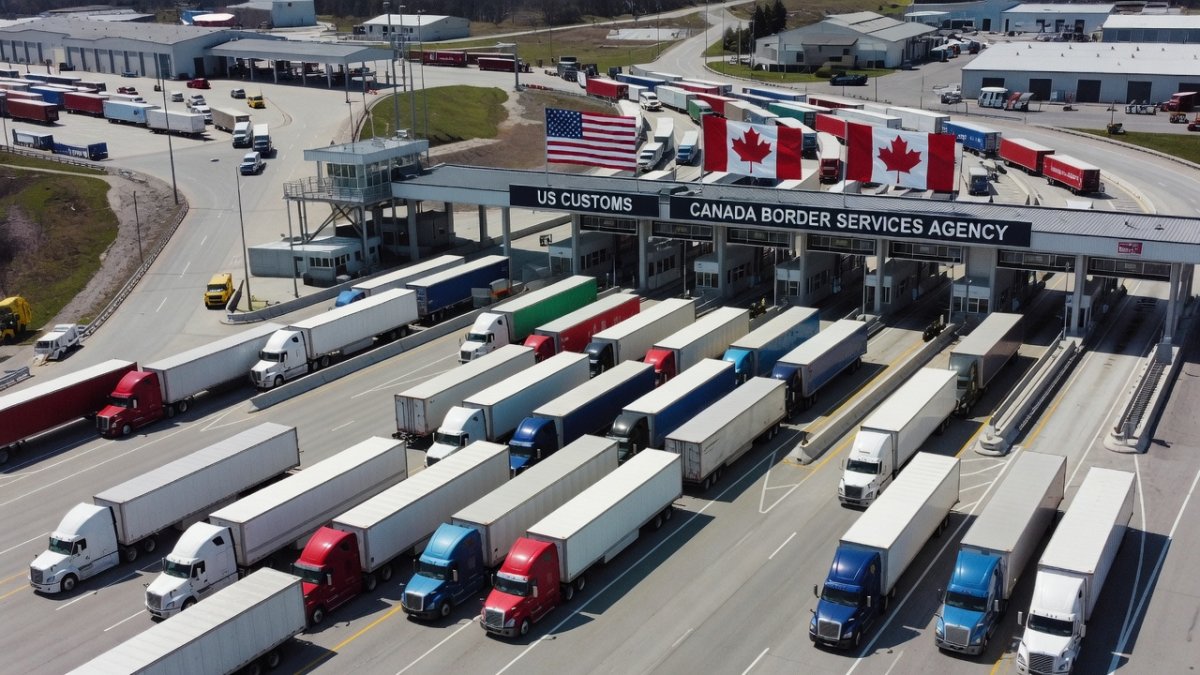
Analysis — A Fracturing Alliance at a Critical Moment
The tariffs represent a profound shift in what was once the world's closest bilateral relationship. The US and Canada share the longest undefended border, deeply interwoven supply chains, and a history of resolving disputes through negotiation rather than unilateral action. This break could have lasting consequences: Canada may accelerate its trade diversification toward Europe and the Asia-Pacific, further eroding US influence in its own hemisphere.
The 30-day window offers a genuine off-ramp. Talks could produce a face-saving compromise on dairy quotas and provincial alcohol restrictions. Yet the broader trajectory suggests that the era of seamless US-Canada economic integration is ending. Both sides appear prepared to accept higher costs in pursuit of leverage.
For Carney, who won the premiership on a platform of standing up to Trump, the crisis also provides a domestic political opportunity to demonstrate Canadian sovereignty. The outcome of these negotiations will shape not only the North American economy but also the template for how other nations — from the EU to Japan to Brazil — approach trade with the Trump administration. The coming weeks will test whether diplomatic channels can still contain the damage.
By Irina Volkov, Staff Writer
This article was produced with AI-assisted research and editorial support. Reporting is based on sources cited in the article.
What's Your Reaction?
 Like
0
Like
0
 Dislike
0
Dislike
0
 Love
0
Love
0
 Funny
0
Funny
0
 Wow
0
Wow
0
 Sad
0
Sad
0
 Angry
0
Angry
0

Russia/Eastern Europe Correspondent at Global1.News. Covering Russian politics, energy, security, and the shifting dynamics of the post-Soviet space. Provides clear-eyed analysis on one of the world's most opaque regions.















Comments (0)