
Saudi Arabia Condemns Houthi Naval Blockade Amid US-Iran War
Houthi rebels impose naval blockade on Saudi Arabia as US-Iran war escalates. Saudi Foreign Ministry condemns the move amid threats to Red Sea oil exports and global energy markets.
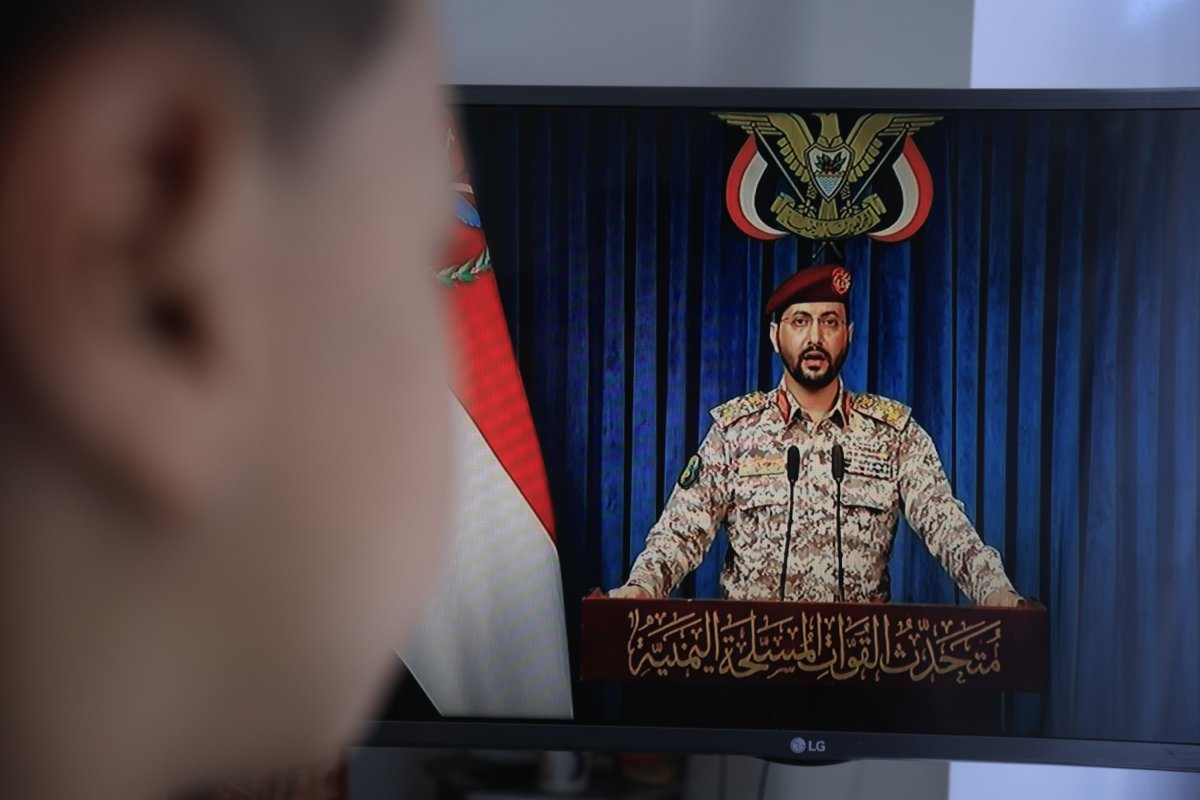
Saudi Arabia Faces Houthi Maritime Threat in Widening Regional Crisis
Beirut, Lebanon — July 21, 2026 — [article continues]
In a dramatic escalation of the ongoing US-Iran conflict, Houthi forces backed by Tehran have imposed a naval blockade on Saudi Arabian ports in the Red Sea, directly challenging Riyadh's oil export routes and threatening to draw the kingdom deeper into the widening war. This move comes as US strikes on Iranian targets continue, raising fears of a broader regional conflagration that could disrupt global energy supplies. Saudi Arabia's swift condemnation highlights the high stakes involved in this proxy confrontation, with potential ripple effects on international shipping and energy prices worldwide.
The Houthi blockade declaration and Saudi response
The Iran-backed Houthi movement in Yemen announced a maritime embargo against Saudi Arabia on Monday, with military spokesperson Yahya Saree declaring it effective immediately under an "eye for an eye" equation. The Saudi Foreign Ministry responded with its strongest condemnation, labeling the Houthi militia a terrorist group and reaffirming Riyadh's support for Yemen's legitimate government. This exchange marks a sharp deterioration after years of relative restraint, directly threatening Saudi access to Red Sea ports that have grown critical for oil shipments.
The Saudi Foreign Ministry issued a statement describing the Houthi blockade as an "illegal and terrorist act" that endangers international navigation and violates Yemen's sovereignty.
This is not the first time the Houthis have employed asymmetric tactics, as seen in the 2019 drone attack on Abha airport and the strikes on Aramco facilities in Abqaiq and Khurais.
Meanwhile, Yemen's Presidential Leadership Council has struggled to maintain unity, with internal divisions hampering any coordinated response to the escalating maritime threats.
The Iran-Houthi supply chain operates through sophisticated smuggling networks that have sustained the rebels' military capabilities despite years of Saudi-led blockades. Weapons components, including advanced anti-ship missiles and drones, flow from Iranian ports via dhows and fishing vessels across the Gulf of Oman and into Yemeni coastal areas under Houthi control. These routes exploit porous borders and corrupt officials, allowing Tehran to maintain plausible deniability while arming its proxy with increasingly sophisticated maritime strike systems.
Recent intelligence reports indicate that Iranian Revolutionary Guard Corps naval units have stepped up transfers of guidance systems and propulsion components through intermediaries in Oman and Somalia. This logistical backbone enables the Houthis to project power far beyond their land-based strongholds, turning the Red Sea into a contested zone where even modest vessels can threaten supertankers. Saudi intelligence has tracked multiple such shipments in recent months, yet interdiction efforts remain hampered by the vastness of the maritime domain and the Houthis' growing tactical proficiency.
Analysts note that this supply chain has evolved from rudimentary smuggling to a structured pipeline incorporating commercial cover operations and encrypted communications. The result is a resilient network that can replenish Houthi arsenals even under intensified scrutiny, ensuring the blockade threat carries credible weight in Tehran's broader strategy of asymmetric escalation.
Broader US-Iran war context driving this escalation
The Houthi move occurs against the backdrop of more than ten days of US strikes on Iran in July 2026, which Tehran has described as a "full-scale war." Washington and Tehran are contesting control over key maritime routes while gas prices in the United States have reached an average of four dollars per gallon. The Houthis' decision to target Saudi shipping lanes reflects Iran's strategy of leveraging proxy forces to widen the conflict and impose costs on US partners without direct confrontation.
The timeline began with initial US strikes on July 12, followed by attacks on IRGC naval bases on July 15 and cyber operations on July 18.
Iran's proxy warfare doctrine treats groups like the Houthis, Hezbollah, and PMU as force multipliers to extend influence without direct engagement.
Domestic politics in both Tehran and Washington add pressure, with hardliners in Iran pushing escalation and US leaders facing midterm concerns over energy prices.
Saudi internal political dynamics under Crown Prince Mohammed bin Salman place Vision 2030 at significant risk from this maritime threat. The ambitious economic diversification plan relies heavily on stable oil revenues to fund massive infrastructure projects and attract foreign investment. Any prolonged disruption to Red Sea exports could force budget reallocations, delay giga-projects like NEOM, and undermine the kingdom's narrative of unstoppable modernization.
MbS has positioned himself as a reformer who can navigate regional turbulence, yet the Houthi blockade tests his ability to protect core economic lifelines without reigniting full-scale war in Yemen. Domestic audiences, already sensitive to past military expenditures, may question the wisdom of renewed entanglement if oil flows are curtailed and global prices spike further.
Regional observers suggest that Riyadh's response will be calibrated to avoid domestic backlash while signaling resolve to both Tehran and Washington. Failure to deter the blockade could erode MbS's carefully cultivated image of strength at a time when internal reforms demand uninterrupted fiscal support.
The Strait of Hormuz and Red Sea strategic dimension
Saudi Arabia has sought to reduce reliance on the Strait of Hormuz by routing exports through Red Sea facilities. The Houthi blockade threatens precisely these alternative pathways, potentially forcing greater volumes back through the narrow Hormuz chokepoint where Iranian forces maintain significant leverage. Control over both the strait and Red Sea approaches gives Iran and its allies asymmetric tools to disrupt global energy transit even as direct naval clashes remain limited.
Saudi Arabia's East-West Pipeline (Petroline) offers 5M bpd capacity under Vision 2030 as a key alternative route.
Previous Houthi Red Sea attacks from 2023-2024 prompted Operation Prosperity Guardian and EUNAVFOR deployments.
Bab al-Mandab coverage gaps continue to expose vulnerabilities in international shipping lanes.
Historical parallels to the Tanker War of 1984-1987 in the Persian Gulf offer sobering lessons for today's Red Sea crisis. During that earlier conflict, Iran and Iraq targeted neutral shipping, leading to skyrocketing insurance premiums and the reflagging of vessels under US protection. Similar dynamics are emerging now, with commercial operators already rerouting tankers around the Cape of Good Hope at enormous additional cost and delay.
The 1980s episode demonstrated how even limited attacks on merchant traffic can produce outsized effects on global energy markets and force great-power naval involvement. Today's Houthis possess far more advanced anti-ship capabilities than their predecessors, raising the specter of a prolonged campaign that could mirror the cumulative damage inflicted during the Tanker War.
Naval strategists warn that without robust international escorts, the Red Sea could become a de facto no-go zone for unaccompanied commercial vessels, echoing the convoy systems required in the 1980s. This historical precedent underscores the difficulty of containing maritime proxy conflicts once they begin targeting economic lifelines.
Historical context: the 2022 truce and its deterioration
The 2022 Saudi-Houthi truce had largely held despite its formal expiration, limiting large-scale cross-border strikes until last week's exchange. That flare-up began when an Iranian plane attempted to land in Sanaa, challenging Saudi oversight of Yemeni airspace. The breakdown of this fragile understanding has now extended from air and missile domains into maritime threats, illustrating how quickly localized Yemeni dynamics can intersect with the wider US-Iran confrontation.
Oman-mediated Muscat negotiations in 2022 laid the groundwork for the initial truce.
The Beijing Accord of March 2023 failed to halt Houthi rearmament despite initial hopes.
Houthi missile and drone capabilities have evolved significantly since 2015, enhancing their maritime reach.
A detailed breakdown of global oil shipping routes reveals the cascading vulnerabilities created by the Houthi blockade. Saudi crude typically transits the Red Sea through the Bab al-Mandab strait before reaching Asian and European markets via the Suez Canal. Alternative routing around Africa adds 10-14 days and millions in fuel and insurance costs per voyage, while the Strait of Hormuz remains vulnerable to Iranian closure.
War risk insurance premiums for Red Sea transits have already surged by over 300 percent since the blockade announcement, with underwriters citing elevated probabilities of missile or drone strikes. Major energy firms are now weighing whether to absorb these costs or seek government-backed guarantees similar to those issued during past Gulf crises.
The combined effect threatens to tighten global supply at a moment when inventories are already low, amplifying price volatility across Brent and WTI benchmarks. Shipping analysts emphasize that even partial enforcement of the blockade could trigger a sustained rerouting crisis with worldwide economic consequences.
Energy market implications
Saudi Arabia produces more than ten million barrels of crude per day, and any sustained interference with Red Sea ports would tighten global supply at a moment when US-Iran tensions have already lifted prices. Markets dependent on Saudi exports face renewed volatility, while higher energy costs in the United States compound domestic pressures from the ongoing conflict. OPEC+ members may face difficult choices about output adjustments if the blockade moves from declaration to enforcement.
Brent crude has stayed above $92 and WTI above $88 since the strikes began.
Japan and South Korea rely on Saudi crude for over 60% of imports, while India depends on it for 20%.
OPEC+ spare capacity of roughly 3.5M bpd limits the cartel's ability to offset disruptions.
China's strategic interest in Saudi stability is profound, given that Beijing imports approximately 15 percent of its total oil from the kingdom. Any prolonged Red Sea disruption would force Chinese refiners to seek costlier alternatives from Russia or the Americas, undermining energy security at a time when the Chinese economy faces domestic headwinds. Beijing has quietly urged de-escalation through diplomatic channels, recognizing that its Belt and Road investments in the region could suffer collateral damage.
Chinese state energy firms have already begun exploring insurance and routing contingencies, while diplomats in Riyadh emphasize the importance of maintaining open sea lanes. This commercial stake gives China a unique incentive to mediate, even as it avoids direct entanglement in the US-Iran confrontation.
Observers note that sustained volatility could accelerate China's diversification away from Middle Eastern crude, reshaping long-term energy geopolitics in ways that neither Riyadh nor Tehran desire.
Regional proxy dynamics (Iran-Houthi-Saudi triangle)
The Houthis, an Iran-backed movement estimated at more than twenty thousand fighters, serve as a forward node in Tehran's regional network. By imposing a naval blockade, they extend Iran's reach into the Red Sea without requiring direct Iranian naval deployment. Saudi Arabia must weigh the costs of renewed military engagement in Yemen against the risk of appearing weak to domestic and regional audiences, while Iran calculates that proxy pressure can offset US military advantages.
Unlike Hezbollah or the PMU in Iraq, the Houthis hold unique maritime leverage through Red Sea operations.
Saudi Patriot systems and naval limitations constrain rapid responses to Houthi threats.
The UAE's 2020 withdrawal from the coalition shifted focus to supporting southern Yemen factions.
The humanitarian dimension compounds the crisis, as Yemen already suffers one of the world's worst famines with millions facing acute food insecurity. A Houthi-enforced blockade on Saudi ports risks reciprocal restrictions on incoming aid and commercial goods, further isolating a population already devastated by years of conflict. Humanitarian organizations warn that any escalation in maritime hostilities could sever critical supply lines for medicine, fuel, and staple foods.
Previous Saudi-led restrictions on Yemeni ports have been blamed for exacerbating malnutrition and disease outbreaks. The current threat of Houthi retaliation raises the prospect of a vicious cycle where civilian suffering intensifies on both sides of the border. International aid agencies are urgently calling for guarantees of safe passage regardless of military developments.
Analysts emphasize that the blockade's humanitarian fallout could generate long-term regional instability, fueling recruitment for extremist groups and complicating future peace efforts. The human cost thus forms an underappreciated but critical dimension of the blockade crisis, demanding attention alongside the immediate military and economic calculations.
What comes next: scenarios for escalation or de-escalation
United Nations spokesman Stephane Dujarric has warned that the Houthi threat risks an even wider regional conflict. Possible trajectories include limited Houthi harassment of shipping that prompts Saudi defensive measures, or a more ambitious attempt to close key lanes that draws in additional actors. Diplomatic off-ramps remain narrow given the active US-Iran exchanges, yet both Riyadh and Tehran have historically sought to avoid all-out war.
Oman, Iraq, and Qatar remain the most plausible mediators, each maintaining open channels with both sides. Muscat's long-standing relationships with the Houthis and Riyadh position it as the natural intermediary, while Baghdad and Doha have hosted discreet talks during earlier flare-ups. Their efforts would likely focus on restoring the 2022 truce framework rather than pursuing a comprehensive political solution in the current environment.
UN Security Council dynamics complicate any coordinated international response. Russia and China have historically blocked strong resolutions targeting the Houthis, viewing them as useful counterweights to US influence in the region. Any new sanctions push would likely face vetoes, limiting the Council's ability to deter further escalation or mandate maritime protection measures.
Iranian decision-makers are acutely aware of the 2026 US midterm election calendar. Tehran may calculate that sustained pressure through proxies could influence American domestic politics and constrain Washington's willingness to expand military operations. This window of perceived US vulnerability could encourage bolder Houthi actions in the short term, even as both sides maintain backchannel communications to prevent an uncontrollable spiral.
The coming weeks will test whether the maritime dimension of the US-Iran conflict can be contained through diplomatic proxies and naval deterrence, or whether it accelerates the broader confrontation in ways that reshape the Middle East's strategic landscape for years to come. What began as a localized Yemeni dispute has become a flashpoint in a much larger war — and the world's energy markets are watching closely.
By Malik Hassan, Staff WriterThis article was produced with AI-assisted research and editorial support. Reporting is based on sources cited in the article.
What's Your Reaction?
 Like
0
Like
0
 Dislike
0
Dislike
0
 Love
0
Love
0
 Funny
0
Funny
0
 Wow
0
Wow
0
 Sad
0
Sad
0
 Angry
0
Angry
0

Middle East Correspondent at Global1.News. Based in Beirut, covering politics, conflict, energy, and society across the Middle East. Brings context and depth to a region often reduced to headlines.















Comments (0)