
The Yazidi Doctor Who Restored Life to Survivors of IS Captivity
The Day Sinjar Fell: Captivity Begins on 3 August 2014 On 3 August 2014 Islamic State militants entered the northern Iraqi town of Sinjar and seized control of homes in a coordinated assault that targeted the Yazidi population. Shireen, then 19 and preparing for a high school examination, was taken directly from her family residence. The operation formed part of a wider campaig
The Day Sinjar Fell: Captivity Begins on 3 August 2014
On 3 August 2014 Islamic State militants entered the northern Iraqi town of Sinjar and seized control of homes in a coordinated assault that targeted the Yazidi population. Shireen, then 19 and preparing for a high school examination, was taken directly from her family residence. The operation formed part of a wider campaign in which at least 12,000 Yazidis were killed or kidnapped, an episode the United Nations has characterised as an ongoing genocide against the religious minority.
Shireen’s removal from her household marked the start of systematic separation of families across Sinjar. Within hours, many young women were transported to markets where they were sold. The speed of these transfers left survivors with little opportunity to locate relatives or understand the scale of the displacement affecting their communities.
The events of that single day reshaped daily life for thousands of Yazidi women. Those who remained in Sinjar faced immediate loss of security, while those taken endured forced movement across IS-controlled territories including Tal Afar and Mosul. Official records later confirmed that such abductions continued for months after the initial incursion.
Shireen’s Ordeal Under Successive Captors in Tal Afar and Mosul
After her abduction Shireen was sold to an IS militant in Tal Afar and held for three months. She was then transferred to Abu Omar in Mosul, where she became his third wife. Abu Omar told her he loved her, yet she later stated, “when you love someone, you don’t rape her. It destroyed my life.” The contradiction between his words and his actions defined her daily existence under his control.
Shireen was confined to the house and required to perform all domestic labour including cooking, washing dishes and cleaning. Although Abu Omar’s other wives lived separately, they beat her during visits. Two additional Yazidi girls, aged six and ten, were later brought to the same household; the younger was forced to clean while the ten-year-old was raped repeatedly. These conditions illustrate the layered violence experienced by multiple generations within a single residence.
The psychological pressure of isolation and repeated physical abuse compounded the trauma. Shireen had no permission to leave the premises and received no information about her family. Her uncle and many friends were killed by IS during this period, while her father and sister remain missing since 2014. Such losses created lasting uncertainty that survivors carried into any subsequent release.
Release During the Mosul Campaign and Immediate Aftermath
In 2016 Iraqi forces liberated Shireen during operations to retake Mosul. The military campaign ended her physical captivity but left her with severe depression and recurring nightmares. Returning to any form of normal routine proved impossible given the absence of her immediate family members and the destruction of her former community networks.
Shireen’s post-release situation required both medical attention and emotional stabilisation. She had witnessed extreme violence against other Yazidi girls and carried the knowledge that many relatives would never return. The lack of closure regarding her father and sister added to the burden of adjusting to life outside IS control.
Official tallies indicate that by July 2018 a total of 2,023 Yazidi women had been liberated from IS territories. Each case involved similar patterns of sale, forced marriage and domestic servitude, underscoring the systematic nature of the abuses documented across multiple cities.
Dr Nagham Nawzat’s Clinical Response at the Duhok Survivors’ Centre
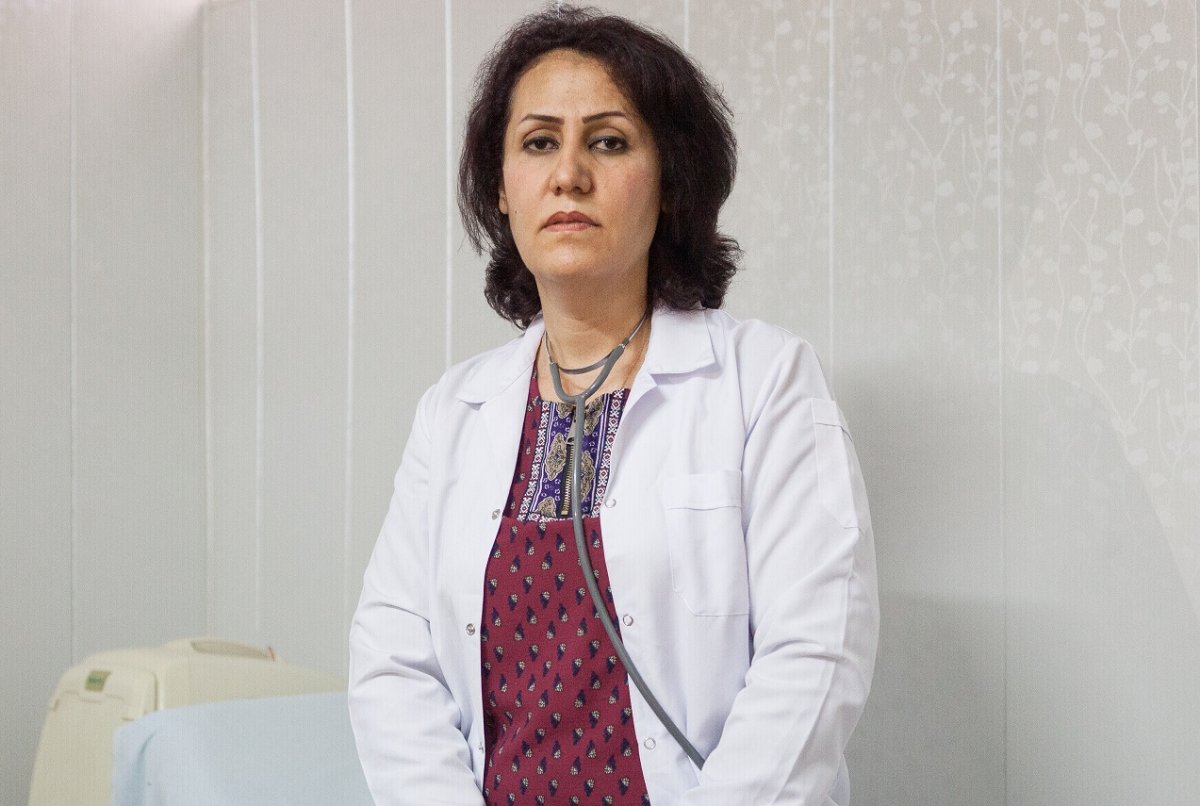
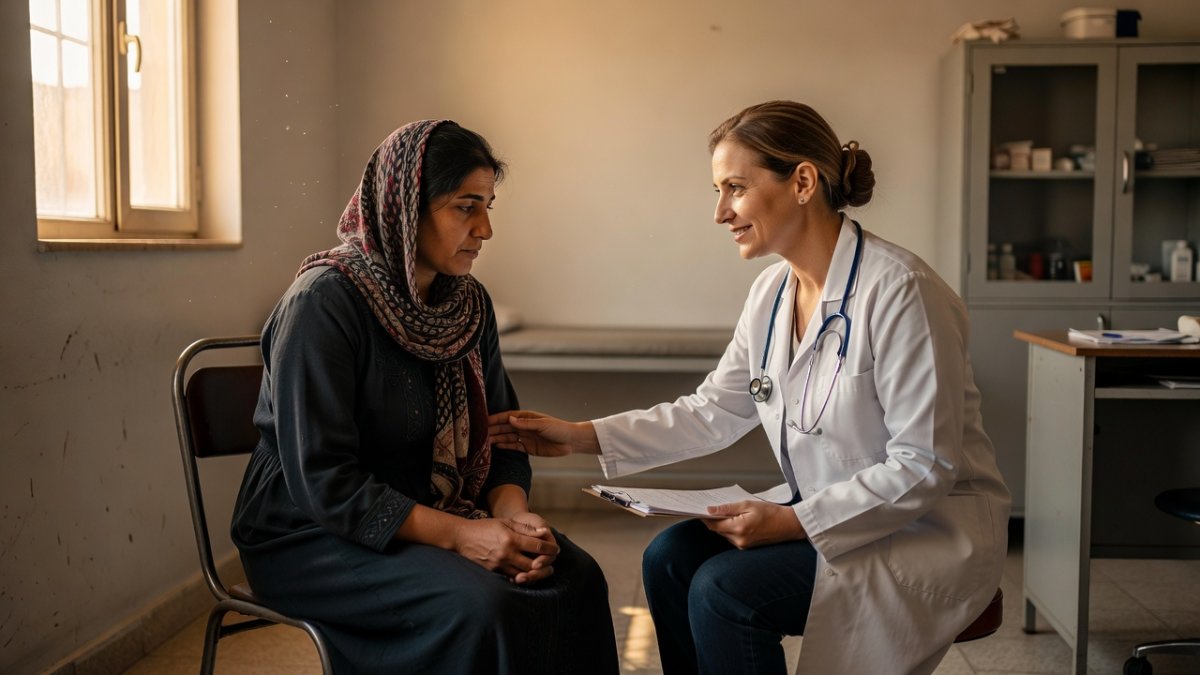
Upon release Shireen sought care from Dr Nagham Nawzat, a Yazidi gynaecologist based in Duhok within Iraq’s Kurdish region. Dr Nawzat supplied both physical examinations and emotional support tailored to the needs of women who had endured sexual violence and prolonged captivity. Her interventions addressed immediate health concerns while also acknowledging the long-term psychological effects reported by survivors.
Dr Nawzat has assisted more than half of the 2,023 women liberated by July 2018, reaching an estimated 1,200 individuals through the Duhok Survivors’ Centre. The facility, supported by the United Nations Population Fund, remains the only centre in Iraq specialising in gender-based violence. Volunteers there provide healthcare and psychological services to women who survived IS captivity.
Women arriving at the centre often describe the same combination of physical injuries and mental distress that Shireen experienced. Dr Nawzat’s consistent presence allows survivors to receive care without repeated retelling of their histories to multiple providers. This continuity has become central to the centre’s model of support.
Professional Background and the 2016 International Women of Courage Award
Dr Nagham Nawzat was born in Mosul in 1976 to a Yazidi family and graduated from Mosul’s Medical College with a degree in gynaecology in 2002. Her training equipped her to recognise both the medical consequences of sexual violence and the cultural barriers that prevent many survivors from seeking help. In 2015 she joined the Duhok Survivors’ Centre as a volunteer.
In March 2016 Dr Nawzat received the International Women of Courage Award from then-US Secretary of State John Kerry. The award recognised her work providing psychological support to traumatised Yazidi survivors and her efforts to combat gender-based violence. The recognition highlighted the centre’s role as the sole specialised facility of its kind in Iraq at that time.
Dr Nawzat’s decision to focus on survivors of IS captivity stems directly from the 2014 seizure of nearly a third of Iraq by the group. Her daily work at the centre continues to address the health needs of women who were released years earlier yet still require ongoing medical attention.
Security Risks Faced by Care Providers and Remaining Captives
Because of her public engagement with survivors, Dr Nawzat receives frequent death threats from IS sympathisers through phone calls and social networks. These threats have not deterred her from continuing her volunteer duties at the Duhok facility. The risks illustrate the ongoing danger faced by anyone assisting women who escaped IS control.
Although Iraqi forces declared final victory over IS in December 2017, Hussein al-Qaidi, director of the Kidnapped Affairs department at the KRG in Duhok, stated that 1,500 Yazidi women remained captive in Iraq, Syria and Turkey as of the most recent available figures. The persistence of these cases shows that liberation efforts have not reached every victim.
Survivors who have returned continue to live with the knowledge that others remain in captivity. The centre’s staff must balance immediate clinical needs with the awareness that additional women may still require rescue and subsequent care.
Life in Displacement and the Question of Return to Sinjar
Shireen now resides alone in a tent at the Khanke Internally Displaced Population camp in Duhok. She has declined to return to Sinjar, noting that most of her family members have obtained asylum in Germany. The town itself remains in ruins, and memories of IS brutality continue to affect daily life for those who stay.
Baba Sheikh, the supreme leader of the Yazidis, issued a public statement declaring that women who had been enslaved by IS were welcome back to the community. This declaration aimed to counter potential stigma, yet practical barriers such as destroyed infrastructure and absent family networks limit actual returns.
Dr Nawzat has stated, “I dedicate my life to the Yazidis.” Her sustained work at the centre provides a consistent point of contact for women navigating displacement, medical recovery and decisions about future residence. The centre’s services remain essential while Sinjar’s reconstruction and the fate of missing relatives stay unresolved.
By Fatima Al-Rashid, Staff WriterThis article was produced with AI-assisted research and editorial support. Reporting is based on sources cited in the article.
What's Your Reaction?
 Like
0
Like
0
 Dislike
0
Dislike
0
 Love
0
Love
0
 Funny
0
Funny
0
 Wow
0
Wow
0
 Sad
0
Sad
0
 Angry
0
Angry
0
Gulf/MENA Correspondent at Global1.News. Based in Doha, covering Gulf politics, energy markets, diplomacy, and development across the Middle East and North Africa. Tracks the economic transformation of the Gulf states.











Comments (0)