
Gulf of Paria Widens as Trinidad Pours Oil on Troubled Venezuelan Waters
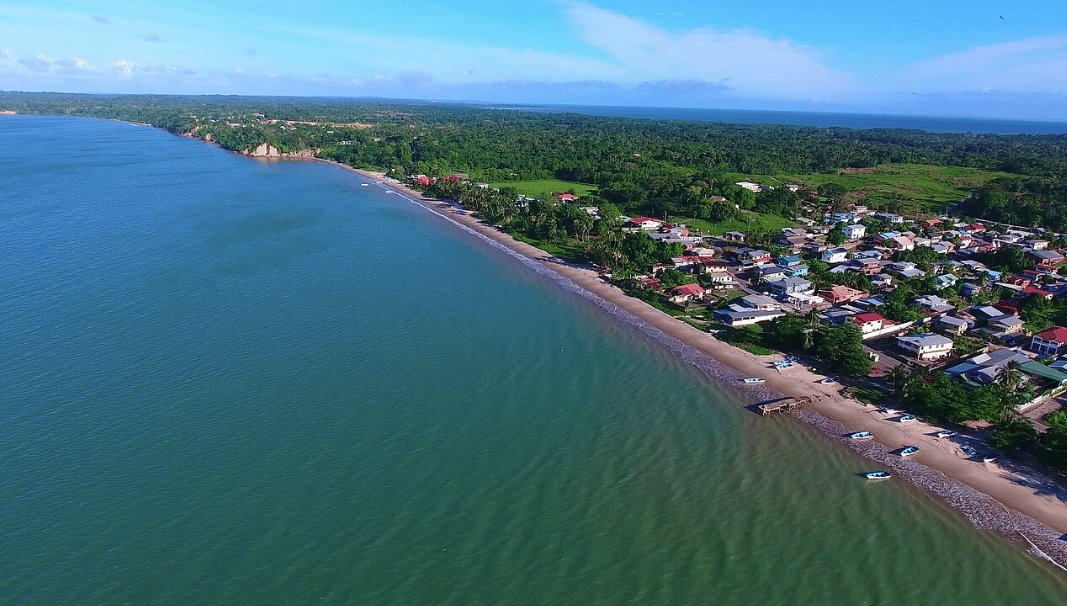
The Diplomatic Spill: Venezuela Demands Answers and Compensation The waters between Trinidad and Tobago and Venezuela have grown markedly more troubled following a formal diplomatic protest lodged by Caracas over an oil spill that occurred on 1 May. Venezuelan authorities claim the incident originated in Trinidadian waters and now threatens the delicate shared ecosystems of the Gulf of Paria.
The Diplomatic Spill: Venezuela Demands Answers and Compensation
The waters between Trinidad and Tobago and Venezuela have grown markedly more troubled following a formal diplomatic protest lodged by Caracas over an oil spill that occurred on 1 May. Venezuelan authorities claim the incident originated in Trinidadian waters and now threatens the delicate shared ecosystems of the Gulf of Paria. In a strongly worded statement, Venezuela’s Minister of Environment has called for detailed information, full accountability and compensation from Port of Spain, describing the spill as a serious transboundary environmental incident.
Trinidad and Tobago has pushed back firmly. Officials in the Ministry of Energy and Energy Industries, along with the Trinidad and Tobago Pollution Control Division, maintain that the spill involved only approximately 10 barrels of crude, was contained within hours, and posed no significant risk to Venezuelan waters. The Commissioner of State Lands and the Ministry of Foreign and CARICOM Affairs have both described Venezuela’s demands as disproportionate, insisting that the matter was handled according to established bilateral protocols.
This latest flare-up comes against a backdrop of long-standing maritime boundary sensitivities and decades of energy-sector cooperation and competition between the two nations. For many in Trinidad, the episode feels like another chapter in a relationship that has oscillated between pragmatic partnership and outright suspicion, particularly since the political and economic crisis in Venezuela intensified after 2015.
Understanding the Gulf of Paria: A Shared and Fragile Ecosystem
The Gulf of Paria, that body of relatively shallow water separating the west coast of Trinidad from the Orinoco Delta region of Venezuela, has always been more than a mere geographical feature. It is a vital ecological bridge. Mangrove forests fringe both sides, serving as nurseries for shrimp, snapper, grouper and a host of other commercially important species that sustain fishing communities in counties such as Caroni, Couva and Penal in Trinidad, as well as in Venezuela’s Sucre and Delta Amacuro states.
Scientists from the University of the West Indies and the Instituto Oceanográfico de Venezuela have long warned that the Gulf functions as a single hydrodynamic system. Tidal flows and the massive freshwater discharge from the Orinoco River create complex mixing patterns that can carry pollutants across the maritime boundary with surprising speed. Mangroves, seagrass beds and coral patches near Soldado Rock and in the Serpent’s Mouth are particularly vulnerable to hydrocarbon contamination. Even small spills, if not properly managed, can coat breathing roots of red mangrove, impair fish gill function and disrupt the benthic communities that form the base of the food web.
Local fishermen in villages like Cedros, La Brea and Erin have expressed quiet alarm. Many operate wooden pirogues that cross the invisible maritime line daily in pursuit of kingfish, carite and prawns. For them the Gulf is not an abstract diplomatic zone but the very source of their livelihoods. A fisherman from Fullarton, who asked not to be named, told this reporter that any talk of oil in the water immediately raises fears of reduced catches and contaminated seafood, concerns that directly affect household incomes already squeezed by rising food prices and inflation that has hovered around 5 to 7 percent in Trinidad over the past two years.
The ecological importance of the Gulf extends beyond fisheries. It is a critical stopover for migratory birds travelling along the Americas flyway and provides habitat for endangered species including the West Indian manatee and various species of sea turtle that nest on both Trinidadian and Venezuelan beaches. Any damage here carries implications not only for Trinidad and Tobago and Venezuela but for the wider Caribbean’s biodiversity commitments under the Cartagena Convention and the United Nations Convention on the Law of the Sea.
Trinidad’s Energy Sector: Decades of Offshore Activity and Regulatory Evolution
Trinidad and Tobago has been pumping oil and gas from its waters since the early 20th century. The first commercial discovery was made in 1902 at Paria, not far from the current controversy. Over the decades the sector evolved from land-based drilling in the south-west peninsula to major offshore platforms in the Columbus Basin and off the north coast. Companies such as BP, Shell, BHP and the state-owned Heritage Petroleum have operated in these waters, contributing roughly 35 to 40 percent of government revenue in recent years despite declining production.
The May 1 incident is reported to have involved a pipeline or valve failure on a facility operated by a local contractor servicing one of the smaller fields in the Gulf. While the exact operator has not been publicly named pending investigation, sources close to the Ministry of Energy confirm that the spill was detected by onboard sensors, contained with booms and dispersants, and that a significant portion of the oil was recovered. The 10-barrel figure cited by Port of Spain stands in contrast to Venezuelan claims of a larger volume that allegedly crossed the median line.
Trinidad’s regulatory framework has improved considerably since the disastrous 1979 blowout at the Ixtoc I well in Mexican waters and the more regionally relevant spills of the 1980s and 1990s. The Environmental Management Act of 2000, the establishment of the Environmental Management Authority (EMA), and stricter guidelines from the Ministry of Energy have introduced mandatory spill response plans, real-time monitoring and financial assurance requirements. Nevertheless, environmental groups such as Fishermen and Friends of the Sea and the Environmental Management Authority’s own advisory committees continue to argue that enforcement remains inconsistent, particularly for smaller operators and during the hurricane season when weather can complicate containment efforts.
The energy sector’s importance to the national economy cannot be overstated. With unemployment hovering near 5 percent and foreign exchange reserves heavily dependent on hydrocarbon exports, any threat to production or investor confidence is taken seriously in Port of Spain. At the same time, the country has begun a cautious transition towards renewable energy, with solar projects in the south and plans for offshore wind and green hydrogen that CARICOM partners hope will position the region as a leader in climate-resilient development. The current dispute risks complicating that delicate balancing act.
Maritime Boundaries and Bilateral Relations: A History of Negotiation and Tension
The maritime boundary between Trinidad and Tobago and Venezuela was formally delimited in the 1990s through a treaty that established a median line through the Gulf of Paria and the Atlantic. That agreement also created a framework for joint development of hydrocarbon resources in certain areas, leading to the Dragon Gas project that was intended to bring Venezuelan natural gas to Trinidad’s Atlantic LNG facilities. Political changes in Caracas, sanctions imposed by the United States, and shifting priorities in Port of Spain have repeatedly delayed full implementation of these arrangements.
Relations have been further strained by the movement of Venezuelan migrants to Trinidad, the flow of drugs and arms across the Gulf, and occasional incursions by Venezuelan naval vessels into disputed fishing zones. The current administration of Prime Minister Dr Keith Rowley has sought to maintain a policy of pragmatic engagement with the government of Nicolás Maduro while simultaneously working with CARICOM partners to support democratic processes in Venezuela. The Attorney General and the Minister of Foreign Affairs have both emphasised that disputes of this nature should be resolved through technical dialogue rather than public confrontation.
Venezuela’s demand for compensation arrives at a sensitive moment. The country is grappling with hyperinflation, infrastructure collapse and severe environmental degradation caused by decades of poorly regulated oil production in the Orinoco Belt and Lake Maracaibo. Many observers in the Caribbean note the irony of Caracas criticising its neighbour’s environmental standards while its own state oil company PDVSA has been responsible for some of the largest chronic spills in the hemisphere. Still, under international law, the principle of transboundary harm requires both states to exercise due diligence and to cooperate in good faith when incidents occur.
Regional diplomats suggest that quiet negotiations are already under way through the CARICOM-Venezuela Joint Commission and technical working groups established under the 1990s treaty. The Office of the Prime Minister has indicated that Trinidad stands ready to share monitoring data and participate in a joint environmental assessment if Venezuela provides reciprocal access to its own spill response records.
Oil Spills in the Caribbean: Lessons from Past Incidents and the Push for Stronger Protection
The Gulf of Paria incident is far from the first time oil has threatened Caribbean waters. The 1979 Ixtoc I spill off Mexico released millions of barrels into the Gulf of Mexico and affected currents that eventually reached Caribbean shores. More recently, the 2021 grounding of the MV X-Press Pearl off Sri Lanka served as a global wake-up call, but within our region the 2018 spill from the tanker in the Bahamas and repeated incidents in Venezuelan waters have kept the issue alive.
Small island developing states (SIDS) such as those in CARICOM are particularly vulnerable. With limited resources for response and recovery, a major spill could devastate tourism-dependent economies. Barbados, for example, relies on pristine beaches for 60 percent of its GDP, while Antigua and Barbuda and St Lucia face similar exposure. Trinidad and Tobago, though more industrialised, still earns significant revenue from tourism in Tobago, where the coral reefs and dive sites are major attractions.
The Caribbean Community has responded by strengthening the Caribbean Oil Spill Response and Cooperation Mechanism and by supporting the development of the Caribbean Disaster Emergency Management Agency’s environmental response capabilities. The University of the West Indies has established marine laboratories in Trinidad, Jamaica and Barbados that conduct regular monitoring of hydrocarbon levels. Yet funding remains a perennial challenge. Many experts argue that the region needs a dedicated Caribbean Environmental Protection Fund, possibly capitalised by contributions from oil companies operating in national waters.
Climate change adds another layer of complexity. Rising sea temperatures, more intense hurricanes and changing rainfall patterns all affect the Gulf’s ability to dilute or disperse pollutants. The Intergovernmental Panel on Climate Change has identified small island states as among the most exposed to compound risks where industrial pollution meets extreme weather events. The May 1 spill, though described as minor by Trinidadian authorities, occurred just weeks before the official start of the Atlantic hurricane season, heightening local anxiety in communities still recovering from the flooding and landslides caused by heavy rains in 2022 and 2023.
Community Voices and Economic Realities in a Time of Rising Costs
Beyond the diplomatic exchanges and scientific assessments, the human dimension of this dispute is impossible to ignore. In coastal communities across southern Trinidad, the cost of living crisis has made every threat to fishing grounds or tourism more acute. Inflation in food prices, fuel costs and utilities has placed heavy pressure on working families. Many households depend on a combination of fishing, small-scale agriculture and remittances from the diaspora in Canada, the United States and the United Kingdom.
Environmental campaigners have called for greater transparency. They want independent third-party verification of both the volume spilled and the effectiveness of the containment operation. The EMA has announced that it will release its preliminary investigation report within the coming weeks, but critics argue that past reports have sometimes lacked sufficient detail on long-term ecological monitoring.
Tourism operators in Tobago are watching developments closely. Although the spill occurred on the western side of Trinidad, any perception of widespread pollution in the Gulf could affect visitor confidence, especially among European and North American travellers who increasingly factor environmental credentials into their holiday choices. The Tobago House of Assembly has quietly begun discussions on contingency marketing plans should the dispute escalate in the media.
Meanwhile, the energy sector itself faces questions about ageing infrastructure. Many of the pipelines and platforms in the Gulf were installed in the 1970s and 1980s. While major operators have invested in integrity management programmes, smaller service companies sometimes operate under tighter margins. The current controversy may accelerate calls for stricter maintenance standards and increased use of newer technologies such as subsea drones and satellite-based oil detection systems.
Looking Ahead: Pathways to Resolution and Regional Cooperation
As the two countries exchange technical data and consider the merits of a joint environmental survey, the wider Caribbean watches with interest. CARICOM heads of government have consistently emphasised the importance of good neighbourly relations even when dealing with politically complex partners such as Venezuela. The Prime Minister of Trinidad and Tobago, in his capacity as a senior CARICOM figure, is expected to brief colleagues at the next inter-sessional meeting on the steps being taken to prevent escalation.
Possible outcomes include the establishment of a bilateral environmental monitoring committee with equal representation, the sharing of real-time data from both countries’ coastal radars and satellite imagery, and perhaps a jointly funded compensation and remediation mechanism should independent experts determine that transboundary harm occurred. Such an approach would align with the spirit of the United Nations Convention on the Law of the Sea and the Escazú Agreement on access to information and environmental justice in Latin America and the Caribbean.
For Trinidad and Tobago, the episode offers an opportunity to demonstrate leadership in environmental stewardship at a time when the country is seeking to diversify its economy and strengthen its reputation as a responsible energy producer. For Venezuela, already burdened by multiple crises, a measured and evidence-based approach could help rebuild some international credibility on environmental matters.
The Gulf of Paria has seen oil and politics mix for more than a century. Today’s dispute is only the latest manifestation of that complicated relationship. Yet the shared nature of the ecosystem means that neither country can solve the problem alone. Effective response requires transparency, scientific cooperation and a willingness to place long-term ecological health above short-term diplomatic point-scoring.
Local communities, environmental scientists, energy companies and policymakers all have roles to play. Fishermen in Cedros and Irapa, marine biologists at the University of the West Indies, engineers on the platforms, and diplomats in Port of Spain and Caracas must find common ground. The cost of failure would be measured not only in barrels of oil or dollars of compensation but in the health of mangroves, the productivity of fishing grounds, and the resilience of a region already facing the existential threat of climate change.
As investigations continue and tempers remain high on both sides of the Gulf, one thing is clear: the waters of the Paria are a shared inheritance. How Trinidad and Tobago and Venezuela choose to manage this latest challenge will say much about their commitment to environmental protection, regional solidarity and the sustainable development of small island and coastal states in the Caribbean.
The coming weeks will test the strength of bilateral mechanisms built over decades. They will also test the region’s ability to place science and community wellbeing above political rhetoric. For a country like Trinidad and Tobago, where energy, environment and economic survival are so tightly interwoven, getting this right is not simply a matter of diplomatic nicety. It is an existential necessity.
Additional reporting and analysis drew upon historical records of bilateral treaties, environmental studies conducted by regional universities, economic data from the Central Statistical Office and the Ministry of Energy, as well as interviews with community members who depend on the Gulf for their daily bread. While official statements remain cautious, the underlying message from civil society is consistent: the health of the Gulf of Paria must come first.
By Sharon Sahatoo, Staff WriterThis article was produced with AI-assisted research and editorial support. Reporting is based on sources cited in the article.
What's Your Reaction?
 Like
0
Like
0
 Dislike
0
Dislike
0
 Love
0
Love
0
 Funny
0
Funny
0
 Wow
0
Wow
0
 Sad
0
Sad
0
 Angry
0
Angry
0

Caribbean Correspondent at Global1.News. Based in Port of Spain, Trinidad, covering Caribbean politics, economy, energy, climate, and culture. Amplifying the voices and stories of the Caribbean region.












Comments (0)