
US-China AI Talks Set for September — Japan's Stake
US-China AI Talks Set for September — Japan's Stake in the Balance The United States and China will hold formal talks over artificial intelligence in September, five people familiar with the matter confirmed to Reuters, marking a critical milestone in technology diplomacy between the two rival superpowers.
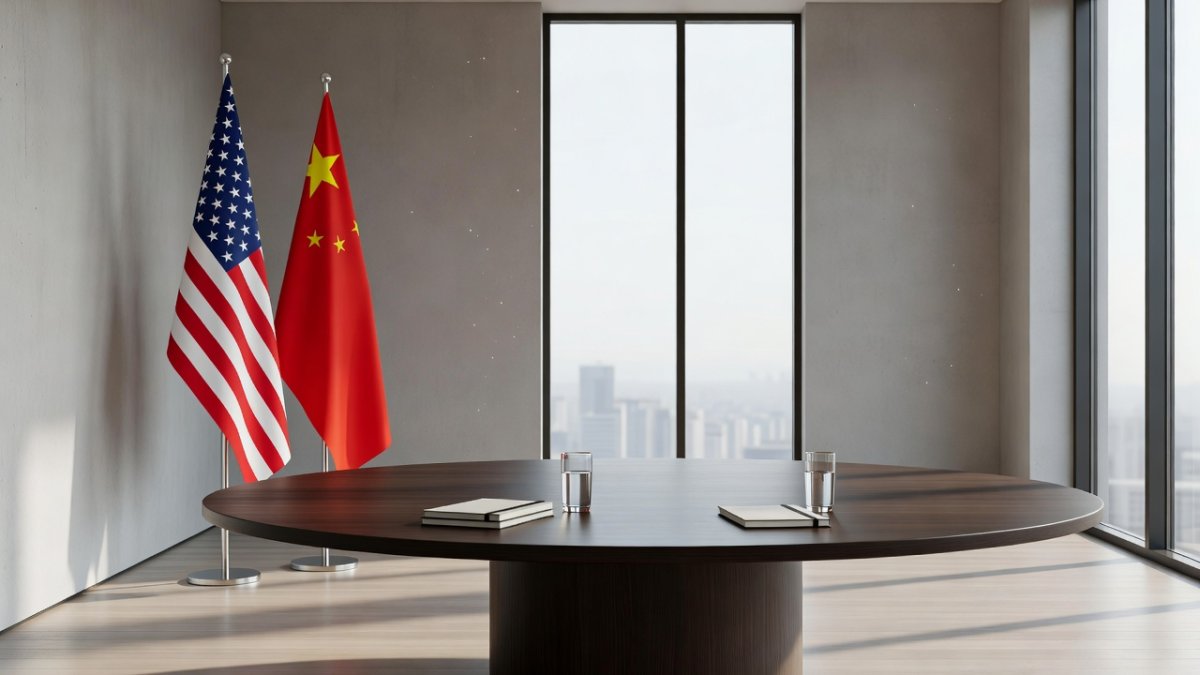
US-China AI Talks Set for September — Japan's Stake in the Balance
The United States and China will hold formal talks over artificial intelligence in September, five people familiar with the matter confirmed to Reuters, marking a critical milestone in technology diplomacy between the two rival superpowers. The discussions, expected to take place before Chinese President Xi Jinping's planned September 24 visit to the United States, represent the most significant attempt yet to establish guardrails for the world's most transformative and potentially destabilizing technology. For Japan, a key US ally and a rising AI power in its own right, the outcome of these talks carries profound implications for its technology industry, national security, and strategic positioning.
Tags: US-China AI talks, artificial intelligence regulation, AI safety, technology diplomacy, Japan AI policy, Marco Rubio, Xi Jinping, September 2026, METI
What the Talks Will Cover
The September discussions are expected to focus on mitigating the risks posed by increasingly powerful frontier AI models being developed on both sides of the Pacific. According to sources familiar with the planning, the agenda will include measures to prevent AI-enabled threats to critical infrastructure, protocols for managing model safety testing, and potential transparency mechanisms for advanced AI development. The talks are a direct outcome of the substantive Trump-Xi summit held in Beijing in May 2026, where both leaders agreed in principle that AI governance required bilateral dialogue at the highest technical level. Secretary of State Marco Rubio and Chinese Foreign Minister Wang Yi further advanced the framework during their meeting on the sidelines of the ASEAN gathering in Manila this week.
Why This Matters: The Nuclear Arms Control Parallel
The Center for Strategic and International Studies has described a successful US-China AI agreement as "the most significant piece of technology diplomacy since the first nuclear arms control agreements." The comparison is deliberate. Like nuclear weapons in the Cold War era, frontier AI systems present existential-scale risks that no single nation can manage alone — but strategic competition makes cooperation inherently fragile. For Japan, which has experienced both the devastation of nuclear warfare and the benefits of post-war technology cooperation, this parallel carries deep resonance. Tokyo has consistently advocated for international AI governance frameworks that balance innovation with safety, and the US-China dialogue may establish precedents that shape global norms for years to come.
Japan's Position in the AI Race
Japan occupies a unique position in the US-China AI dynamic. While not a first-tier AI superpower on the scale of the United States or China, Japan has made significant strides through initiatives such as the AI Strategy 2025, substantial investment in domestic AI startups, and a world-leading position in robotics and semiconductor manufacturing. Japanese companies including SoftBank Group, Preferred Networks, and NEC Corporation have been expanding their AI capabilities, while the Ministry of Economy, Trade and Industry has positioned AI as a pillar of the country's economic security strategy. The September talks will directly affect Japan's technology ecosystem: any US-China agreement on AI export controls, model transparency, or safety testing standards will necessarily shape the regulatory environment in which Japanese firms operate.
The Broader Diplomatic Context
The AI talks do not exist in a vacuum. They unfold against a backdrop of intensifying US-China competition across multiple domains — semiconductor supply chains, rare earth processing, undersea cables, and space technology. Rubio's meeting with Wang Yi in Manila this week signaled that diplomatic channels remain open even as tensions persist over Taiwan, the South China Sea, and technology transfer restrictions. The fact that both sides are proceeding with AI dialogue despite these frictions suggests a mutual recognition that AI risks transcend ordinary geopolitical disputes. For Japan, which maintains deep economic ties with China while depending on the US security alliance, this dual-track dynamic creates both opportunities and vulnerabilities. Tokyo must navigate carefully to avoid being caught between Washington's technology containment strategy and Beijing's push for technological self-sufficiency.
Implications for Japanese Businesses and Consumers
Japanese technology firms face several potential outcomes from the September talks. A framework that stabilizes AI governance expectations could reduce regulatory uncertainty, benefiting companies like SoftBank that have made major AI investments. Conversely, any agreement that imposes strict transparency or licensing requirements on advanced AI models could increase compliance costs for Japanese developers. Consumers may see indirect effects as well: AI safety standards agreed upon by Washington and Beijing are likely to influence international standardization bodies where Japan holds significant sway. The International Telecommunication Union and the G7's Hiroshima AI Process, which Japan has championed, may serve as vehicles for translating bilateral US-China understandings into multilateral norms.
What to Watch For
Several indicators will signal the trajectory of the September talks. First, the composition of each delegation will reveal the priority both sides assign to the dialogue — technical experts from national AI institutes versus diplomatic generalists. Second, whether the talks produce a joint statement, a memorandum of understanding, or merely an agreement to continue meeting will indicate the level of genuine commitment. Third, and most critically for Japan, the treatment of allied nations in any US-China AI framework will test whether Washington treats AI governance as a bilateral exclusive or as a multilateral endeavor. METI and Japan's AI Strategy Council should be preparing now to ensure Japanese interests are represented in any emerging architecture — because once the US and China agree on AI rules, they will be exceedingly difficult for middle powers to reshape.
The September AI talks represent a pivotal moment in technology governance. For Japan, the challenge is clear: remain engaged, ensure its voice is heard, and prepare for a world where the two largest AI powers have established rules that will shape the technological landscape for decades. The outcome will reverberate far beyond Washington and Beijing — landing squarely in Tokyo's policy inbox.
By Kenji Tanaka, Staff Writer
This article was produced with AI-assisted research and editorial support. Reporting is based on sources cited in the article.
What's Your Reaction?
 Like
0
Like
0
 Dislike
0
Dislike
0
 Love
0
Love
0
 Funny
0
Funny
0
 Wow
0
Wow
0
 Sad
0
Sad
0
 Angry
0
Angry
0

Japan Correspondent at Global1.News. Tokyo-based voice covering Japanese politics, technology, economy, and culture. Tracks the intersection of tradition and innovation in one of the world's most dynamic societies.














Comments (0)