
Data Centers Are Ditching the Grid for Gas — and Nobody's Ready for What That Means
Data centers are abandoning the grid for off-grid gas power as interconnection waits hit seven years. Meta paid $473M for 813 gas generators, Oracle ordered 2.3 GW of modular gas, xAI ran 59 unpermitted turbines, and a $28B Australian project proves this is global. What it means for hosting.
Data Centers Are Ditching the Grid for Gas — and Nobody's Ready for What That Means
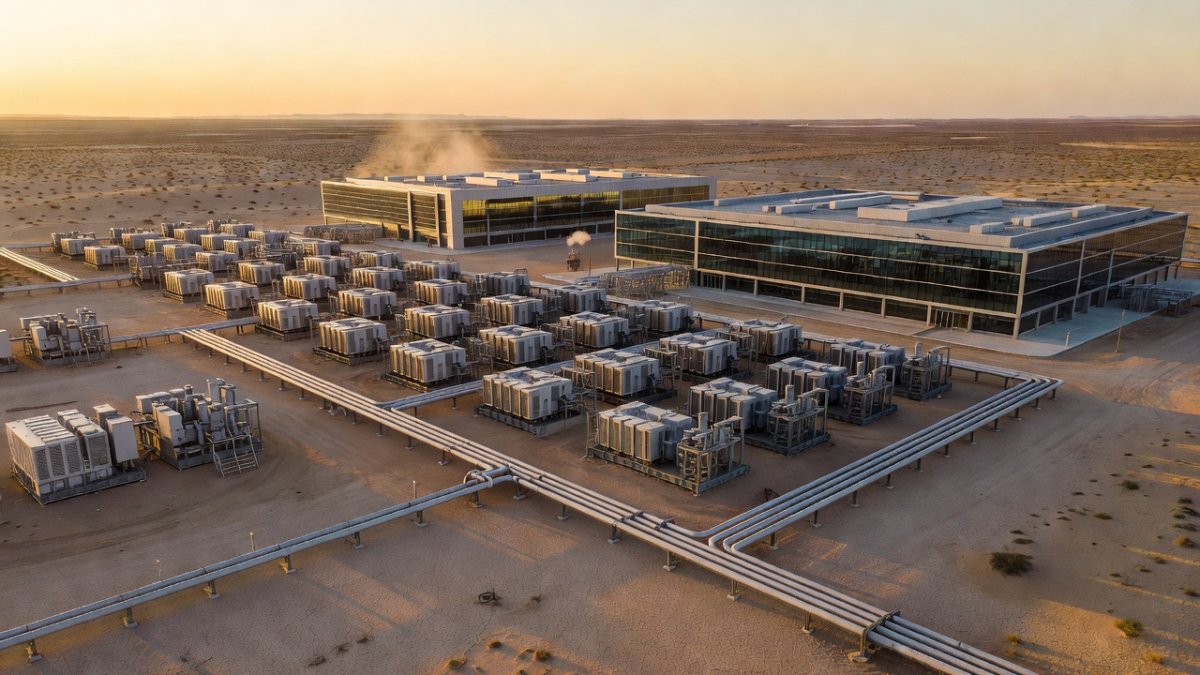
Let me tell you something I've been watching for months, and this week it finally clicked into focus. We've been talking about AI infrastructure as if the biggest bottleneck is chips, or cooling, or debt markets. And those are all real problems. But there's a quieter, faster-moving shift happening right now that nobody in the mainstream is connecting the dots on: data centers are giving up on the electrical grid entirely and building their own gas power plants.
I'm not talking about backup generators. I'm talking about primary power. Hundreds of gas turbines, modular gas engine fleets, direct pipeline connections — all feeding AI data centers that have decided the grid is too slow, too expensive, or too unreliable to wait for.
This is not a niche trend. This is becoming the default model for anyone who needs power at gigawatt scale before 2030. And it has consequences that the industry hasn't even started to reckon with.
The Grid Is the Bottleneck Nobody Wants to Talk About
Here's the core problem, and it's simple. The US Department of Energy reports that data centers consumed 176 terawatt-hours in 2023 — that's 4.4% of all US electricity. By 2028, that number is projected to hit 325 to 580 TWh, or up to 12% of total US load.
The grid is not built for this. It's not even close. In Northern Virginia — the world's largest data center hub — the wait for a new grid connection is seven years. In California, it's nine. The median interconnection time nationally has gone from under two years in 2008 to nearly five years today. And here's the kicker: only 20% of projects that apply for a grid connection ever actually make it to operation.
When you're a hyperscaler spending $50 billion a year on AI infrastructure and your power won't show up until 2033, you don't wait. You build your own.
Meta Just Wrote a $473 Million Check for Gas Generators
Let me start with the most concrete example. Meta is building a 1-gigawatt data center in El Paso, Texas. The grid connection timeline? Too long. So Meta chose to spend $473 million on 813 modular gas generators — built by El Paso Electric as a dedicated 366-megawatt gas plant — to power the facility by 2027.
That's half a billion dollars on combustion engines because the grid can't keep up. And this isn't a backup plan. This is the primary power source. A LinkedIn analyst who tracks this stuff put it bluntly: "That's not a workaround. That's the new playbook."
At $1,291 per kilowatt, Meta is paying a 36% premium over conventional gas generation — and they're doing it anyway. Because the alternative is waiting until 2032 for grid power, and in AI infrastructure terms, 2032 is a lifetime away.
Oracle Is Ordering 2.3 Gigawatts of Modular Gas — and That's Just the Beginning
Oracle went even bigger. In April 2026, Oracle signed a deal with VoltaGrid — a Texas rapid-deployment power company — for 2,300 megawatts of modular natural gas generation to power its AI data centers across Texas. That's 2.3 gigawatts of off-grid, behind-the-meter gas power, supplied through Energy Transfer's pipeline and storage network. The engines are Jenbacher gas units from INNIO — 300 of them in VoltaGrid's QPac platform.
The kicker: VoltaGrid claims a 55-day delivery record for getting gas generation online. Fifty-five days from order to power. Compare that to seven years for a grid connection. The incentives here are so skewed it's almost funny — if the implications weren't so serious.
And Oracle isn't alone. Crusoe's 900-megawatt Abilene expansion for Microsoft runs on behind-the-meter gas. Microsoft has a deal with Enchanted Rock for on-site generation. The Stargate project in Abilene — OpenAI's flagship $500 billion campus — combines Tesla Megapacks with simple-cycle natural gas turbines.
Behind-the-meter gas generation has gone from "niche workaround" to "default design choice" in about 18 months.
xAI's 59 Unpermitted Turbines — the Regulatory Wild West
Here's where this gets worrying. Elon Musk's xAI has installed 59 natural gas turbines for its Colossus 2 data center in Memphis, Tennessee — without securing federal clean air permits. At least 57 of those turbines are in Mississippi, just over the state line, where the regulatory oversight is even looser.
The NAACP has filed a lawsuit on behalf of residents in the area, arguing that unchecked emissions from the turbines are worsening air quality in already polluted communities. Federal regulators are involved. And xAI's position is essentially that the permits aren't required.
This is not a one-off. Scores of off-grid power plants for data centers are moving through permitting processes across the country at unprecedented speed. The International Business Times reported in June that dozens of large natural gas power plants designed exclusively for data centers are being fast-tracked with "little oversight." The clean air permits, water permits, and community impact assessments that normally regulate new power infrastructure are being bypassed or reinterpreted.
Australia's $28 Billion Gas-Powered AI Campus — the International Dimension
This is not a US-only phenomenon. On July 22, 2026 — today — the Northern Territory government in Australia granted 185 hectares of land to Beetaloo Digital Pty Ltd, a subsidiary of natural gas company Beetaloo Energy Australia, to develop two hyper-scale AI data center campuses. The project claims it could attract A$40 billion ($28 billion) in private investment.
The catch? These data centers will be powered by natural gas piped directly from the Beetaloo Basin. The ABC calculated that the facility would require more than six times the total electricity demand of the Darwin and Katherine grids combined to operate. Local community groups are already calling for an immediate moratorium on the project.
Meanwhile in Europe, the UK has waived seven data center projects through to hook up to the gas grid, and both the UK and EU have announced plans to triple AI capacity by 2030 and 2035 respectively. The WhoWhatWhy investigation into "The Plot to Cover Europe with Gas-Powered AI Data Centers" lays out how gas infrastructure companies are positioning themselves as the default power source for the AI buildout.
This is a global shift. And it's happening at regulatory speed, not at the speed the consequences deserve.
The Secondary Bottleneck Nobody's Talking About — Permitting Is Not Catching Up
The Pattern C cross-pollination here is a regulatory and permitting gap that's growing wider by the month. The traditional environmental review process for a new gas plant takes 18-24 months. The air quality permit adds another 6-12 months. But data center off-grid gas is being treated as "temporary" or "behind-the-meter" — which in many jurisdictions exempts it from the usual permitting requirements.
Meta's Indiana data center in Lebanon is the state's first off-grid power source — a temporary gas facility approved for a facility that will eventually connect to the grid. Except "temporary" in data center terms means operational for a decade or more.
Williams Companies — one of the largest US natural gas pipeline operators — has already committed over $1.6 billion to natural-gas-to-power projects specifically for data centers. The gas-to-AI tracker from Sunya Research shows a fast-growing pipeline of gigawatt-scale behind-the-meter gas deals that sit outside traditional power plant regulation.
This is generating two simultaneous problems. First, the environmental consequences: Truthout's investigation into the data center boom concludes it's "fueling an expansion of natural gas projects" at exactly the moment when climate policy should be contracting them. Second, the community backlash: a Leger poll in Canada found 79% of Canadians worry about environmental impacts of data centers, and the Children's Health Defense investigation found dozens of data centers exploiting air permitting loopholes meant for small-scale polluters. In the US, 70% of Americans don't want data centers built nearby, and the eminent domain fights I wrote about two days ago are escalating.
What This Actually Means for Independent Hosting Providers
If you run an independent hosting business, this trend changes your competitive landscape in four concrete ways.
First — hardware availability is about to get tighter. When hyperscalers build off-grid gas power, they don't just solve their own power problem. They lock in long-term gas contracts, pipeline capacity, and turbine supply that smaller players can't access. The same supply constraints that hit GPUs are hitting power generation equipment. Jenbacher engines, Siemens turbines, Caterpillar generators — they're all on allocation. If your colo provider was counting on a new gas peaker plant to support expansion, those lead times are stretching.
Second — your competitors are going off-grid faster than you think. The $473 million Meta spent on El Paso generators isn't just Meta's problem. Every hyperscaler that goes off-grid reduces the pressure on the public grid, which sounds good — until you realize that the grid improvements and transmission upgrades everyone was counting on won't happen because the big customers aren't pushing for them anymore. The grid will be left serving residential and small commercial customers, who will pay for upgrades that benefit mostly off-grid hyperscalers.
Third — regulatory risk is inbound. The xAI NAACP lawsuit, the Northern Territory backlash, the European gas-grid investigations — these are early signals. Within 24 months, expect state-level legislation requiring environmental impact assessments for any data center with on-site gas generation. When that happens, the cost of compliance will hit everyone equally, but independent operators with smaller margins will feel it more.
Fourth — power cost certainty is your biggest competitive advantage right now. The hyperscalers are paying a 36% premium for off-grid gas. That premium goes into their cost structure, not yours. If you're on a stable grid tariff with a long-term power purchase agreement, you have a pricing advantage that lasts until the grid interconnect queue catches up — which could be five to seven years. Lock in your power contracts now, while grid-tied power is still cheaper than behind-the-meter gas.
The Structural Reality — This Is the Grid Walking Away From the AI Industry
The conventional framing is that data centers are abandoning the grid because they're impatient. I think it's more accurate to say the grid is abandoning the data center industry. The interconnection queue is not a bottleneck that can be fixed with more investment — it's a structural constraint. You cannot add ten years of demand growth in five years and expect the grid to keep up, no matter how much money you throw at transmission lines.
The DOE's own numbers prove this: from 58 TWh in 2014 to 176 TWh in 2023 to a projected 325-580 TWh by 2028. That's a 3-10x increase in 14 years. The US grid was not designed for that kind of growth, and it cannot be retrofitted for it in the timeline the AI industry needs.
The hyperscalers know this. That's why they're spending half a billion dollars on gas generators instead of waiting for transmission upgrades. That's why Oracle is ordering 2.3 gigawatts of modular gas engines. That's why the xAI turbines are up and running without permits — because the alternative is waiting until the regulatory process catches up, and nobody in AI has that kind of time.
The Bottom Line
Here's what I keep coming back to. The off-grid gas trend solves the hyperscalers' immediate power problem, but it creates a dozen new ones — environmental, regulatory, community, and cost — that the industry hasn't begun to price in. Every unpermitted turbine, every fast-tracked gas plant, every "temporary" generator that runs for a decade is building up a regulatory liability that will come due eventually.
For the independent hosting provider, the window is open but it's closing. Lock your power costs now. Watch the legislative landscape in your state. And understand that every hyperscaler that builds its own gas plant is proving that the grid can't serve the AI industry — which means the grid they're leaving behind will be more expensive for everyone who stays on it.
The grid wasn't built for this. The AI industry doesn't have time to wait. And the gas turbines are already humming.
-- Allan Ali, Founder
This article was produced with AI-assisted research and editorial support. Reporting is based on sources cited in the article.
What's Your Reaction?
 Like
0
Like
0
 Dislike
0
Dislike
0
 Love
0
Love
0
 Funny
0
Funny
0
 Wow
0
Wow
0
 Sad
0
Sad
0
 Angry
0
Angry
0

Publisher of Global1.News. Automation architect, systems builder, and the guy making sure the truth gets published.











Comments (0)