
Nurse Protest Exposes Uttarakhand Hiring Crisis
An unemployed nurse's desperate act outside a minister's home yesterday has spotlighted the severe nursing recruitment crisis in Uttarakhand. With over 7,200 graduates awaiting jobs and minimal hiring in recent years, the incident underscores systemic failures in state healthcare staffing. This event ties directly into India's broader challenge of meeting the National Health Policy 2017 targets amid widespread shortages.
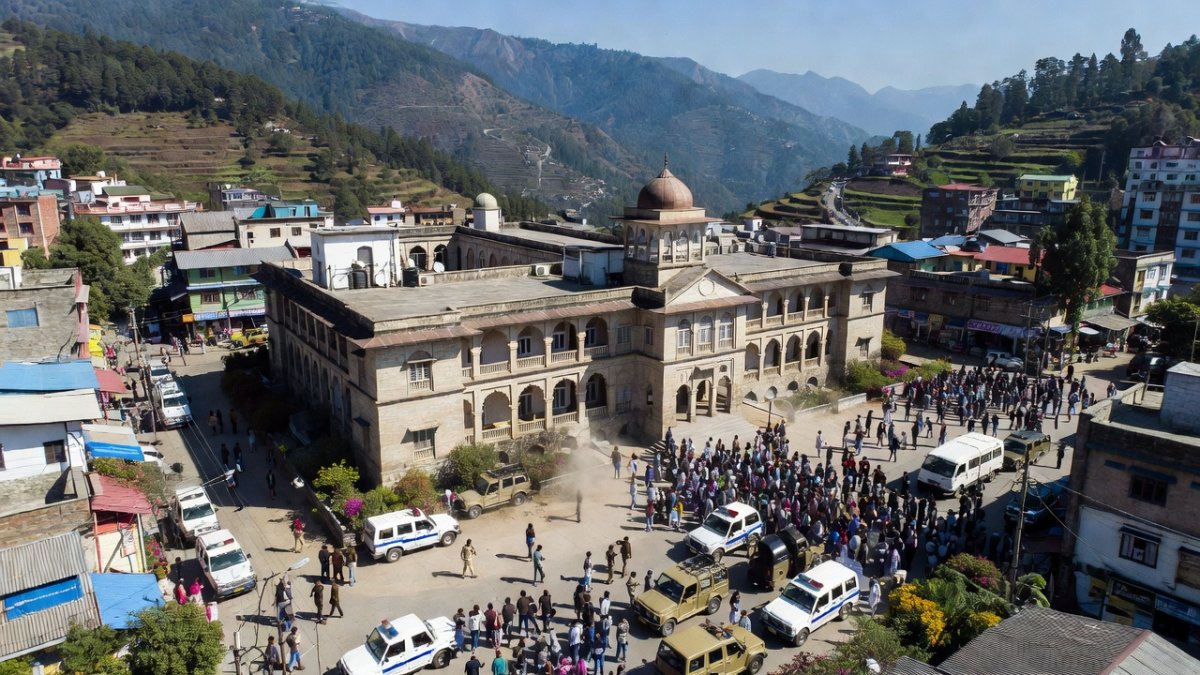
An unemployed nurse's desperate act outside a minister's home yesterday has spotlighted the severe nursing recruitment crisis in Uttarakhand. With over 7,200 graduates awaiting jobs and minimal hiring in recent years, the incident underscores systemic failures in state healthcare staffing. This event ties directly into India's broader challenge of meeting the National Health Policy 2017 targets amid widespread shortages.
Nurse Protest Exposes Uttarakhand Hiring Crisis
Dehradun, Uttarakhand — An unemployed female nurse consumed phenyl outside the residence of Uttarakhand Health Minister Subodh Uniyal in Dehradun yesterday while seeking a position in the health department and was rushed to a nearby hospital in critical condition.
The Incident and Immediate Response
Yesterday's event occurred directly outside the minister's home as the nurse demanded employment from the health department. She was immediately taken to a nearby hospital for treatment, with her condition reported as critical. This case reflects the deep frustration among thousands of qualified nurses facing prolonged unemployment in the state, following months of unsuccessful attempts to secure government positions through regular channels.
The health minister's residence became the focal point of this extreme act after months of inconclusive negotiations between Nursing Ekta Manch representatives and state officials. Local civil society groups have called for an independent inquiry into the circumstances that pushed a trained healthcare professional to such measures. The incident has drawn widespread condemnation of the state government's handling of the recruitment crisis, with opposition parties demanding immediate intervention from the Chief Minister's office.
Protests Led by Nursing Ekta Manch
Nursing Ekta Manch has coordinated demonstrations for over five months across all 13 districts of Uttarakhand. NEM president Naval Kishore Pundir has led the agitation demanding year-wise recruitment of nursing officers. The 60-day sit-in at Dehradun's Parade Ground, Jyoti Rautela's 60-hour water tank protest at Survey Chowk, the alleged self-immolation attempt by a protester, the May 2026 suspension of protests after government assurances followed by resumed agitation, and the 158-day mark of the protest underscore a deepening crisis in state health governance. These actions mirror similar agitations in Rajasthan, where prolonged nursing strikes forced incremental recruitments, and Tamil Nadu, where structured cadre reviews averted such escalations through timely policy interventions.
The sustained mobilisation reveals Uttarakhand's administrative inertia in addressing contractual versus regular posts, a pattern repeated across hill states where fiscal conservatism overrides National Health Policy 2017 commitments. With the protest entering its sixth month, the involvement of 47 nursing institutions has amplified demands for transparent year-wise hiring, exposing how delayed assurances erode public trust in the state machinery. Comparisons with Rajasthan's 2024 settlement, which absorbed 1,800 nurses after 120 days of agitation, highlight Uttarakhand's slower response despite comparable graduate outputs.
This agitation carries broader implications for India's federal health framework, where states like Uttarakhand lag in implementing Ayushman Bharat-linked staffing norms. The desperation evident in extreme protests signals urgent need for dialogue mechanisms akin to those in southern states, lest the impasse further strain rural health delivery across the 13 districts.
Recruitment Backlog and Official Statistics
Uttarakhand conducted no nursing officer recruitments between 2018 and 2023, resulting in a backlog exceeding 4,800 graduates. Official estimates place approximately 7,200 nursing graduates awaiting government employment. The 1,142 candidates from 2019 and 2020 batches whose written exams were cleared but never processed represent a stark administrative failure, while 2,400 annual graduates emerge from 47 institutions including Himalayan Institute of Medical Sciences and Shri Guru Ram Rai Institute. This backlog contrasts sharply with Kerala’s nurse-to-population ratio of 3.5 per 1,000 and Maharashtra’s 2.8 per 1,000, both achieved through consistent recruitment drives aligned with state health missions.
Ayushman Bharat’s 18% surge in demand for trained personnel has exacerbated the mismatch, as Uttarakhand’s health department prioritises fiscal restraint over cadre expansion. The unprocessed 2019-2020 cohort alone could fill critical gaps in district hospitals, yet procedural delays persist amid competing budgetary claims from infrastructure projects. In policy terms, this reflects the uneven implementation of the National Health Mission guidelines, where northern states trail southern counterparts in converting graduate pipelines into regular employment.
The statistics point to a structural inefficiency that undermines Uttarakhand’s ability to meet central scheme targets, forcing reliance on contractual hires that lack long-term incentives. Addressing the 4,800-plus backlog requires synchronised recruitment calendars modelled on Tamil Nadu’s annual cycles, lest the 7,200 waiting graduates fuel further out-migration and weaken primary care networks.
Current Vacancies Versus Annual Demand
UKMSSB announced 196 nursing officer vacancies for the current year. This figure represents only 10.6 percent of the estimated annual demand of 1,850 positions required to meet the National Health Policy 2017 target of 3 nurses per 1,000 population. The state produces roughly 2,400 nursing graduates each year, yet hiring remains severely limited. In contrast, neighbouring Himachal Pradesh recruited 1,450 nurses last fiscal through its health services commission, achieving nearly 78 percent of its own projected need, while Rajasthan’s RPSC cleared 1,120 posts against a similar demographic benchmark. Uttarakhand’s 10.6 percent therefore exposes a structural lag that cannot be explained by fiscal constraints alone.
Over the past three years the cumulative shortfall has reached 5,400 unfilled positions, according to internal health department data submitted to the state assembly. Administrative delays and protracted litigation over the 2019 and 2020 recruitment batches—still pending before the Uttarakhand High Court—have frozen selections that should have absorbed 2,800 graduates. Congress Mahila Pradesh President Jyoti Rautela has publicly criticised the UKMSSB for failing to expedite hearings, arguing that the impasse violates both the National Health Policy 2017 and the state’s obligations under Ayushman Bharat Pradhan Mantri Jan Arogya Yojana, which mandates expanded nursing cadres in district hospitals.
The 196 vacancies announced this year also ignore annual attrition of approximately 240 nurses, retirements projected at 180, and the additional 320 posts required to operationalise new Ayushman Bharat health and wellness centres in the hill districts. Without addressing these variables, the present recruitment round will leave Uttarakhand further behind the 3:1,000 nurse-to-population ratio even if every advertised post is filled. The gap underscores how state-level selection bottlenecks continue to undermine centrally sponsored health targets.
India's National Nursing Shortage Framework
India currently has 1.7 nurses per 1,000 population against WHO recommended 3 per 1,000. The country has 3.07 million registered nurses but faces a projected requirement of 4.3 million by 2025. The paradox of unemployed nurses alongside national shortages stems from the divide between contractual and regular posts, compounded by fiscal constraints at state level that limit regularisation despite National Health Policy 2017 targets of a 1:3 doctor-nurse ratio, against the current 1:1.7 reality. Brain drain has intensified the crisis, with over 60,000 Indian nurses migrating overseas between 2022 and 2025 to Gulf nations, the UK, Canada and the US, depleting states like Uttarakhand of experienced personnel.
This outflow directly impacts hill districts where recruitment backlogs already constrain Ayushman Bharat implementation. The policy framework’s emphasis on expanding nursing cadres clashes with state-level austerity, creating a surplus of graduates who cannot secure stable positions while urban and rural facilities operate understaffed. Uttarakhand’s situation exemplifies how federal funding mechanisms under the National Health Mission fail to translate into timely hires, widening the gap with WHO benchmarks.
Reversing the brain drain and backlog demands coordinated reforms, including incentives for domestic retention and streamlined recruitment that aligns with the 4.3 million target. Without such measures, the 1.7 per 1,000 ratio will persist, undermining health security in states bearing the brunt of migration pressures.
Overseas Migration Trends Among Nurses
More than 60,000 Indian nurses registered with overseas councils between 2022 and 2025, primarily heading to the Gulf countries, United Kingdom, Canada and the United States. This outflow compounds domestic shortages in states like Uttarakhand where recruitment delays persist and qualified professionals see no career progression at home. The trend connects to India's overall inability to retain trained professionals within the national health framework, as better compensation, working conditions, and career advancement opportunities abroad draw nurses away from state health systems.
The migration pattern is particularly damaging for Uttarakhand, which invests in training nurses through 47 recognised institutions but fails to absorb them into government service. Each nurse who migrates represents a loss of both educational investment and potential service years. Countries like the UK have actively recruited Indian nurses through government-to-government agreements, further accelerating the outflow. Without competitive domestic employment conditions and timely recruitment, Uttarakhand and other northern states will continue losing their trained nursing workforce to better-paying overseas markets, widening the gap between healthcare supply and demand.
Lessons from Neighbouring States and Outlook
Himachal Pradesh resolved a comparable backlog earlier this year through High Court-monitored recruitment of 1,450 nurses under a transparent merit list, setting a precedent for judicial oversight in health workforce planning. Uttarakhand's 2019 and 2020 batches involving 1,142 candidates cleared written examinations but remain unprocessed due to administrative delays and protracted litigation before the Uttarakhand High Court, which has previously intervened in petitions filed in 2021 and 2024 concerning the same recruitment cycles.
Policy experts recommend instituting an annual transparent recruitment calendar published by UKMSSB, creation of a dedicated nursing cadre with time-bound promotions, and 80 percent reservation for state nursing graduates in government posts to curb out-migration and align with the National Health Policy 2017 equity goals. With assembly elections scheduled for next year, the nursing crisis is poised to emerge as a key electoral issue, particularly in hill districts where healthcare access remains limited and voters increasingly link staffing shortages to poor service delivery.
Without swift adoption of structured hiring mechanisms modelled on Himachal Pradesh's court-supervised framework, Uttarakhand risks further escalation of protests and continued erosion of public confidence in its healthcare governance. The phenyl incident in Dehradun has crystallised the human cost of inaction, demanding urgent systemic reform before more desperate acts unfold.
— By Dr. Raj Patel, Staff WriterThis article was produced with AI-assisted research and editorial support. Reporting is based on sources cited in the article.
What's Your Reaction?
 Like
0
Like
0
 Dislike
0
Dislike
0
 Love
0
Love
0
 Funny
0
Funny
0
 Wow
0
Wow
0
 Sad
0
Sad
0
 Angry
0
Angry
0

India/South Asia Correspondent at Global1.News. Analytical voice with a background in science and health journalism. Based in New Delhi, covering Indian politics, education, healthcare, technology, and policy. Breaks down complex data into clear, actionable reporting.












Comments (0)