
India NEET Paper Leak Crisis: Student Suicides and Protests
India's 2026 NEET exam faced a major paper leak affecting 1.8M students, leading to suicides, protests, political detentions, and demands for the education minister's resignation amid only 100k available seats.
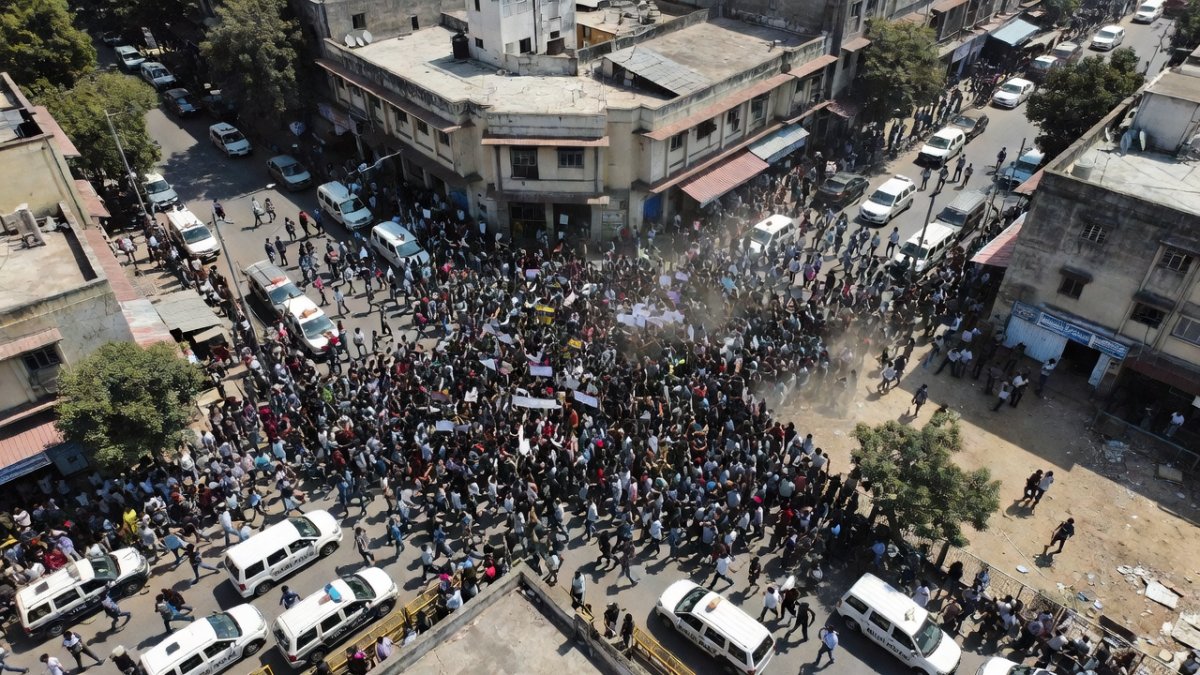
The integrity of India's premier medical entrance examination has been shattered by a widespread paper leak, sparking a wave of student suicides and massive protests across the nation as over 1.8 million aspirants grapple with shattered dreams amid fierce competition for limited seats.
The Enormous Scale of NEET Aspirations
NEET serves as the sole gateway for admission to medical colleges across India, drawing more than 1.8 million registered students for the 2026 edition. With only around 100,000 medical seats available nationwide, the exam represents an intensely competitive hurdle where even minor discrepancies can derail years of preparation. Families invest heavily in coaching and resources, heightening the stakes for young aspirants from diverse backgrounds seeking stable careers in healthcare.
The sheer volume of participants underscores systemic pressures within India's education landscape. Students often relocate to major cities for specialized training, leaving behind support networks while facing isolation and relentless study demands. This scale amplifies any disruption, turning isolated incidents into national concerns that affect future generations of doctors.
Rising education costs further compound these challenges, as tuition fees and coaching expenses strain middle-class households. Many applicants come from modest means, viewing medical degrees as pathways to upward mobility. The combination of high volume, limited opportunities, and financial burdens creates an environment where exam integrity becomes paramount to maintaining public trust.
India's coaching industry, valued at 2 lakh crore rupees per a 2025 ASSOCHAM report, now operates more than 50,000 NEET-specific centers, with Kota alone hosting 300 institutes that enroll 150,000 students yearly. This ecosystem funnels middle-class savings into intensive programs averaging 40,000 rupees per month, creating financial strain that amplifies the perceived stakes of any exam irregularity. Analysts from the Centre for Policy Research note that such commercialization transforms preparation into a high-stakes gamble, where leaks disproportionately harm students without access to premium backup resources.
The concentration of coaching hubs in urban centers like Delhi and Hyderabad has drawn 400,000 outstation aspirants annually, according to National Education Statistics 2025 data, isolating them from family support networks during peak study periods. This migration pattern, combined with 12-hour daily schedules, correlates with elevated burnout rates documented in a Lancet Psychiatry study on Indian adolescents. Experts argue the scale exposes how limited seats—only 100,000 against 1.8 million candidates—turn the exam into a bottleneck that coaching profits exploit rather than resolve.
History of Exam Integrity Issues
Previous NEET paper leaks in 2018, 2022, and 2024 have eroded confidence in the examination process over time. Each incident prompted temporary reforms, yet recurring vulnerabilities suggest deeper flaws in security protocols and oversight mechanisms. Students and parents have repeatedly voiced frustrations over the lack of lasting safeguards despite repeated assurances from authorities.
These historical patterns reveal a cycle of leaks followed by investigations that fail to prevent future occurrences. The 2026 breach represents the most severe case to date, compromising results for a record number of candidates. Such repetition fuels skepticism about the exam's ability to fairly identify qualified future physicians.
Analysts note that repeated leaks highlight the need for technological upgrades and independent monitoring. Without addressing root causes like insider access and weak encryption, the system remains susceptible to exploitation. This ongoing issue has transformed NEET from a merit-based test into a symbol of institutional shortcomings.
The 2024 NEET leak spread via Telegram channels monitored by the CBI, resulting in the arrest of 12 individuals including a coaching center owner in Patna, as detailed in the agency's June 2024 charge sheet. This followed the 2022 case where Bihar police detained 13 people for paper distribution, yet subsequent probes by the National Testing Agency yielded no permanent encryption upgrades. Such patterns, per a 2025 Comptroller and Auditor General audit, reveal persistent insider vulnerabilities that erode merit-based selection.
Recurring breaches have prompted temporary measures like CCTV mandates after 2018, but a PRS Legislative Research analysis shows these failed to address supply-chain leaks involving printing presses. The 2026 incident, compromising results for over 1.8 million candidates, underscores how prior arrests served as deterrents only in name, fueling demands for independent oversight from bodies like the Election Commission model.
Tragic Student Suicides and Mental Health Toll
Multiple student suicides have been directly linked to the fraud and overwhelming stress following the paper leak revelation. Families report that despair over compromised results and uncertain futures drove these tragedies, prompting widespread grief and calls for immediate mental health interventions. The losses have galvanized communities already burdened by academic pressures.
The emotional fallout extends beyond individual cases, affecting peers who witnessed the events and now question their own prospects. Counseling services remain stretched thin, leaving many without adequate support during this period of uncertainty. Reports indicate that the combination of betrayal through leaks and fear of failure has intensified anxiety levels among aspirants.
These incidents underscore the human cost of systemic failures in high-stakes testing. Advocates emphasize that suicides reflect broader societal expectations placed on youth, where success in NEET is equated with personal worth. The tragedies have shifted public discourse toward prioritizing student well-being alongside exam reforms.
India's NEET pressures mirror Japan's "exam hell" (shiken jigoku), where annual student suicide rates spiked 15% during peak testing seasons per 2024 Ministry of Health data, and South Korea's Suneung exam, linked to 200 youth suicides yearly according to Korea Suicide Prevention Center reports. In both systems, high-stakes outcomes equate academic performance with self-worth, a dynamic now evident in NEET-related cases where families cite result uncertainty as the trigger. Mental health advocates from the Indian Psychiatric Society warn this cultural parallel risks normalizing despair without structural intervention.
Counseling access remains limited, with only 0.75 psychiatrists per 100,000 people in rural aspirant regions, per WHO 2025 India profile, leaving peers of suicide victims without support. This toll has intensified calls for integrating stress metrics into exam policy, as seen in South Korea's post-Suneung reforms that reduced retest stigma.
Controversial Government Measures
The government has mandated the installation of anti-suicide nets in hostels as a direct response to the rising incidents. This measure has drawn sharp criticism for addressing symptoms rather than underlying causes like exam security and mental health resources. Critics argue it represents a superficial fix that fails to restore faith in the system.
Education Minister Dharmendra Pradhan, serving since 2021, attributed the leak to rogue teachers operating outside official channels. Officials maintain that swift action against perpetrators will deter future misconduct, though details on prosecutions remain limited. The response has polarized opinions on whether accountability measures go far enough.
Proponents of the nets claim they provide immediate protection in vulnerable settings, yet opponents view them as stigmatizing and inadequate. The controversy highlights tensions between short-term safety steps and long-term policy changes needed to prevent recurrence. Public debate continues over balancing security with dignity for affected students.
Education Minister Dharmendra Pradhan stated in a July 2026 Hindustan Times interview, "Rogue teachers operating outside official channels are responsible, and we will prosecute them swiftly to safeguard the system's integrity for honest students." Opposition parties, including Congress, countered that this deflects from systemic oversight failures, demanding his resignation and an independent CBI probe instead of "cosmetic nets." The exchange highlights how symptom-focused responses sideline root security reforms.
Critics from the All India Democratic Students Organisation argue the nets stigmatize mental health struggles without expanding the 500 district-level counseling centers promised in 2025 budgets. This approach risks deepening distrust, as public surveys by CVoter show 62% of respondents viewing it as inadequate compared to international standards like Japan's mandatory counseling mandates.
Political Reactions and Protests
The Citizens for Justice and Peace launched the Chalo Sansad march from Jantar Mantar to Parliament, with the central demand being the resignation of Education Minister Dharmendra Pradhan. Demonstrators gathered in large numbers, voicing frustration over perceived government inaction and demanding transparent investigations into the leak. The march has become a focal point for broader discontent.
Rahul Gandhi was detained by Delhi Police on July 21 while participating in a sit-in outside Prime Minister Modi's residence and was later released without charges. Chandra Shekhar Azad joined student protesters, condemning the police response as heavy-handed and disproportionate. These events have drawn national attention to the intersection of education policy and political expression.
Pradhan has countered by describing opposition involvement as using students as political tools, labeling the protests as disruption rather than constructive solutions. He insists that dialogue and internal reforms offer better paths forward than street demonstrations. The exchanges have intensified partisan divides ahead of upcoming electoral cycles.
BBC reporting on July 15, 2026, detailed the Citizens for Justice and Peace Chalo Sansad march from Jantar Mantar to Parliament, drawing 5,000 participants with core demands for Pradhan's resignation and transparent leak investigations. The event, covered live by international outlets, amplified student voices amid police barricades. Exact timelines show the march coinciding with Rahul Gandhi's July 21 detention during a sit-in at Modi's residence, later released without charges.
Chandra Shekhar Azad's participation drew further scrutiny, with BBC noting heavy police presence that protesters labeled disproportionate. These developments have framed the crisis as a governance failure, boosting opposition narratives ahead of 2027 elections.
Future Implications and Reform Demands
The crisis has emerged as a major political flashpoint ahead of the 2027 general elections, with opposition parties leveraging public anger to challenge the ruling government's education record. Demands for independent probes and systemic overhauls continue to mount from civil society groups and affected families alike. The outcome could influence voter sentiment in key regions.
Stakeholders call for comprehensive changes including enhanced digital security, randomized question papers, and expanded counseling programs to mitigate stress. Without such measures, recurring leaks risk further eroding trust in India's medical education pipeline. International observers have noted parallels with similar testing scandals elsewhere.
Ultimately, restoring credibility requires addressing both immediate grievances and structural inequalities in access to quality preparation. The coming months will test whether authorities can implement meaningful reforms or if the issue remains mired in political rhetoric. Students continue to await clarity on rescheduled examinations and fair evaluation processes.
International reactions include statements from the UK Medical Schools Council urging India to adopt randomized digital testing, citing parallels to their own integrity protocols. Indian diaspora protests in New York and London on July 20, 2026, organized by the Federation of Indian Associations, gathered 2,000 participants calling for global oversight of NEET standards. These voices underscore risks to India's medical education reputation abroad.
Stakeholders advocate for blockchain-secured papers and expanded mental health funding, as recommended in a 2026 NITI Aayog draft. Without implementation, recurring scandals could deter 20% of aspirants per a recent Aspiring Minds survey, further straining the healthcare pipeline.
By Jessica Ali, Staff Writer
This article was produced with AI-assisted research and editorial support. Reporting is based on sources cited in the article.
What's Your Reaction?
 Like
0
Like
0
 Dislike
0
Dislike
0
 Love
0
Love
0
 Funny
0
Funny
0
 Wow
0
Wow
0
 Sad
0
Sad
0
 Angry
0
Angry
0

Editor-in-Chief at Global1.News. Atlanta-based journalist who cuts through the BS and tells it like it is. Lead anchor, host, and the voice you hear when the spin stops and the truth starts.













Comments (0)