
Argentina Hantavirus Outbreak: Climate Change Drives Deadly Surge
In the heart of Latin America, Argentina confronts a devastating hantavirus outbreak that exposes the lethal fusion of climate disruption and zoonotic disease. Cases have nearly doubled year-over-year while fatalities climb, demanding urgent regional attention. This crisis reveals how warming temperatures and habitat loss are reshaping public health across the continent. Argentina Hantavirus Outbreak: Climate Change Drives Deadly Surge Buenos Aires, Argentina — A Rising...
In the heart of Latin America, Argentina confronts a devastating hantavirus outbreak that exposes the lethal fusion of climate disruption and zoonotic disease. Cases have nearly doubled year-over-year while fatalities climb, demanding urgent regional attention. This crisis reveals how warming temperatures and habitat loss are reshaping public health across the continent.
Argentina Hantavirus Outbreak: Climate Change Drives Deadly Surge Buenos Aires, Argentina —

A Rising Threat: Hantavirus Cases Surge Across Argentina
Argentina has confirmed 101 hantavirus cases and 32 deaths as of May 2026 according to Boletin Epidemiologico Nacional N°806, SE 16. This figure represents nearly double the 57 cases recorded in the same period during 2024-2025, marking an alarming acceleration. Highest case counts appear in Buenos Aires with 42 infections, followed by Salta at 30, Santa Fe with 7, Jujuy at 6, Rio Negro with 5, Entre Rios at 5, and Chubut reporting 4. These numbers reflect a sharp rise that echoes across Patagonia, the northwest, and central provinces where endemic zones overlap with expanding urban edges. Historically, Argentina has recorded 198 total hantavirus deaths over the previous 13 years, yet the current pace threatens to eclipse that grim total rapidly. The surge hits hardest in provinces already strained by limited healthcare infrastructure, amplifying suffering among rural and indigenous communities. Data from mandatory reporting systems highlight how the outbreak now penetrates deeper into populated areas than previous cycles. Public health officials note that early detection remains inconsistent, allowing clusters to grow before intervention. This escalation transforms hantavirus from a sporadic rural concern into a national emergency with profound social and economic costs for Latin American nations facing similar pressures. The doubling of cases signals systemic vulnerabilities that climate factors only intensify, leaving families devastated and hospitals overwhelmed in affected regions.
The Climate Connection: How Warming Temperatures Fuel Rodent Booms
Scientists directly link climate change to increased rodent populations known as ratadas through warmer temperatures and heightened rainfall that boost vegetation and food supplies for rodents, triggering explosive population booms. Habitat destruction further drives rodents into closer contact with human settlements, including the sprawling metropolis of Buenos Aires where green spaces now harbor infected animals. Instituto Malbran detected hantavirus in wild rodents of the genus Abrothrix in Ushuaia and Tierra del Fuego for the first time since mandatory reporting began in 1996, confirming the virus has established new footholds in southern ecosystems. Climate models project that virus-carrying rodents could expand their geographic range dramatically as precipitation and temperature patterns shift across the continent. These dynamics mirror similar climate-driven zoonotic patterns observed in North America and other regions where environmental upheaval accelerates disease emergence. In Argentina, the combination of deforestation, agricultural expansion, and erratic weather creates perfect conditions for rodents like the long-tailed pygmy rice rat to thrive near homes and workplaces. The result is heightened exposure risk for millions of residents in Latin America who depend on rural economies. Warmer winters reduce natural die-offs, sustaining larger rodent colonies year-round and extending transmission seasons. This environmental shift demands that policymakers treat climate action as essential public health infrastructure rather than an optional priority. Without aggressive mitigation, ratadas will recur more frequently and spread farther, turning isolated outbreaks into recurring regional crises that strain resources across borders.
Cruise Ship Cluster: A Global Wake-Up Call
The MV Hondius cruise ship departed Ushuaia on April 1, 2026, becoming the epicenter of a tragic cluster that illustrates the virus's reach beyond traditional boundaries. The index case involved 70-year-old Dutch man Leo Schilperoord who contracted the infection near Ushuaia through rodent exposure at a landfill during birdwatching activities. Both he and his wife died from the disease, contributing to the 8-11 confirmed or probable cases and 3 total deaths linked to the vessel. Passengers disembarked across multiple countries before health authorities recognized the outbreak and initiated contact tracing, raising fears of secondary spread in distant locations. Despite these events, the WHO assessed the global risk as low and not comparable to COVID-19, emphasizing that sustained human-to-human chains remain limited. Nevertheless, the incident exposed gaps in port surveillance and international notification protocols that allowed potentially exposed travelers to disperse widely. The cluster underscores how tourism and global mobility can transform localized rodent-borne threats into multinational concerns, particularly when index cases originate in remote Patagonian areas now seeing novel virus circulation. Health experts stress that rapid genomic sequencing and cross-border communication could have contained the event more effectively. This episode serves as a stark reminder that climate-expanded rodent habitats near popular tourist sites like Ushuaia create new vectors for international incidents. Latin American ports must enhance rodent control and traveler screening to prevent future tragedies that blend environmental change with global travel networks.
A Virus Without a Cure: The Deadly Reality of Andes Virus
The Andes virus, an Orthohantavirus strain, stands as the only hantavirus capable of human-to-human transmission via close or prolonged contact, setting it apart from other variants worldwide. Its case fatality rate reaches 30-40 percent, making it exceptionally lethal once symptoms progress. No specific treatment or approved vaccine exists, leaving supportive care as the sole option for patients who develop severe complications. Hantavirus causes Hantavirus Cardiopulmonary Syndrome (HCPS) that begins with flu-like symptoms before escalating into severe respiratory distress and shock, often overwhelming victims within days. Primary transmission occurs through inhalation of aerosolized virus particles from rodent urine, feces, or saliva, a pathway that makes cleaning protocols in rural and endemic areas critical yet insufficient alone. The long-tailed pygmy rice rat, Oligoryzomys longicaudatus, serves as the primary reservoir for the Andes virus in southern Argentina, sustaining the pathogen in wild populations that increasingly interface with humans. Prevention therefore centers on rigorous rodent avoidance measures and meticulous sanitation in Patagonia, the northwest, and central provinces where exposure risks peak. The absence of medical countermeasures amplifies the urgency of environmental interventions that address root drivers like climate-induced rodent surges. Families in affected Latin American communities live with constant dread knowing that a single rodent encounter can prove fatal without warning. This therapeutic void highlights the need for accelerated research investment tailored to regional strains rather than reliance on distant pharmaceutical pipelines.
From Patagonia to Buenos Aires: The Geographic Spread
The outbreak now stretches from remote Patagonian landscapes into the urban core of Buenos Aires, where 42 cases already represent the highest provincial total. Salta follows closely with 30 infections, demonstrating how the virus bridges traditional southern reservoirs with northern agricultural zones. Additional hotspots in Santa Fe, Jujuy, Rio Negro, Entre Rios, and Chubut reveal a widening footprint that defies earlier containment assumptions. Habitat destruction pushes infected rodents into human settlements across these diverse ecosystems, creating novel transmission opportunities in cities previously considered low-risk. Instituto Malbran's first-ever detection of the virus in Abrothrix rodents in Ushuaia since 1996 marks a pivotal expansion into Tierra del Fuego that climate models predict will continue. Warmer temperatures and increased rainfall sustain larger rodent populations that migrate along river corridors and road networks connecting provinces. This geographic progression threatens tourism economies in Patagonia while simultaneously burdening metropolitan hospitals in Buenos Aires with complex HCPS cases. Rural workers and indigenous groups bear disproportionate impacts as their daily activities intersect with expanding rodent habitats. The spread underscores how climate change erodes the natural barriers that once limited Andes virus circulation, allowing it to infiltrate new biomes. Coordinated provincial surveillance becomes essential to track this movement before it overwhelms fragmented health systems throughout Argentina and neighboring nations.
Latin America on Alert: Regional Implications
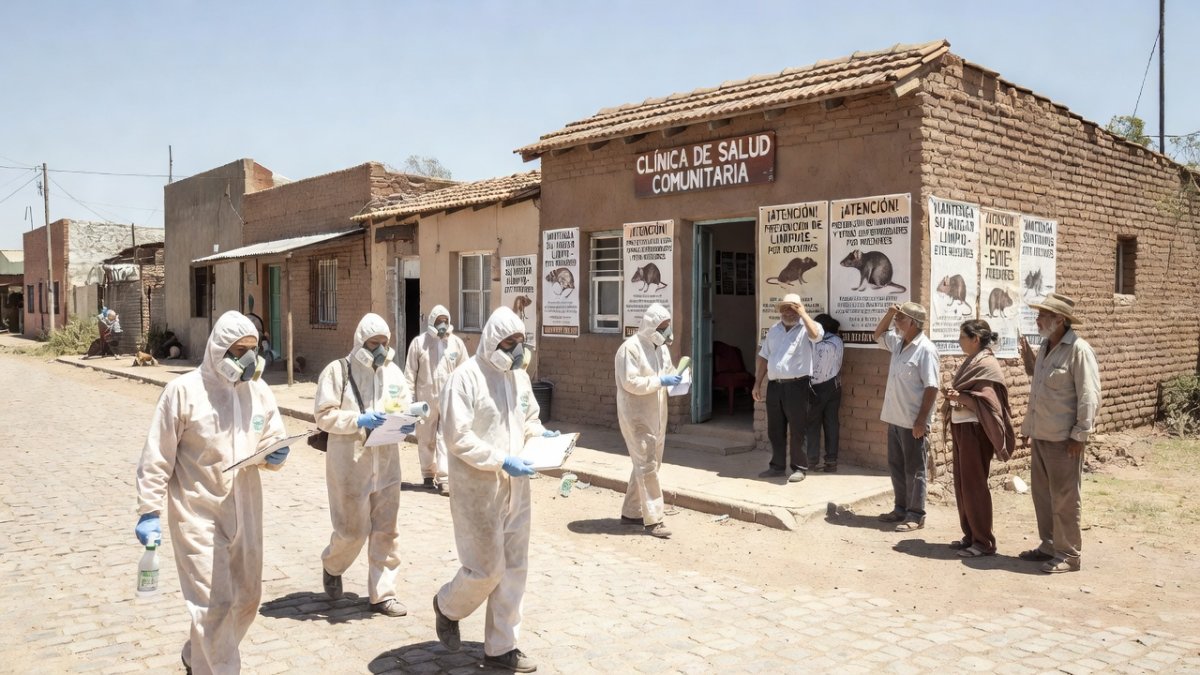
Parallel risks now confront Chile, Brazil, Uruguay, and Paraguay where climate change similarly expands rodent habitats and disease vectors, creating a continent-wide threat landscape. The same warmer temperatures and rainfall patterns fueling ratadas in Argentina operate across borders, driving rodent booms that carry hantavirus into previously unaffected territories. Habitat fragmentation from agriculture and urbanization forces animals into human proximity throughout the region, mirroring dynamics seen in North America. Broader Latin American health authorities must prepare for comparable surges as precipitation shifts allow virus-carrying species to colonize new elevations and latitudes. The Andes virus's human-to-human potential adds a layer of complexity absent in many other zoonoses, requiring enhanced contact tracing capacity across porous borders. Economic disparities mean that poorer communities in these nations face heightened exposure without adequate protective infrastructure or medical access. Regional cooperation on rodent monitoring, climate adaptation, and rapid response networks could mitigate the worst outcomes, yet funding gaps persist. The Argentine outbreak serves as an early warning that environmental changes are synchronizing disease emergence across South America. Scientists emphasize that integrated One Health approaches linking ecology, climate science, and epidemiology offer the best defense. Without swift action, Latin America risks repeated cycles of deadly outbreaks that undermine development gains and strain already fragile healthcare systems.
The Bottom Line — What Comes Next
Argentina's response must prioritize rodent avoidance education, rigorous cleaning protocols in endemic zones, and expanded surveillance that incorporates climate forecasting to anticipate ratadas. The 101 cases and 32 deaths recorded by May 2026, nearly double prior levels, demonstrate that current measures fall short against accelerating environmental drivers. International bodies like WHO correctly assess global risk as low, yet the cruise ship cluster aboard MV Hondius proves that localized events can generate multinational ripples when passengers disperse before detection. Sustained investment in vaccine development and antiviral research remains vital given the 30-40 percent fatality rate and complete absence of approved therapies. Climate models forecasting expanded rodent ranges demand that Latin American governments integrate disease prevention into national adaptation plans rather than treating outbreaks as isolated incidents. Historical data showing 198 deaths over 13 years provide sobering context for the urgency of scaling interventions now. Communities in Patagonia, Buenos Aires, and beyond deserve proactive protection that addresses both immediate exposure risks and the root climatic forces reshaping their environments. Coordinated regional strategies involving Chile, Brazil, and others can transform this crisis into an opportunity for resilient health systems. The time for decisive, data-driven action is now, before the next ratada claims even more lives across the continent.
By Elena Vasquez, Staff WriterThis article was produced with AI-assisted research and editorial support. Reporting is based on sources cited in the article.
What's Your Reaction?
 Like
0
Like
0
 Dislike
0
Dislike
0
 Love
0
Love
0
 Funny
0
Funny
0
 Wow
0
Wow
0
 Sad
0
Sad
0
 Angry
0
Angry
0

Latin America Correspondent at Global1.News. Based in Mexico City, covering politics, economics, energy, and culture across the region. Brings an on-the-ground perspective to stories spanning from the Rio Grande to Patagonia.















Comments (0)