
Fanti Carnival 2026: Lagos Showcases Vibrant Afro-Brazili...
Lagos transformed into a living canvas of Afro-Brazilian heritage this April as the annual Fanti Carnival took over Tafawa Balewa Square, drawing tens of thousands of revellers in a dazzling celebration of the centuries-old cultural bond between Nigeria and Brazil. The 2026 edition of what organisers call Africa's biggest Afro-Brazilian street experience reaffirmed Lagos as a powerhouse of diaspora cultural tourism.
Lagos transformed into a living canvas of Afro-Brazilian heritage this April as the annual Fanti Carnival took over Tafawa Balewa Square, drawing tens of thousands of revellers in a dazzling celebration of the centuries-old cultural bond between Nigeria and Brazil. The 2026 edition of what organisers call Africa's biggest Afro-Brazilian street experience reaffirmed Lagos as a powerhouse of diaspora cultural tourism.
Fanti Carnival 2026: Lagos Showcases Vibrant Afro-Brazilian Heritage
Lagos, Nigeria — The 2026 Lagos Fanti Carnival, held on 6 April at Tafawa Balewa Square on Lagos Island, brought together over 40,000 locals, tourists, and international visitors in a riot of colour, music and dance that honoured the city's unique Afro-Brazilian heritage — a tradition rooted in the return of formerly enslaved Africans from Brazil in the 19th century, who settled in the seven Fanti communities on Lagos Island and kept their carnival traditions alive across generations.
The Return That Built a Quarter
The 19th century saw waves of Afro-Brazilian returnees arrive in Lagos after the abolition of the transatlantic slave trade. These freed people, many from Bahia, carried memories of Brazil back to West Africa and established new lives on Lagos Island. The word Aguda, of Yoruba origin, refers specifically to these returnees from Brazil who rebuilt communities with skills in masonry, tailoring and trade that strengthened Lagos commerce for decades.
Locals knew them as the Aguda in Nigeria and the Amaro in Benin and Togo. They clustered in Popo Aguda, the Brazilian Quarter on Lagos Island, where their presence shaped entire streets and neighbourhoods. The seven Fanti communities on Lagos Island are Okepopo, Okoo-Faji, Maroko, Igbore, Popo Aguda, Campos and Olowogbowo, each preserving distinct customs that trace directly to the returnees' arrival.
Their architectural legacy remains visible today. Distinctive Afro-Brazilian buildings, including the Casa do Benin at 1 Joseph Street, Lagos Island, still stand with their ornate facades and tiled roofs that echo the style of 19th-century Salvador. These structures housed extended families and served as centres for religious and social gatherings that sustained the community's identity.
Religious life blended Catholicism with Yoruba traditions. The returnees created syncretic practices that honoured both saints and orishas, a fusion that continues in the seven Fanti communities on Lagos Island. This blending mattered because it created resilient cultural forms that survived colonial pressures and now anchor events like the Fanti Carnival for new generations across West Africa.
The name Fanti itself traces to these communities. It refers to the collective identity of the seven Fanti groups that preserved the carnival customs brought from Brazil and adapted them to local rhythms and stories. Similar Afro-Brazilian carnivals exist in Cotonou in Benin and Lomé in Togo, showing how returnee networks spread the same heritage across borders.
These seven Fanti communities maintain distinct customs in architecture, cuisine and religious practices. Their continuity gives the carnival its living roots and explains why the event still draws descendants every April. For African readers this history shows how migration can strengthen rather than erase identity, a lesson that resonates from Dakar to Lagos.
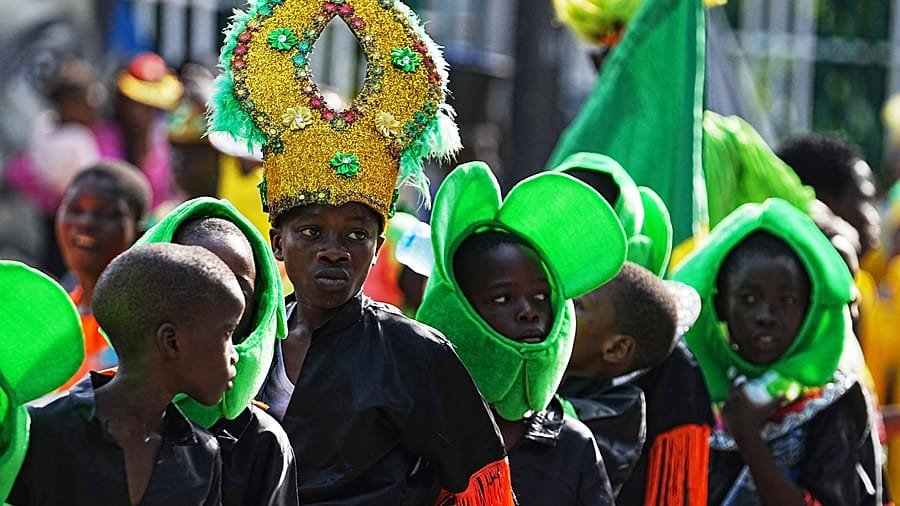
April 2026: A Day of Colour and Connection
On 6 April 2026 the carnival filled Tafawa Balewa Square on Lagos Island with movement and sound. Organisers from the Lagos State Ministry of Tourism, Arts and Culture had previewed the event with videos that captured the coming pomp and masquerades. The carnival route ran from Campos Square through Marina to Tafawa Balewa Square, turning central Lagos into a moving procession that honoured the returnee story.
Costumes sparkled with feathers, sequins and beads in green, white and other symbolic colours. Each detail told stories of the returnee heritage while catching the Lagos sunlight. The carnival featured specific costume competitions judged on authenticity to Afro-Brazilian tradition, rewarding artisans who kept the original techniques alive.
Community floats represented the seven Fanti groups and rolled through the square in sequence. Spectators cheered as the processions passed, each float carrying dancers and drummers who embodied their neighbourhood's history. Brazilian capoeira groups performed alongside Nigerian traditional dancers, creating moments where two continents met in one rhythm.
Performance groups including Okepopo and Okoo-Faji delivered sharp routines and acrobatics. Their steps mixed Brazilian samba energy with Yoruba precision, creating routines that held the crowd's attention for hours. Nigeria's National Troupe also performed at the 2026 carnival, adding national scale to the local celebration.
Samba rhythms blended with Yoruba percussion and Nigerian music throughout the day. The resulting soundscape felt both familiar and new, a direct echo of the cultural exchange that began in the 19th century. Local food vendors served Afro-Brazilian dishes like feijoada adapted with Nigerian ingredients, turning the square into a shared table of flavours.
Masquerades echoed Brazilian carnival traditions while incorporating Yoruba elements. Attendees described the atmosphere as joyous and electric, with the square pulsing until the final procession wound down at dusk. Tafawa Balewa Square has hosted major Nigerian cultural events since its construction in 1972, making the 2026 Fanti Carnival part of a long line of public gatherings that define Lagos identity.
40,000 Voices: The Economic and Cultural Impact
Organisers estimated over 40,000 attendees across locals and international visitors at the 2026 event. The crowd included families from Lagos Island, domestic tourists from other Nigerian states, and visitors from Brazil and Europe. The 2026 edition was the first to feature dedicated VIP viewing areas and live broadcast, allowing wider participation while generating new revenue streams for organisers.
The economic boost reached Lagos hospitality and creative sectors immediately. Hotels on Lagos Island reported full occupancy during carnival weekend, while costume designers and musicians secured new commissions from the exposure. The Fanti Carnival contributes to Lagos creative economy estimated at over $500 million annually, showing how heritage events translate culture into sustained income for artisans and performers.
The Lagos State Government Ministry of Tourism, Arts and Culture organised and promoted the event as a flagship. Officials highlighted the carnival alongside the revived Eyo Festival as twin successes in cultural tourism for 2026. The Lagos State Government allocated dedicated budget for the carnival in 2026 fiscal year, confirming official commitment to its growth.
The festival served as a platform for local artisans, costume designers, musicians and performers. Many sold work directly at stalls around the square, turning the day into a marketplace of living heritage. The carnival was declared part of Lagos State's official cultural tourism calendar, securing its place alongside the Eyo Festival for years ahead.
Lagos State Government statements praised the carnival as a major cultural tourism success. The event's growth from earlier editions confirmed its place on the city's annual calendar. Professional photographer Onumonu Olumide documented the 2026 edition, capturing images that later circulated widely and helped attract early interest for future years.
This scale matters for African readers because it demonstrates how diaspora connections can drive real economic value without relying on external models. When communities in Senegal or Ghana see similar returnee stories, the Lagos example offers a practical path to turn memory into measurable opportunity.
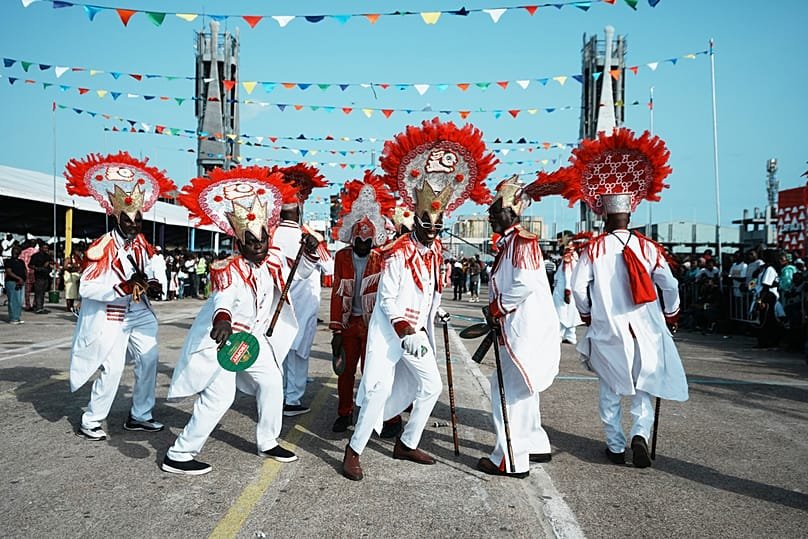
Carnival as Living History
The Fanti Carnival preserves and transmits history through celebration rather than textbooks. Each float and costume carries stories of the 19th-century returnees who rebuilt lives on Lagos Island. Elders in the seven Fanti communities teach younger members the dances and meanings so the practices stay intact across decades.
Passing traditions across generations remains central. Younger Lagosians engage with their Afro-Brazilian heritage through the festival. Many join performance groups or design costumes, finding personal connection in the public spectacle that keeps the Aguda legacy visible.
The educational dimension teaches history through art and performance. Visitors learn about the Aguda returnees and their influence on Lagos while enjoying the music and movement. Continuity of Candomblé-influenced traditions, cuisine and music from the returnee communities stays visible.
Dishes such as acarajé appear alongside Yoruba staples, showing how the two cultures merged. Comparisons with other Afro-diaspora carnivals around the world highlight the Fanti event's unique Nigeria-Brazil identity. While Rio, Trinidad and Notting Hill share roots, the Lagos version speaks directly to the return migration story that shaped West African cities.
A Bridge Between Two Continents
Brazil holds the largest African diaspora population in the Americas, with over 100 million people. The 2026 carnival reminded visitors that Lagos sits at the centre of that shared lineage. Bahia and Lagos share deep ancestral connections, with many returnees coming from Bahia and bringing Yoruba cultural elements that shaped Brazilian Candomblé, capoeira and cuisine.
Yoruba culture deeply influenced Brazilian Candomblé, capoeira, and cuisine such as acarajé. The Fanti Carnival reverses the flow, bringing those elements back to their source in visible form. In 2025, Nigeria and Brazil signed a cultural cooperation agreement to promote shared heritage, giving official backing to events like this one.
The return migration story represents a two-way cultural exchange. Contemporary Nigerian musicians now collaborate with Brazilian artists, extending the dialogue the carnival celebrates each April. The Brazilian Consulate in Lagos actively supports the Fanti Carnival as part of cultural diplomacy, and the Brazilian ambassador to Nigeria has attended previous Fanti Carnival editions.
The festival serves as a cultural diplomacy bridge between Nigeria and Brazil. The Brazilian consulate and Lagos State Government both support the event as a symbol of ongoing ties. AFP described the carnival as a living bridge between Brazil and Africa, a phrase that captures how the 6 April gathering at Tafawa Balewa Square keeps the historic connection active and public.
What to Watch For
The growing profile of Lagos as a cultural tourism destination continues to rise. The 2026 Fanti Carnival added momentum by drawing international visitors who then explored other heritage sites on Lagos Island. Lagos plans to expand the 2027 carnival to a week-long festival, allowing deeper engagement with the seven Fanti communities and more time for workshops on traditional costume making.
The Lagos State Government's commitment to expanding the Fanti Carnival and the Eyo Festival remains firm. Both events now anchor the city's cultural calendar and attract consistent funding. Potential 2027 plans include an expanded parade route, more international participation and Brazilian cultural delegations, with early discussions already pointing to larger floats and additional performance stages.
Other Nigerian cities may develop similar heritage festivals. The success at Tafawa Balewa Square offers a model for communities with their own returnee or diaspora stories, from the coastal towns of Senegal to the inland markets of Mali. The creative economy potential for Lagos fashion and music industries grows with each edition, as designers who create carnival costumes gain visibility that leads to commercial opportunities year-round.
The carnival finds its place alongside established pan-African festivals like FESPACO and Sauti za Busara. Its focus on the Nigeria-Brazil link gives it a distinct position within that continental circuit. For African readers this trajectory shows how one city's returnee heritage can become a shared continental asset, strengthening ties that colonial borders once tried to sever.
By Amara Diop, Staff WriterThis article was produced with AI-assisted research and editorial support. Reporting is based on sources cited in the article.
What's Your Reaction?
 Like
0
Like
0
 Dislike
0
Dislike
0
 Love
0
Love
0
 Funny
0
Funny
0
 Wow
0
Wow
0
 Sad
0
Sad
0
 Angry
0
Angry
0

West Africa/Sahel Correspondent at Global1.News. Dakar-based journalist covering politics, security, climate, and development across Francophone and Anglophone West Africa. Tells the stories of a region undergoing profound transformation.









Comments (0)