
New Hamas Chief Outlines 6 Priorities Topped by Ending Israeli Offensive in Gaza
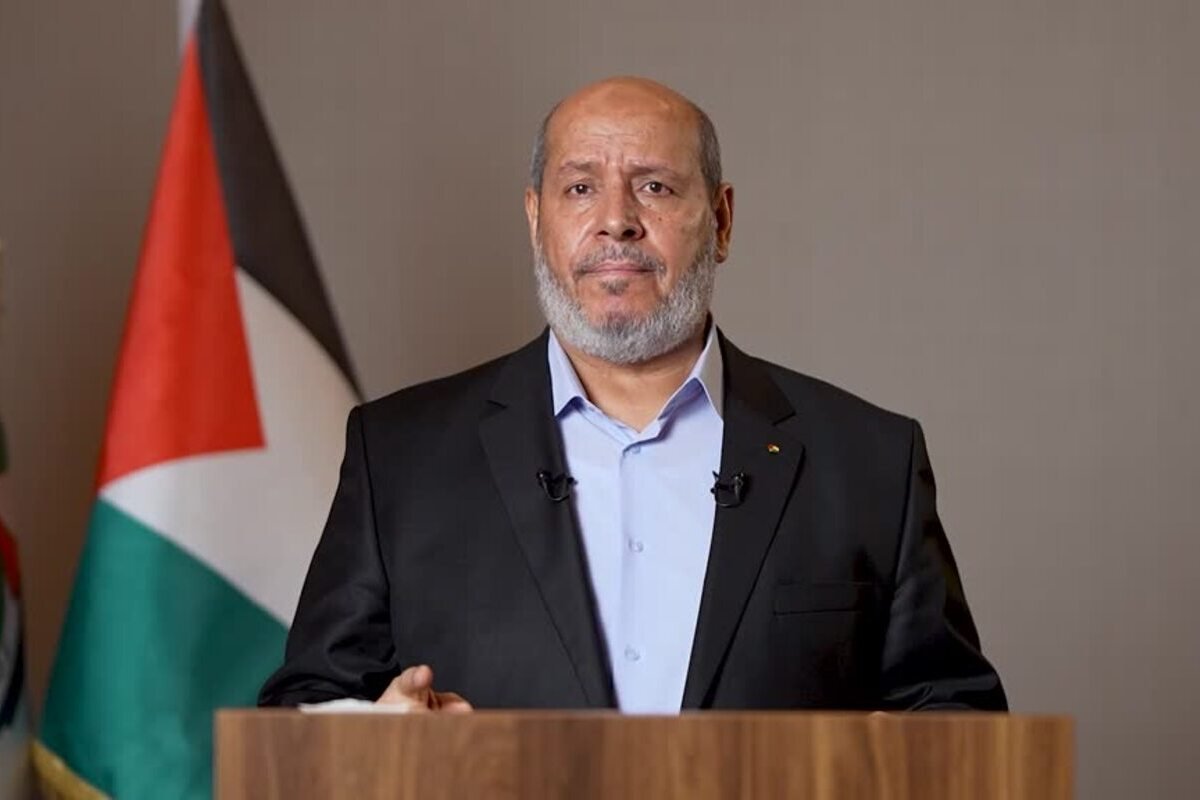
In the wake of Yahya Sinwar’s death, newly elected Hamas political bureau chief Khalil al-Hayya has presented a six-point roadmap that begins with an immediate end to Israel’s offensive in Gaza and a full withdrawal. The agenda responds directly to the suffering of families who have endured more than 73,000 deaths and widespread destruction, while also addressing longer-term needs for reconstruction, unity, and accountability.
Ending the Israeli Offensive and Securing Full Withdrawal
Khalil al-Hayya placed an immediate and comprehensive end to Israel's military offensive in Gaza as the first of six priorities. He called for a full Israeli withdrawal from the enclave and urged mediating countries to pressure the Israeli government to implement existing ceasefire agreements and advance to the next phase of negotiations.
This demand reflects the urgent need to halt ongoing destruction that has defined daily life for Gaza residents since October 2023. A complete withdrawal would allow displaced families to return to their areas without fear of renewed attacks.
Restoring Dignified Living Conditions and Advancing Reconstruction
The second priority focuses on restoring dignified living conditions for Palestinians in Gaza, thwarting displacement plans, accelerating reconstruction, and securing the release of prisoners. Hayya emphasized practical steps to rebuild homes, hospitals, and infrastructure destroyed during the offensive.
These measures address the immediate survival needs of hundreds of thousands who remain without adequate shelter or medical care. Reconstruction efforts would also create local employment and restore basic services essential to community recovery.
Achieving Palestinian Unity Through National Dialogue
Hayya listed Palestinian unity as the third priority. He called for an immediate national dialogue to rebuild institutions, particularly the Palestine Liberation Organization, on democratic and consensual foundations.
Unity efforts aim to strengthen collective representation at a time when fragmented leadership has complicated responses to occupation and displacement. Inclusive dialogue could help align strategies across political factions for long-term stability.
Divisions between Fatah and Hamas since the 2007 split have produced parallel governing structures in the West Bank and Gaza, weakening unified decision-making on issues of occupation and displacement. Earlier reconciliation agreements, including those reached in Cairo and Doha, repeatedly stalled over questions of security control, electoral sequencing, and representation within shared institutions. These repeated setbacks have left ordinary Palestinians navigating fragmented services and inconsistent political strategies that limit collective leverage in negotiations.
The Palestine Liberation Organization faces ongoing questions about its inclusivity and legitimacy among newer generations and factions outside its traditional framework. Calls for rebuilding institutions on democratic and consensual foundations point to practical steps such as agreed electoral processes, power-sharing formulas, and mechanisms that allow all major factions to participate without dominance by any single group. Such arrangements, if realized, could align strategies across territories and strengthen the capacity to address both immediate relief and longer-term political objectives.
Strengthening Relations with Arab and Muslim Countries
The fourth priority centers on expanding Hamas relations with Arab and Muslim nations. Hayya described this outreach as essential for building broader political and material support.
Regional ties have historically influenced aid flows and diplomatic pressure in the Palestinian context. Strengthened connections could open additional channels for humanitarian assistance and political advocacy.
Mobilizing Regional Action Against Ongoing Violence
Hayya identified the fifth priority as mobilizing Arab and Muslim nations to increase pressure on Israel to stop what he described as its killing and genocide machine while supporting Palestinian rights. He urged concrete actions beyond statements.
Such mobilization would connect directly to the lived experience of Gaza families who have endured repeated cycles of bombardment and siege. Coordinated regional efforts could amplify calls for protection of civilians under international law.
Urging International Accountability for War Crimes
The sixth priority calls on the international community and the United Nations to protect Palestinians and hold Israeli war criminals accountable. Hayya framed this as a necessary step toward justice and deterrence.
Accountability mechanisms remain central to Palestinian demands for recognition of losses suffered during the offensive. International engagement on this front could influence future protections for civilians in conflict zones.
ICC investigations into alleged crimes committed in Palestine continue to examine events from previous rounds of conflict through the current offensive, though procedural and jurisdictional challenges have slowed progress. UN resolutions and ICJ advisory opinions have repeatedly addressed the legal status of the occupation and obligations toward civilian protection, yet enforcement has remained limited. Past initiatives, including the Goldstone Report following the 2008–2009 offensive, produced detailed findings that were ultimately not translated into binding accountability measures.
The persistent gap between established legal frameworks and their practical application leaves Palestinian communities without effective remedies for documented losses. Hayya’s emphasis on international accountability reflects a broader demand that existing mechanisms move beyond statements toward concrete steps capable of deterring future violations. Without stronger enforcement pathways, the cycle of destruction and displacement risks continuing despite repeated legal pronouncements.
Khalil al-Hayya's Leadership and Succession of Yahya Sinwar
Hamas announced on Monday the election of Khalil al-Hayya as head of its political bureau, succeeding Yahya Sinwar, who was killed during clashes with Israeli forces in Rafah in October 2024. In his first televised speech, Hayya presented the six priorities as a roadmap for the group.
His assumption of the role occurs amid continued negotiations over ceasefire implementation. Hayya's public outline signals an emphasis on both immediate relief and longer-term political objectives.
The Scale of Devastation in Gaza
The Israeli army launched its offensive in Gaza in October 2023. The campaign killed more than 73,000 people and injured nearly 174,000 before a ceasefire was reached in October 2025, leaving widespread destruction across the enclave.
These figures illustrate the human cost borne by Palestinian communities. Entire neighborhoods were reduced to rubble, and basic infrastructure required for daily survival was severely damaged.
The offensive that began in October 2023 produced levels of physical ruin that have left Gaza’s civilian population facing prolonged displacement and loss of basic services. Hospitals, schools, water networks, and housing units sustained repeated damage, forcing families to shelter in overcrowded conditions without reliable access to medical care or clean water. Agricultural land and productive infrastructure were also heavily affected, contributing to sharp declines in local economic activity and rising unemployment that compound daily hardship for residents already coping with the human toll reflected in the reported casualty figures.
Reconstruction timelines remain uncertain and depend on sustained international funding and political conditions. UN estimates and donor pledges have historically fallen short of full recovery needs in similar post-conflict settings, while comparisons with efforts in Lebanon after 2006 or Iraq after 2003 illustrate how prolonged restrictions on materials and movement can extend timelines for years. If implemented, coordinated reconstruction programs could generate employment and restore essential services, yet success hinges on verifiable withdrawal and the removal of barriers that have previously hindered material inflows.
Implications for Ceasefire Negotiations
Hayya directed his remarks at mediating countries, asking them to press Israel to fulfill current agreements and proceed to subsequent phases. This approach ties the listed priorities to the practical mechanics of ongoing talks.
Progress on withdrawal and reconstruction would depend on coordinated international involvement. The priorities therefore serve as benchmarks for evaluating whether negotiations deliver tangible improvements for Gaza residents.
Palestinian Perspectives on the Stated Priorities
From the viewpoint of Palestinians living under occupation and displacement, the six priorities address core concerns of safety, return, and self-determination. Ending the offensive and enabling reconstruction speak to immediate needs for shelter and security.
Unity and regional mobilization reflect long-standing aspirations for coordinated resistance to policies that fragment Palestinian society. Accountability demands connect to the desire for recognition of rights violated during years of conflict.
By Fatima Al-Rashid, Staff WriterThis article was produced with AI-assisted research and editorial support. Reporting is based on sources cited in the article.
What's Your Reaction?
 Like
0
Like
0
 Dislike
0
Dislike
0
 Love
0
Love
0
 Funny
0
Funny
0
 Wow
0
Wow
0
 Sad
0
Sad
0
 Angry
0
Angry
0
Gulf/MENA Correspondent at Global1.News. Based in Doha, covering Gulf politics, energy markets, diplomacy, and development across the Middle East and North Africa. Tracks the economic transformation of the Gulf states.











Comments (0)