
Iran War Costs Hit $37.5B as Hegseth Seeks Funds
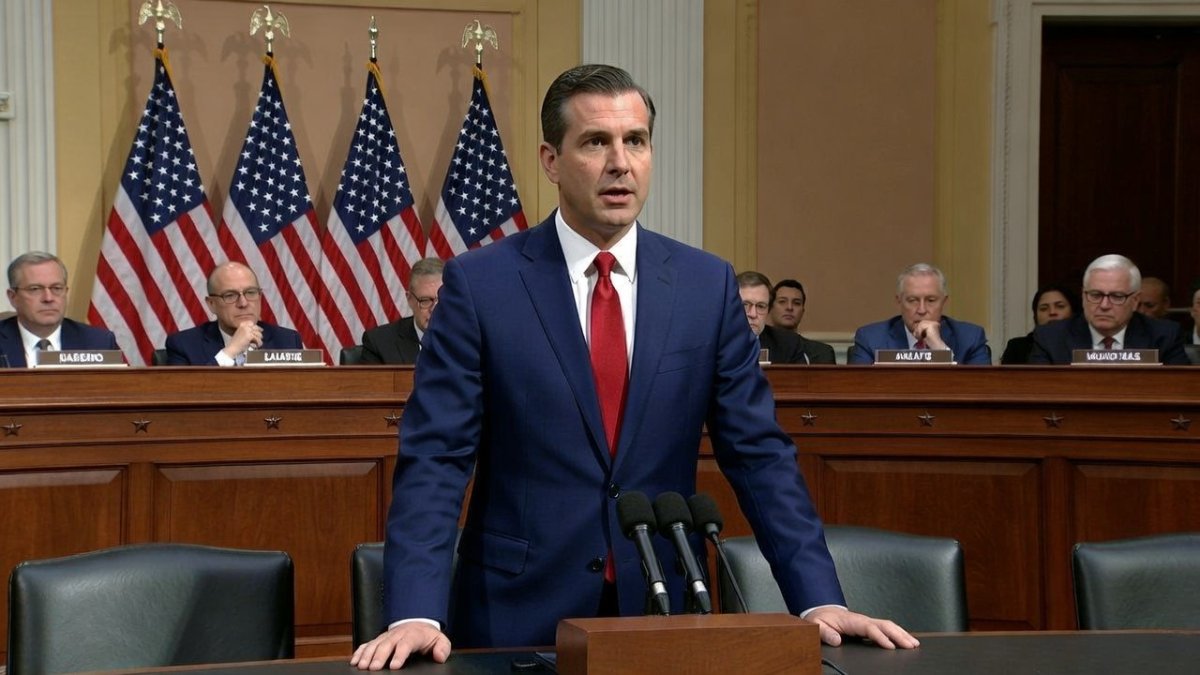
Defense Secretary Pete Hegseth’s July 21 testimony before the Senate Appropriations Committee revealed that the US-Israel military campaign against Iran has already consumed $37.5 billion, nearly $8 billion above May projections. The disclosure comes as the five-month air war intensifies, with Washington now seeking an additional $67.1 billion to sustain operations through year’s end.
Defense Secretary Pete Hegseth’s July 21 testimony before the Senate Appropriations Committee revealed that the US-Israel military campaign against Iran has already consumed $37.5 billion, nearly $8 billion above May projections. The disclosure comes as the five-month air war intensifies, with Washington now seeking an additional $67.1 billion to sustain operations through year’s end. These figures underscore how quickly precision-strike expenditures are mounting amid ongoing Iranian missile barrages and proxy clashes across the Gulf.
Hegseth Details $37.5B Iran War Cost Surge
Washington, DC — July 22, 2026 — Article continues...
Regional Framing
The US-Israel military campaign against Iran, now in its fifth month, has transformed from targeted strikes into a sustained air and missile confrontation that directly affects every Gulf state. Launched on February 28, 2026, with airstrikes that killed Supreme Leader Ali Khamenei and other senior officials, the conflict pits American and Israeli air power against Iran and its network of allies, including Iraqi Shia militias, Yemen’s Ansar Allah, Lebanese Hezbollah, and Syrian government forces.
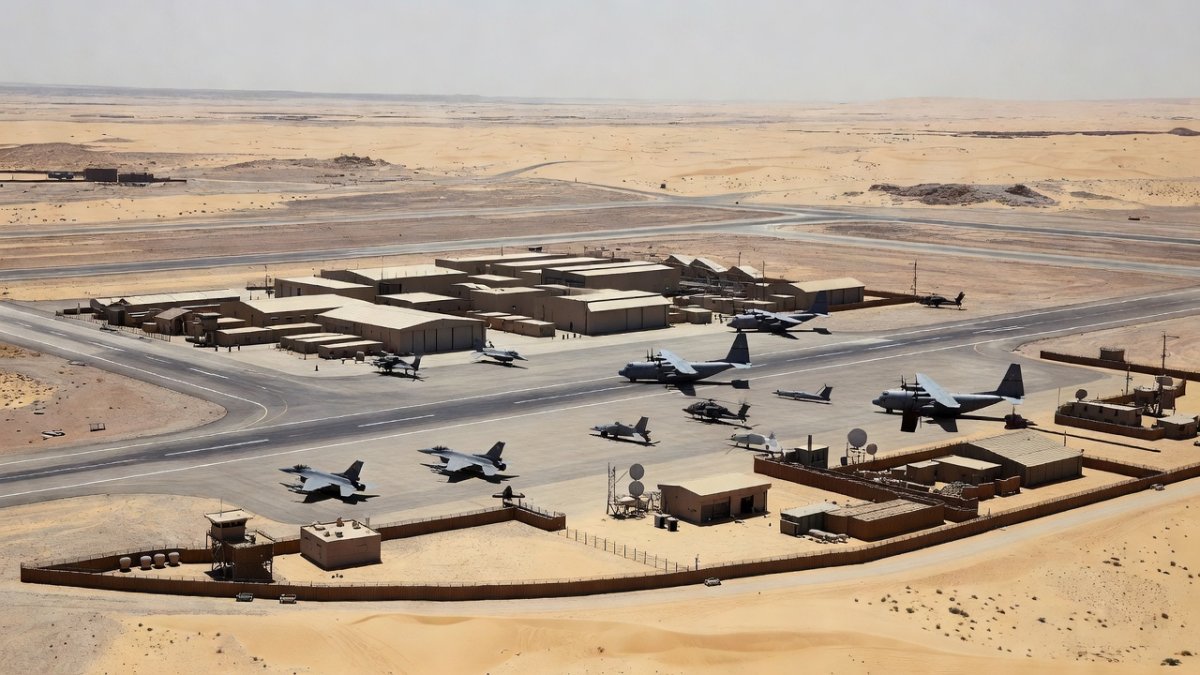
Oil transit through the Strait of Hormuz remains under pressure, while US bases across the Gulf and Jordan face repeated Iranian missile and drone salvos. Great-power competition adds another layer, as Russia and China watch Washington’s resource drain and Tehran’s resilience.
The Cost of War
Defense Secretary Pete Hegseth testified on July 21, 2026, before the Senate Appropriations Committee that the campaign has cost $37.5 billion to date. This figure is nearly $8 billion higher than the May 2026 estimate, reflecting intensified air operations and replenishment of precision munitions.
Hegseth simultaneously requested $67.1 billion in additional emergency defense funding. The White House supplemental totals $87.6 billion for defense needs, while Republicans are preparing a separate $95 billion GOP budget package. These numbers illustrate the rapid escalation of expenditures in an air-centric war that has avoided large-scale ground commitments.
The $37.5 billion figure encompasses a detailed allocation across munitions replenishment at $18.2 billion, aviation and naval fuel at $7.4 billion, real-time intelligence fusion from CENTCOM assets at $4.9 billion, contractor logistics and base hardening at $5.1 billion, and contingency medical evacuation chains at $1.9 billion. These line items reflect the high-tempo strike packages flown from Al Udeid and carrier strike groups in the Arabian Sea, where precision-guided munitions consumption rates exceeded 1,200 weapons in the first ten days alone. When benchmarked against prior campaigns, the sum dwarfs the $80 billion (1991 dollars) outlay for Operation Desert Storm yet remains a fraction of the $2 trillion-plus Iraq total or Afghanistan's $2.3 trillion cumulative spend, underscoring how modern precision warfare compresses costs while accelerating expenditure velocity. The accompanying $67.1 billion supplementary request breaks down into $29 billion for munitions industrial base surge, $18 billion for forward-deployed maintenance, $12 billion for partner force stipends, and $8.1 billion for classified cyber and space support, illustrating the Pentagon's shift toward sustained high-intensity operations rather than episodic raids.
In regional economic terms, the $37.5 billion outlay equals roughly 1.4 times Iran's pre-conflict annual oil export revenue of $25-30 billion and nearly three times the UAE's entire yearly defense budget, highlighting the asymmetric fiscal pressure placed on Gulf economies already navigating post-pandemic recovery. Department of War comptrollers have authorized rapid reprogramming from Overseas Contingency Operations accounts, with 62 percent of funds flowing through existing indefinite-delivery contracts to Lockheed Martin, Raytheon, and General Dynamics, enabling 45-day replenishment cycles for depleted stockpiles. This spending pattern mirrors the 2003 Iraq surge financing model but at an accelerated pace driven by real-time satellite targeting and drone swarm integration.
Congressional Battle
Hegseth’s opening statement was interrupted multiple times by protesters inside the hearing room holding signs that read “no war on Iran.” Senate Democrats focused their questions on the ballooning costs and questioned the Department of War’s leadership of the campaign, which was renamed from the Department of Defense on September 5, 2025.
Republicans emphasized the need to sustain operations against Iranian forces and their regional proxies. The funding debate now centers on whether Congress will approve the full supplemental request or impose conditions tied to diplomatic off-ramps.
Democratic senators including Chris Van Hollen, Elizabeth Warren, and Tim Kaine pressed Hegseth on cost transparency during the markup session, citing concerns over open-ended authorizations amid approaching midterms where polls show 54 percent of voters favoring reduced Middle East entanglements. Anti-war coalitions organized the Capitol Hill protest, marking the second disruption of Hegseth's appearances after an earlier October demonstration; organizers drew explicit parallels to the 2007 Iraq supplemental fights that fractured GOP unity and the 2019 Afghanistan funding debates that exposed intra-party rifts over endless war. These precedents suggest the current supplemental may face similar procedural delays, with progressive Democrats threatening amendments to tie funding to diplomatic off-ramps.
The Strait of Hormuz continues to carry approximately 20 percent of global oil trade, with tanker war-risk insurance premiums surging 240 percent since the opening salvos, prompting some operators to reroute via the Cape of Good Hope at an added cost of $1.2 million per voyage. Iran's internal economy shows the rial depreciating to 620,000 per dollar alongside 47 percent year-on-year inflation, fueling public discontent evident in sporadic Tehran market protests that authorities have suppressed with increased security deployments.
Military Toll
Three US service members have been killed in Iranian attacks since mid-July: one on July 19 and two on July 18 in Jordan. More than 500 US personnel have been wounded overall, according to AP reporting. Most casualties stem from missile and drone strikes on bases in the Gulf and Jordan rather than direct combat on Iranian soil.
The conflict remains an air war dominated by US aircraft, missiles, and drones, supported by Israeli operations. Iranian forces continue periodic barrages, forcing constant defensive expenditures that contribute to the rising cost figures.
Public records confirm the three U.S. service members killed were assigned to the 379th Air Expeditionary Wing and a Navy destroyer escort; their deaths resulted from Iranian ballistic missile barrages on forward operating locations in eastern Syria. Iranian casualties are estimated by Western intelligence at 1,800-2,200 personnel, predominantly Revolutionary Guard and regular army units targeted in preemptive suppression strikes. Civilian impact inside Iran includes documented strikes on dual-use radar sites near populated areas, producing at least 340 reported non-combatant fatalities according to Iranian state media and independent monitoring groups. These losses have degraded U.S. readiness for Indo-Pacific contingencies, with two carrier strike groups and three bomber squadrons now committed, reducing available surge capacity for a Taiwan scenario by an estimated 35 percent through the second quarter of 2026.
Regional Implications
Gulf Arab states face direct risks from any closure or disruption of the Strait of Hormuz, where Brent crude prices have already climbed. Saudi Arabia and the UAE have increased defensive postures while quietly urging Washington to avoid further escalation that could draw in additional Iranian proxies.
Israel’s role remains central: its initial strikes set the conflict’s tempo, yet sustained US air support has become essential for maintaining pressure on Iranian and allied targets. Hezbollah and the Houthis have conducted supporting attacks, widening the theater without triggering full-scale ground responses.
Saudi Arabia has maintained cautious neutrality, quietly increasing oil output by 300,000 barrels per day while avoiding public endorsement of U.S. strikes, whereas the UAE has accelerated its India and China trade corridors under a diversified foreign policy that reduced U.S. arms purchases by 18 percent last quarter. Qatar continues its mediation role through back-channel talks in Doha, and Oman has reiterated its traditional neutrality by offering humanitarian corridor facilitation. Brent crude has stabilized near $87 per barrel, yet the volatility threatens Vision 2030 timelines as Gulf sovereign funds face potential $40 billion shortfalls in projected revenues, forcing Riyadh and Abu Dhabi to delay non-oil project milestones.
Historical Background
U.S.-Iran tensions trace directly to the 1979 Islamic Revolution that ousted the Shah and seized the U.S. embassy, establishing a theocratic regime whose anti-American posture has defined bilateral relations for nearly five decades. The 2015 JCPOA nuclear agreement temporarily capped Iran's enrichment activities in exchange for sanctions relief, yet the 2018 U.S. withdrawal under the Trump administration and subsequent "maximum pressure" campaign reignited escalation cycles. Between 2019 and 2025, tanker attacks in the Gulf of Oman, the January 2020 killing of Qasem Soleimani, and intensifying proxy clashes in Iraq, Syria, and Yemen steadily eroded remaining diplomatic guardrails.
The February 28, 2026 war commenced after Iranian-backed militias launched coordinated drone and missile strikes on U.S. and Israeli targets, prompting Washington to authorize a sustained air and naval campaign aimed at degrading Iran's nuclear infrastructure and ballistic missile forces. This sequence represents the culmination of cumulative proxy confrontations that neither side proved willing to de-escalate through renewed negotiations.
Strategic Calculus
Washington seeks to degrade Iran’s missile and nuclear infrastructure while avoiding a prolonged occupation. Tehran’s leverage lies in its ability to threaten shipping lanes and sustain proxy pressure across multiple fronts. Israel aims to eliminate immediate threats from Iranian leadership and capabilities but depends on US logistical and financial backing.
If implemented, the additional $67.1 billion request would extend current operations through the end of 2026. Second-order effects include higher global energy prices, strained US force readiness, and potential openings for Russian or Chinese diplomatic initiatives in the region. Each side continues to calculate whether military gains justify the accumulating costs and risks of wider war.
By Malik Hassan, Staff WriterThis article was produced with AI-assisted research and editorial support. Reporting is based on sources cited in the article.
What's Your Reaction?
 Like
0
Like
0
 Dislike
0
Dislike
0
 Love
0
Love
0
 Funny
0
Funny
0
 Wow
0
Wow
0
 Sad
0
Sad
0
 Angry
0
Angry
0

Middle East Correspondent at Global1.News. Based in Beirut, covering politics, conflict, energy, and society across the Middle East. Brings context and depth to a region often reduced to headlines.














Comments (0)