
Kontext AI LoRA Training Brings Custom Fine-Tuning to Local GPU Hardware
Kontext AI from Black Forest Labs adds LoRA training to FLUX.1-Kontext-dev, enabling custom fine-tuning on local GPUs. The Aitrepreneur tutorial shows how to achieve top results for consistent characters and styles.
Kontext AI is flipping the script on local image generation by bringing serious LoRA training power straight to consumer hardware, letting users ditch generic outputs for models tuned exactly to their needs without begging cloud services for scraps.
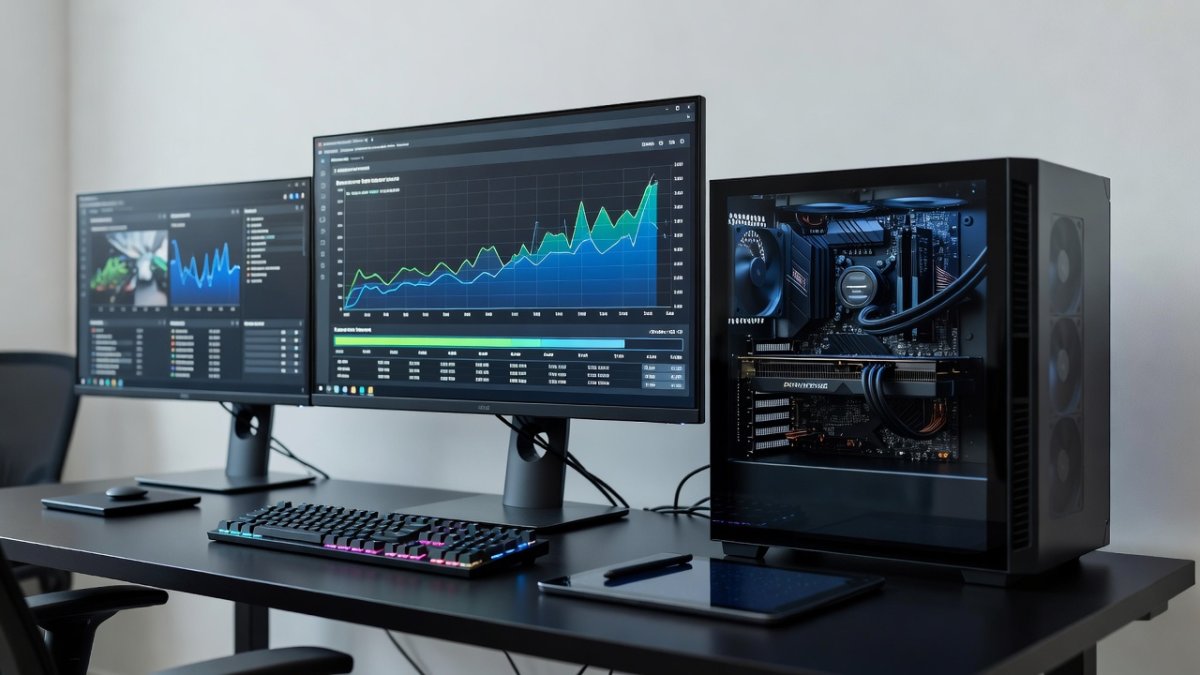
Kontext LoRA Training Brings Custom AI Fine-Tuning to Local Models
AI Community, July 2026 — Black Forest Labs just dropped LoRA support for FLUX.1-Kontext-dev, and the open-source crowd is already turning heads with results that punch above most commercial tools. The Aitrepreneur YouTube channel laid it out in their tutorial titled ULTIMATE KONTEXT LORA TRAINING BEST RESULTS EVER, showing step-by-step how to squeeze top-tier custom fine-tuning from this context-aware model on everyday rigs. This is not another hype cycle. It is a practical leap that puts personalized AI image tools in the hands of anyone tired of paying per prompt or settling for one-size-fits-all generations.
What Is Kontext AI?
Kontext, or FLUX.1-Kontext-dev, comes from the same Black Forest Labs team that built the original FLUX models. What sets it apart is its built-in context awareness. The model reads scene composition, spatial relationships between objects, and stylistic consistency far better than earlier open-source releases. Instead of mangling prompts with multiple subjects or complex backgrounds, Kontext keeps elements grounded and coherent. That matters when you want reliable outputs instead of random hallucinations that force endless rerolls.
Developers released it as an open model, which means the community can inspect, modify, and extend it without corporate gatekeepers. Early adopters quickly noticed how it handles detailed environments and character interactions with fewer artifacts than competing local options. This foundation made it ripe for the next evolution: user-driven fine-tuning.
LoRA Training Comes to Kontext
Low-Rank Adaptation, or LoRA, lets users train small adapter files on specific subjects, styles, or characters using just a handful of images. Black Forest Labs added native LoRA support to Kontext, removing the need for heavy full-model retraining. The Aitrepreneur tutorial walks through dataset prep, training parameters, and inference tweaks that deliver the cleanest results yet seen in local setups. Users report consistent character faces across wildly different poses and lighting after only a few hours of training.
The process runs on consumer GPUs without exotic setups. Training scripts integrate directly with existing FLUX workflows, so anyone already running Kontext can add LoRAs in minutes. This closes the gap between hobbyist experiments and professional-grade custom models.
Training LoRA models in Kontext begins with preparing a curated dataset of 20-100 high-resolution images paired with descriptive captions in a specific format. Users organize files into folders, set parameters like rank, alpha, and learning rate through the intuitive interface, then initiate the process on local hardware. Typical sessions on an RTX 4090 GPU complete in 30-90 minutes depending on dataset size and epochs, allowing rapid iteration without external dependencies. This local approach contrasts sharply with cloud platforms like Replicate, where per-hour fees accumulate quickly and data upload introduces latency plus potential privacy risks.
Community feedback on GitHub and Hugging Face has been overwhelmingly positive, with developers praising the seamless integration and reduced barrier to entry compared to traditional full fine-tuning. Users share pre-trained adapters and troubleshooting tips in active forums, highlighting how Kontext democratizes access for hobbyists. Many note superior customization over cloud services, as local training avoids rate limits and enables offline experimentation while maintaining model quality on par with paid alternatives.
What LoRA Training Unlocks
Creators gain the ability to lock in personal styles, product lines, or recurring characters without starting from scratch every time. Digital artists can train on their own portfolio to generate variations that match their signature look. Product teams visualize custom items in real-world scenes with accurate branding. The Aitrepreneur video highlights examples where LoRA-trained Kontext produced brand-consistent marketing visuals that previously required expensive studio shoots or cloud subscriptions.
Style transfer becomes reliable too. Feed the model a small set of reference artworks and it reproduces the aesthetic across new subjects while preserving the context-aware strengths. This cuts through the usual noise where other models flatten details or ignore prompt intent.
Local Hardware Requirements
Unlike cloud-only services that nickel-and-dime users, Kontext with LoRA runs entirely on local machines. The tutorial shows solid results on 8-12GB VRAM cards, though 16GB+ yields faster training and higher resolution outputs. No data leaves your system, which matters for proprietary designs or sensitive creative work. Setup stays straightforward with standard Python environments and the provided scripts from Black Forest Labs.
Enthusiasts on modest hardware can still participate by lowering batch sizes and using gradient checkpointing. The barrier to entry dropped dramatically compared to earlier fine-tuning methods that demanded enterprise GPUs.
How It Compares to FLUX and Other Models
Kontext builds directly on the FLUX architecture but layers in stronger scene understanding. Standard FLUX handles broad prompts well, yet it can lose spatial logic when prompts grow complex. Kontext maintains object relationships and background coherence more reliably, making it the better base for LoRA work where consistency across a trained concept is non-negotiable. Against closed models like Midjourney or DALL-E variants, the local option wins on cost and privacy once the initial training is complete.
Community benchmarks shared alongside the Aitrepreneur video show Kontext LoRAs matching or exceeding paid alternatives in character fidelity while running offline. The open nature also means rapid iteration as new optimizations appear daily.
What This Means for Creators
Independent artists and small studios finally have a path to custom AI without recurring fees or data leaks. One trained LoRA can power an entire series of illustrations, product mockups, or social content. The democratization angle is real here: tools once locked behind corporate APIs now sit on personal machines. That shifts power away from platforms that control access and toward individuals who own their creative pipeline.
Content creators especially benefit from the speed. Generate dozens of on-brand images in the time it used to take to brief an external service. The Aitrepreneur tutorial emphasizes practical workflows that integrate into existing design software, keeping the focus on output rather than technical hurdles.
Creators leverage Kontext's local LoRA training for product design by generating consistent branding elements across marketing materials, reducing reliance on stock imagery. In comics and games, artists maintain character consistency across hundreds of panels or scenes through specialized adapters trained on reference sheets, streamlining workflows that once required manual redrawing. Style transfer applications allow agencies to apply unique visual identities to client campaigns, fostering brand recognition without recurring licensing costs.
Cost analysis reveals significant savings: cloud API calls for similar generations can exceed $50 monthly for active users, whereas a one-time GPU investment of around $1,500 pays for itself within months. Privacy advantages are paramount, as sensitive datasets like proprietary character concepts or client logos never leave the creator's machine, mitigating risks associated with third-party servers. This empowers independent artists and small studios to experiment freely while retaining full control over their intellectual property.
The Bottom Line
Kontext LoRA training marks a clear milestone for open-source image generation. The gap between local and commercial tools continues to shrink, and this release accelerates that trend. Anyone with a decent GPU can now build personalized models that deliver professional results on demand. Skip the hype cycles and focus on the actual capability: reliable, private, and customizable AI image creation is here for the taking.
By Jessica Ali, Staff Writer
This article was produced with AI-assisted research and editorial support. Reporting is based on sources cited in the article.
What's Your Reaction?
 Like
0
Like
0
 Dislike
0
Dislike
0
 Love
0
Love
0
 Funny
0
Funny
0
 Wow
0
Wow
0
 Sad
0
Sad
0
 Angry
0
Angry
0

Editor-in-Chief at Global1.News. Atlanta-based journalist who cuts through the BS and tells it like it is. Lead anchor, host, and the voice you hear when the spin stops and the truth starts.











Comments (0)