
China Censure of British Steel Nationalisation Threatens UK-China Investment Climate
China's MOFCOM protests UK nationalisation of Jingye-owned British Steel under the 1986 investment treaty, citing rights infringement and lost investor confidence. The move protects 2,700 jobs and UK virgin steel capacity. Burnham's incoming government faces immediate tests on China investment ties.
China Censure of British Steel Nationalisation Threatens UK-China Investment Climate
Beijing, China — China’s commerce ministry has escalated its diplomatic protest against the British government’s decision to nationalise British Steel, a move that threatens to reshape investor confidence in one of the world’s most established bilateral investment relationships.
The United Kingdom’s nationalisation of British Steel has triggered a pointed diplomatic protest from Beijing, exposing the limits of Cold War-era investment treaties in an age of strategic industrial policy. This episode tests whether treaty protections can withstand national security claims, while reshaping Chinese perceptions of the UK as an investment destination. The outcome will influence how both capitals navigate supply-chain resilience and capital flows amid intensifying technological competition.
The core diplomatic protest
China's commerce ministry issued a firm statement opposing the United Kingdom's nationalisation of British Steel. The ministry expressed strong dissatisfaction, arguing that the move infringed upon the legitimate rights of Jingye Group and undermined investor confidence. Beijing called for the UK to honour its commitments under existing bilateral agreements while monitoring further developments closely.
The Jingye acquisition history
Jingye Group acquired British Steel's operations prior to the recent events, with the UK government assuming control of the Scunthorpe site last year while ownership remained with the Chinese firm. This arrangement restricted London's ability to direct the company's strategic direction until the nationalisation legislation was enacted. The commerce ministry highlighted Jingye's prior contributions to the UK economy as a basis for its objections.
The bilateral investment treaty dimension
The 1986 China-UK Bilateral Investment Treaty remains the governing framework for such disputes. MOFCOM urged London to fulfil its obligations under this agreement, which was established to promote and protect cross-border investments. The treaty provides mechanisms for addressing claims related to expropriation and fair treatment, though specific enforcement steps were not detailed in the ministry's response.
The 1986 China-UK Bilateral Investment Treaty emerged during Deng Xiaoping’s reform era, when Beijing sought to attract Western capital while London pursued post-imperial trade diversification. Signed amid the Thatcher government’s privatisation drive and China’s opening to foreign direct investment, the treaty reflected an asymmetric bargain: the UK offered legal protections to secure market access, while China retained significant regulatory latitude. Its sparse language on “fair and equitable treatment” and expropriation now confronts contemporary realities of state intervention in strategic sectors, exposing the treaty’s Cold War-era assumptions to 21st-century industrial policy.
Beijing’s invocation of the treaty echoes prior disputes. In Germany, the 2016 Kuka acquisition triggered CFIUS-style scrutiny that ultimately forced partial divestment; in Australia, the 2021 decision to block Chinese investment in the Port of Darwin and rare-earth projects invoked national security clauses without triggering formal arbitration. MOFCOM’s statement that the nationalisation “seriously infringed upon Jingye’s legitimate rights” deliberately invokes the treaty’s expropriation provision, which prohibits measures “tantamount to expropriation” without prompt, adequate compensation. Jingye could pursue indirect expropriation claims by arguing that operational control was effectively transferred without compensation, a doctrine refined in NAFTA and ICSID jurisprudence.
Although the 1986 treaty predates the ICSID Convention’s widespread use by Chinese investors, Jingye retains the option to initiate arbitration under UNCITRAL rules or through the treaty’s state-to-state mechanism. MOFCOM’s reference to “faithfully fulfil obligations” signals willingness to escalate diplomatically while preserving the possibility of investor-state dispute settlement. This calibrated language mirrors China’s evolving approach: rhetorical defence of multilateral investment norms paired with selective enforcement that avoids direct confrontation with major economies.
UK national security justification
UK officials framed the nationalisation as necessary to safeguard a vital national capability and meet a public interest test. Legislation passed by Parliament enables public ownership when such criteria are satisfied. A government spokesperson noted that negotiations with Jingye failed to yield an agreement providing value to the taxpayer, leading to the decision to bring operations under state control.
The UK’s public interest test under the new legislation parallels China’s own national security architecture. Beijing’s 2015 National Security Law and 2019 Foreign Investment Law authorise blocking or conditioning foreign acquisitions in sectors deemed critical to technological self-reliance. Both frameworks subordinate property rights to state-defined security imperatives, yet London’s test remains narrower, requiring demonstrable threats to “vital national capability” rather than the broader “ideological security” criteria embedded in Chinese law. This convergence reveals a global recalibration in which liberal market economies adopt screening tools once associated primarily with developmental states.
The trend extends beyond bilateral comparison. Washington’s CFIUS, strengthened by FIRRMA in 2018, now reviews transactions for supply-chain resilience, while the EU FDI Screening Regulation has enabled member states to coordinate on strategic assets. Britain’s approach sits between these models: it lacks the United States’ extraterritorial reach yet exceeds the EU’s voluntary coordination. The Scunthorpe decision therefore tests whether the UK can maintain an open-investment posture while exercising veto power over legacy industrial assets—an equilibrium that China’s own investment regime has long rejected in favour of explicit state direction.
The economic losses and jobs at stake
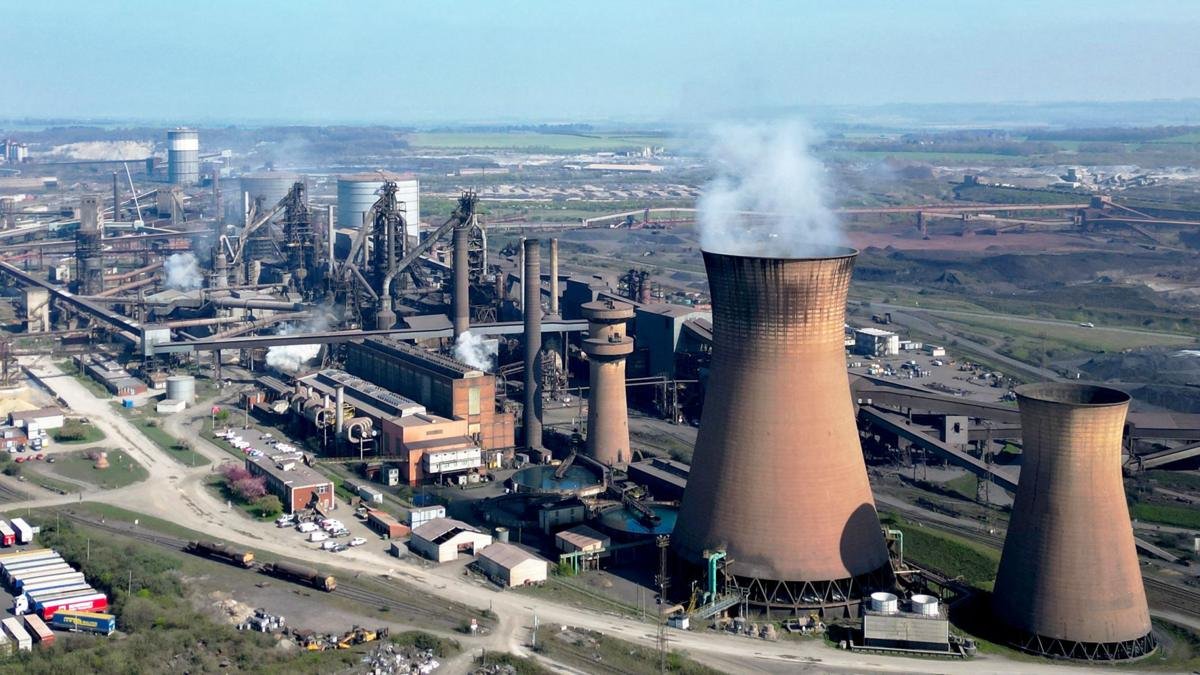
The Scunthorpe steelworks directly employs approximately 2,700 workers and supports thousands more positions in the supply chain. Jingye had reported daily losses of £700,000, while government estimates placed running costs at around £1.3 million per day. An independent valuer will assess compensation in the autumn, with the possibility that any award could be nil. The facility's continued operation prevents the UK from becoming the sole G7 economy without virgin steel production capacity.
Political context of Burnham transition
The nationalisation occurs as Andy Burnham prepares to assume the role of prime minister. The incoming administration must balance domestic industrial priorities with the economic advantages of engagement with China, the world's second-largest economy. This timing introduces immediate pressure on how the new leadership will manage the evolving bilateral dynamic.
Broader implications for Chinese investment in UK
The commerce ministry warned that the action severely damages the confidence of Chinese companies considering UK investments. While the UK spokesperson affirmed that Britain remains open to such capital inflows, the precedent set by the nationalisation raises questions about the security of existing and future projects. This development could prompt Chinese firms to reassess risk exposure in the British market.
Chinese capital in Britain spans nuclear, water and transport infrastructure. CGN’s stake in Hinkley Point C, CK Infrastructure’s interest in Thames Water, and various port and rail holdings illustrate the scale of exposure. The nationalisation of British Steel introduces precedent that could affect these assets, particularly where government subsidies or operational directives intersect with Chinese ownership. Investors already navigate heightened scrutiny under the National Security and Investment Act 2021; the steel precedent amplifies perceptions that political risk has risen materially for legacy manufacturing and critical infrastructure alike.
This friction disrupts China’s “Going Out” strategy, which encouraged state-linked firms to acquire overseas industrial capacity. Nationalisation risk accelerates the pivot toward Dual Circulation, wherein outbound FDI prioritises projects that directly support domestic technological upgrading rather than portfolio diversification. Chinese policy banks are likely to reallocate lending away from jurisdictions perceived as unreliable, favouring Belt and Road partners with stronger bilateral political guarantees. The episode therefore contributes to a broader de-risking of Western markets by Chinese capital.
Strategic outlook
From Beijing's perspective, the episode reflects tensions between China's pursuit of technological and industrial self-sufficiency and Western efforts to protect critical supply chains. London seeks to preserve domestic manufacturing capacity amid reliance on imports from the EU, US, China and India. Second-order effects may extend to ASEAN and EU partners evaluating their own investment screening regimes, potentially influencing Global South perceptions of UK openness to Chinese capital. Both sides retain leverage through trade volumes and diplomatic channels, though the absence of immediate retaliatory measures suggests a preference for calibrated responses.
Prime Minister-designate Andy Burnham inherits a China policy already under strain. Early signals suggest continuity with the previous government’s “protect and promote” framework, yet the steel nationalisation forces an immediate choice between domestic industrial strategy and the fiscal benefits of Chinese engagement. Beijing’s response will likely remain calibrated: sustained diplomatic protest without immediate trade retaliation, preserving leverage for future negotiations over market access and technology controls.
For the Global South, the episode reinforces narratives of Western investment volatility. African and Southeast Asian governments may interpret the UK move as evidence that even treaty-protected assets remain vulnerable when political winds shift, potentially tilting preferences toward Chinese financing that carries fewer governance conditionalities. Finally, the decision intersects with China’s energy transition and critical minerals strategy: preserving virgin steel capacity in Britain reduces short-term dependence on Chinese supply chains, yet it also signals to Beijing that Western governments will weaponise industrial policy to secure strategic materials, accelerating China’s own efforts to lock in overseas mining and processing assets.
By Prof. Marcus Chen, Staff Writer
This article was produced with AI-assisted research and editorial support. Reporting is based on sources cited in the article.
What's Your Reaction?
 Like
0
Like
0
 Dislike
0
Dislike
0
 Love
0
Love
0
 Funny
0
Funny
0
 Wow
0
Wow
0
 Sad
0
Sad
0
 Angry
0
Angry
0

World Politics Analyst at Global1.News. Based in Beijing, covering US-China relations, global trade, and geopolitical strategy. Brings deep analytical perspective to the power dynamics shaping international affairs.















Comments (0)