
El Niño Storms Kill 10 in Chile, Strand 104,000 in Coquimbo
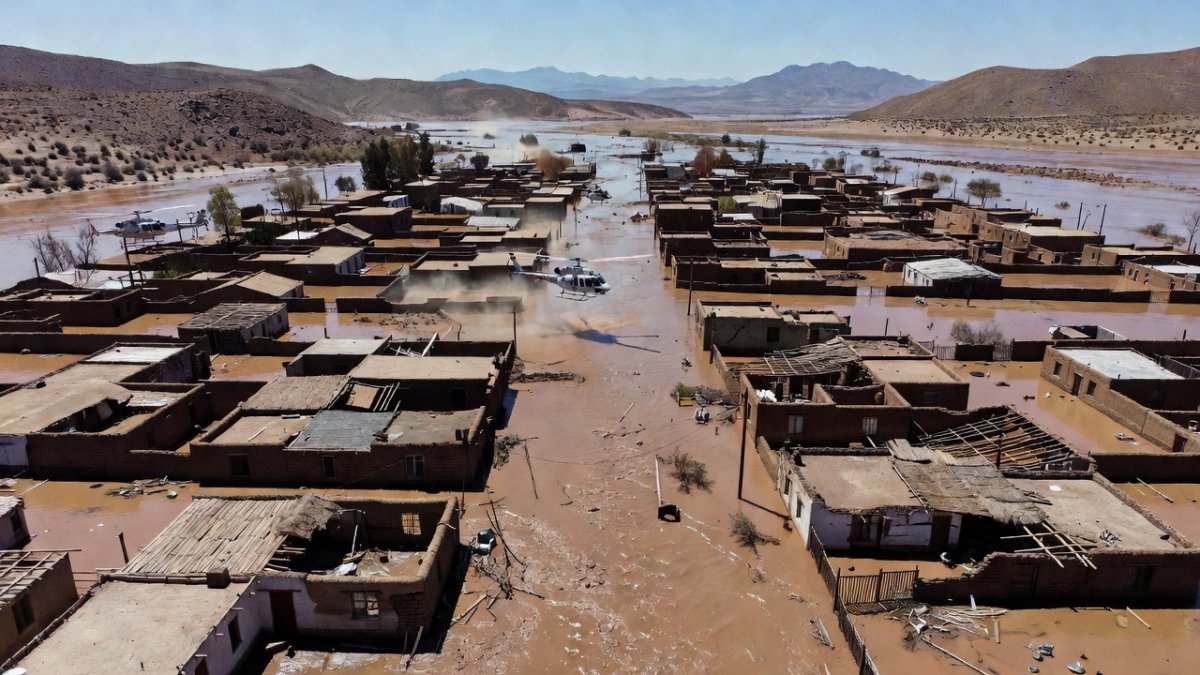
In a recent DW News report, footage shows floodwaters surging through streets in northern Chile after a week of intense rainfall linked to El Niño. At least 10 people have died, four remain missing, and 17 others suffered injuries from the storms that stranded more than 104,000 residents, turning a long drought into sudden disaster for families across Coquimbo and Atacama.
In a recent DW News report, footage shows floodwaters surging through streets in northern Chile after a week of intense rainfall linked to El Niño. At least 10 people have died, four remain missing, and 17 others suffered injuries from the storms that stranded more than 104,000 residents, turning a long drought into sudden disaster for families across Coquimbo and Atacama.
COQUIMBO, Chile — July 22, 2026 —
Deadly El Niño Rains Strike Northern Chile
The deluge has claimed lives in scattered spots across the Coquimbo and Atacama regions, with Senapred confirming the toll reached ten by midday on July 21. In Alto del Carmen, three residents drowned when a swollen creek swept through their hillside homes, while two more perished in Vallenar after floodwaters undermined a bridge they were crossing. La Serena reported a family of four lost when their vehicle was caught in a flash flood on the outskirts, and Copiapó saw one miner swept away near the outskirts of town. These tragedies underscore how quickly the rains turned dry riverbeds into lethal torrents.
The hardest-hit areas include the regions of Coquimbo and Atacama, where sudden downpours overwhelmed communities already strained by nearly 16 years of severe drought. Officials recorded over 1,100 homes destroyed or severely damaged in these zones alone.
Mining operations have ground to a near halt in key districts, with copper output at major sites like those operated by Codelco and private firms dropping by an estimated 15 percent in the first week alone. The vital mining highway, Ruta 5 Norte, suffered a massive washout near Copiapó, severing access for supply trucks and stranding workers in remote camps. Analysts note this disruption could ripple through global copper markets, given Chile’s role as the world’s top producer, and local unions have already called for emergency aid to prevent further economic fallout in the affected zones.
President Kast Declares State of Emergency
President Jose Antonio Kast declared a state of emergency for Coquimbo and Atacama in response to the flooding. The declaration allows national resources to support local rescue operations and supply distribution to isolated towns.
The Ejército de Chile mobilized over 2,000 troops within hours of the declaration, focusing on airlifts from isolated hamlets in the Atacama foothills. Helicopters from the Chilean Air Force plucked 47 families from rooftops in Alto del Carmen after roads became impassable, with pilots describing gusty winds that complicated every descent. These operations have already saved dozens more in Vallenar’s surrounding valleys, where rising waters threatened entire neighborhoods.
Deputy Interior Minister Maximo Pavez noted that the volume of rain exceeded normal monthly totals in single hours, turning dry riverbeds into fast-moving channels that swept away vehicles and livestock in rural areas.
Coastal communities faced urgent evacuations as Senapred issued alerts for La Serena and nearby beaches, fearing storm surges could compound the inland flooding. Officials like regional governor Juan Carlos Díaz praised the swift military response, noting that over 1,200 people had been moved to higher ground by July 20. This coordinated effort highlights the government’s shift toward proactive disaster management under President Kast’s leadership.
Families in Coquimbo reported losing access to roads within hours, forcing many to shelter on rooftops until rescue teams arrived. The sudden shift from drought to flood left residents without stored water reserves or prepared drainage systems.
Senapred Issues Hundreds of Evacuation Alerts
Senapred director Alicia Cebrian directed hundreds of evacuation alerts across 10 of Chile's 16 regions. Teams moved residents from low-lying zones near rivers and mining access roads before waters rose further.
In Atacama, Senapred coordinated with local governments to set up temporary shelters for displaced families. Rural communities without power or running water relied on these centers for food and medical checks in recent days.
Rescue workers in Coquimbo focused on reaching older adults and children stranded in hillside neighborhoods where landslides blocked primary routes. The alerts prevented larger casualties but left many families separated from livestock and crops.
Infrastructure Damage Isolates Mining Communities
The storms severed a key mining highway that connects northern production sites to ports, halting transport of copper and other minerals. Power lines fell across multiple valleys, cutting electricity to thousands of homes for days.
Mining giants have reported full production halts at several pits near Copiapó, with supply chains for explosives and fuel completely severed by the highway collapse. The damage extends beyond the main route, as secondary access roads to sites in the Coquimbo region crumbled under the weight of mudslides, leaving heavy machinery stranded and forcing temporary layoffs for hundreds of workers.
Drinking water systems failed in several Atacama towns after sediment clogged treatment plants. Residents collected rainwater in buckets while waiting for tanker trucks organized by regional authorities.
Road destruction has been extensive, with engineers estimating that 45 kilometers of Ruta 5 Norte between Vallenar and Copiapó require complete rebuilding after sections vanished into ravines. Water and electricity outages now plague more than 85,000 residents across the two regions, according to Senapred updates, with rural mining outposts hit hardest as backup generators fail amid the relentless downpours.
Isolated villages in Coquimbo lost phone service, preventing families from contacting relatives in Santiago or other parts of Chile. Meteorologist Arnaldo Zuniga of the national meteorological service stated that Chile has not recorded this volume of rainfall in two decades.
Shift From Drought to Flood Hits Vulnerable Families
After 16 years of drought, the sudden rains caught many rural households without reinforced roofs or cleared drainage ditches. Families in Atacama watched fields that had stayed dry for years turn into mud that buried stored grain and tools.
Local agriculture has taken a severe blow, with vineyards and olive groves in the valleys around La Serena submerged under meters of silt, wiping out what little harvest survived the prior dry spell. Livestock losses mount in Atacama’s rural zones, where goats and sheep drowned in flash floods, leaving families without their primary source of income and food.
Children in Coquimbo missed school days as buses could not navigate flooded roads. Parents described carrying belongings to higher ground while neighbors formed human chains to move elderly residents to safety.
Rural and indigenous communities, including Aymara groups in the highlands near Alto del Carmen, have been especially vulnerable, their traditional adobe homes dissolving in the rains. After 16 years of drought, many had adapted by building cisterns and conserving every drop, yet these measures offered no defense against sudden inundation, leaving elders to recount how their survival strategies now feel painfully inadequate.
The contrast between prolonged dry conditions and intense hourly rainfall exposed gaps in local infrastructure that had been built for arid weather rather than extreme events.
Broader Effects Across Latin America
El Niño patterns have produced similar heavy rains and flooding in parts of Peru and Argentina this season, showing how the same climate driver affects multiple countries at once. Chile's experience highlights shared risks for nations along the Pacific coast.
El Niño forecasts from regional meteorologists predict intensified rains could linger through September, with models showing elevated risks for Peru and Bolivia in the coming weeks. Chile’s unfolding crisis serves as a stark warning for neighboring nations, illustrating how quickly arid zones can flip to disaster zones under shifting climate patterns.
Emergency systems like Senapred now face pressure to update models that previously focused on water scarcity. Analysts note that infrastructure built during drought years requires rapid upgrades to handle sudden volume increases.
Climate scientists like Dr. Elena Vargas from the University of Chile emphasize the drought-flood cycle as a new normal, noting that weakened La Niña influences have left ecosystems brittle and unprepared. She urges Latin American governments to invest in resilient infrastructure now, warning that without coordinated action, similar tragedies could unfold from Mexico’s north to Argentina’s northwest.
Communities across the region watch Chile's response for lessons on protecting rural populations when dry spells end abruptly. Coordinated alerts and cross-border data sharing could reduce future losses in neighboring countries facing the same weather shifts.
Recovery Efforts Focus on Rebuilding and Preparedness
National teams continue clearing debris from the severed mining highway while local crews restore power in Coquimbo neighborhoods. Senapred maintains daily updates on missing persons and damaged homes.
President Jose Antonio Kast's administration has directed funds toward temporary housing for the 1,100 affected families. Officials emphasize that long-term planning must account for both drought and flood cycles to protect northern Chile's residents.
The events underscore how climate extremes test emergency networks and daily life in Latin American regions where agriculture and mining support most households. Continued monitoring by Senapred remains essential as waters recede.
By Rosa Martinez, Staff Writer
This article was produced with AI-assisted research and editorial support. Reporting is based on sources cited in the article.
What's Your Reaction?
 Like
0
Like
0
 Dislike
0
Dislike
0
 Love
0
Love
0
 Funny
0
Funny
0
 Wow
0
Wow
0
 Sad
0
Sad
0
 Angry
0
Angry
0

Latin America/Andes Correspondent at Global1.News. Based in Bogota, covering politics, environment, energy, and social movements across the Andean region. Passionate about environmental journalism and communities protecting their land.














Comments (0)