
Russia Bars Banking, Property Access for Expat Dissidents
Russia bars banking, property, and consular access for exiled dissidents convicted of political crimes. State Duma targets over 800,000 who fled the Ukraine war.
Russia Bars Banking, Property Access for Expat Dissidents
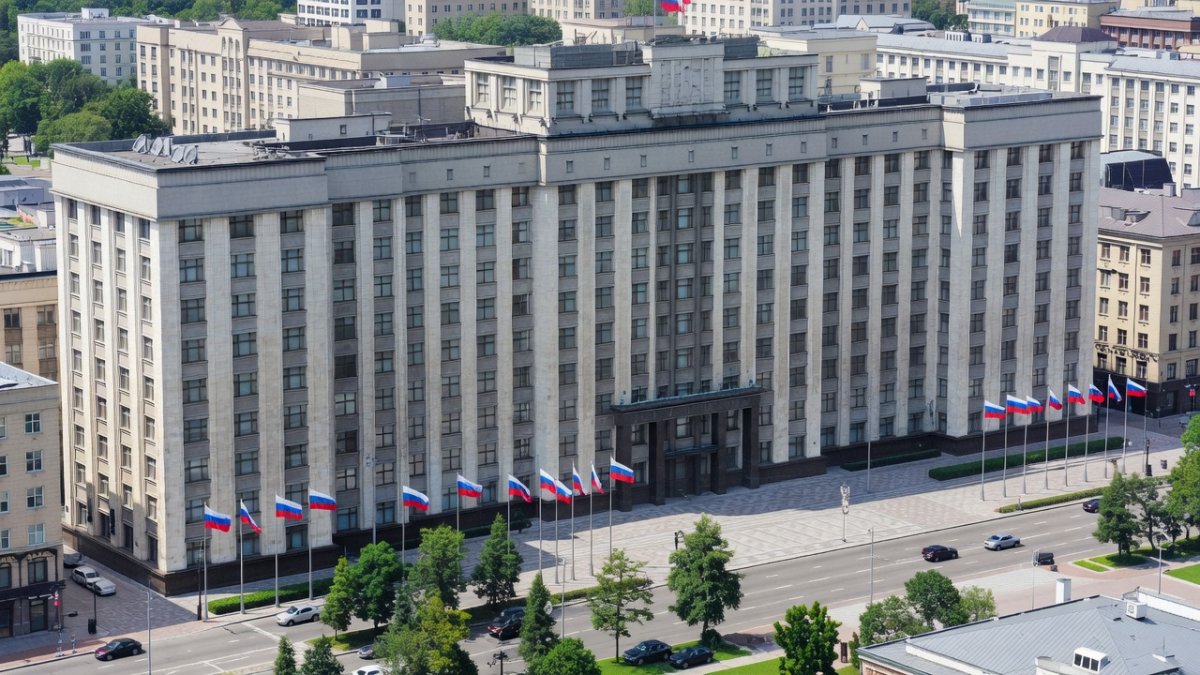
In a sweeping escalation of extraterritorial control, Russia’s State Duma has enacted legislation that automatically strips banking services, real estate rights, and consular protections from citizens living abroad who have been convicted in absentia on political charges. The measures, channeled through a Justice Ministry registry, target a growing diaspora of more than 800,000 people who fled after the 2022 invasion of Ukraine. By weaponizing everyday administrative access, Moscow is effectively erasing practical ties between the state and its critics overseas.
Moscow, Russia — On Wednesday the State Duma approved new measures that will sever access to online banking, real estate transactions, and consular services for Russians living abroad who have been convicted in absentia under specific statutes. These provisions apply to individuals designated under existing legal categories and will be implemented through a public registry maintained by the Justice Ministry.
The State Duma Passes Restrictive Legislation This Week
On Wednesday the State Duma approved new measures that will sever access to online banking, real estate transactions, and consular services for Russians living abroad who have been convicted in absentia under specific statutes. These provisions apply to individuals designated under existing legal categories and will be implemented through a public registry maintained by the Justice Ministry.
Designated Categories Subject to the New Rules
The legislation targets those convicted in absentia for discrediting the armed forces, participating in organizations labeled undesirable, holding foreign agent status, or advocating separatism and sanctions. Once listed on the Justice Ministry registry, these individuals face automatic application of the restrictions without additional court proceedings for each measure.
Consular and Administrative Services Withdrawn
Under the new framework, affected persons lose the ability to obtain or renew passports, register marriages, or access other standard consular functions. Vehicle registration is also prohibited, eliminating routine administrative interactions that many expatriates previously maintained with Russian authorities from abroad.
Real Estate and Property Transaction Bans
The bills explicitly bar listed individuals from conducting real estate deals inside Russia. This restriction extends to any form of property transfer or registration, creating a complete barrier for those seeking to manage or dispose of assets held within the country.
Property owned by targeted individuals risks full seizure under expanded anti-extremism statutes, with courts empowered to transfer assets to the state treasury rather than merely freezing them. Russians who departed intending eventual return now confront irreversible losses, as re-entry triggers arrest warrants and confiscation proceedings. The real estate market has absorbed capital flight pressures through tightened transaction rules that deter outward investment, stabilizing domestic prices at the expense of emigre wealth. Mechanisms for transferring holdings to relatives inside Russia require notarized powers of attorney that themselves invite scrutiny, often resulting in partial divestment or forced sales at depressed valuations to avoid total forfeiture.
Banking Access and Asset Disposition Mechanisms
Online banking services are cut off for those placed on the registry. Existing frozen accounts remain inaccessible, while courts gain authority to seize portions of these funds to cover legal fees and damages awarded in related cases. Any remaining balances may be allocated to support family members still residing in Russia.
Statements from United Russia Leadership
State Duma Deputy Chairman Pyotr Tolstoy of United Russia stated on Telegram that he would not be surprised if some of the targeted individuals altered their positions, noting that financial pressure often influences those he described as uncompromising freedom fighters. This remark reflects the official framing of the measures as a means to influence behavior through economic consequences.
Pyotr Tolstoy's prominence within United Russia positions him as a reliable executor of presidential directives, his statements reflecting coordinated messaging from the Security Council and presidential administration that draft repressive legislation behind closed doors. His remark that "the wallet is a liberal's most sensitive organ" encapsulates elite assumptions that economic self-interest will ultimately subdue political dissent, a calculus repeatedly deployed to justify asset seizures. While a handful of Duma deputies voiced procedural concerns, the bills passed with overwhelming majorities, underscoring the chamber's transformation into a rubber-stamp body. The Kremlin markets these measures domestically as essential defenses against foreign subversion, framing repression as patriotic necessity and thereby sustaining public acquiescence despite evident human costs.
Scale of Emigration Since the 2022 Invasion
More than 800,000 Russians have departed the country since the 2022 invasion of Ukraine. The new legislation intersects with this outflow by imposing ongoing legal and practical limitations on those already abroad who fall under the specified designations.
The exodus of over 800,000 Russians since the 2022 invasion has reshaped migration patterns across Eurasia and beyond, with the largest concentrations settling in Georgia, Armenia, Kazakhstan, Turkey, and select EU states such as Germany and Serbia. Georgian authorities recorded more than 100,000 arrivals by mid-2023, many clustering in Tbilisi where Russian-language businesses proliferated, while Armenia absorbed roughly 80,000, drawn by visa-free entry and cultural proximity. Kazakhstan hosted around 150,000, leveraging its Eurasian Economic Union ties, and Turkey emerged as a key hub with over 200,000 temporary residents capitalizing on property purchases and relaxed residency rules. These destinations offered immediate safety but exposed emigres to fluctuating political climates, as host governments balanced economic gains against Moscow's diplomatic pressure. The professional composition of this wave underscores a severe brain drain: IT specialists, journalists, lawyers, and academics dominate the outflows, with surveys indicating that up to 40 percent of departing Russians held advanced degrees in technology or media. This depletion has already contracted Russia's tech sector output by an estimated 15-20 percent, according to independent economic analyses, while the loss of independent journalists has further narrowed domestic discourse.
Diaspora communities have rapidly organized into structured political entities, most notably the "Peaceful Russia" movement and affiliated advocacy networks that coordinate lobbying efforts in host capitals and maintain digital platforms for cross-border activism. These groups have facilitated petitions to European parliaments and raised funds for legal defense, transforming scattered exiles into a coherent opposition force capable of influencing sanctions policy. Economically, the departure of high-earning taxpayers has deprived the Russian treasury of billions in annual revenue, exacerbating budget shortfalls amid wartime expenditures and accelerating inflation in urban centers. The Kremlin initially framed these departures as temporary relocations of citizens who would eventually return, yet by late 2023 official rhetoric shifted decisively toward portraying the diaspora as a permanent external threat, with state media accusing emigres of coordinating with Western intelligence and fomenting regime change from abroad.
The legislation’s extraterritorial reach mirrors tactics long employed by authoritarian regimes seeking to neutralize opposition from afar, yet Russia’s digital registry introduces an unprecedented layer of automated enforcement that links financial, property, and consular sanctions in real time. Historical parallels to the Soviet practice of internal exile and passport revocation are unmistakable: where once the state physically relocated “enemies of the people,” it now erases their administrative existence while they remain thousands of kilometers away. This evolution carries broader implications for global migration governance, as host countries must now weigh the humanitarian costs of sheltering professionals whose home state can still inflict material ruin through remote legal mechanisms, potentially reshaping asylum policies and bilateral extradition norms for years to come.
Development of the Legal Framework Over Time
The foreign agents statute originated in 2012, while laws concerning undesirable organizations and military discreditation were expanded after 2022. The current bills build directly on these earlier provisions by adding enforcement tools that operate through the new public registry and automatic restrictions.
The 2012 foreign agents law marked the initial legislative salvo, requiring organizations receiving foreign funding to register and submit to intrusive audits, thereby stigmatizing civil society. Its 2015 expansion to "undesirable organizations" criminalized cooperation with designated foreign entities, effectively shuttering international NGOs and broadening the scope of prohibited activity to include educational exchanges. The 2022 statutes on discrediting the military completed this arc by criminalizing any public statement questioning the invasion, with penalties extending to fifteen years imprisonment. Each iteration incrementally redefined dissent from financial transparency requirements to outright ideological conformity, allowing authorities to label virtually any independent voice as subversive. In absentia convictions now proceed through streamlined procedures where defendants receive no notice and face automatic asset freezes, mirroring Soviet-era mechanisms that designated "spetspereselentsy" for internal exile without trial. Contemporary "digital citizenship" revocation complements these tools by stripping online access to state services, effectively erasing individuals from the administrative fabric of the state while they remain abroad.
Interpreting Consequences for the Diaspora and Domestic Divisions
One interpretation of these measures is that they formalize a separation between Russia and segments of its expatriate population by removing practical ties that previously allowed limited engagement. The combination of frozen assets, blocked transactions, and loss of consular access may accelerate decisions by some to fully sever remaining connections or, alternatively, prompt others to seek ways to comply with the underlying designations. Official claims emphasize behavioral change, yet the structure of the registry and the breadth of affected categories suggest the policy could also reinforce existing lines of division rather than resolve them. Family provisions for remaining assets indicate an acknowledgment that complete isolation of individuals may still leave indirect links through relatives inside Russia.
A Russian passport holder in Georgia or Turkey encounters immediate practical barriers when attempting renewal, as consular services have been curtailed or conditioned on return to Russia, stranding thousands without valid travel documents. Dual nationals face acute dilemmas, compelled to weigh retention of Russian citizenship against loss of banking access, property rights, and pension eligibility inside the country. Family members remaining in Russia often become conduits for frozen assets, creating enforced financial dependency that the state exploits to discourage further emigration. Domestic courts offer negligible recourse, routinely upholding convictions on national security grounds, while applications to the European Court of Human Rights face jurisdictional hurdles and years-long delays. Comparable policies in Belarus, China, and Iran reveal a shared authoritarian playbook: extraterritorial control through citizenship weaponization, passport denial, and familial leverage, though Russia's scale and digital enforcement mechanisms distinguish it as particularly pervasive.
These interlocking restrictions also deepen domestic polarization by transforming relatives inside Russia into de facto hostages whose financial security depends on the political silence of their emigre kin, thereby extending state leverage into private family spheres previously untouched by foreign-agent rules. The resulting climate of mutual suspicion corrodes social trust at every level and risks accelerating the very brain drain the Kremlin claims to mitigate, as remaining professionals accelerate their own departure plans before similar designations reach them.
By Irina Volkov, Staff WriterThis article was produced with AI-assisted research and editorial support. Reporting is based on sources cited in the article.
What's Your Reaction?
 Like
0
Like
0
 Dislike
0
Dislike
0
 Love
0
Love
0
 Funny
0
Funny
0
 Wow
0
Wow
0
 Sad
0
Sad
0
 Angry
0
Angry
0
Russia/Eastern Europe Correspondent at Global1.News. Covering Russian politics, energy, security, and the shifting dynamics of the post-Soviet space. Provides clear-eyed analysis on one of the world's most opaque regions.












Comments (0)