
Heat Dome 2026: What It Is and How It's Affecting US, Mexico
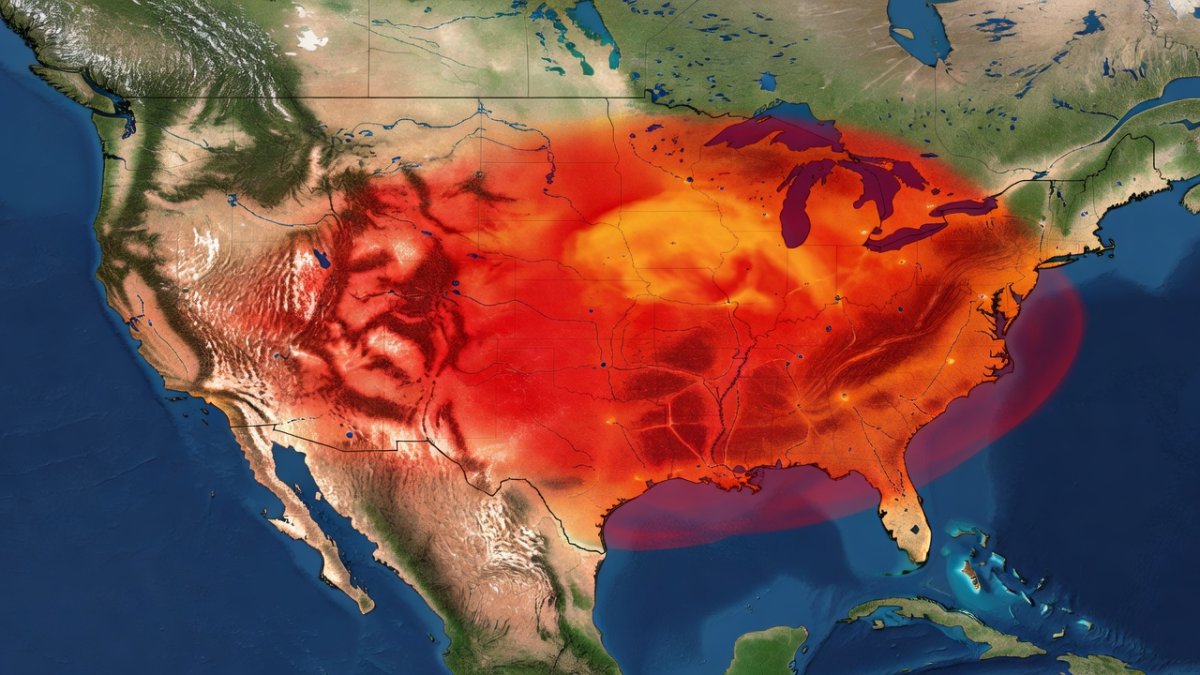
A massive heat dome has settled over North America in early July 2026, trapping scorching air from the Gulf of Mexico to the Canadian prairies and placing more than 120 million people under extreme heat warnings. Centered near Memphis, this high-pressure system is generating historically dangerous conditions that coincide with the Fourth of July weekend and the World Cup knocko
A massive heat dome has settled over North America in early July 2026, trapping scorching air from the Gulf of Mexico to the Canadian prairies and placing more than 120 million people under extreme heat warnings. Centered near Memphis, this high-pressure system is generating historically dangerous conditions that coincide with the Fourth of July weekend and the World Cup knockout stages, turning stadiums and city streets across the hemisphere into pressure cookers.
For Latin America, the crisis is particularly acute. Monterrey has already recorded 40.5°C with thousands suffering heat-related illness, while Mexico City's 2,240-meter altitude adds a dangerous compound effect. This is not an isolated American crisis — it is a shared continental emergency demanding immediate action.
Heat Dome 2026: What It Is and How It's Baking the Americas — A Hemisphere Health Crisis
Monterrey, Nuevo León – Mexico, July 2, 2026 — The July 2026 heat dome has descended like an iron lid across North America, from the Gulf of Mexico to the Canadian prairies, placing over 120 million people under extreme heat warnings. Heat indices in Dallas, Houston, Atlanta, Philadelphia, and Miami have surged past 100–108°F (38–42°C), while the National Weather Service has issued major and extreme heat risk alerts across vast swaths of the United States.
What Is a Heat Dome — The Science
A heat dome forms when a powerful high-pressure system acts like a lid on a pot, preventing hot air from rising and allowing temperatures to climb relentlessly day after day. In late June and early July 2026, this particular dome has parked itself near Memphis, creating a vast zone of sinking air that compresses and heats the atmosphere below. Climate change is making these domes more frequent, more intense, and longer-lasting because warmer baseline temperatures give the system more thermal energy to work with. Scientists have documented how anthropogenic warming amplifies the jet-stream patterns that lock these domes in place for weeks rather than days.
The physics are unforgiving: as the high-pressure cell strengthens, it suppresses cloud formation and rainfall, turning the landscape into a giant solar collector. Pavement and buildings absorb and re-radiate heat, pushing urban heat islands to extremes. In 2026, this mechanism has produced heat indices exceeding 108°F across multiple U.S. cities while simultaneously driving Monterrey’s mercury to 40.5°C with a thermal sensation of 41°C. The science is clear—without rapid emissions reductions, heat domes will migrate southward more often, threatening the very regions already struggling with water scarcity and fragile health systems. Latin America cannot afford to treat this as someone else’s problem.
A Hemisphere Under Pressure — US Impact
Across the United States, the 2026 heat dome has placed over 120 million residents under extreme heat warnings, with the National Weather Service issuing its most severe alerts for the South and Midwest. Heat indices in Dallas, Houston, Atlanta, Philadelphia, and Miami have repeatedly topped 100–108°F (38–42°C), turning Fourth of July celebrations and World Cup fan zones into medical hazards. The timing could not be worse: peak heat coincides with major sporting events, drawing millions outdoors when public health officials are urging everyone to stay indoors during the hottest hours.
Emergency services are stretched thin. Houston Fire Department has deployed extra EMS units along fan routes, while pavement temperatures reaching 120–122°F create radiant heat and burn risks for anyone standing on sidewalks for extended periods. The human cost is mounting in real time—heat exhaustion, dehydration, and heat stroke cases are surging in emergency rooms from Texas to Pennsylvania. This is the lived reality of a warming hemisphere, and the United States is experiencing only the northern edge of a crisis that will soon intensify across Mexico and Central America. The data from this single event should force a national reckoning with infrastructure, labor protections, and urban planning that currently fail the most vulnerable populations.
Mexico in the Crosshairs — Latin America Feels the Heat
Monterrey has become a grim showcase of the heat dome’s reach into Latin America. On opening day of the World Cup, the city recorded 40.5°C with a thermal sensation of 41°C, and fans endured extremely long entry queues at Estadio BBVA in temperatures exceeding 40°C that many described as “inhuman.” Cruz Roja Mexicana treated hundreds for fainting, dehydration, and golpe de calor, while over 100 fans required medical attention and four were hospitalized. UNAM specialists have warned of elevated heat-stroke risks in all host cities, underscoring how Mexico’s northern industrial heartland is now on the front lines of a climate emergency once considered distant.
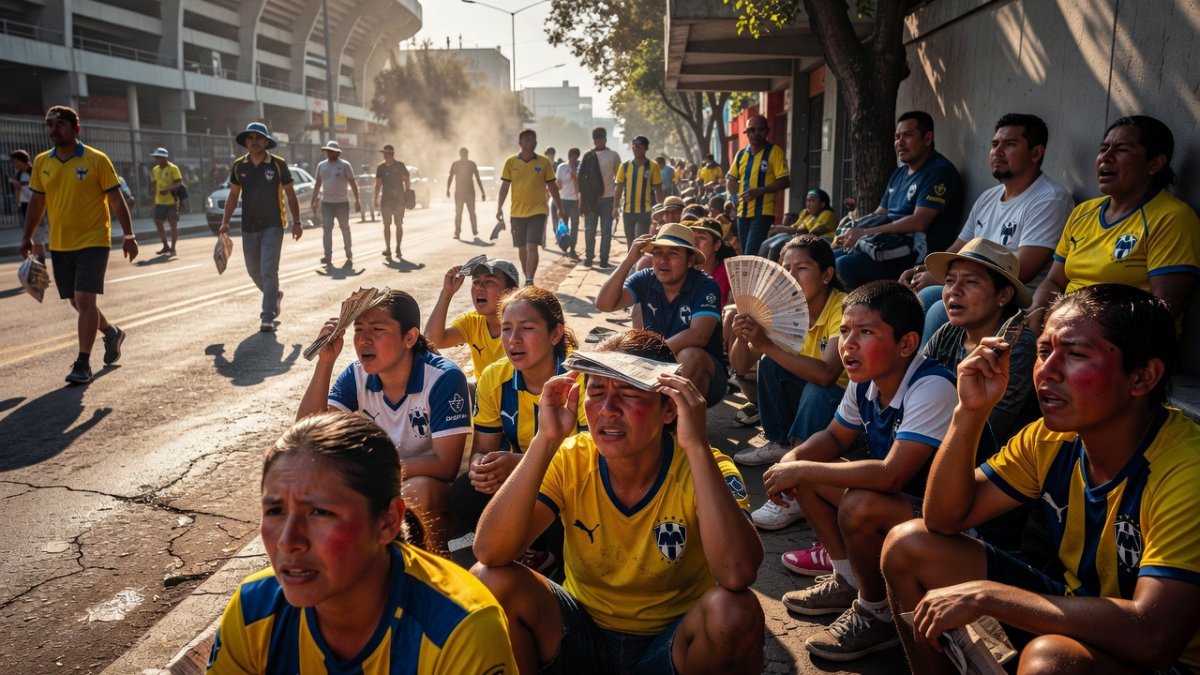
The situation reveals deep inequities. Working-class supporters who cannot afford air-conditioned transport or premium seating face the greatest exposure, while wealthier attendees enjoy climate-controlled suites. This pattern mirrors broader Latin American realities where informal laborers and low-income neighborhoods absorb the worst impacts of rising temperatures. CONAGUA’s Servicio Meteorológico Nacional is monitoring conditions closely, yet the structural gaps in cooling access and emergency response remain glaring. What happens in Monterrey today foreshadows the challenges awaiting cities farther south as heat domes expand their influence across the hemisphere.
The Altitude Factor — Mexico City’s Unique Challenge
Mexico City sits at 2,240 meters above sea level, where oxygen per breath drops roughly 20–25 percent compared with sea level. During July’s rainy season the city normally enjoys milder temperatures of 26–28°C, yet the current heat dome has combined with high UV radiation and drier air to accelerate fluid loss through faster breathing. Athletes and fans alike experience compounded stress: the body must work harder to deliver oxygen while simultaneously losing moisture at an elevated rate. Studies show that higher-altitude home teams gain approximately half a goal per 1,000 meters of advantage, but that physiological edge comes at a steep health cost when extreme heat is layered on top.
CONAGUA’s SMN has issued alerts emphasizing the unique risks for visitors unacclimated to the altitude. Dehydration sets in more rapidly, and the combination of thinner air and intense solar radiation increases the likelihood of heat exhaustion even when ambient temperatures appear moderate. For Latin American teams and supporters traveling from lower elevations, the capital represents a double burden that few international observers fully appreciate. This altitude effect is a distinctly Mexican dimension of the 2026 crisis, reminding us that climate impacts are never uniform and that regional geography shapes vulnerability in ways that demand tailored adaptation strategies.
Public Health Crisis — Heat Stress Across Borders
The Wet Bulb Globe Temperature (WBGT) remains FIFA’s primary heat-stress metric, with thresholds above 26–30°C triggering mandatory cooling breaks. In response to the 2026 conditions, FIFA implemented mandatory three-minute hydration breaks at the 22nd and 67th minutes, reversing an earlier water-bottle ban after widespread backlash. FIFPRO has called for updated, science-based heat policies that go beyond these minimal measures. Risks include heat exhaustion, heat stroke, dehydration, and measurable declines in athletic performance, all of which are amplified when pavement radiates temperatures of 120–122°F.
Public health systems on both sides of the border are mobilizing. Houston has stationed EMS units along fan routes, while Cruz Roja Mexicana has treated hundreds in Monterrey alone. The convergence of a major sporting event with record heat exposes how existing protocols remain inadequate for the climate era. Latin American medical professionals are documenting cases of golpe de calor at rates that would have been unthinkable a decade ago. These cross-border health impacts underscore the need for coordinated regional responses rather than fragmented national efforts that leave millions unprotected.
Climate Change and the New Normal
Human-caused warming is making heat domes more frequent, intense, and persistent across the hemisphere. The decision to host the 2026 World Cup in midsummer has amplified these risks, placing players, staff, and millions of fans in harm’s way during the hottest weeks of the year. A 2024 Scientific Reports study had already flagged Arlington, Houston, and Monterrey as locations facing the highest heat stress during summer tournaments, yet scheduling remained unchanged. Future events will almost certainly require shifts to cooler months or entirely different regions if organizers wish to avoid repeating this dangerous experiment.
For Latin America, the implications extend far beyond football. Agricultural workers, street vendors, and urban poor populations face daily exposure without the protections afforded to athletes. The same atmospheric dynamics driving the 2026 dome will intensify droughts in Central America and heat waves in the Andes. This is the new normal we have chosen through decades of inaction, and the data from this single summer should serve as a final warning that incremental adaptation will no longer suffice.
The Bottom Line — What Comes Next
The 2026 heat dome has demonstrated that climate impacts respect no borders and that Latin America stands on the front line of a crisis long predicted by scientists. Over 120 million people in the United States alone face extreme conditions, while Monterrey and Mexico City reveal how altitude, infrastructure gaps, and sporting events compound vulnerabilities. The science of heat domes, the failures of current policies, and the human stories emerging from emergency rooms all point to the same conclusion: we must accelerate emissions reductions while simultaneously building robust, equitable heat-action plans across the hemisphere.
Regional cooperation through CONAGUA, UNAM, Cruz Roja, and FIFPRO offers a starting point, but governments must move beyond warnings to enforceable labor protections, expanded cooling centers, and urban redesign that prioritizes the most exposed communities. The images of fans collapsing in Monterrey queues and athletes requiring medical intervention should haunt policymakers until meaningful change occurs. This is not merely a sporting footnote; it is a continental alarm that demands an immediate, passionate, and science-driven response from every nation under the dome.
This article was produced with AI-assisted research and editorial support. Reporting is based on sources cited in the article.
What's Your Reaction?
 Like
0
Like
0
 Dislike
0
Dislike
0
 Love
0
Love
0
 Funny
0
Funny
0
 Wow
0
Wow
0
 Sad
0
Sad
0
 Angry
0
Angry
0

Latin America Correspondent at Global1.News. Based in Mexico City, covering politics, economics, energy, and culture across the region. Brings an on-the-ground perspective to stories spanning from the Rio Grande to Patagonia.















Comments (0)