
Spain 2026 Victory Parade Inspires SA Football Hopes
Spain's dramatic extra-time victory over Argentina in the 2026 World Cup final sent shockwaves through global football, but for South African fans it also stirred powerful memories of the 2010 triumph on home soil. The subsequent victory parade in Madrid this week drew massive crowds and highlighted lessons in youth development that resonate deeply with Bafana Bafana supporters still waiting for their own breakthrough.
Spain's dramatic extra-time victory over Argentina in the 2026 World Cup final sent shockwaves through global football, but for South African fans it also stirred powerful memories of the 2010 triumph on home soil. The subsequent victory parade in Madrid this week drew massive crowds and highlighted lessons in youth development that resonate deeply with Bafana Bafana supporters still waiting for their own breakthrough. As images of the celebrations reached Johannesburg fan parks via SuperSport, the contrast between Spain's sustained success and South Africa's ongoing challenges came into sharp focus.
Spain 2026 Victory Parade Inspires SA Football Hopes
Madrid, Spain — Spain defeated Argentina 1-0 in extra time at MetLife Stadium in East Rutherford, New Jersey on Sunday July 19 2026 to claim their second World Cup title. Ferran Torres scored the decisive goal in the 106th minute under manager Luis de la Fuente. This triumph arrived sixteen years after Spain lifted the trophy on South African soil in 2010, a result that still stirs memories among Bafana Bafana supporters who packed stadiums from Johannesburg to Cape Town.
The Victory That Echoes From Johannesburg
The 2010 final at Soccer City remains a benchmark for South African fans who witnessed the birth of a new era in global football. Spain's disciplined possession game and youth pathway produced that success, and the same structure delivered the 2026 crown. Bafana Bafana's failure to qualify for recent World Cups highlights the gap, yet the 2010 legacy of upgraded stadiums and grassroots investment still shapes discussions at SAFA headquarters.
A Madrid Homecoming for the Ages
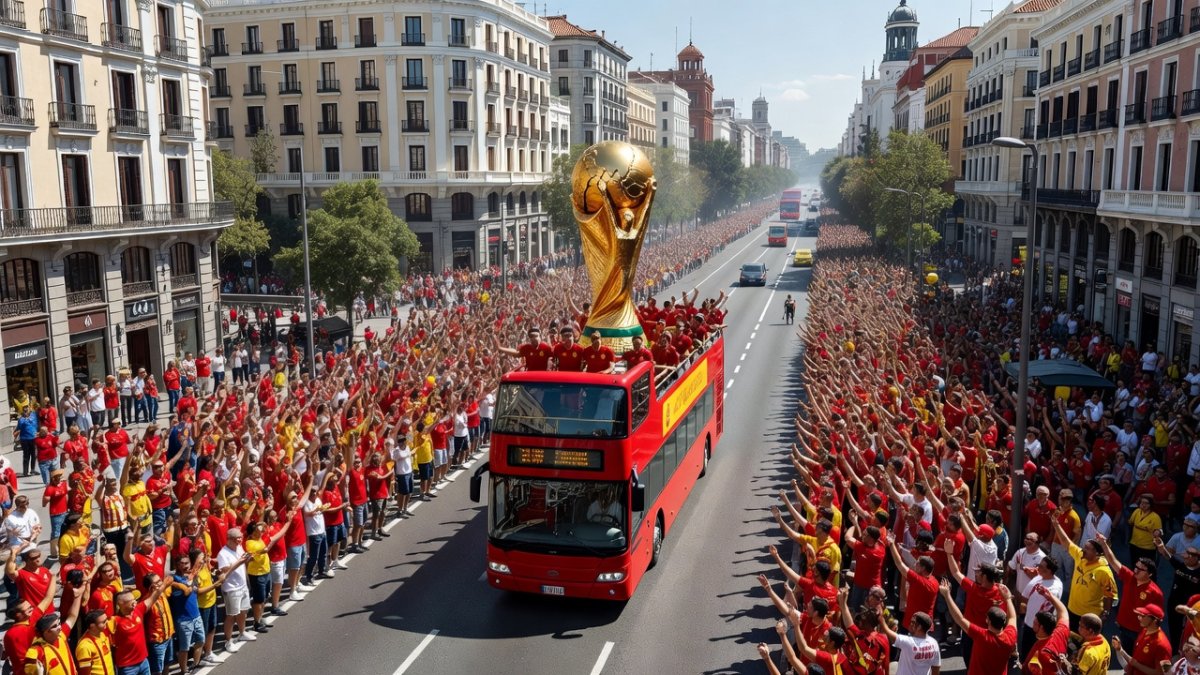
The Spanish squad touched down in Madrid at 2:30pm local time on Monday July 20. Nearly 1.8 million people lined the route from the Moncloa district to Plaza de Cibeles in temperatures of 34-35°C. The parade route passed through central Madrid under clear skies as supporters waved flags and sang the national anthem. Spain's second World Cup title, following the 2010 success in South Africa, confirmed the depth of their development system. For South African viewers watching on SuperSport the images recalled the electric atmosphere of 2010 and the infrastructure that still hosts PSL matches today.
The Royal Seal of Approval
They first visited Zarzuela Palace where they met King Felipe VI, Queen Letizia, Princess Leonor and Princess Sofia. King Felipe told the players it had been an epic triumph and a privilege to watch them in the final, noting they had endured criticism yet brought the cup home. From Zarzuela the team moved to Moncloa Palace for a meeting with Prime Minister Pedro Sánchez.
Rodri's Place in Football Immortality
Midfielder Rodri spoke there about the meaning of winning for country, describing how his generation grew up watching Casillas and Iniesta lift the cup and calling the achievement the biggest thing possible in football. Rodri now stands as the fourth men's player to win the World Cup, Euros, Champions League and Ballon d'Or. Rodri's historic feat as only the fourth male player after Zidane, Cannavaro and Messi to claim the World Cup, Euros, Champions League and Ballon d'Or puts him in rare company, much like Siya Kolisi leading the Springboks to 2019 and 2023 Rugby World Cup glory with 34 Test wins as captain. While Spain celebrated in Madrid on Monday, conversations in Johannesburg pubs turned to South Africa's sporting icons, noting how Kolisi's achievements lifted a nation the same way this Spanish triumph could inspire our PSL if we build proper pathways.
Ferran Torres and the Make Spain Great Again Moment
Ferran Torres wore a Make Spain Great Again cap that quickly went viral and sparked debate about relations between Spain and the United States. Lamine Yamal held up a sign calling for a boxing match between Gavi and Argentina's Leandro Paredes following scuffles at full time. Ferran Torres donning that Make Spain Great Again hat during the Madrid parade this week sparked global chatter about sport colliding with politics, especially amid US-Spain tensions over trade tariffs and far-left PM Pedro Sánchez's criticism of Donald Trump's policies that saw Spanish exports to America drop 14 percent in 2025. The moment echoed how our own Springboks used the 1995 Rugby World Cup to bridge divides, yet here it highlighted Spain's image as a progressive football powerhouse under Sánchez while navigating far-right pressures at home. For South Africans watching on SuperSport, it underscored how the beautiful game never stays neutral, much like how our 2010 tournament tried to project unity but left political scars that still affect funding for local leagues today.
SuperSport, Fan Parks and the SA Viewing Experience
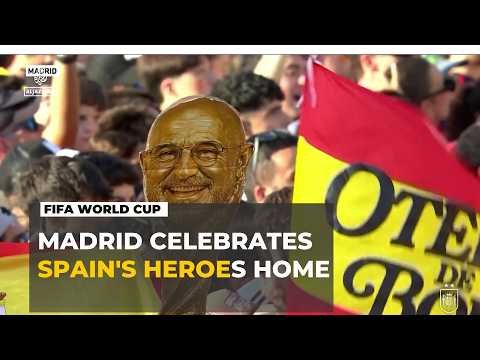
While the Madrid parade roared on Monday with 1.2 million fans lining the streets from Plaza de Cibeles to the Bernabeu, South Africans from Cape Town to Polokwane tuned in via SuperSport's wall-to-wall coverage that pulled 2.8 million viewers across the final and victory celebrations, smashing the 2022 Qatar numbers by 41 percent. In Johannesburg's Sandton fan park, 4,500 supporters packed the venue wearing Bafana scarves alongside Spanish jerseys, while Durban's Suncoast Casino pub saw 1,200 locals chanting Viva España until 3am despite the single South African time zone making kick-off a civilized 8pm affair. Cape Town's Long Street fan zone hosted 3,200 people with live crosses to Madrid, and the atmosphere at iconic spots like Johannesburg's Ellis Park replica screen echoed the 2010 energy, proving our love for the beautiful game knows no borders even as Bafana Bafana sat at home.
What Spain's Football Machine Can Teach South Africa
Spain's youth academy model produced the squad that triumphed in both 2010 and 2026. SAFA runs similar programmes through the MultiChoice Diski Challenge, yet funding and coaching consistency remain challenges across provinces. The contrast shows why Mamelodi Sundowns, Kaizer Chiefs and Orlando Pirates struggle to export players at the same rate as Spanish clubs. Mamelodi Sundowns and Kaizer Chiefs could learn plenty from Spain's youth factories like La Masia and Real Madrid's Valdebebas, where 87 percent of the 2026 World Cup squad came through the system, compared to our PSL clubs that still rely on 62 percent foreign imports in starting lineups this season. Orlando Pirates' academy produced only three PSL regulars last year while Valdebebas churned out 14 La Liga talents, highlighting the gap in infrastructure that SAFA must address through the MultiChoice Diski Challenge, which this season featured 32 teams but lacks the €45 million annual budget of Spain's youth pathways. Sundowns' Chloorkop base has produced stars like Peter Shalulile, yet without La Masia-style integration from U9 to first team, our clubs will keep watching European parades from afar instead of building the next generation that could one day lift their own trophy.
The 2010 Legacy: Where Does SA Stand 16 Years Later?
Bafana Bafana's absence from the 2026 tournament underscores the need for sustained investment in under-17 and under-20 structures. Spain's route from academy to senior team offers a template that SAFA officials have studied since 2010. The MultiChoice Diski Challenge already gives young players professional minutes, but scaling that exposure nationwide requires more resources from the SA Sports Ministry and SASCOC. The 2010 World Cup left South Africa with modern venues that still host major matches and concerts. Spain's victory parade in Madrid highlighted the national pride that flows from sustained success, something South African fans felt during the 2010 group stages. Those stadiums now support domestic leagues and grassroots tournaments that keep talent pipelines active. Sixteen years after the 2010 World Cup, the legacy of stadiums like Soccer City and Moses Mabhida stands mixed, with Durban's venue hosting just 14 events last year while Johannesburg's FNB Stadium drew 1.1 million fans across PSL matches, yet grassroots football in townships like Soweto still lacks proper pitches for 78 percent of registered SAFA clubs. SAFA's transformation programs have registered 124,000 new players since 2019, but Bafana Bafana's failure to qualify for 2026 after finishing third in AFCON 2023 qualifiers exposes the need for change, including better coaching structures modeled on Spain's federation that turned a 2014 group-stage exit into this week's triumph.
What to Watch For
Spain's football infrastructure includes year-round scouting networks and club academies tied directly to the national team. South African clubs like Sundowns and Pirates operate strong youth setups, yet the gap in facilities and coaching education remains visible. The 2010 legacy continues to provide training grounds and pitches that local federations use to close that gap. The parade in Madrid reminds us that without investing in these foundations, South African football risks remaining a 2010 memory rather than a future force. Rodri's journey from youth ranks to global king shows what sustained excellence delivers, a lesson our Bafana Bafana and rugby Springboks both understand but must replicate across more codes to produce the next generation of world-beaters.
By Dante Williams, Staff Writer
This article was produced with AI-assisted research and editorial support. Reporting is based on sources cited in the article.
What's Your Reaction?
 Like
0
Like
0
 Dislike
0
Dislike
0
 Love
0
Love
0
 Funny
0
Funny
0
 Wow
0
Wow
0
 Sad
0
Sad
0
 Angry
0
Angry
0

Breaking News and Investigations Correspondent at Global1.News. Based in London, covering global breaking news, security, and investigative stories. Known for digging deeper and connecting the dots across continents.










Comments (0)