
India's Neurological Crisis: Brain Disorders Rise as Neurologist Shortage Worsens
India's Growing Neurological Burden Demands Systemic Reform Neurological disorders have emerged as one of India's most pressing public health challenges. On World Brain Day, July 22, 2026, experts across the country are drawing attention to a sharp rise in conditions such as stroke, epilepsy, Parkin
India's Growing Neurological Burden Demands Systemic Reform
Neurological disorders have emerged as one of India's most pressing public health challenges. On World Brain Day, July 22, 2026, experts across the country are drawing attention to a sharp rise in conditions such as stroke, epilepsy, Parkinson's disease, dementia and multiple sclerosis. The WHO Global Status Report on Neurological Disorders 2025 estimates that more than 40% of the world's population lives with a neurological condition, placing India among the nations facing the steepest increases.
Strokes Striking Younger Indians
Stroke, once viewed primarily as a disease of old age, now affects many people in their 30s and 40s. Dr Madhukar Bhardwaj, Director and Head of Neurology at Aakash Healthcare, notes that uncontrolled hypertension, diabetes, obesity, smoking, chronic stress, physical inactivity, unhealthy diets and poor sleep are driving this shift. These risk factors are largely modifiable, yet they remain widespread across urban and semi-urban India.
The implications for families are immediate. A stroke in a primary earner in the 30s or 40s often leads to prolonged rehabilitation, loss of income and heavy out-of-pocket expenditure. Taxpayers ultimately bear part of the cost through public hospitals and schemes such as Ayushman Bharat when patients require extended care.
India records 1.8 million new stroke cases annually according to the Indian Stroke Association, a figure that underscores the scale of the emerging epidemic among younger working-age adults. When combined with the WHO estimate that stroke cost India 8 billion dollars in 2022, the data reveal not only a clinical emergency but a macroeconomic drag that threatens productivity gains achieved over the past two decades. These numbers place additional pressure on already strained district-level facilities that lack both diagnostic equipment and trained personnel to manage acute cases within the critical first hours.
Severe Shortage of Neurologists
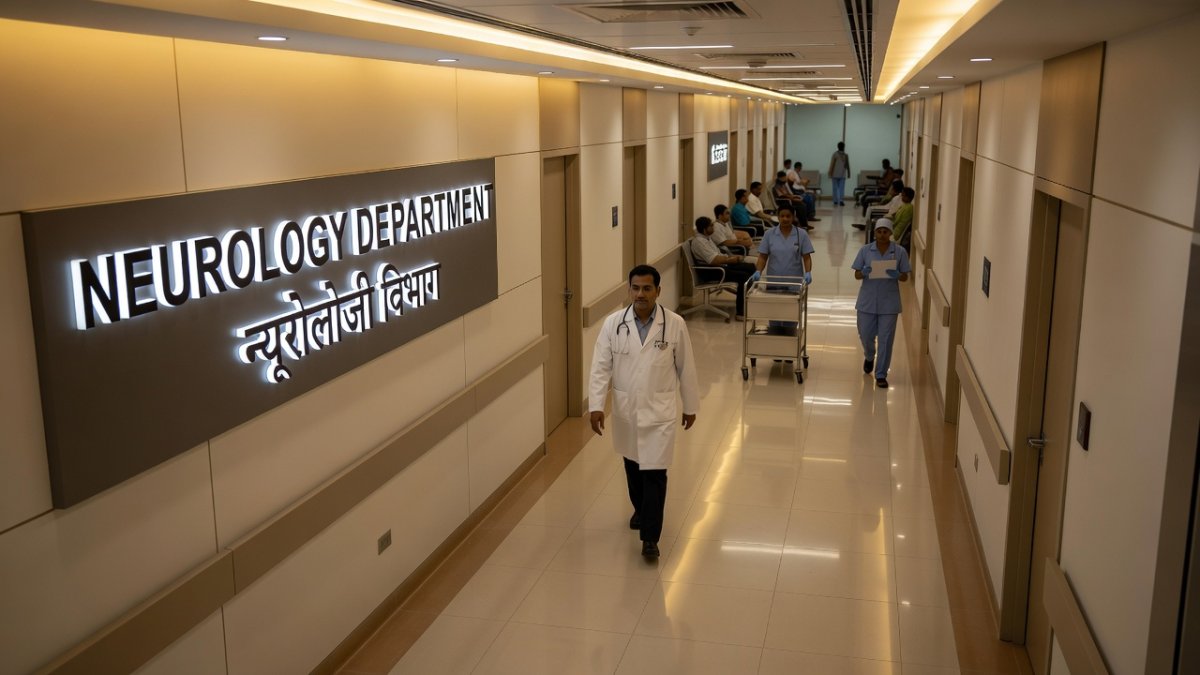
India's neurologist-to-patient ratio is nearly 80 times worse than that of high-income countries. Most specialists remain concentrated in metropolitan centres, leaving patients in smaller towns and rural areas without timely diagnosis. Many reach a neurologist only after irreversible damage has occurred, increasing the likelihood of permanent disability.
This imbalance directly affects primary health centres, which form the backbone of India's public system. Without trained staff or clear referral pathways, early signs of epilepsy, Parkinson's or cognitive decline go unrecognised. Expanding specialist training through NEET-based postgraduate seats and posting neurologists at district hospitals would reduce these delays.
India currently has only about 2,000 practicing neurologists against an estimated need exceeding 20,000, a gap sustained by roughly 200 DM Neurology seats added each year. Entire states including Jharkhand, Chhattisgarh, and several northeastern regions have zero specialists, forcing patients to travel hundreds of kilometers or forgo care altogether.
Pilot teleneurology programmes in Tamil Nadu and Kerala have cut referral delays by up to 40 percent through remote EEG and imaging review, yet scale remains limited. By comparison, China maintains roughly three times India’s neurologist density per million population, reflecting sustained investment in postgraduate training that India has yet to match.
Technology as a Bridge to Underserved Areas
Dr Neha Kapoor, Associate Director and Head of Neurology at Asian Hospital, highlights advances in neuroimaging, artificial intelligence and precision medicine. Telemedicine and digital health platforms can connect remote patients with specialists, yet these tools remain largely confined to private hospitals in big cities. Integrating them into Ayushman Bharat digital infrastructure and primary health centres would extend reach without requiring every district to recruit dozens of neurologists immediately.
Reference: India Today video coverage of World Brain Day 2026 (video ID: IND-WBD-220726) demonstrates how AI-assisted imaging is already being piloted in select states.
IIT-developed stroke-detection algorithms now undergoing trials in district hospitals analyze CT scans with reported accuracy above 90 percent, while DRDO neuroimaging projects focus on portable, low-cost MRI enhancements suited to primary-care settings. These tools aim to compress the critical “golden hour” window for intervention in areas lacking on-site experts.
Telemedicine neurological consultations surpassed 500,000 in 2025-26, with the eSanjeevani platform incorporating dedicated stroke protocols that route suspected cases to higher centers within minutes. Integration of these digital pathways into existing primary-care workflows offers a pragmatic route to extend specialist reach without proportional increases in physical infrastructure.
Broader Health Impacts Beyond Movement and Memory
Neurological conditions affect multiple body systems. Dr Vineet Malhotra of VNA Hospital explains that the brain controls male sexual function; stroke, Parkinson's, multiple sclerosis and diabetic neuropathy can therefore lead to erectile dysfunction and reduced libido. Similarly, Dr Hrishikesh Pai of Lilavati Hospital Mumbai and Fortis Hospitals notes that hypothalamic and pituitary disorders disrupt menstrual cycles, ovulation and pregnancy outcomes in women.
These secondary effects compound the economic burden on households already managing chronic neurological care.
Brain health intersects tightly with systemic conditions; untreated hypertension and diabetes accelerate both stroke and cognitive decline, while 46 percent of Indian adults report poor sleep quality that further elevates vascular and neurodegenerative risk. This interconnected burden multiplies overall healthcare demand and reduces workforce participation across decades of productive life.
The economic multiplier of untreated neurological disease extends well beyond direct treatment costs, generating secondary losses in caregiving, education disruption, and long-term disability support that compound national productivity declines.
Raising Public Awareness on Warning Signs
The FAST acronym—Face drooping, Arm weakness, Speech difficulty, Time to call emergency—remains poorly recognized, with only 24 percent of Indians able to identify core stroke symptoms in earlier surveys. Comparable gaps exist for Parkinson’s tremors, epileptic seizure presentations, and early cognitive decline, resulting in delayed hospital arrivals that worsen outcomes even when care is available.
Embedding stroke and neurological warning-sign modules into school health curricula could build generational awareness, while structured training for ASHA workers would extend recognition skills into villages where first contact often occurs with community providers rather than physicians.
These grassroots efforts shift the paradigm from reactive hospital treatment toward earlier community-level action, potentially reducing disability severity across high-burden regions.
Prevention Must Match Treatment Efforts
Dr Rajas Deshpande, Consultant and Head of Neurology at Jupiter Hospital Pune, stresses that controlling hypertension, diabetes and physical inactivity reduces risk for both stroke and vascular dementia. Public health messaging at primary health centres, combined with Ayushman Bharat wellness programmes, offers a scalable route to lifestyle intervention before disease onset.
The National Programme for Prevention and Control of Cancer, Diabetes, Cardiovascular Diseases and Stroke (NPCDCS) has screened millions for common risk factors, yet dedicated neurological components remain underdeveloped and poorly linked to tertiary care pathways.
Tobacco-control legislation has lowered prevalence in certain age groups, while Ayushman Bharat now reimburses select neurological procedures, offering financial risk protection to millions of low-income households previously excluded from advanced treatment.
NITI Aayog recommendations stress integration of non-communicable-disease care at primary levels, with 2030 targets aiming for a 25 percent reduction in stroke incidence through salt-reduction campaigns, expanded tobacco enforcement, and scaled community screening under existing national frameworks.

Policy Priorities for the Next Decade
India must increase neurologist training capacity, post specialists at district hospitals, integrate brain health screening into primary care, and expand digital referral systems. Without these steps, the 80-fold disparity in specialist access will continue to produce higher rates of disability, greater family impoverishment and rising long-term costs for public health schemes. Early action on modifiable risk factors and equitable distribution of expertise remain the most cost-effective paths forward.
The data from the WHO 2025 report and clinical observations at Aakash Healthcare, Asian Hospital, Jupiter Hospital Pune, Lilavati Hospital Mumbai, Fortis Hospitals and VNA Hospital together paint a clear picture: neurological disorders are no longer a future concern but a present crisis requiring coordinated national response.
By Dr. Raj Patel, Staff Writer
This article was produced with AI-assisted research and editorial support. Reporting is based on sources cited in the article.
What's Your Reaction?
 Like
0
Like
0
 Dislike
0
Dislike
0
 Love
0
Love
0
 Funny
0
Funny
0
 Wow
0
Wow
0
 Sad
0
Sad
0
 Angry
0
Angry
0

India/South Asia Correspondent at Global1.News. Analytical voice with a background in science and health journalism. Based in New Delhi, covering Indian politics, education, healthcare, technology, and policy. Breaks down complex data into clear, actionable reporting.













Comments (0)