
California DMV Forces 11K Drivers to Retake Written Tests
In a stunning enforcement action that has upended the lives of thousands, the California DMV has ordered 11,000 drivers to retake their written tests or face license cancellation, all based on vague claims of irregularities with no individualized evidence provided. This mass notification has ignited outrage over due process, algorithmic errors, and bureaucratic overreach in a state already plagued by DMV failures.
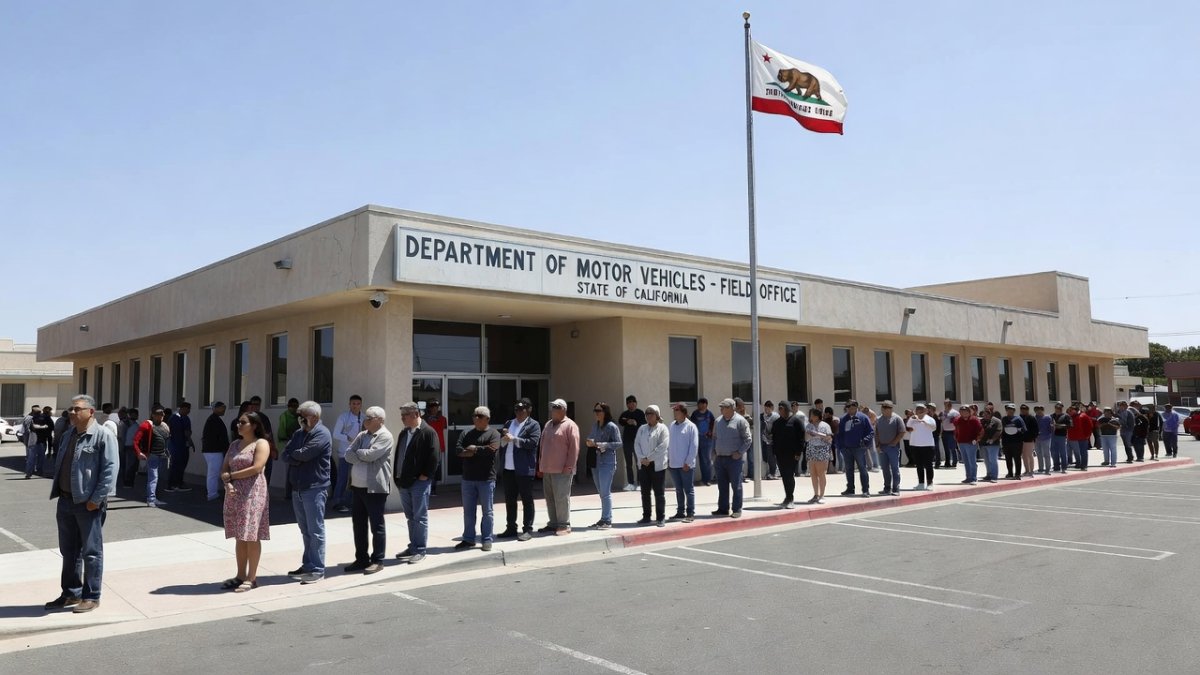
California DMV Orders 11,000 Drivers to Retake Written Test
Sacramento, CA - According to reports from the New York Post, ABC7 San Francisco, Fox LA, and California Insider, the DMV's enforcement action is sweeping and unprecedented.
The Bureaucratic Hammer Drops
California drivers, wake up. The DMV just blindsided 11,000 of you. If you received a letter from the California Department of Motor Vehicles recently, telling you to retake your written drivers test within 30 days or lose your license, you are not alone. You are part of a massive, unprecedented enforcement action that has sent shockwaves across the state.
The DMV says it identified irregularities in written drivers license tests. The official term. But what that actually means is that up to 11,000 people are now being treated as suspects in a cheating probe, with zero clarity on what they supposedly did wrong. The letters went out without warning, without specifics, and without any meaningful explanation of how the DMV arrived at its conclusions.
The California DMV's mass notification of 11,000 drivers echoes earlier enforcement waves, such as the 2012-2013 crackdown in New York where thousands of licenses were flagged for suspected test fraud at third-party centers, leading to lengthy court battles over due process. In California, the 30-day retake mandate raises immediate legal questions about administrative overreach, as drivers receive no specific evidence of irregularities and limited avenues for appeal beyond the standard hearing process. Legal experts suggest that the DMV may be vulnerable to class-action claims if it cannot demonstrate individualized review of each flagged test. The burden of proof ordinarily rests on the accusing agency, but here the DMV has shifted that burden onto the driver. The affected 11,000 now must prove their innocence by retaking a test they already passed, within a punitive deadline, with no guarantee their replacement score will be honored if the original was legitimate.
Real People, Real Consequences
ABC7 San Francisco featured a Burlingame teen who passed her written test legitimately. She studied. She took the test fairly. And she still got the letter. She is not alone. Across social media and local news, Californians are sharing the same story: I passed. I did nothing wrong. And now the DMV is threatening my license.
For many of these drivers, their licenses are not just pieces of plastic. They are lifelines. Commutes to work. School drop-offs. Medical appointments. Grocery runs. The DMV is effectively holding 11,000 peoples mobility hostage over a vague reference to irregularities that it refuses to explain on a case-by-case basis.
The human impact extends beyond inconvenience. A single mother in Fresno told local media she cannot afford to take time off work to drive to a DMV office, study for a test she already passed, and wait in line for hours. A delivery driver in San Diego said his job depends on a valid license; if it is canceled, he loses his income. The DMV has not offered alternative testing arrangements, remote testing options, or hardship accommodations for the 11,000 affected. The letters are uniform form letters with no human contact information. There is no phone number to call for questions. The system is automated, impersonal, and inflexible. For many, the 30-day window is simply impossible to meet given work schedules, childcare obligations, and DMV appointment availability that already stretches weeks in many parts of the state.
What Counts as an Irregularity?
Here is the part that should make every Californian furious. The DMV will not say. It has not disclosed which testing locations were involved. It has not specified what time periods are under scrutiny. It has not explained what specific patterns triggered the flags. Was it a specific testing center where cheating was documented? A specific time window where answers were compromised? A specific test administrator under investigation? Nobody knows.
And that lack of transparency is the real story here. Because if the DMV cannot tell 11,000 people what they supposedly did wrong, how is any of those 11,000 supposed to defend themselves?
Based on reporting from California Insider, the irregularities appear to stem from algorithm-driven analysis of test result patterns. The DMV likely used statistical anomaly detection to flag testing locations or time periods where pass rates deviated significantly from historical averages. While such algorithms can identify suspicious patterns, they are notorious for producing false positives, especially when applied to small sample sizes or diverse demographic groups. A testing center serving a non-English-speaking community might show higher error rates on specific questions. A temporary instructor might have administered tests differently. Technical glitches in the computer-based testing system could have corrupted answer recordings. Without transparency about the methodology, affected drivers have no way to know whether they were flagged by a flawed algorithm or genuine evidence of cheating.
The Prosecution Angle
The DMV has confirmed that certain cases have been referred to district attorneys for prosecution. That means criminal charges could be coming for some of these drivers. But the DMV was also careful to say that not all 11,000 necessarily cheated. Some may have been caught up in a dragnet. Some may have had their tests flagged because of how or where the test was administered, not because of anything they personally did.
If you are one of the 11,000 and you know you passed fairly, here is what you need to understand: the fact that you received the letter does not mean the DMV has proof you cheated. It means your test was in a batch they flagged. That is a big difference, and the DMV is not explaining that difference to the people receiving these letters.
District attorneys across multiple California counties have confirmed receipt of case referrals from the DMV, but none have announced charges yet. This suggests the cases are under review and prosecutors are evaluating whether the evidence meets the standard for criminal prosecution. The likely charges would be perjury (for signing an attestation of honest completion) or fraud. However, prosecutors know that juries are unlikely to convict drivers who claim they passed the test legitimately, especially en masse. The sheer volume of 11,000 cases also creates logistical challenges for already overburdened DA offices. It is possible that only the most egregious cases with clear evidence of organized cheating rings will result in charges, while the majority of flagged drivers face administrative consequences only.
A DMV History of Bureaucratic Failure
This is not happening in a vacuum. The California DMV has a long and well-documented track record of bureaucratic failures that have harmed the very people it is supposed to serve. Endless wait times at field offices. Computer systems that crash during renewal periods. Data breaches that exposed personal information. And now, a mass retake order that treats 11,000 people as guilty until proven innocent.
This is the same agency that was sued over its handling of REAL ID applications. The same agency that faced class-action lawsuits for excessive wait times. The same agency whose IT systems have been described by state auditors as antiquated and unreliable. And now it is asking Californians to trust that its irregularity detection system is flawless.
The California DMV has a documented history of algorithmic enforcement failures. In 2019, the DMV's automated vehicle registration system sent erroneous suspension notices to thousands of drivers who had actually paid their fees. In 2021, a database glitch caused the DMV to issue duplicate licenses to ineligible individuals. In 2023, the DMV's online services platform experienced a month-long outage during peak renewal season. The agency has consistently struggled with technology modernization, earning repeated criticism from the Little Hoover Commission and state auditors. The current irregularity detection system was implemented without public scrutiny or legislative oversight, raising questions about whether due process safeguards were built in before the mass notification went out.
What You Need to Do If You Got the Letter
First: do not ignore it. The 30-day clock is ticking. If you fail to retake and pass the written test within that window, your license will be canceled. Period. No extensions. No grace period.
Second: contact the DMV in writing and demand specifics about your case. Ask which test was flagged, when it was taken, and what specific irregularity was detected. Get everything in writing. Build a paper trail.
Third: reach out to your state assembly member. This is exactly the kind of bureaucratic overreach that elected officials are supposed to investigate. If enough constituents demand answers, Sacramento will have to respond.
And fourth: study. Whether you passed before or not, the written test is the gateway. If you have to retake it, be ready. Because the DMV is not going to make this easy.
Legal aid organizations in California are already preparing for what they expect will be a wave of litigation. The ACLU of Northern California has issued a statement expressing concern about due process violations. Consumer advocacy groups are advising affected drivers to document everything: the date they received the letter, the test date referenced, any attempts to contact the DMV, and the outcome of their retake. The DMV has not established a formal appeals process beyond the standard hearing mechanism, which requires drivers to request a hearing and wait for an available date. With 11,000 potentially affected, hearing wait times could stretch months, far beyond the 30-day retake window. This structural mismatch between the deadline and the appeals process is likely to be a central issue in any legal challenge.
By Jessica Ali, Staff Writer
This article was produced with AI-assisted research and editorial support. Reporting is based on sources cited in the article.
What's Your Reaction?
 Like
0
Like
0
 Dislike
0
Dislike
0
 Love
0
Love
0
 Funny
0
Funny
0
 Wow
0
Wow
0
 Sad
0
Sad
0
 Angry
0
Angry
0

Editor-in-Chief at Global1.News. Atlanta-based journalist who cuts through the BS and tells it like it is. Lead anchor, host, and the voice you hear when the spin stops and the truth starts.













Comments (0)