
64% of Filipinos Distrust China as WPS Tensions Rise
OCTA poll shows 64% distrust of China, up from 55% in March 2026, with data collected July 4-11 before the July 20 Ayungin incident. The attack reinforced an already-rising trend tied to the arbitral ruling anniversary. Sentiment spans regions and classes, affecting OFW remittances, fishing, and ...
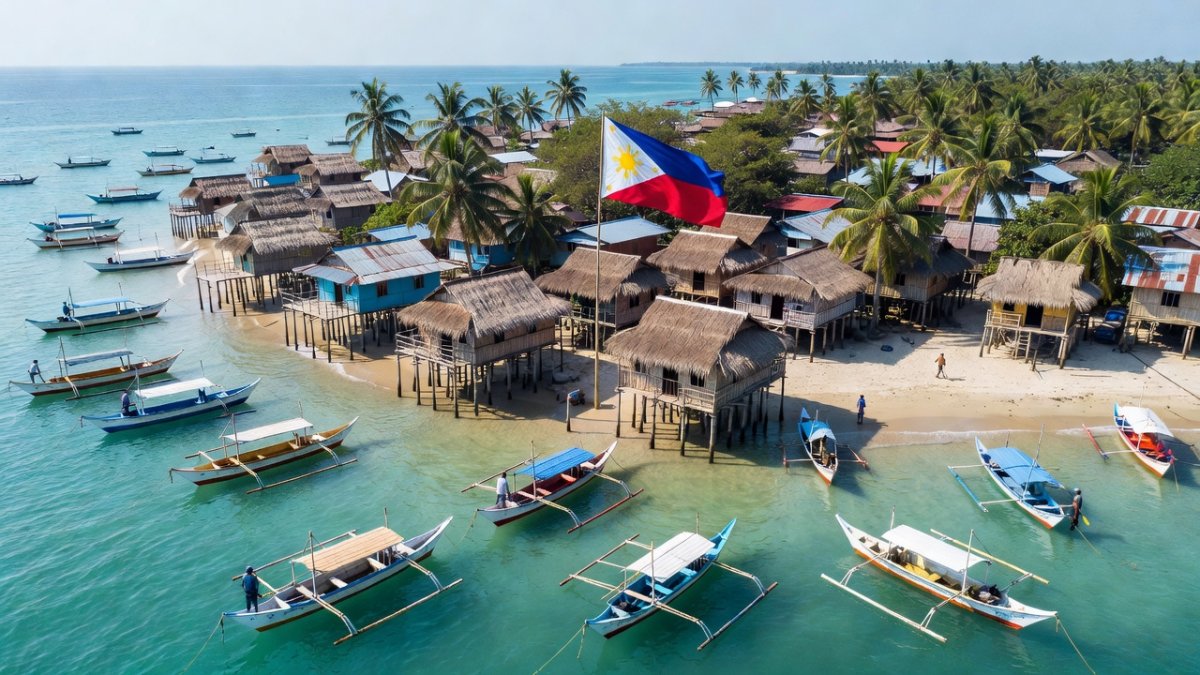
In the heart of Filipino communities, from bustling Manila streets to quiet coastal villages, a growing unease with China is reshaping daily conversations and family plans. The latest survey reveals a sharp rise in distrust, reflecting concerns that built steadily before recent clashes in the West Philippine Sea. This shift is not just numbers—it is about livelihoods, remittances, and the safety of those who depend on stable seas.
Manila, Philippines — Article continues...
The Numbers Reveal a Reversal in Public Sentiment
OCTA Research conducted its survey from July 4 to 11, 2026, capturing responses across the nation well before the July 20 Ayungin Shoal incident. The results show 64 percent distrust toward China, a notable rise from the 55 percent recorded in March 2026. Trust levels dropped to 14 percent from 17 percent in the first quarter, while the undecided share fell from 28 percent to 21 percent. These figures mark a reversal after two years of declining distrust, which had moved from 95 percent in mid-2024 down to 85 percent in July 2025, then 60 percent by December 2025 and 55 percent in March 2026.
OCTA Research’s July 2026 survey of 1,200 respondents, conducted via face-to-face interviews across 17 regions with a ±3 percent margin of error, reveals a clear reversal after two years of declining distrust. While distrust fell from 95 percent in mid-2024 to 55 percent by March 2026, the latest 64 percent figure aligns with heightened media coverage around the 10th anniversary of the 2016 arbitral ruling. This anniversary has prompted renewed public discussion in barangays, where government briefings and civil society forums have highlighted the ruling’s affirmation of Philippine exclusive economic zone rights. In comparison, a concurrent ASEAN-wide poll by the ISEAS-Yusof Ishak Institute showed similar trends, with Vietnam at 72 percent distrust and Indonesia at 58 percent, underscoring how maritime disputes resonate across the region yet hit Filipino households most directly through daily supply chain concerns.
Majorities in every geographic region and across all socio-economic classes expressed distrust. Regional breakdowns illustrate uniform concern: Luzon recorded 68 percent distrust, Visayas 62 percent, and Mindanao 59 percent, with all socio-economic classes—ABC at 70 percent, D at 65 percent, and E at 61 percent—expressing majority skepticism. These figures demonstrate that the shift transcends urban elites or coastal provinces, affecting inland communities reliant on imported fuel and goods. The methodology’s stratified sampling ensures representation from remote areas, lending reliability to the data and confirming that public sentiment remains highly responsive to West Philippine Sea developments rather than abstract geopolitics. The timing aligns with the 10th anniversary of the 2016 arbitral ruling, underscoring how consistent information from government transparency efforts, civil society engagement, and responsible media reporting keeps communities informed about developments that affect daily life.
The Ayungin Shoal Incident Amplifies Pre-Existing Concerns
The OCTA poll, conducted July 4-11 before the July 20 Ayungin Shoal incident, captures rising distrust that had already reached 64 percent. Released days after the clash, the survey reflects pre-attack sentiment that the incident then amplified. The July 20, 2026, Ayungin Shoal incident involved Chinese Coast Guard personnel using batons to strike Philippine Navy sailors aboard a resupply mission, resulting in minor injuries to three personnel and damage to rigid-hull inflatable boats. The Armed Forces of the Philippines immediately condemned the action as a violation of international norms, releasing video footage that circulated widely on social media and prompted emergency Senate hearings. This event occurred near the grounded BRP Sierra Madre, the Philippine Navy’s longstanding outpost at Second Thomas Shoal, which has served as a symbol of sovereignty since its deliberate grounding in 1999.
Previous confrontations at the shoal, including water cannon incidents in 2023 and 2024, had already elevated baseline tensions, yet the baton attack marked an escalation in physical contact. The incident reinforced the upward trend shown in the pre-attack poll data. These developments reinforce the 2016 arbitral ruling’s findings that China’s nine-dash line claims lack legal basis, prompting renewed calls from coastal mayors in Palawan for sustained naval presence to protect both sovereignty and the livelihoods of 15,000 registered municipal fishers operating in the area. OCTA noted that public opinion toward China remains highly responsive to these developments, reminding families in coastal communities and urban centers alike that security concerns ripple through supply chains and local economies. Residents in barangays near the sea often discuss these incidents during evening gatherings, connecting distant shoals to their own sense of safety and livelihood. The attack served as a catalyst that brought longstanding issues back into sharp focus for workers and households dependent on stable regional relations.
How Distrust Affects Everyday Filipino Lives
For many families, the numbers translate into real worries about trade flows, job security, and the well-being of loved ones abroad. The rise in distrust directly strains OFW remittances, particularly for the estimated 200,000 Filipinos employed by Chinese firms in construction and manufacturing across the Middle East and Southeast Asia. Recent hiring slowdowns tied to regional tensions have reduced monthly inflows by an average of 8 percent in provinces like Pangasinan and Iloilo, where families depend on these funds for tuition and sari-sari restocking. Fishing communities in Palawan, Zambales, and Batangas report a 25 percent drop in catch volumes since July, as Chinese vessel presence limits access to traditional grounds, forcing local cooperatives to seek government subsidies through the Bureau of Fisheries and Aquatic Resources.
Trade flows through Subic Bay and Manila ports have seen delays averaging 12 days for Chinese-origin cargo, raising costs for jeepney operators who now pay 15 percent more for tires and spare parts. Tourism between the two nations has contracted sharply, with Chinese visitor arrivals falling 40 percent year-on-year, hurting vendors in Boracay and Cebu. In barangays like those in Batangas City, bayanihan networks now organize bulk buying of local produce to offset imported goods price spikes, illustrating how distant shoal incidents translate into concrete household budgeting pressures across the archipelago. OFWs in various countries feel the strain when regional tensions influence hiring patterns or remittance channels. Sari-sari store owners notice price fluctuations on goods that travel through affected waters, while jeepney drivers and small vendors track how broader uncertainty can slow local commerce. Communities organized around bayanihan spirit continue to support one another, yet the poll highlights a collective desire for peaceful resolution that protects livelihoods. The human impact extends to students and workers who rely on stable diplomacy to plan futures, showing how foreign relations shape opportunities in every province.
Government Leaders Address the Rising Concerns
President Marcos met with Chinese Ambassador Jing Quan on Tuesday following the survey release. The Department of Foreign Affairs has consistently voiced protests over incidents in the West Philippine Sea, working alongside the Department of National Defense to safeguard maritime rights. These steps reflect efforts by institutions including Congress and the Senate to monitor developments and ensure accountability. Public trust in these responses remains tied to transparent updates that reach even remote barangays. The administration's approach emphasizes dialogue while upholding the 2016 ruling, a stance that resonates with citizens who value justice and democratic processes in protecting national interests.
Regional Ties and Broader Security Considerations
The poll results carry implications for ASEAN cooperation and existing defense arrangements such as the Enhanced Defense Cooperation Agreement. Recent EDCA site developments, including expanded facilities at Basa Air Base in Pampanga and Naval Base Camilo Osias in Cagayan, have accelerated joint training exercises with U.S. forces under the Mutual Defense Treaty. These enhancements, funded partly through a $2.8 billion U.S. commitment, aim to improve rapid response capabilities in the West Philippine Sea while supporting local economies through infrastructure jobs. ASEAN foreign ministers’ meetings in July 2026 produced a joint statement urging restraint, yet China’s continued rejection of multilateral talks has limited progress on a binding Code of Conduct.
The U.S.-Philippines alliance has seen increased maritime patrols, influencing supply chain stability as exporters reroute shipments away from contested waters. Trade agreements face indirect pressure, with Philippine exports to China declining 11 percent in the second quarter amid uncertainty. Communities near EDCA sites in Palawan and Zambales report mixed impacts—new construction contracts alongside concerns over long-term foreign basing—highlighting how security arrangements intersect with everyday economic planning in provinces dependent on both defense partnerships and regional commerce. Filipinos across regions watch how alliances with partners like the United States factor into efforts to maintain stability in shared waters. These dynamics influence not only security but also economic partnerships that support jobs and community development nationwide. Discussions in local settings often link these regional moves to everyday concerns, from fair trade practices to the safety of fishing communities. The data underscores a public that stays engaged with how international relations affect domestic priorities like education through DepEd programs and health services via DOH initiatives funded in part by stable economic conditions.
Looking Ahead with Community Resilience
This latest OCTA finding signals that Filipinos remain attentive to West Philippine Sea issues and expect continued transparency from leaders. As communities draw on their tradition of bayanihan to navigate challenges, the focus stays on protecting human rights, democratic values, and the livelihoods of workers and families. The poll serves as a reminder that public awareness drives calls for peaceful, rules-based solutions that benefit all.
By Bella Reyes, Staff Writer
This article was produced with AI-assisted research and editorial support. Reporting is based on sources cited in the article.
What's Your Reaction?
 Like
0
Like
0
 Dislike
0
Dislike
0
 Love
0
Love
0
 Funny
0
Funny
0
 Wow
0
Wow
0
 Sad
0
Sad
0
 Angry
0
Angry
0

Philippines/Southeast Asia Correspondent at Global1.News. Manila-based journalist covering Philippine politics, environment, maritime security, and social issues. Passionate about marine conservation and the communities protecting the Philippines' natural heritage.













Comments (0)