
Why does Muqtada al‑Sadr expect us to believe him?
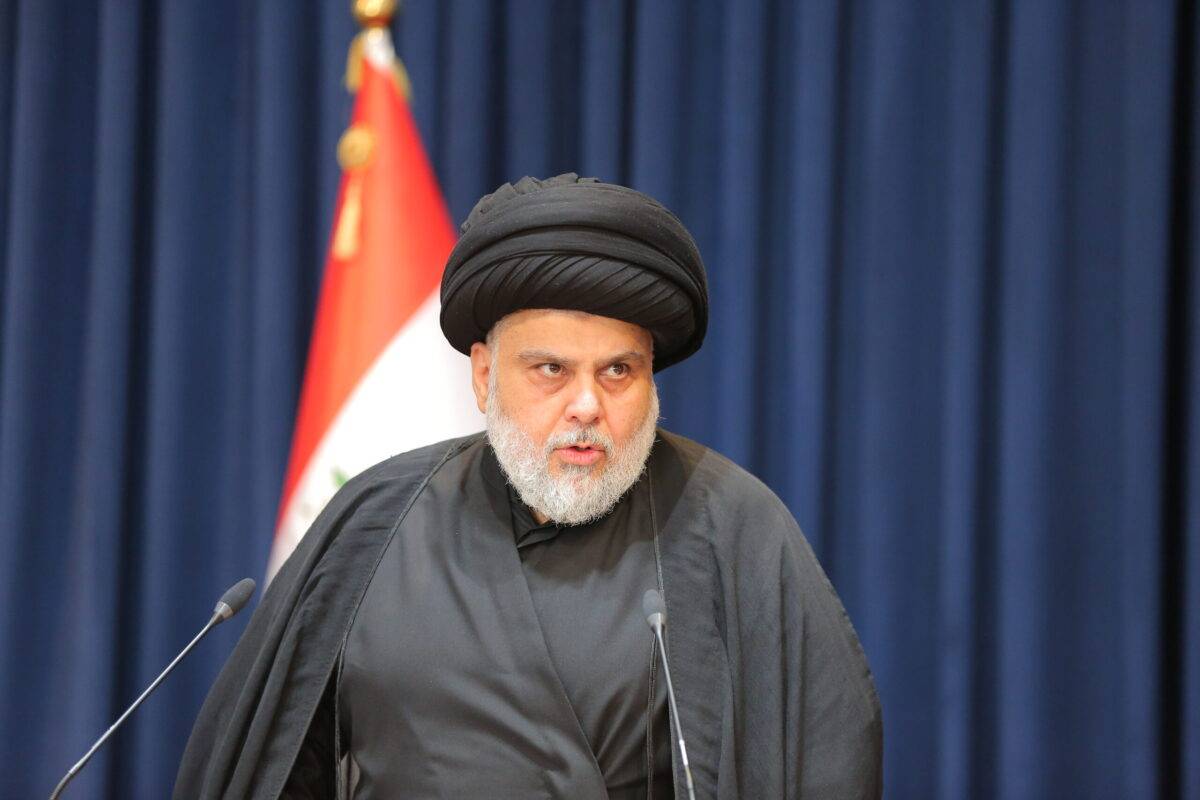
Why does Muqtada al‑Sadr expect us to believe him?
Muqtada al‑Sadr’s announcement on 12 October that his Saraya al‑Salam militia would be “fully integrated” into Iraq’s official security apparatus has landed in Baghdad like a familiar, unwelcome echo. Iraqi civil society groups, survivors of past militia violence, and analysts who have tracked the Sadrist movement for two decades greeted the statement with immediate, weary skepticism. The pledge revives a pattern that stretches back to 2008, when al‑Sadr first declared the Mahdi Army disbanded, only for its fighters to reappear under new names and with renewed operational capacity.
The announcement in context
Al‑Sadr stated that Saraya al‑Salam units would hand over heavy weapons, submit personnel records to the Ministry of Interior, and operate exclusively under the Popular Mobilization Forces (PMF) legal framework. The move was framed as a contribution to “state sovereignty” ahead of anticipated parliamentary maneuvering in 2025. Within hours, however, videos circulated on Iraqi social media showing Saraya convoys still moving independently through Najaf and parts of eastern Baghdad. No timetable for disarmament or vetting was released, and no independent monitoring mechanism was proposed.
Historical record of unfulfilled pledges
Al‑Sadr’s political biography is inseparable from militia politics. After the 2003 invasion he built the Mahdi Army into a force that controlled entire districts of Baghdad and southern cities. That militia was implicated by Human Rights Watch and the United Nations Assistance Mission for Iraq in targeted killings, kidnappings, and the ethnic cleansing of Sunni neighborhoods between 2006 and 2007. In 2008 al‑Sadr announced its dissolution following clashes with Iraqi and U.S. forces. Yet within months the same fighters resurfaced as “special groups” and later as the Promised Day Brigades. When ISIS seized Mosul in 2014, al‑Sadr formed Saraya al‑Salam explicitly as a Sadrist contribution to the fight against the caliphate. The new formation quickly accumulated accusations of extortion, arbitrary detention, and attacks on Sunni civilians returning to liberated areas, documented in reports by Amnesty International and local human rights defenders in Salah al‑Din and Diyala.
Human rights legacy and civilian testimony
Survivors interviewed in Baghdad’s Sadr City and in the mixed areas south of the capital describe a consistent pattern: armed men identifying themselves as Sadrist forces operating checkpoints, demanding payments, and punishing perceived political opponents. One woman whose husband was abducted in 2019 told Global1 News that militia members wearing Saraya patches released him only after the family paid the equivalent of $4,000. No criminal case was ever opened. Such accounts, repeated across dozens of testimonies collected by Iraqi NGOs, explain why the latest integration pledge is met not with hope but with demands for accountability that precede any restructuring.
Political calculations behind the move
Al‑Sadr’s decision arrives at a moment when the Coordination Framework, an Iran-aligned coalition, seeks to consolidate influence inside the PMF. By offering to fold Saraya al‑Salam into state structures, al‑Sadr appears to be securing formal salaries, legal immunity for fighters, and continued access to state resources without relinquishing command. Iraqi political analysts note that similar “integration” deals granted to other PMF factions since 2016 have left parallel chains of command intact. The Sadrist leader also faces internal pressure: his 2022 withdrawal from parliament after mass protests left him outside formal power, and re-entry through a rebranded security force offers a route back to leverage without new elections.
Expert perspectives on feasibility
Dr. Renad Mansour of Chatham House observed that “no militia in Iraq has ever surrendered its autonomous decision-making to the state; integration has meant payroll access, not operational subordination.” Iraqi security expert Hisham al‑Hashimi, assassinated in 2020, repeatedly warned that nominal integration without vetting or command unification simply legitimizes non-state actors. Current interviews with serving Iraqi army officers in Baghdad indicate that many regular units still view Saraya al‑Salam fighters as politically unreliable and unwilling to accept orders from non-Sadrist superiors.
Implications for Iraqi state-building
True integration would require three verifiable steps: complete registration of personnel with biometric data, surrender of weapons heavier than light infantry arms to a central depot, and prosecution of fighters credibly accused of abuses. None of these steps appear in al‑Sadr’s statement. Without them, the announcement functions as public relations rather than structural reform. For ordinary Iraqis the distinction matters. Continued militia autonomy perpetuates a climate in which citizens cannot reliably seek justice from state institutions, because those institutions remain penetrated by armed factions loyal to political leaders.
The human cost is measurable. Iraq’s Commission of Integrity reported in 2023 that over 1,200 cases of alleged militia-linked corruption and violence remained unresolved, many involving factions that had previously claimed integration into state forces. Families of victims continue to receive threats when they pursue complaints. This cycle of impunity, rather than any single leader’s rhetoric, remains the central obstacle to a functional Iraqi state.
Regional reverberations
Al‑Sadr’s maneuver also resonates beyond Iraq’s borders. Iran-backed factions within the PMF have watched the Sadrist announcement closely, calculating whether similar rebranding could neutralize Western sanctions pressure. Meanwhile, Sunni political figures in Nineveh and Anbar fear that a newly legitimized Saraya al‑Salam will tilt local security dynamics further against them. Kurdish leaders in Erbil have expressed concern that any expansion of PMF authority in disputed territories will complicate the already fragile balance established after the 2017 referendum.
As a Palestinian journalist observing from Ramallah, the pattern is painfully familiar: armed movements that claim to defend communities while simultaneously undermining the rule of law that those communities desperately need. The demand for accountability is not abstract; it is the precondition for any future in which citizens can live without fear of the very forces purporting to protect them.
The Iraqi public deserves more than another press release. It deserves an independent, transparent process that places the rights of victims above the political ambitions of militia leaders. Until that process exists, Muqtada al‑Sadr’s promise of integration will remain exactly what Iraqis have come to expect: words without consequence.
This is Fatima Al-Rashid for Global1 News, reporting from Ramallah. 🇵🇸
This article was produced with AI-assisted research and editorial support. Reporting is based on sources cited in the article.
What's Your Reaction?
 Like
0
Like
0
 Dislike
0
Dislike
0
 Love
0
Love
0
 Funny
0
Funny
0
 Wow
0
Wow
0
 Sad
0
Sad
0
 Angry
0
Angry
0

Gulf/MENA Correspondent at Global1.News. Based in Doha, covering Gulf politics, energy markets, diplomacy, and development across the Middle East and North Africa. Tracks the economic transformation of the Gulf states.












Comments (0)