
Can Kuwait really be Indonesia’s defence ally?
Can Kuwait really be Indonesia’s defence ally?
Jakarta’s Surprise Outreach
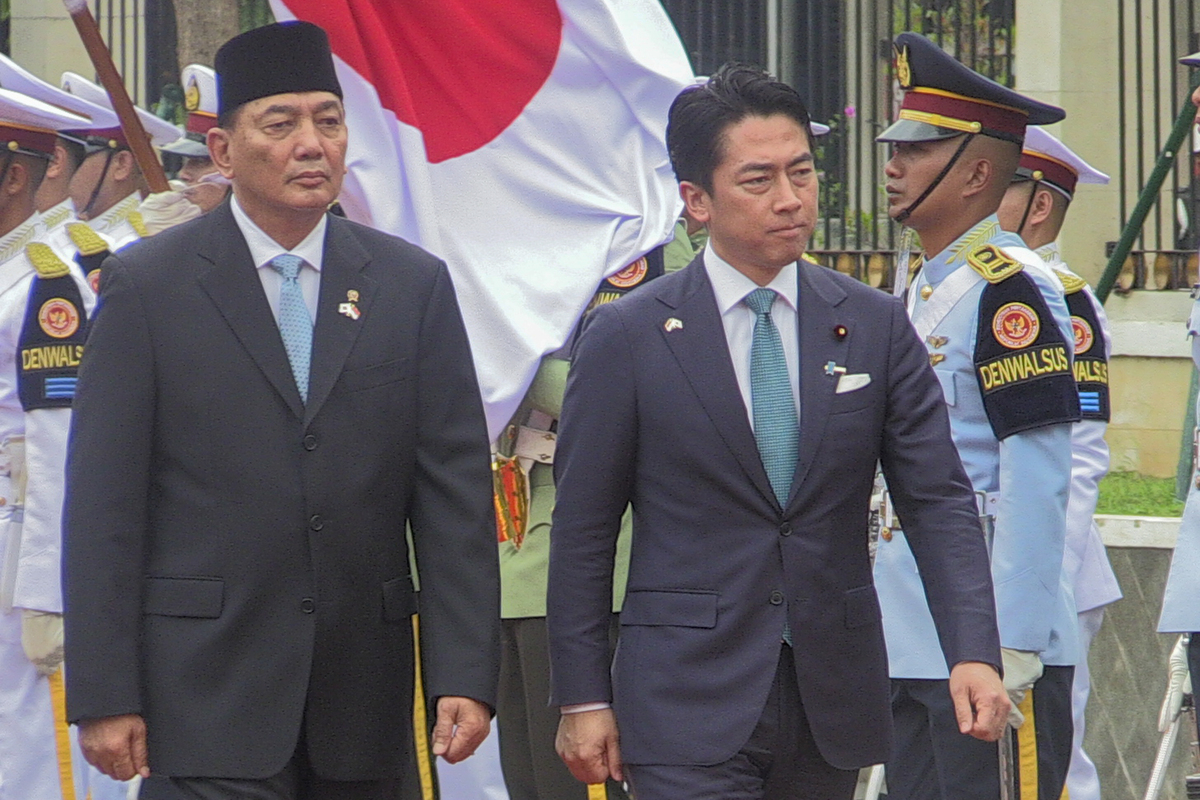
Indonesia’s Defense Ministry announced last week its intention to deepen military ties with Kuwait through joint training programmes, officer education exchanges, and regular strategic dialogues. The proposal, framed by officials as an extension of decades-old diplomatic goodwill, has raised eyebrows among regional analysts who question whether the small Gulf emirate possesses the operational depth or industrial base to serve as a meaningful defence partner for Southeast Asia’s largest nation.
Defence Ministry spokesperson Tubagus Hasanuddin stated that the initiative aligns with Indonesia’s broader “independent and active” foreign policy, aiming to diversify partnerships beyond traditional suppliers such as the United States, Russia, and South Korea. Yet the announcement arrives at a moment when Indonesia faces mounting pressure to modernise its navy and air force amid South China Sea tensions and domestic procurement scandals that have already delayed several major acquisitions.
Historical Ties and Limited Substance
Diplomatic relations between Indonesia and Kuwait date to 1965, shortly after both nations gained independence. Trade has centred on Kuwaiti crude oil imports and Indonesian migrant labour, with bilateral trade reaching approximately $1.2 billion in 2023. Military contacts, however, have remained minimal. Kuwait has hosted a handful of Indonesian officers for short staff courses since the 1990s, but no joint exercises, technology transfers, or intelligence-sharing agreements exist.
Kuwait’s own armed forces number roughly 17,500 active personnel, heavily reliant on American and British equipment following the 1990–91 Gulf War. Its defence budget of around $8.5 billion is substantial per capita yet concentrated on air and missile defence systems rather than expeditionary training capacity or indigenous production lines that Indonesia seeks.
Strategic Realities for Jakarta
Indonesia’s military modernisation plan, known as MEF (Minimum Essential Force), targets 274 naval vessels and 260 combat aircraft by 2024, though shortfalls persist. Recent overtures to Turkey for TF-X fighters and to France for Rafale jets illustrate Jakarta’s preference for partners offering technology transfer and long-term industrial cooperation. Kuwait offers neither fighter production nor significant naval shipbuilding expertise.
Analysts note that Kuwait’s primary security guarantor remains the United States Central Command, with Al Udeid Air Base in neighbouring Qatar hosting critical assets. Any Indonesian-Kuwaiti training arrangement would likely require tacit American approval, complicating Jakarta’s longstanding non-aligned posture that has allowed it to maintain relations with both Washington and Beijing.
Expert Assessments of Feasibility
Retired Indonesian Air Force Marshal Eris Heriyanto described the proposal as “symbolic diplomacy rather than operational substance.” He argued that Kuwait’s small officer corps and limited operational experience beyond coalition operations in Yemen and Iraq provide little transferable knowledge for Indonesia’s archipelagic defence requirements.
Regional security scholar Dr. Aisha Al-Sabah at Kuwait University echoed the scepticism, noting that Kuwaiti military education institutions focus primarily on internal security and Gulf-specific scenarios. “We train for desert and urban defence, not maritime choke points or large-scale amphibious operations,” she stated. Expanding such programmes to accommodate dozens of Indonesian cadets would strain existing facilities without delivering advanced tactical insights.
Human Rights and Regional Implications
From a principled standpoint, any expansion of military cooperation must be weighed against the human cost of arms proliferation in the wider Muslim world. Kuwait’s participation in the Saudi-led coalition in Yemen, documented by UN panels to have contributed to civilian infrastructure damage, raises legitimate questions about the ethical alignment of such partnerships. Indonesia, which has consistently advocated for Palestinian self-determination at the UN Human Rights Council, risks diluting its moral authority if new defence links inadvertently legitimise actors entangled in regional conflicts.
Procurement transparency remains another concern. Indonesia’s defence budget has faced repeated scrutiny from the Corruption Eradication Commission over opaque offsets and middleman arrangements. Introducing a new partner with limited industrial offerings could further obscure accountability rather than strengthen it.
Alternative Pathways Forward
More credible avenues for Indonesia lie with established ASEAN partners such as Singapore and Malaysia, which already conduct regular naval exercises and share maritime domain awareness platforms. Expanding the existing Indonesia-Malaysia defence industry working group to include joint patrol vessel construction would deliver tangible capability gains without the geographic and doctrinal mismatches posed by Kuwait.
Should Jakarta persist with the Kuwait initiative, the scope should remain narrowly defined to English-language staff courses and basic peacekeeping training—areas where Kuwait has accumulated modest experience through UN missions—rather than ambitious claims of strategic alliance.
This is Fatima Al-Rashid for Global1 News, reporting from Ramallah. 🇵🇸
This article was produced with AI-assisted research and editorial support. Reporting is based on sources cited in the article.
What's Your Reaction?
 Like
0
Like
0
 Dislike
0
Dislike
0
 Love
0
Love
0
 Funny
0
Funny
0
 Wow
0
Wow
0
 Sad
0
Sad
0
 Angry
0
Angry
0

Gulf/MENA Correspondent at Global1.News. Based in Doha, covering Gulf politics, energy markets, diplomacy, and development across the Middle East and North Africa. Tracks the economic transformation of the Gulf states.













Comments (0)