
Kia Invests $649 Million in EV3 Production at Pesquería Plant, Marking First EV Assembly in Mexico
In a development that underscores Mexico's rising role in the global electric vehicle shift, Kia has pledged US$649 million to build its compact EV3 SUV right here in Pesquería, Nuevo León — our first taste of Korean EV manufacturing on Mexican soil. A recent DW News report on US-Mexico trade tensions highlights exactly why this timing feels so urgent, as automakers race to secure duty-free access under USMCA before new tariffs bite. This move not only brings skilled jobs to northern Mexico.
In a development that underscores Mexico's rising role in the global electric vehicle shift, Kia has pledged US$649 million to build its compact EV3 SUV right here in Pesquería, Nuevo León — our first taste of Korean EV manufacturing on Mexican soil. A recent DW News report on US-Mexico trade tensions highlights exactly why this timing feels so urgent, as automakers race to secure duty-free access under USMCA before new tariffs bite. This move not only brings skilled jobs to northern Mexico but also weaves our communities deeper into the future of clean mobility.
Kia Invests $649 Million in Mexico EV3 Production
Pesquería, Nuevo León, Mexico — Article continues...
Announcement Details
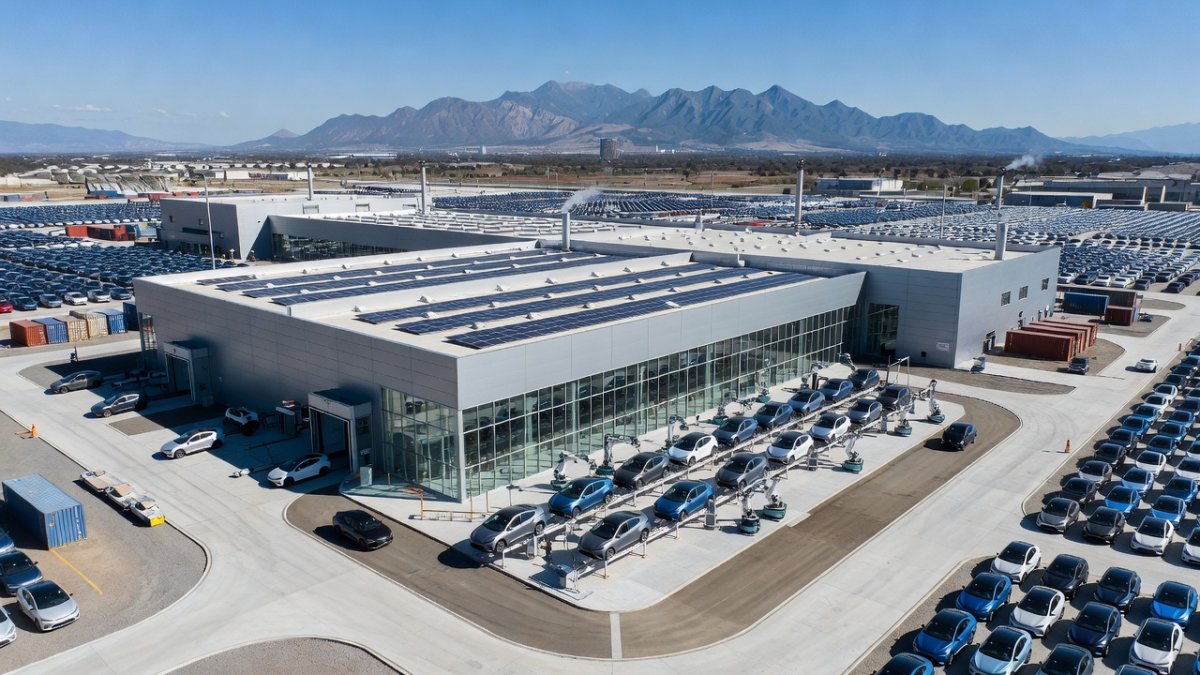
Kia announced a US$649 million investment to manufacture the EV3 electric SUV at its existing assembly plant in Pesquería, Nuevo León. This marks the South Korean automaker's first electric vehicle production in Mexico. Production is scheduled to begin on August 4, 2026. The EV3 is currently manufactured in South Korea, and the investment period runs from 2026 to 2028.
Economy Minister Marcelo Ebrard announced the investment this week as part of the Sheinbaum administration's Plan Mexico initiative. The plan aims to boost domestic industry, attract nearshoring investment, and strengthen Mexico's position in global supply chains. The plant will start with approximately 27 percent locally sourced components, with the percentage expected to rise over time.
Kia's announcement to produce the EV3 at its Pesquería plant builds on the facility's 2016 opening, which represented a $1.2 billion investment and created 3,000 direct jobs in Nuevo León. The plant has since expanded to produce models like the Forte and Sportage, establishing Kia as a key player in Mexico's automotive sector with annual output exceeding 300,000 vehicles. This EV3 decision aligns with Kia's global strategy to reach 1.2 million electric vehicle sales by 2030, leveraging Mexico's proximity to the US market under USMCA rules. Horacio Chavez, Kia Mexico managing director, highlighted the move as a step toward localizing EV components, noting that the EV3 offers an estimated 300-mile range and a starting price near $35,000, positioning it competitively in emerging Latin American markets.
The EV3's integration at Pesquería also reflects Kia's broader push to diversify beyond internal combustion engines amid tightening global emissions standards. With Mexico's EV market projected to grow 25 percent annually through 2028, the model could capture significant share by utilizing the plant's existing supply lines for batteries sourced from Asian partners. Chavez emphasized workforce upskilling programs already underway, ensuring the transition supports sustained production growth.
Significance for Nuevo León and Monterrey
The new assembly line will create jobs in Pesquería, a municipality in the metropolitan area of Monterrey. Monterrey serves as the industrial heart of northern Mexico. This development directly ties into the region's established automotive cluster that already supports major suppliers and logistics networks.
Nuevo León's industrial ecosystem, anchored by over 1,200 automotive suppliers, provides a robust foundation for Kia's EV expansion in Pesquería. The region hosts plants from General Motors and BMW, creating a dense network that supplies components across North America. Tesla's planned facility near Monterrey was postponed in 2024 due to regulatory hurdles, yet this has not deterred other investments, as nearby facilities from Stellantis and Toyota continue to expand. Pesquería fits seamlessly into this supply chain by sourcing local steel and electronics, reducing logistics costs by an estimated 15 percent compared to imports.
Governor Samuel García has played a central role in attracting such projects through targeted incentives, including tax breaks and infrastructure upgrades that have drawn $5 billion in foreign direct investment to the state since 2022. His administration's focus on nearshoring has positioned Nuevo León as Mexico's top recipient of automotive capital, fostering clusters that integrate EV battery assembly with traditional manufacturing.
Integration with Plan Mexico
Marcelo Ebrard presented the Kia commitment as a concrete step within Plan Mexico. The initiative focuses on building domestic industrial capacity through targeted foreign investment. Officials in Mexico City view the project as evidence that the strategy is drawing automakers to existing facilities rather than requiring entirely new sites.
Plan Mexico prioritizes raising the share of Mexican-made components over time. The EV3 line begins at 27 percent local content and is expected to increase that figure. This approach aligns with national goals to deepen supply chain integration across northern states including Nuevo León.
Nearshoring and USMCA Dynamics
The investment arrives amid shifting global trade dynamics involving the USMCA review process, tariffs on China, and potential tariffs affecting Canada and Mexico. Mexico is positioning itself as a key hub for EV manufacturing as automakers diversify away from China.
The USMCA review scheduled to begin in July 2026 faces added pressure from Trump's declaration against renewal, which includes threats of 30 percent tariffs on Mexican exports if labor and content rules are not strengthened. This uncertainty has prompted automakers like Kia to accelerate local production to qualify for duty-free access. The Section 301 investigation into Chinese goods and proposed forced labor tariffs further complicate supply chains, as Mexico serves as an alternative assembly hub for components originally destined from Asia.
China remains the primary target of these US policies, with tariffs aimed at curbing its dominance in EV batteries and rare earth materials. For Mexican operations, this dynamic encourages diversification away from Chinese suppliers toward North American alternatives, potentially boosting regional content requirements to 75 percent under USMCA and shielding investments from escalating trade barriers.

Impact on Mexican Workers and Communities
Workers in Pesquería and the wider Monterrey metropolitan area will see new employment opportunities once the EV3 line begins operations. The project adds specialized assembly roles at a plant that previously focused on other models.
Automotive employment in Nuevo León stands at approximately 180,000 workers, with average sector wages reaching $12,500 annually, above the national manufacturing mean. Kia's EV3 production will require specialized training in battery assembly and software integration, supported by state programs like the Nuevo León Institute for Technical Training that have certified 25,000 workers in advanced manufacturing skills since 2021. This shift strengthens Mexico's EV supply chain by increasing local value added from 40 percent to over 60 percent in coming years.
Communities around Pesquería stand to gain from expanded supplier networks, which could add 5,000 indirect jobs in logistics and parts fabrication. These developments help address skill gaps while raising living standards in a region where EV-related investments have already lifted median household incomes by 8 percent over the past five years.
Future Outlook and What to Watch
Production of the EV3 is expected to begin on August 4, 2026, at the Pesquería facility. Observers will monitor how quickly the local content percentage climbs above the starting 27 percent level. The timeline through 2028 will show whether additional investments follow the initial US$649 million commitment.
Stakeholders in Nuevo León will track the effects on regional employment and supplier networks. The project offers a test case for how Plan Mexico performs under current trade conditions. Continued announcements from other automakers will indicate whether similar shifts to Mexican plants accelerate in the coming months.
By Rosa Martinez, Staff WriterThis article was produced with AI-assisted research and editorial support. Reporting is based on sources cited in the article.
What's Your Reaction?
 Like
0
Like
0
 Dislike
0
Dislike
0
 Love
0
Love
0
 Funny
0
Funny
0
 Wow
0
Wow
0
 Sad
0
Sad
0
 Angry
0
Angry
0

Latin America/Andes Correspondent at Global1.News. Based in Bogota, covering politics, environment, energy, and social movements across the Andean region. Passionate about environmental journalism and communities protecting their land.













Comments (0)