
China's AI Disinformation Dilemma: Natural Disasters Test Beijing's Digital Governance
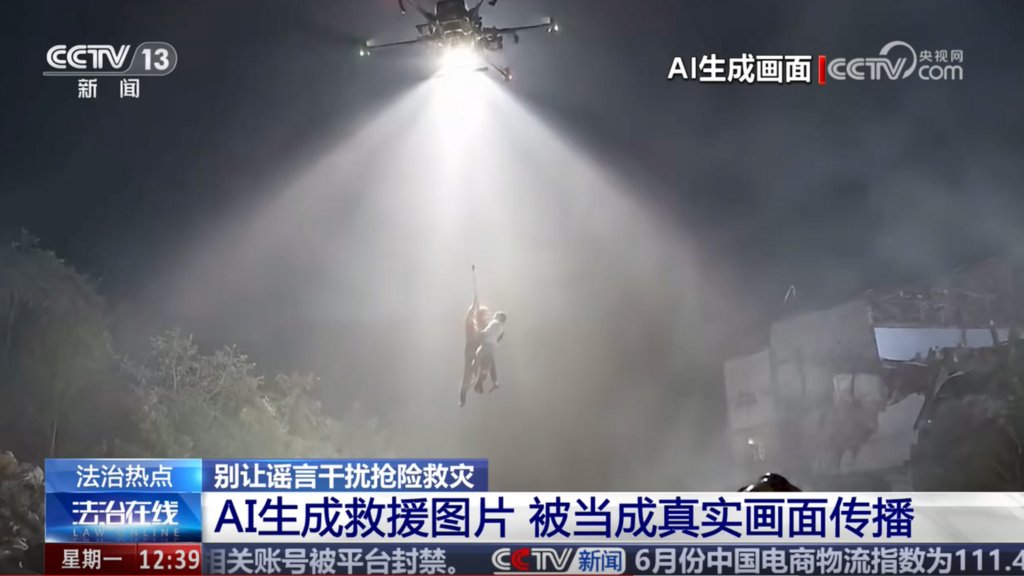
Dilemma: Natural Disasters Test Beijing's Digital Governance The Double-Edged Sword of China's AI Ambition When Typhoon Noul swept across southern China over the weekend of July 25–27, 2026, it brought not only devastating floodwaters but a new and disturbing phenomenon that Chinese authorities are only beginning to confront: the proliferation of AI-generated disinformation during natural disasters.
The Double-Edged Sword of China's AI Ambition
When Typhoon Noul swept across southern China over the weekend of July 25–27, 2026, it brought not only devastating floodwaters but a new and disturbing phenomenon that Chinese authorities are only beginning to confront: the proliferation of AI-generated disinformation during natural disasters. As the Communist Party pours hundreds of billions into positioning China as the world's leading AI superpower — a goal formally enshrined in the State Council's 2017 "New Generation Artificial Intelligence Development Plan" — the same technology is proving to be a double-edged sword that undermines social stability precisely when the party needs public trust most.
The challenge exposes a fundamental tension at the heart of Beijing's digital governance model. The same tools that power China's surveillance state and content moderation apparatus are now cheaply available to ordinary citizens, enabling the creation of hyper-realistic fake content that authorities struggle to detect, let alone counter. This is not merely a domestic nuisance; it carries profound implications for China's international image, its Belt and Road disaster response partnerships, and the credibility of its claims to technological leadership.
Typhoon Noul and the AI Disinformation Wave
Typhoon Noul made landfall over the weekend, triggering the annual flood season crisis that typically tests local emergency response capabilities. But unlike previous years, the storm was accompanied by a deluge of AI-generated content — fabricated videos depicting dead bodies floating in floodwaters, false imagery of severe flooding in unaffected areas, and entirely invented scenes of emergency response failures. Some videos falsely claimed that entire neighborhoods had been without power for days, prompting panic buying of emergency supplies that strained local logistics networks.
One particularly egregious example emerged from Hengzhou city in Guangxi province, where early July flooding caused hundreds of snakes to escape from a breeding farm. Within hours, AI-generated images appeared online claiming that crocodiles had also been released into local rivers — an entirely fabricated detail that sent communities into further panic. The pattern was clear: disaster events create information vacuums that bad actors fill with increasingly convincing AI-generated fabrications.
Huang Zhihua, Deputy Chief in charge of online public security for the Zhejiang Police Department, told Chinese state media that "many of these content creators use disaster news to try to gain followers, knowing that more sensational or exaggerated content will garner more likes and more views. They are deliberately fabricating information to grab people's attention." His comments, carried by Xinhua, acknowledge a reality that Chinese authorities have been reluctant to admit: the attention economy incentivizes disinformation, and AI tools have dramatically lowered the barrier to entry.
The Trust Vacuum: When Censorship Breeds Susceptibility
Perhaps the most troubling dimension of this crisis is that China's own information control apparatus has created the conditions that make AI disinformation so potent. Professor Xu Xiaoke of Beijing Normal University, a specialist in digital media and disinformation, told the BBC that "detection technology still lags behind generation technology. We're in a constant cat-and-mouse game." But the problem runs deeper than technical detection capabilities.
Earlier in July 2026, local journalists covering a major breach in the wall of the Liulan Dam near Nanning were instructed by officials to "soften" their language, describing the catastrophic failure as an "opening" or "gap" rather than a breach. The water that burst through the dam killed at least 26 people downstream. This was not an isolated incident. In 2021, local officials in Henan province were arrested for allegedly concealing or underreporting 139 deaths during catastrophic flooding. These episodes of official information suppression have created what analysts describe as a "trust vacuum" — a population conditioned to doubt official narratives, making them more vulnerable to convincingly fabricated alternative accounts.
Professor Gao Fuping of the East China University of Political Science and Law identified three categories of AI disinformation creators: those acting "to create something amusing without thinking about the consequences," those seeking "to generate traffic for personal gain," and those who deliberately aim to "cause panic or social unrest." The trust vacuum amplifies the impact of all three categories by reducing the credibility of official counter-messaging.
Beijing's Regulatory Response: CAC Crackdown and Police Task Forces
On July 23, 2026, China's Cyberspace Administration (CAC) announced a nationwide crackdown on fake internet content related to floods and other disasters. The directive ordered local CAC branches to focus on detecting fabricated data, malicious editing, staged scenes, misattributed historical events, and content impersonating officials. Social media platforms were instructed to strengthen content review protocols for disaster-related material.
Local police forces have moved beyond policy to enforcement. Gao Kai of the Ningbo Public Security Bureau stated that authorities have "created a specialised task force to monitor social media closely, especially short video platforms. They will investigate and handle these cases quickly, cracking down in a very strict manner." The penalties are substantial: punishments range from administrative fines to criminal prosecution, with the most serious cases carrying prison terms of up to seven years if the fallout from the misinformation is deemed sufficiently harmful.
Professor Chen Bin, writing in the newspaper of the Communist Party's Central Party School, acknowledged the scale of the challenge: "AI dramatically lowers the technical barriers to producing false information. Individuals no longer require sophisticated technical skills. By simply prompting AI tools, they can rapidly generate convincing text, images, audio and video — which is highly realistic but entirely fabricated content, manufactured on a large scale." His assessment, published by the party's own training institution for senior officials, signals that the leadership is taking the threat seriously at the highest levels.
The Platform Accountability Question
A critical dimension that Chinese authorities have been slower to address is the role of the platforms themselves in enabling the spread of AI-generated content. Peter Pang, a Shanghai- and Washington-based lawyer monitoring the legal landscape, argues that "the first line would be the platforms, because they're the ones that are the enablers. They're the ones that allow this to go out." Pang's analysis points to a growing international consensus that platform liability must extend to AI-generated content — a position that puts China's domestic platform giants under new scrutiny.
Using a hypothetical example of a pedestrian run over by a driver panicked by a fake social media post, Pang illustrated the chain of responsibility: "The video creator might say 'you ran over somebody. That's your problem.' But let's think it through. You created the foundation from which people reacted. If you created that panic, you need to have responsibility for consequences that occur." Chinese platforms, including ByteDance's Douyin and Tencent's WeChat, now face pressure to implement proactive AI detection and content authentication systems — a technological and financial burden that will test their compliance capabilities.
Global Implications: China's AI Governance Model Under Scrutiny
The crisis unfolding in China's disaster zones carries implications far beyond the Yangtze River basin. China has positioned itself as a global leader in AI governance, promoting its approach at venues including the United Nations, the World Internet Conference in Wuzhen, and through its Global AI Governance Initiative. The sight of Chinese authorities struggling to contain AI-generated disinformation during a domestic crisis undermines Beijing's claims to have solved the governance challenges of artificial intelligence.
For developing nations participating in the Belt and Road Initiative, many of which rely on Chinese technical assistance for disaster monitoring and early warning systems, the episode raises uncomfortable questions. If China's sophisticated digital surveillance apparatus cannot prevent AI disinformation from spreading during domestic disasters, what confidence can partner nations have in Chinese-developed information management tools? The reputational stakes are high, particularly as Beijing competes with Washington to set global norms for AI regulation.
Professor Xu Xiaoke's warning that "AI-generated misinformation is likely to increase not only in volume but in the speed with which it spreads" suggests that this is not a temporary crisis but a structural feature of the new information environment. He identifies "political elections, public health emergencies, armed conflicts, natural disasters, and issues affecting people's livelihoods" as "high-risk areas for AI-generated misinformation" — a list that reads almost as a summary of China's strategic vulnerabilities.
Beyond Technology: The Limits of the Cat-and-Mouse Game
Professor Xu's broader warning deserves careful attention: "I would also stress that detection technology still lags behind generation technology. We're in a constant cat-and-mouse game. So we should not assume that technology alone can identify AI-generated content with the click of a button." This is a remarkably candid admission from a Chinese academic, given the party's historical emphasis on technological solutions to governance challenges.
Professor Gao Fuping believes that the true solution lies in "public education combined with law enforcement," arguing that there was a "need to publicise real cases where people have been punished." He added that "the harm caused by AI-generated fake content is ultimately the result of how people choose to use the technology — not the technology itself," and maintained that existing laws are sufficient to address the problem. Professor Chen Bin, however, struck a less confident note: "AI technology continues to evolve much faster than legal frameworks. As new legal questions emerge, AI misinformation remains a considerable challenge."
Strategic Implications for Beijing's Information Governance
The convergence of natural disaster response with AI-generated disinformation represents a new stress test for what Chinese officials call "network sovereignty" — the principle that states have the right to control internet content within their borders. The crisis reveals that even a state with the world's most sophisticated content moderation infrastructure, the "Great Firewall of China," cannot fully immunize itself against the democratization of AI content creation tools.
As China enters what the National People's Congress has designated as a period of elevated disaster risk — with Typhoon Noul only the latest in a series of extreme weather events linked to climate change — the party's ability to maintain information control during crises will face repeated testing. The tension between China's AI ambitions and the destabilizing potential of the same technology is likely to intensify, forcing the leadership into an uncomfortable choice: either invest more heavily in detection and authentication infrastructure, or accept that the era of uncontested information control is coming to an end. Neither option aligns neatly with the Communist Party's long-standing governance model.
By Prof. Marcus Chen, Staff Writer
This article was produced with AI-assisted research and editorial support. Reporting is based on sources cited in the article.
What's Your Reaction?
 Like
0
Like
0
 Dislike
0
Dislike
0
 Love
0
Love
0
 Funny
0
Funny
0
 Wow
0
Wow
0
 Sad
0
Sad
0
 Angry
0
Angry
0

World Politics Analyst at Global1.News. Based in Beijing, covering US-China relations, global trade, and geopolitical strategy. Brings deep analytical perspective to the power dynamics shaping international affairs.














Comments (0)