
Meralco CEO Pangilinan Asks Who Pays as Marcos Pushes EPIRA Reform to Remove System Loss Charges
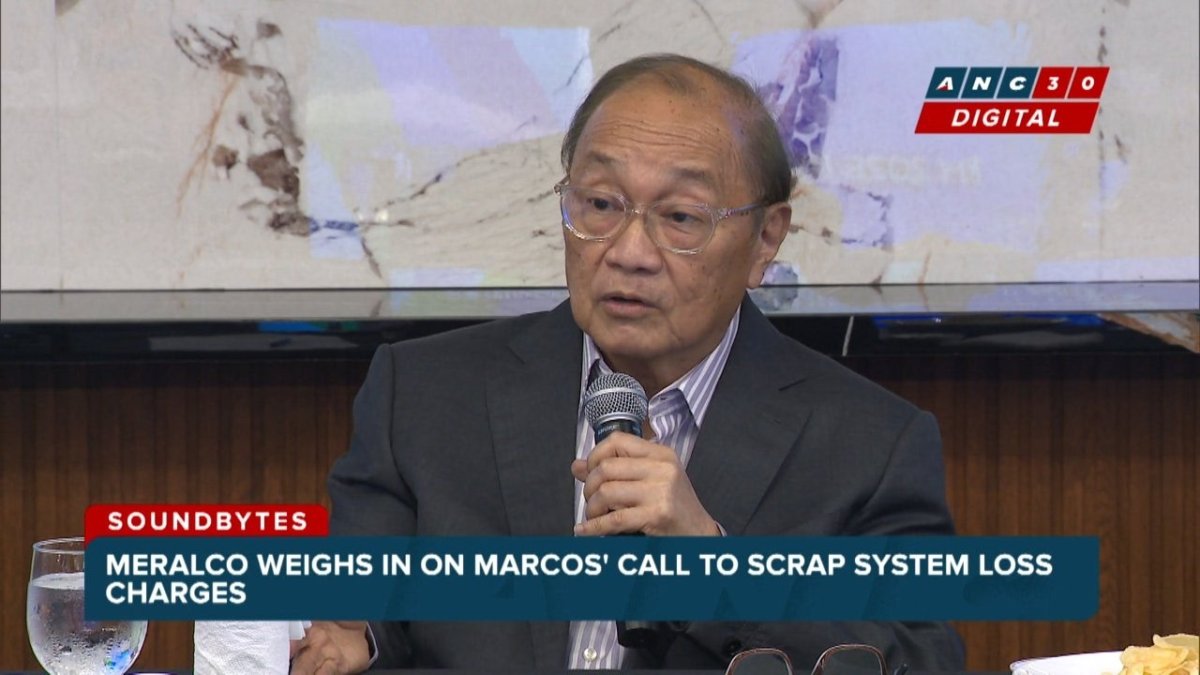
In a recent ANC 24/7 report, Meralco Chairman and Chief Executive Officer Manuel V. Pangilinan raised a pressing question that affects every Filipino household with an electric connection: if the government removes system loss charges from electricity bills, who will pay the bill instead? His warning that power companies "may not survive" if forced to absorb the costs alone has ignited a heated debate over President Ferdinand Marcos Jr.'s proposal to amend the Electric Pow...
In a recent ANC 24/7 report, Meralco Chairman and Chief Executive Officer Manuel V. Pangilinan raised a pressing question that affects every Filipino household with an electric connection: if the government removes system loss charges from electricity bills, who will pay the bill instead? His warning that power companies "may not survive" if forced to absorb the costs alone has ignited a heated debate over President Ferdinand Marcos Jr.'s proposal to amend the Electric Power Industry Reform Act.
Pangilinan Asks Who Will Pay as Marcos Pushes EPIRA Reform to Remove System Loss Charges
Manila, Philippines — Manila Electric Company (Meralco) Chairman and CEO Manuel V. Pangilinan this week delivered a blunt warning to the Marcos administration: removing system loss charges from consumers' electricity bills would shift tens of billions of pesos in costs onto the power industry — and some companies may not survive the burden.
The President's Proposal: EPIRA Amendment After SONA
President Ferdinand Marcos Jr., in his fifth State of the Nation Address, called on Congress to amend the Electric Power Industry Reform Act of 2001 and put an end to system loss charges being passed on to consumers. The President specifically targeted the pass-through charge and its accompanying value-added tax, describing them as unjust burdens on Filipino families already struggling with high electricity costs.
The call was met with immediate support from senators like Win Gatchalian, who chairs the Senate energy committee. Gatchalian said the removal of system loss charges is "a concrete step toward lowering power costs" in a country that consistently ranks among the most expensive electricity markets in Southeast Asia.
"Removing unjust system loss charges is a concrete step toward lowering power costs," Gatchalian said, citing the Philippines' high electricity rates compared with its neighbors like Thailand, Vietnam, and Malaysia.
What Is System Loss, and Why Does It Matter?
System loss refers to the difference between the electricity generated by power plants and the amount actually consumed and billed to end-customers. As electricity travels long distances from power plants to homes and businesses, energy is inevitably lost along the way due to both technical and non-technical factors.
Technical factors include electricity flowing through transmission wires that generate heat, power passing through multiple transformers, and voltage stability concerns in the power grid. Non-technical causes include electricity theft and illegal connections that siphon power before it reaches the meter.
Under current law — specifically EPIRA and Republic Act No. 7832, the Anti-Pilferage of Electricity and Theft of Electric Transmission Lines or Materials Act — distribution utilities like Meralco are permitted to recover a regulated portion of these system losses from consumers through a line item on monthly electricity bills.
For Meralco's 7.8 million customers across Metro Manila, Bulacan, Cavite, Laguna, Rizal, and parts of Quezon province, the system loss charge accounts for approximately 5% of their monthly bill. While seemingly small, for a typical household paying P3,000 to P5,000 monthly, that represents P150 to P250 that would no longer appear on their bill.

Pangilinan's Warning: "Tens of Billions of Pesos"
Speaking in an ANC 24/7 interview, Pangilinan did not mince words about the financial implications. He described the potential shift in costs as "a big bill for the industry because it cuts across generation, transmission, and distribution" — the three major segments of the power sector.
"The bill is too big for the industry to absorb all of it," Pangilinan said. "It's going to impact the entire power industry in this country. It is not a small matter. So, who's going to pay for that? The industry? It's going to cost tens of billions of pesos."
The Meralco chief executive warned that some utility companies "may not survive" if forced to shoulder the full cost of system losses without passing any of it to consumers. His comments underscored the tension between the President's consumer-friendly policy direction and the operational realities of power distribution companies, particularly smaller electric cooperatives in provincial areas.
Meralco's Position: Cooperation With Caveats
Meralco Executive Vice President and Chief Operating Officer Ronnie Aperocho issued a statement clarifying the company's position. While expressing respect for the President's policy direction, Aperocho emphasized that system loss "is not unique to any distribution utility but is a common operational aspect of the delivery of electricity — which affects the entire power industry."
"While distribution utilities like Meralco continue to invest in modernizing and upgrading facilities and deploying technologies that reduce system losses, a certain level of technical losses remains inherent in operating an electric distribution system," Aperocho said.
Meralco has maintained its system loss levels below the 6.5% cap set by the Energy Regulatory Commission through consistent investment in network modernization and system loss management initiatives. Aperocho said the company will "actively participate in the discussions as the proposed amendments to the EPIRA are deliberated" and will continue working with the government, regulators, legislators, and other industry stakeholders.
The Consumer Perspective: Relief and Skepticism
For ordinary Filipino families, the proposed removal of system loss charges offers genuine relief. With inflation still squeezing household budgets and the cost of basic goods rising, any reduction in electricity bills would be welcome — particularly for low-income families in Metro Manila's informal settlements and provincial barangays where every peso counts.
However, consumer advocacy groups have expressed skepticism, warning that removing one charge does not address the deeper structural problems driving the Philippines' high electricity rates. The country's power costs are among the highest in ASEAN, trailing only Japan and Singapore in some metrics, largely due to reliance on imported fossil fuels, lack of competition in the generation sector, and the financial burden of long-term power purchase agreements.
"Removing system loss charges is an important first step, but Congress must not mistake it for the solution," consumer advocates have cautioned.
Gabriela Fires Back: "Meralco Earned P26.5 Billion"
Gabriela party-list Representative Arlene Brosas pushed back hard against Meralco's argument that the industry cannot absorb system loss costs. In a statement, Brosas noted that Meralco reported P26.5 billion in profits, raising questions about whether the company is exaggerating the financial impact of absorbing system losses.
"We urge lawmakers to fast-track the EPIRA amendments while working toward the law's eventual repeal," Brosas said. She argued that the structural problems in the Philippine power sector go far beyond system loss charges and require a more comprehensive approach to bring down electricity costs for consumers.
The Gabriela solon's statement reflects growing frustration in progressive circles with the power industry's profits amid consistently high consumer rates. The question of who truly bears the burden — and whether the industry is being asked to sacrifice an acceptable portion of its margins — is likely to be a central point of contention as EPIRA amendment discussions proceed.
The DOE's Solution: Loans for Electric Cooperatives
The Department of Energy has proposed one concrete measure: the National Electrification Administration may provide loans to help electric cooperatives upgrade their facilities and reduce system losses. This targeted approach recognizes that smaller electric cooperatives in provincial areas — which often lack the capital for infrastructure upgrades — would be hit hardest by the removal of system loss charges.
Electric cooperatives serving rural barangays and remote communities typically have higher system loss rates than Meralco, which has invested heavily in modernizing its network. Without the ability to recover these losses from consumers, these cooperatives face a difficult financial squeeze that could affect the quality and reliability of electricity service in provincial areas.
What to Watch For
The EPIRA amendment process will now move to Congress, where the Senate energy committee under Senator Gatchalian is expected to prioritize the legislation. Key questions remain: How will the government determine a fair transition period for the removal of system loss charges? Will the power industry receive any compensating mechanisms, such as tax incentives or infrastructure subsidies? And how will electric cooperatives be supported through the transition?
Meralco has committed to participating constructively in the discussions, and Pangilinan said the company will cooperate with the government as the amendments are deliberated. But his core question hangs over the entire debate: with tens of billions of pesos at stake and the Philippines' already high electricity costs as the backdrop, who will ultimately bear the cost of making power more affordable?
For Filipino families from Tondo to Taguig, from Bulacan to Batangas, the answer to that question will determine whether their monthly electricity bills actually go down — or whether the cost is simply shifted elsewhere in the system.
By Bella Reyes, Staff Writer
This article was produced with AI-assisted research and editorial support. Reporting is based on sources cited in the article.
What's Your Reaction?
 Like
1
Like
1
 Dislike
0
Dislike
0
 Love
0
Love
0
 Funny
0
Funny
0
 Wow
0
Wow
0
 Sad
0
Sad
0
 Angry
0
Angry
0

Philippines/Southeast Asia Correspondent at Global1.News. Manila-based journalist covering Philippine politics, environment, maritime security, and social issues. Passionate about marine conservation and the communities protecting the Philippines' natural heritage.













Comments (0)